Rob Marshall, a classical musician from Swansea, first met singer Bonnie Tyler when he was 15 years old and asked her for an autograph. Over nearly 30 years, he attended her annual Christmas parties and became close friends with her and her husband. Bonnie Tyler, known for hits like "Total Eclipse of the Heart," died recently in Portugal after a long illness.
Key Facts
Rob Marshall met Bonnie Tyler as a teenage fan when he asked for her autograph.
Tyler invited Marshall to her Christmas parties for 29 years.
Marshall is a concert pianist and often played music with Tyler at these gatherings.
Bonnie Tyler’s real name was Gaynor Hopkins.
Tyler passed away in Portugal after ongoing illness.
She was married to Robert Sullivan for over 50 years.
Tyler was known internationally for songs like "Total Eclipse of the Heart."
Songwriter Desmond Child, who worked with Tyler, expressed deep sadness at her death.
Read the Original
Want the full story? Tap a source to open the original
article.
The Bayeux Tapestry, an 11th-century artwork showing the Battle of Hastings, has arrived in London for the first time in over 900 years. It will be shown at the British Museum from September 2026 to July 2027 as a loan from France, symbolizing the relationship between the two countries.
Key Facts
The Bayeux Tapestry dates back to the 11th century.
It illustrates the Battle of Hastings.
The tapestry has returned to London after more than 900 years.
It was transported securely from France to the British Museum.
The display is scheduled from September 2026 to July 2027.
This visit marks a historic loan between France and the UK.
The display highlights cultural ties between the two nations.
Read the Original
Want the full story? Tap a source to open the original
article.
Wildfires have spread across Spain, causing at least 11 deaths and forcing evacuations. The fires are worsened by a strong heatwave with temperatures over 40°C and high winds that make fighting the flames harder.
Key Facts
At least 11 people have died due to wildfires in Spain.
Fires are burning from the southern to the northern parts of the country.
Many people have been evacuated to keep them safe.
A severe heatwave is causing temperatures above 40°C in many areas.
Strong winds are making it harder for firefighters to control the fires.
The situation is ongoing, with fire crews still working to stop the blazes.
This is one of the most intense wildfire episodes Spain has faced recently.
Read the Original
Want the full story? Tap a source to open the original
article.
The Bayeux Tapestry has returned to the United Kingdom for a one-year exhibit at the British Museum after nearly 1,000 years. Its trip from France was carefully managed with police escorts and special protection to keep the fragile medieval artwork safe.
Key Facts
The Bayeux Tapestry is almost 1,000 years old.
It has been brought from France to the UK for a temporary show.
The exhibition will last for one year at the British Museum in London.
The tapestry’s journey was highly secretive and carefully controlled.
Police escorts accompanied the tapestry during transport.
A special case was designed to protect the tapestry during the trip.
Strict rules were in place to keep this delicate medieval piece safe.
The event highlights cultural ties between France and Britain.
Read the Original
Want the full story? Tap a source to open the original
article.
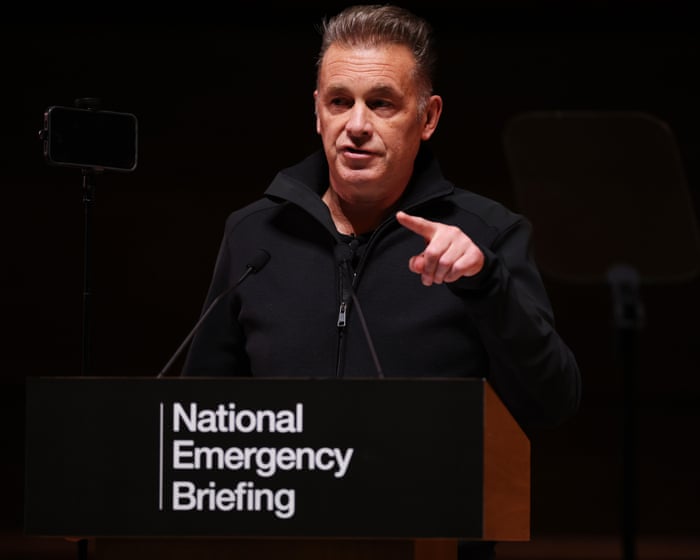
UK Members of Parliament (MPs) are asking the government to hold a televised national briefing on the climate emergency. This call follows a special event where experts warned about the serious risks climate change poses to the UK’s food, economy, and health, especially during recent heatwaves.
Key Facts
MPs want a televised emergency briefing on the climate crisis for the UK public.
In November, nine experts gave urgent talks about climate and ecological dangers in Westminster Hall.
A 50-minute film called the People’s Emergency Briefing explains threats like food shortages and health risks.
The UK is experiencing its third heatwave of the summer, with Europe having faced record-breaking heat.
Over 90 MPs and peers from different parties support the call for the government to hold this briefing.
The film is hosted by Chris Packham, a TV presenter and environmentalist.
A former senior army officer called climate change the "most insidious threat" to society.
The UK government currently gives an annual climate statement, but critics say more investment is needed to protect against extreme weather.
Churches and Christian groups in the UK also support the call for a national briefing.
Read the Original
Want the full story? Tap a source to open the original
article.
This short article suggests that a political figure named Mamdani, described as a democratic socialist, has recently faced a setback. The article implies that Mamdani’s sense of pride or arrogance will lead to negative consequences for him.
Key Facts
The article is about a person named Mamdani.
Mamdani is identified as a democratic socialist.
It states that Mamdani experienced a setback or loss this week.
The article claims Mamdani’s arrogance will cause problems for him.
No specific details about events or reasons are given.
Read the Original
Want the full story? Tap a source to open the original
article.
President Donald Trump has promised to allow Ukraine to build Patriot air defense systems. Experts say this could help Ukraine in the long term but may not meet its immediate defense needs against ongoing Russian attacks.
Key Facts
President Trump announced a license for Ukraine to produce Patriot missile systems.
Patriot systems are used to defend against air attacks.
Building a manufacturing setup in Ukraine will take years.
Workers need special training to produce these advanced defense systems.
Ukraine faces daily attacks from Russia while production efforts begin.
This plan aims to improve Ukraine’s defense ability over time, not immediately.
The agreement signals strong U.S. support for Ukraine’s defense efforts.
Experts caution the new production will not quickly change battlefield realities.
Read the Original
Want the full story? Tap a source to open the original
article.
A Ryanair plane flying from Thessaloniki, Greece, to Memmingen, Germany, had a cabin window come loose shortly after takeoff. A passenger was almost pulled partially out of the window but was saved by other travelers. The plane returned safely to Thessaloniki, and an investigation is underway.
Key Facts
The incident happened on a Ryanair flight operated by its subsidiary Malta Air.
The plane was a Boeing 737 about 18 years old.
After takeoff, a loud bang was heard and the window broke, causing oxygen masks to drop.
A Serbian passenger in his 60s was hanging head-first out of the broken window but was pulled back inside by other passengers.
The aircraft returned to Thessaloniki and landed safely.
One passenger received medical help on the ground.
A replacement plane was arranged to complete the journey to Memmingen.
Aviation authorities in Ireland, Greece, and Malta are involved in investigating the incident.
Some reports say engine debris may have caused the window to break, but Ryanair has not confirmed this.
Read the Original
Want the full story? Tap a source to open the original
article.
Japan has raised visa fees for foreign workers applying for permanent residency and is thinking about adding a language test. Although Japan needs these workers because of an aging population and fewer babies being born, its government is making immigration rules stricter.
Key Facts
Japan increased visa fees for foreign nationals seeking permanent residency.
The government is considering requiring foreign workers to pass a language test.
Japan faces population challenges, with more elderly people and fewer children.
Foreign workers are needed to help fill the gaps in the workforce.
The current nationalist government is tightening immigration rules despite this need.
The article also discusses other Asia-Pacific stories unrelated to Japan’s immigration policy.
Read the Original
Want the full story? Tap a source to open the original
article.
Wildfires have caused hundreds of deaths across Europe in the last ten years, with a recent fire in southern Spain killing at least 11 people. Climate change is making heatwaves and dry conditions worse, leading to more wildfires and higher risks for people.
Key Facts
A wildfire in southern Spain killed at least 11 people recently, one of the deadliest in the country.
Europe is warming twice as fast as the global average since the 1980s.
2025 was the third-hottest year worldwide, with strong heatwaves hitting Europe.
Burning fuels like gasoline and coal contribute to climate change, which increases wildfire risks.
In 2018, over 100 people died in a wildfire in Mati, Greece.
In 2023, more than 20 people died in Greek wildfires, including migrants trapped by flames.
In 2025, a wildfire in northern Greece killed a 12-year-old boy and his father.
In 2024, 10 firefighters died in a wildfire in Turkey when the wind suddenly changed and trapped them.
Read the Original
Want the full story? Tap a source to open the original
article.
The International Energy Agency (IEA) has warned that renewed fighting between the United States and Iran threatens to delay recovery in global oil supplies. Despite some diplomatic efforts and a recent agreement aiming to reopen the Strait of Hormuz, ongoing conflict continues to disrupt oil production and exports, raising concerns about energy shortages worldwide.
Key Facts
The IEA said fighting between the US and Iran could prolong the global energy crisis by disrupting oil markets.
A recent agreement (memorandum of understanding) aimed to reopen the Strait of Hormuz, a key shipping route for about 20% of the world’s oil and natural gas exports.
Fighting led to a closure of the strait, cutting up to 14 million barrels of oil per day from global flow.
Global oil demand is expected to fall this year for the first time since 2020 due to conflicts in the Middle East.
After partial reopening, oil supply rose by 4.1 million barrels per day in June but remains 9.4 million barrels below pre-war levels.
Oil prices stayed steady around $76 per barrel despite tension, showing market hopes for diplomatic progress.
US sources said pauses in attacks are part of efforts to support peace talks, but the US military remains ready to act if needed.
Several Middle Eastern countries and others like Pakistan and Qatar are working to promote negotiations and avoid wider conflict.
Read the Original
Want the full story? Tap a source to open the original
article.
In May 1984, Anthony Littler was murdered in a London alleyway. After 42 years with no arrests, two brothers, Michael and Anthony Stewart, were found guilty and sentenced for the crime following an undercover police operation.
Key Facts
Anthony Littler was attacked and killed near East Finchley station in north London in 1984.
He was struck twice on the head and died without regaining consciousness.
No evidence was found initially, and no one was charged for over 40 years.
Michael Stewart (57) and Anthony Stewart (60) were sentenced to life imprisonment in 2026.
The Stewarts were teenagers at the time of the murder—15 and 18 years old.
Police used undercover surveillance, bugging the suspects' home and vehicles to collect evidence.
The Stewarts targeted gay men for robbery, although Anthony Littler was not known to be gay.
Several previous investigations, including appeals on TV programs, failed to solve the case.
Read the Original
Want the full story? Tap a source to open the original
article.
The United States and Iran recently exchanged attacks after a peace agreement signed on June 17 started to break down. Despite the violence, a U.S. official said that Washington still wants to continue technical talks aimed at a lasting peace deal.
Key Facts
The U.S. and Iran signed a memorandum of understanding (MoU) on June 17 to pause hostilities for 60 days for peace talks.
The agreement included free passage for ships through the Strait of Hormuz and a U.S. promise to lift some sanctions on Iranian oil.
After attacks on commercial ships near the Strait of Hormuz, the U.S. launched strikes on 85 Iranian targets.
Iran responded with attacks on U.S. military and infrastructure in Gulf states, leading to further U.S. attacks on 90 Iranian targets.
President Donald Trump said the MoU was “over” but allowed peace talks to continue, although he expressed frustration with Iran’s leadership.
Explosions were reported in southern Iran, including near a nuclear plant, but the U.S. denied involvement.
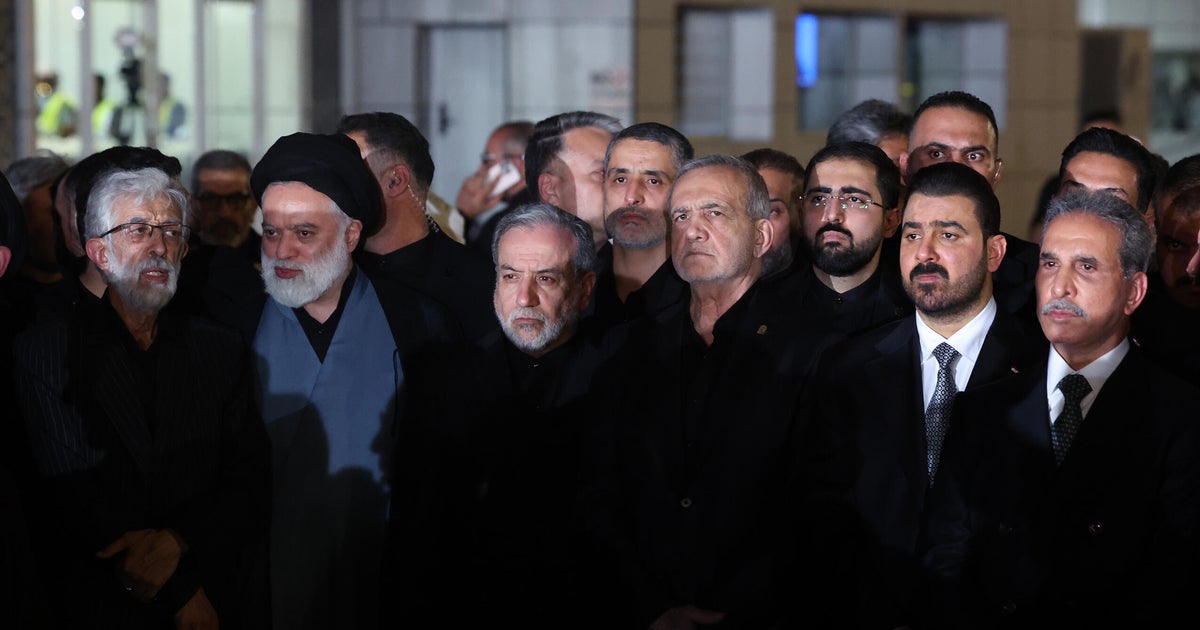
Peace talks have been delayed due to conflict in Lebanon and the funeral of Iran’s former Supreme Leader Ali Khamenei.
Both sides have accused each other of breaking the ceasefire, and the future of the talks remains uncertain.
Read the Original
Want the full story? Tap a source to open the original
article.
Sheikh Hasina, the ousted former Prime Minister of Bangladesh, plans to return from exile in India this December despite facing a death sentence in Bangladesh. She aims to restart her political party, the Awami League, and challenge the legal actions taken against it.
Key Facts
Sheikh Hasina fled to India two years ago after a violent crackdown on a student-led uprising in Bangladesh.
She has been sentenced to death in Bangladesh during her time in exile.
Hasina wants to return with senior party members to challenge the banning of the Awami League.
The current Bangladeshi government strongly opposes Hasina’s return and labels her a mass murderer.
Hasina served as Bangladesh’s Prime Minister for 20 years, boosting the economy and garment exports.
Her government was also accused of authoritarianism and suppressing political opposition.
India has allowed Hasina to stay but faces pressure from Bangladesh to extradite her.
Hasina’s return might ease diplomatic tensions between Bangladesh and India.
Read the Original
Want the full story? Tap a source to open the original
article.
Scottish police warned people to check facts before attending protests after disorder in Glasgow caused by false and misleading online information. The police said some protests targeted innocent people and were organized by outsiders aiming to cause trouble.
Key Facts
Protests occurred in Glasgow neighborhoods Cranhill and Castlemilk based on false online claims about serious crimes.
One protest involved a mistaken identity, targeting someone not charged with any offence.
Similar unrest happened in Royston, Glasgow, linked to an alleged sexual assault with no convictions.
Five police officers were hurt and two men arrested during protests.
Police say some misinformation plays on fears about sex offenders from ethnic minorities.
A protest planned at a Glasgow care home is based on false rumors about its closure and conversion.
Police urge people to protest peacefully and to verify information from reliable sources.
Police describe some disorder as violent acts by people manipulated from outside Glasgow.
Read the Original
Want the full story? Tap a source to open the original
article.
Wally Funk, a pioneering female aviator and member of the Mercury 13 astronaut group, died at age 87. In 2021, she became the oldest woman to fly into space during a Blue Origin suborbital flight at age 82, fulfilling a long-held dream.
Key Facts
Wally Funk was born in 1939 and grew up interested in aviation.
She was part of the Mercury 13, a group of women who went through astronaut testing in the 1960s but never flew in NASA missions.
NASA required astronauts to have military jet pilot experience, which at the time women were not allowed to have.
Funk became the first female flight instructor at a U.S. military base and the first female FAA flight inspector.
In 1974, she became the first female air safety investigator at the National Transportation Safety Board.
On July 20, 2021, Funk flew on Blue Origin’s New Shepard capsule, becoming the oldest woman in space at 82.
Her flight lasted about 10 minutes and she was awarded commercial astronaut wings by the Federal Aviation Administration.
She inspired many by breaking barriers in aviation and space exploration over her long career.
Read the Original
Want the full story? Tap a source to open the original
article.
Unidentified airstrikes hit southern Iran shortly after the U.S. said it completed its attacks on the country. Iran has not named who is responsible but warned the United Arab Emirates about supporting the U.S., and tensions remain high over control of the strategic Strait of Hormuz.
Key Facts
A series of unclaimed airstrikes targeted southern Iran after the U.S. ended its own attacks.
The strikes occurred as Iran was preparing to bury Supreme Leader Ayatollah Ali Khamenei.
Iran did not directly blame any country but warned the UAE about aiding the U.S. campaign against Iran.
The Gulf Arab states targeted by Iran in this conflict did not immediately comment on the new strikes.
The Strait of Hormuz, vital for global oil and gas shipments, is a key point of tension between Iran and other nations.
Iran demands control over the strait and wants ships to pay fees, opposing the historical view of it as an international waterway.
Iran responded to the strikes by launching attacks across several Gulf countries, causing missile alerts and at least one injury.
Israel, which has engaged in conflict with Iran, has not claimed responsibility for recent attacks on Iran.
Read the Original
Want the full story? Tap a source to open the original
article.
France is experiencing its third major heatwave since May, with very high temperatures reaching 41.1°C in Lodève. Most of the country is under heat alerts, causing people to stay indoors, seek cooler places near water, or leave their homes.
Key Facts
France is currently facing a strong heatwave, the third since May.
Temperatures have reached 41.1°C in the town of Lodève.
Almost the entire country is under official heat alerts.
People are trying to stay cool by staying inside or going to canals and rivers.
Some residents are leaving their homes to find cooler locations.
The heatwave affects both local people and visitors on holiday.
This heatwave adds to ongoing concerns as rivers are drying up in parts of France.
Read the Original
Want the full story? Tap a source to open the original
article.
Europe is seeing more heat waves and more people want air-conditioning to stay cool. Only about 20% of Europeans have AC now, but experts predict many more homes will need it by 2050 as the climate warms. However, using more traditional air conditioners can increase electricity use and pollution, which adds to global warming.
Key Facts
Temperatures in Europe have risen above 40°C, causing high demand for AC units and fans.
Currently, only about 20% of European homes have air-conditioning, compared to nearly 90% in the US.
Air-conditioning helps people stay comfortable, focused, and can prevent heat-related deaths.
Europe is warming faster than any other continent, with countries like the UK and Norway expecting big increases in heat and cooling needs.
Traditional AC units use a lot of electricity, causing roughly 3% of global greenhouse gas emissions.
Installing more AC units without improving efficiency risks worsening climate change.
Political debates exist over air-conditioning use, with some parties promising more AC and others warning against its high energy use.
Experts suggest finding better, smarter, and fairer ways to cool buildings rather than relying on inefficient portable AC units.
Read the Original
Want the full story? Tap a source to open the original
article.
Iran's top diplomat contacted leaders from nearby countries and mediators to discuss recent clashes and work toward restarting talks with the U.S. After a series of attacks between the two nations, efforts continue to reduce tensions and promote diplomacy. Shipping through the strategic Strait of Hormuz remains low due to ongoing uncertainties.
Key Facts
Iran's Foreign Minister Abbas Araghchi spoke with officials from Oman, Turkey, Saudi Arabia, and Pakistan to discuss recent regional events.
The recent flare-up involved Iranian attacks on commercial ships in the Strait of Hormuz and U.S. airstrikes in response.
The ceasefire agreement between the U.S. and Iran was reached in mid-June 2026 but was tested by these recent attacks.
Iran claims at least 14 people were killed in the U.S. strikes and retaliated by launching missiles targeting U.S. allies in the Gulf.
Regional countries like Qatar and Pakistan are acting as mediators to help bring Iran and the U.S. back to talks.
Despite U.S. statements, commercial shipping traffic through the Strait of Hormuz remains much lower than before the conflict escalated.
All parties emphasize the importance of diplomacy to avoid further escalation.
Read the Original
Want the full story? Tap a source to open the original
article.