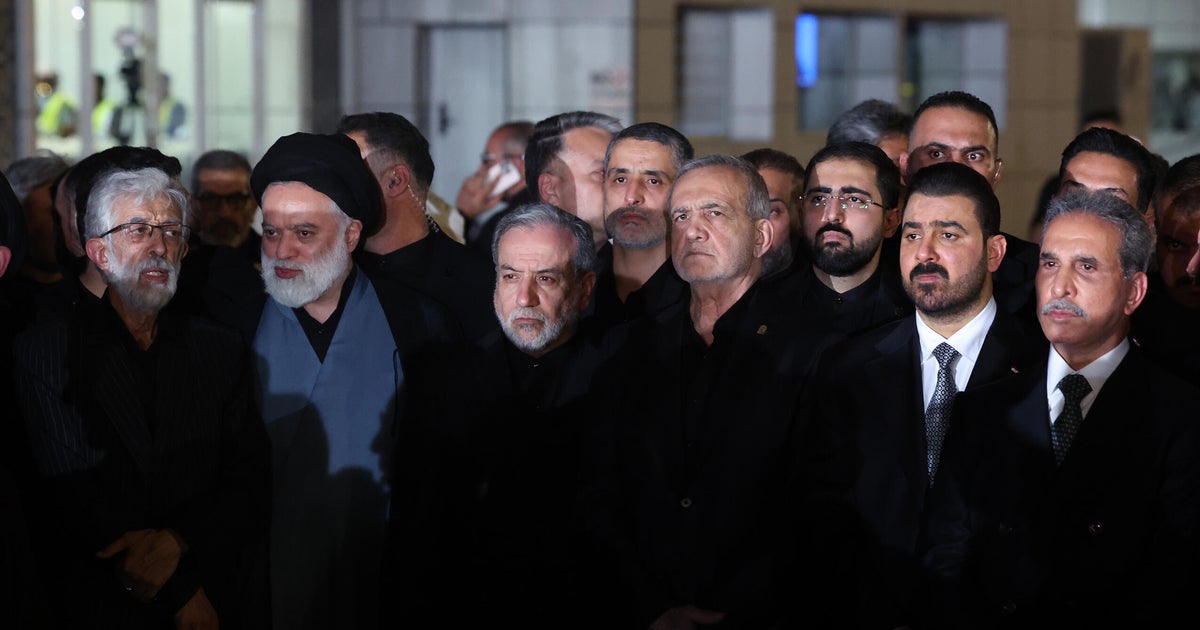
Unidentified airstrikes hit southern Iran shortly after the U.S. said it completed its attacks on the country. Iran has not named who is responsible but warned the United Arab Emirates about supporting the U.S., and tensions remain high over control of the strategic Strait of Hormuz.
Key Facts
A series of unclaimed airstrikes targeted southern Iran after the U.S. ended its own attacks.
The strikes occurred as Iran was preparing to bury Supreme Leader Ayatollah Ali Khamenei.
Iran did not directly blame any country but warned the UAE about aiding the U.S. campaign against Iran.
The Gulf Arab states targeted by Iran in this conflict did not immediately comment on the new strikes.
The Strait of Hormuz, vital for global oil and gas shipments, is a key point of tension between Iran and other nations.
Iran demands control over the strait and wants ships to pay fees, opposing the historical view of it as an international waterway.
Iran responded to the strikes by launching attacks across several Gulf countries, causing missile alerts and at least one injury.
Israel, which has engaged in conflict with Iran, has not claimed responsibility for recent attacks on Iran.
Read the Original
Want the full story? Tap a source to open the original
article.
France is experiencing its third major heatwave since May, with very high temperatures reaching 41.1°C in Lodève. Most of the country is under heat alerts, causing people to stay indoors, seek cooler places near water, or leave their homes.
Key Facts
France is currently facing a strong heatwave, the third since May.
Temperatures have reached 41.1°C in the town of Lodève.
Almost the entire country is under official heat alerts.
People are trying to stay cool by staying inside or going to canals and rivers.
Some residents are leaving their homes to find cooler locations.
The heatwave affects both local people and visitors on holiday.
This heatwave adds to ongoing concerns as rivers are drying up in parts of France.
Read the Original
Want the full story? Tap a source to open the original
article.
Europe is seeing more heat waves and more people want air-conditioning to stay cool. Only about 20% of Europeans have AC now, but experts predict many more homes will need it by 2050 as the climate warms. However, using more traditional air conditioners can increase electricity use and pollution, which adds to global warming.
Key Facts
Temperatures in Europe have risen above 40°C, causing high demand for AC units and fans.
Currently, only about 20% of European homes have air-conditioning, compared to nearly 90% in the US.
Air-conditioning helps people stay comfortable, focused, and can prevent heat-related deaths.
Europe is warming faster than any other continent, with countries like the UK and Norway expecting big increases in heat and cooling needs.
Traditional AC units use a lot of electricity, causing roughly 3% of global greenhouse gas emissions.
Installing more AC units without improving efficiency risks worsening climate change.
Political debates exist over air-conditioning use, with some parties promising more AC and others warning against its high energy use.
Experts suggest finding better, smarter, and fairer ways to cool buildings rather than relying on inefficient portable AC units.
Read the Original
Want the full story? Tap a source to open the original
article.
Iran's top diplomat contacted leaders from nearby countries and mediators to discuss recent clashes and work toward restarting talks with the U.S. After a series of attacks between the two nations, efforts continue to reduce tensions and promote diplomacy. Shipping through the strategic Strait of Hormuz remains low due to ongoing uncertainties.
Key Facts
Iran's Foreign Minister Abbas Araghchi spoke with officials from Oman, Turkey, Saudi Arabia, and Pakistan to discuss recent regional events.
The recent flare-up involved Iranian attacks on commercial ships in the Strait of Hormuz and U.S. airstrikes in response.
The ceasefire agreement between the U.S. and Iran was reached in mid-June 2026 but was tested by these recent attacks.
Iran claims at least 14 people were killed in the U.S. strikes and retaliated by launching missiles targeting U.S. allies in the Gulf.
Regional countries like Qatar and Pakistan are acting as mediators to help bring Iran and the U.S. back to talks.
Despite U.S. statements, commercial shipping traffic through the Strait of Hormuz remains much lower than before the conflict escalated.
All parties emphasize the importance of diplomacy to avoid further escalation.
Read the Original
Want the full story? Tap a source to open the original
article.
After recent U.S. airstrikes during funeral ceremonies for Iran's leader Ayatollah Ali Khamenei, Iran increased pressure by targeting U.S. allies and threatening American military bases in the region. Despite President Trump's statement that the ceasefire is over, secret talks may still be happening because both sides want to avoid a long war, especially with U.S. elections coming up.
Key Facts
The U.S. launched strikes during the funeral ceremonies for Ayatollah Ali Khamenei.
Iran responded by putting pressure on U.S. allies and threatening U.S. bases in the region.
Iran wants to push the U.S. back to negotiation talks.
President Trump announced that the ceasefire with Iran has ended.
Despite this, behind-the-scenes discussions between the U.S. and Iran are believed to continue.
Both sides want to avoid a long and full-scale war.
The upcoming U.S. midterm elections influence the willingness to avoid prolonged conflict.
The situation reflects ongoing tension in the Middle East between the U.S. and Iran.
Read the Original
Want the full story? Tap a source to open the original
article.
Pauline Hanson, leader of Australia’s One Nation party, is visiting the UK to meet with far-right figures as part of a “fact-finding mission.” Experts say these meetings and public stunts aim to build her international profile and influence political debate by shifting public opinions to the right.
Key Facts
Pauline Hanson is on a UK visit with her chief of staff, meeting far-right activists and politicians.
She met Tommy Robinson, a well-known UK far-right activist with a criminal record and controversial views.
Hanson will appear in a podcast with Robinson, continuing their public association.
Robinson supports Russia’s invasion of Ukraine and is known for anti-Islam activism.
Hanson’s party republished a controversial interview with Robinson on their social media channels.
Experts describe these actions as “pseudo events” designed to gain publicity and shift political debate.
Opposition politicians criticize Hanson’s party as a “one-person show” with unclear policies.
Anti-fascist groups warn that such meetings promote a hostile agenda and normalize violence against non-white people.
Read the Original
Want the full story? Tap a source to open the original
article.
A new study from Texas A&M University found that alcohol affects the brain differently depending on the type of Alzheimer's disease changes present. Specifically, alcohol reduced brain activity linked to amyloid-beta plaques but increased activity linked to tau tangles, two proteins involved in Alzheimer's.
Key Facts
Alzheimer's disease involves two main protein problems: amyloid-beta plaques and tau tangles.
Amyloid-beta plaques form sticky clumps between brain cells, while tau tangles form inside brain cells.
Researchers studied how alcohol affects brain communication in animals with either amyloid-beta or tau changes.
Alcohol lowered brain communication in animals with amyloid-beta plaques.
Alcohol increased brain communication in animals with tau tangles.
These effects were opposite to what researchers originally expected.
The study suggests alcohol's impact on the brain varies based on existing Alzheimer's changes.
People concerned about brain health should be careful with alcohol and follow medical advice.
Read the Original
Want the full story? Tap a source to open the original
article.
Senegal’s highest court rejected a recent law that would have reduced the president’s powers and increased parliament’s role. The court ruled the law unconstitutional, stopping a key reform proposed by the parliamentary majority.
Key Facts
The law aimed to give more power to parliament and limit the president’s authority.
It included plans to replace the Constitutional Council with a new Constitutional Court.
President Bassirou Diomaye Faye challenged the law’s approval process and requested a quick court review.
The Constitutional Council ruled against the law on Thursday evening.
The reform was proposed by Pastef, the party of former prime minister Ousmane Sonko.
Sonko was dismissed but remains influential as president of the National Assembly.
Political tensions between President Faye and Sonko have increased since their alliance broke up.
Opposition leaders see the reform proposal as political retaliation by Sonko.
Read the Original
Want the full story? Tap a source to open the original
article.
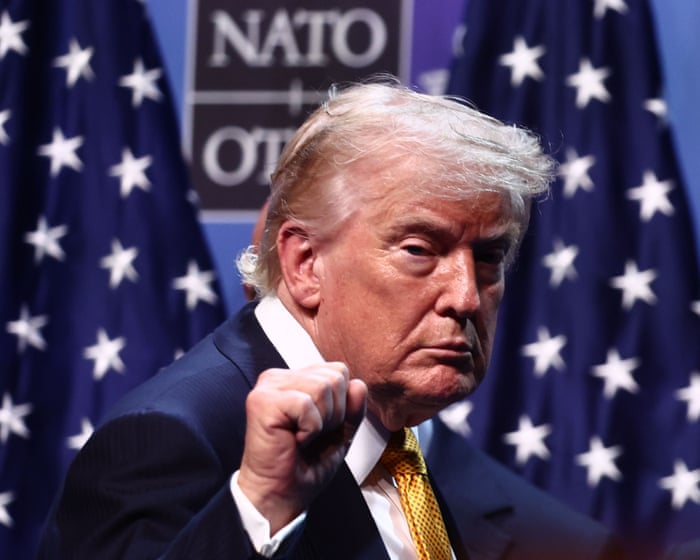
Nato leaders held a summit in Ankara to reaffirm their commitment to collective defense and strengthen support for Ukraine. Despite disruptions caused by President Trump’s unpredictable statements and threats, allies pledged to increase defense spending and improve military cooperation.
Key Facts
Nato is a 77-year-old defense alliance among North American and European countries.
President Trump made controversial remarks at the summit, including threats against Greenland and trade cuts with Spain.
Nato leaders reaffirmed their pledge to spend 5% of their economy (GDP) on defense and infrastructure by 2035.
Allies announced large purchases and joint projects for new military equipment, including air refueling tankers and missiles.
The summit emphasized stronger European defense capabilities, but uncertainty remains about future US military support.
The US Department of Defense is reviewing its troop presence in Europe, hinting at possible withdrawals.
Nato officially declared support for Ukraine’s role in transatlantic security.
The summit aimed to boost cooperation and reduce barriers in defense trade among member countries.
Read the Original
Want the full story? Tap a source to open the original
article.
Mexico plans to ask U.S. prosecutors to investigate the deaths of 17 Mexican citizens who died in U.S. Immigration and Customs Enforcement (ICE) custody or during immigration operations under President Donald Trump's administration. This request follows the recent killing of a Mexican man by an ICE agent in Houston, increasing tensions between Mexico and the United States.
Key Facts
Mexico will request criminal charges related to 17 deaths of Mexicans in ICE custody or immigration operations.
The request will be sent to state prosecutors and the U.S. Department of Justice but has no legal power to force action.
Mexico will also file civil lawsuits against companies running detention centers, aiming to stop human rights abuses.
The announcement followed the fatal shooting of Lorenzo Salgado Araujo by an ICE agent in Houston.
ICE officers were reportedly trying to detain another person and stopped Salgado Araujo’s vehicle; he was shot after allegedly ignoring commands.
The Mexican government says 14 Mexicans died in ICE custody and 3 during ICE operations.
In 2025, 31 people died in ICE detention, the highest number in 20 years.
Mexico has previously used diplomatic channels and human rights organizations to address these deaths and now wants to take stronger legal action.
Read the Original
Want the full story? Tap a source to open the original
article.
A museum in Rotterdam has recreated a peanut butter floor artwork by Dutch artist Wim T Schippers, who recently passed away. The installation spreads 800 pounds of smooth peanut butter on the gallery floor following Schippers’ precise instructions, celebrating his unique style and influence in Dutch art.
Key Facts
The installation, called Pindakaasvloer (Peanut butter floor), was originally conceived in 1962 and first shown in 1969.
Schippers left detailed instructions for applying 15.6 kg of smooth peanut butter per square meter without touching or standing on it.
Wim T Schippers died in June at the age of 83.
He was known for using absurd, playful ideas and food in art, like covering floors with peanut butter or chairs with canned noodles.
Schippers also worked in television, creating controversial and popular programs and characters in the Netherlands.
His influence is compared to that of Monty Python in the UK for combining serious and silly elements in art.
The peanut butter floor has been displayed multiple times across Dutch museums, even surviving vandalism that added chocolate sprinkles and bread.
Visitors can see the artwork at Museum Boijmans van Beuningen in Rotterdam until early September.
Read the Original
Want the full story? Tap a source to open the original
article.
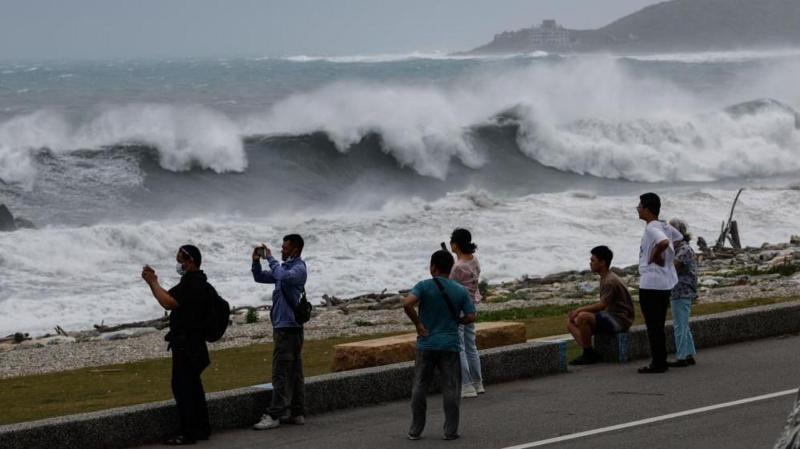
A large typhoon named Bavi is moving across the Pacific Ocean towards Taiwan, Japan, and southeastern China, causing concern for heavy rain, strong winds, and flooding. In the southern Philippines, landslides caused by a recent storm have killed at least 15 people, and preparations are underway in the region to handle the potential damage.
Key Facts
Typhoon Bavi is about 1,000 km (620 miles) wide, similar to the width of France.
Bavi is expected to bring heavy rain to northern and eastern Taiwan, remote Japanese islands, and southeastern China.
At least 15 people died in the southern Philippines due to landslides from recent heavy storms.
Taiwan has prepared 29,000 soldiers for relief efforts and warned rainfall could reach 1 meter (39 inches).
Flights have been canceled and schools closed in affected regions as people stock up on supplies.
Farmers and fishermen are securing their crops and boats ahead of the storm.
China warns that the storm's impact could affect northern provinces less used to typhoons.
Japan Airlines and All Nippon Airways canceled hundreds of flights, affecting tens of thousands of passengers.
The region is still recovering from Typhoon Maysak, which killed at least 39 people in southern China earlier this week.
Read the Original
Want the full story? Tap a source to open the original
article.
Millions of people in Iran participated in six days of funeral ceremonies for the country’s former Supreme Leader, Ayatollah Ali Khamenei, who was killed in US-Israeli strikes in February. During the events, mourners chanted slogans against the US and Israel, while fresh US strikes increased tensions and Iran’s new supreme leader stayed out of public view.
Key Facts
Ayatollah Ali Khamenei, Iran's former Supreme Leader, was killed in US-Israeli strikes in late February 2026.
Iran held six days of funeral ceremonies with millions attending.
Mourners expressed strong anti-US and anti-Israel feelings during the events.
New US strikes took place as the ceremonies were concluding.
Iran’s new supreme leader did not appear publicly during the mourning period.
The situation has raised concerns about rising tensions between Iran and the US.
The article references other recent related events, such as US strikes near Iranian sites and discussions of military and political changes in Iran.
Iranian leaders suggest that neither Iran nor the US wants full-scale war but both want to maintain strength.
Read the Original
Want the full story? Tap a source to open the original
article.
A passenger’s head and shoulders were nearly pulled out of a plane window that broke during a Ryanair flight from Greece to Germany. The plane returned safely to Greece, and the injured passenger was taken to the hospital in stable condition.
Key Facts
The incident happened on a Ryanair flight from Thessaloniki, Greece, to Memmingen, Germany.
A plane window broke after debris from the plane's engine hit it.
The broken window caused depressurization inside the cabin.
One passenger’s head and shoulders were pulled outside the broken window but was pulled back inside by others.
The injured passenger had friction burns and was hospitalized in stable condition.
Passengers had to use oxygen masks that dropped after the window shattered.
The plane returned to Thessaloniki safely and later continued to Memmingen with a replacement aircraft.
Ryanair confirmed the incident and stated they arranged a new plane to minimize delays.
Read the Original
Want the full story? Tap a source to open the original
article.
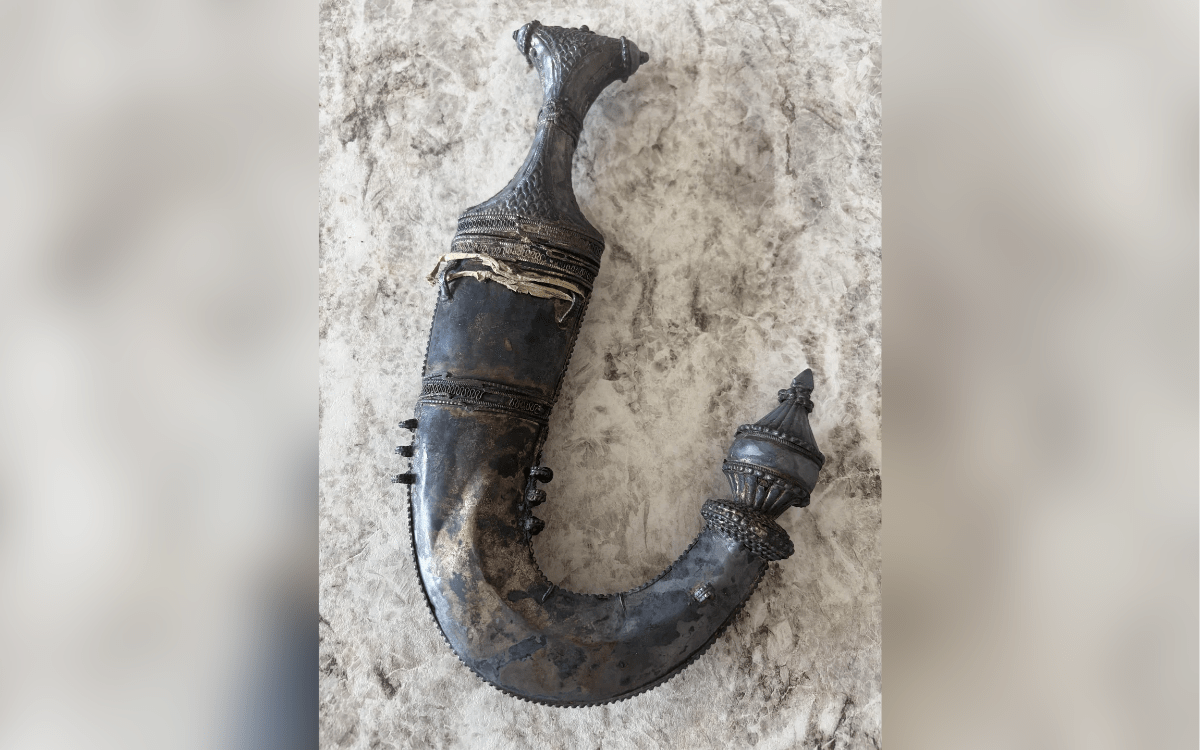
A woman named Georgia found an old Yemeni dagger called a jambiya while sorting through her late father’s belongings. The dagger, which likely dates back to the 19th century, reminds her of her father’s time working in Saudi Arabia and has become a special keepsake to remember him by.
Key Facts
Georgia’s father recently passed away unexpectedly.
He had worked in Saudi Arabia in the early 1990s managing an oil and gas facility.
The dagger she found is a Yemeni jambiya, a traditional curved dagger with cultural importance.
The jambiya symbolizes Yemeni manhood, honor, and social status and is often shown at special events.
Georgia’s father received the dagger from a local who needed money and told him it was a family heirloom.
The dagger was kept hidden away in a closet for over 30 years because it was considered dangerous around children.
After her father’s death, Georgia discovered it wrapped in a towel and plans to keep it as a family heirloom.
The dagger is believed to be a few hundred years old based on comments from people online.
Read the Original
Want the full story? Tap a source to open the original
article.
Sao Paulo in Brazil has launched the largest city-run facial recognition system called Smart Sampa to help fight crime. The system is now facing criticism for allegedly targeting people based on their race, a practice known as racial profiling.
Key Facts
Sao Paulo operates the world's biggest city-managed facial recognition system.
The system is called Smart Sampa and uses artificial intelligence (AI).
Similar technologies exist in countries like India, China, Hong Kong, and the UK.
Sao Paulo's system is larger in scale than any other city’s AI surveillance program.
Accusations have emerged that the system is engaging in racial profiling.
Racial profiling means treating people differently based on their skin color or ethnicity.
The technology is officially used to help fight crime in the city.
The controversy around the system raises concerns about privacy and fairness.
Read the Original
Want the full story? Tap a source to open the original
article.
The European Union has accused Meta, the company behind Facebook and Instagram, of making these platforms addictive by using features like infinite scrolling and autoplay videos. The EU wants Meta to disable these features because they can harm users’ physical and mental health, especially children, and has started a legal process that could lead to fines.
Key Facts
The EU says Meta violated its Digital Services Act by designing addictive features on Facebook and Instagram.
Features like infinite scrolling and autoplay videos make users spend more time on the platforms.
Meta has tools to manage usage, but the EU says they are too hard to use or can be easily ignored.
Meta introduced Teen Accounts that protect teens and allow parents to limit screen time.
The EU wants changes to the design so that addictive features are off by default.
If Meta doesn’t fix the issues, it could face fines up to 6% of its global yearly revenue.
The EU emphasizes protecting users’ mental and physical health as a priority.
The investigation started in 2024 over concerns about protecting children on social media.
Read the Original
Want the full story? Tap a source to open the original
article.
The article features French rapper Kalash and singer Manon Lisa in a cultural segment in Paris. Kalash talks about his new album, while Manon Lisa performs a song about finding happiness in simple things. The story ends with a boat trip on Lake Geneva in Switzerland.
Key Facts
Kalash is a well-known French rapper who released a new album called "Ex-Voto."
He discusses his feelings, spirituality, and being a 38-year-old father as influences on his music.
Manon Lisa is a singer who performs her single "Le Petit Pêcheur."
Her song celebrates enjoying life’s simple pleasures and questions what true happiness means.
The program includes a boat ride on Lake Geneva, the largest lake in Western Europe.
The content is from the show "Paris des Arts," which highlights arts and culture.
The episode aired on July 10, 2026.
The article also mentions how to enable video playback if blocked by browser extensions.
Read the Original
Want the full story? Tap a source to open the original
article.
The United Nations reports that over the past 18 months, more than one million women and girls have lost access to critical aid due to big cuts in global funding. Many organizations that support women and girls cannot meet the growing demand because donors like the United States and several European countries have reduced their foreign aid budgets.
Key Facts
At least one million women and girls are no longer receiving life-saving aid because of funding cuts.
90% of organizations serving women and girls say they cannot meet current needs due to loss of money.
The US, once the largest aid donor, cut its foreign aid by over 50% after President Trump reduced funding and dismantled USAID.
Other donors such as Germany, France, and the UK have also reduced aid, partly due to their own budget pressures and increased defense spending.
A UN survey found 40% of women’s organizations might shut down within a year because of low funding.
60% of these organizations are helping fewer women and girls than before despite higher needs.
Many groups report turning women and girls away or placing them on waiting lists.
Services addressing conflict-related sexual violence have decreased even though such violence has doubled.
Read the Original
Want the full story? Tap a source to open the original
article.
Hamas is ending its role as the ruling authority in Gaza after almost 20 years. The group is transferring control to a new government made up of experts who will manage Gaza’s affairs.
Key Facts
Hamas has been the main governing force in Gaza for nearly two decades.
The group is now dissolving its own government.
Power will be handed over to a technocratic administration, which means a government run by specialists and experts rather than politicians.
Gaza has been under a blockade during Hamas’s time in power.
The change could affect Gaza’s future governance and daily life for its residents.
The announcement was reported by Al Jazeera journalist Marah Rayan.
This shift marks a significant change in how Gaza will be managed.
Read the Original
Want the full story? Tap a source to open the original
article.