Neutral summaries of your favorite news sources — just the facts.
Your favorite news sources, one neutral feed — we distill their reporting into fact-first
summaries and always link to the original story. How it works
World News
Comprehensive coverage of international news and global events
Justin Baldoni and his wife Emily spoke publicly for the first time in nearly two years about their ongoing legal dispute with actress Blake Lively. They said they are healing and grateful, even though the legal battle has been difficult, and they are focusing on their family and recovery.
Key Facts
Justin Baldoni and Blake Lively were involved in a legal dispute related to the 2024 film "It Ends With Us."
Much of Lively’s case, including sexual harassment claims, was dismissed by a federal judge, but a retaliation claim against Baldoni’s PR team was allowed to continue.
Baldoni’s company, Wayfarer Studios, and Lively agreed to settle the case but are still in court over legal fees.
Baldoni and his wife had not spoken publicly about the case until they posted a joint video on Instagram.
They chose not to comment earlier to let the legal process play out without adding to public noise.
The couple expressed gratitude and said they are healing from the experience, even though it has been painful.
Lively’s lawyers recently claimed in court that Baldoni’s company owes over $7 million in attorneys’ fees related to a dismissed defamation lawsuit.
The Baldonis plan to focus on their family and continue the healing process.
Read the Original
Want the full story? Tap a source to open the original
article.
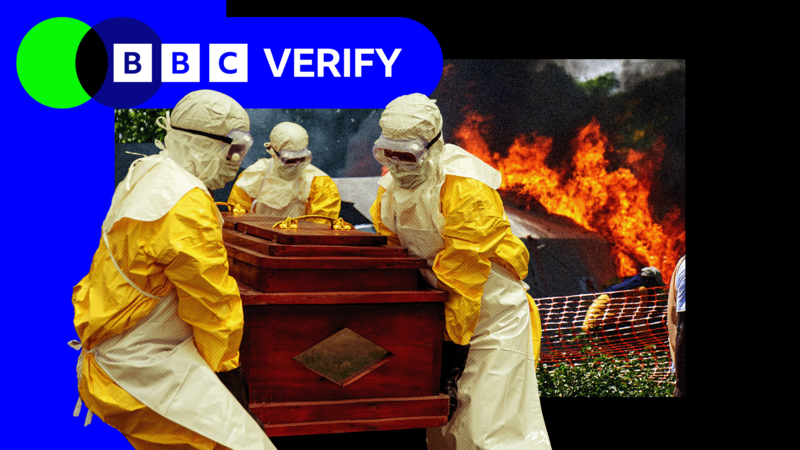
In eastern Democratic Republic of Congo, misinformation about Ebola is causing attacks on health workers and treatment centers. False rumors claim Ebola does not exist or that health workers have harmful intentions, which makes it harder to control the outbreak. Safe burial practices, important to stop the disease spread, face resistance due to these false beliefs.
Key Facts
Over 1,700 people have been infected and 580 have died in the current Ebola outbreak in DR Congo since mid-May.
Health workers trying to conduct safe burials have been attacked, including an incident where four Red Cross volunteers were hurt.
Misinformation includes claims that Ebola is fake, that health workers infect people on purpose, or that the Ebola response is a money scam.
At least 12 violent incidents linked to resistance against Ebola control have been documented, including attacks on treatment centers.
A treatment center was set on fire on 1 July in Bafwabango, with clashes resulting in a police officer's death.
Ebola spreads through direct contact with bodily fluids, and bodies remain infectious after death, making safe burials critical.
No approved vaccine or treatment exists yet for the Bundibugyo species causing this outbreak, but trials for treatments have begun.
Funeral practices involving touching the deceased can spread Ebola, so alternatives have been promoted, but cultural traditions and mistrust complicate acceptance.
Read the Original
Want the full story? Tap a source to open the original
article.
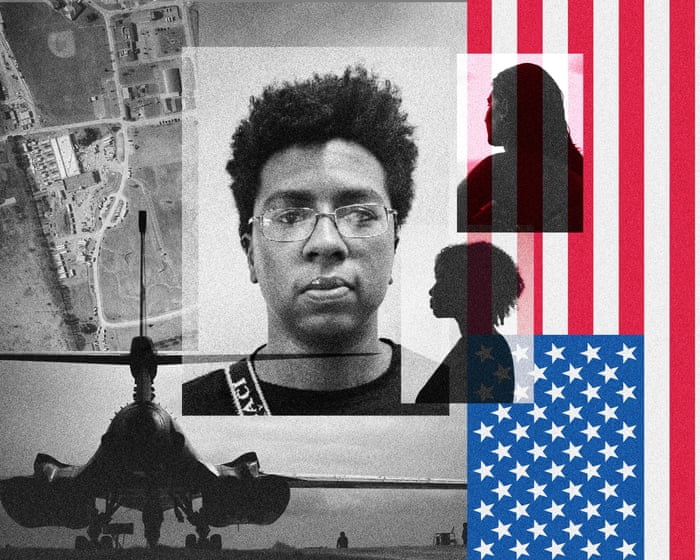
Two British women accused a US airman stationed at RAF Lakenheath in England of sexual assault and rape. Instead of being tried by a British court, the airman was prosecuted in a US military court and was convicted of sexual assault on one woman but acquitted on other charges.
Key Facts
Rebecca reported to police in England that a US airman raped her in June 2020.
The police handed the case over to the US Air Force, so the airman was tried in a military court in England, not in a British court.
The airman, Tyrion Davis, was convicted of sexually assaulting his estranged wife, Emily, but acquitted of other charges.
Both women described traumatic experiences during the investigation and trial process.
Rebecca discovered that the military jury was made up entirely of the airman’s military peers, not regular civilians.
Davis worked at RAF Lakenheath, an American airbase in rural Suffolk, England.
The legal process for US military personnel in the UK can differ significantly from normal British criminal rule.
Both women’s names were changed to protect their privacy.
Read the Original
Want the full story? Tap a source to open the original
article.
A leading architectural historian, Jennifer Alexander, says there is no proof that marks found on old English buildings are related to witches or magic. Instead, these symbols are likely practical marks made by stonemasons training apprentices and organizing work.
Key Facts
English Heritage and Historic England have identified many marks on historic buildings as "witches’ marks" or ritual protection symbols.
Jennifer Alexander, a professor at Warwick University, says these marks are actually practice designs for stonemason training.
Daisy wheels (also called hexafoils) are common symbols made by apprentices learning to use compasses on stone.
Some marks thought to be magical are practical geometry exercises or mason’s ciphers used to organize building work.
English Heritage found many such marks at Gainsborough Old Hall, describing them as ritual symbols, but this view is disputed.
Historic England has encouraged the public to find witches’ marks but notes different theories about their meaning.
Alexander states that marks like overlapping Vs or letters are practical signs used to help build structures, not magical symbols.
While some symbols might serve to ward off evil, the majority of these marks relate to construction processes.
Read the Original
Want the full story? Tap a source to open the original
article.
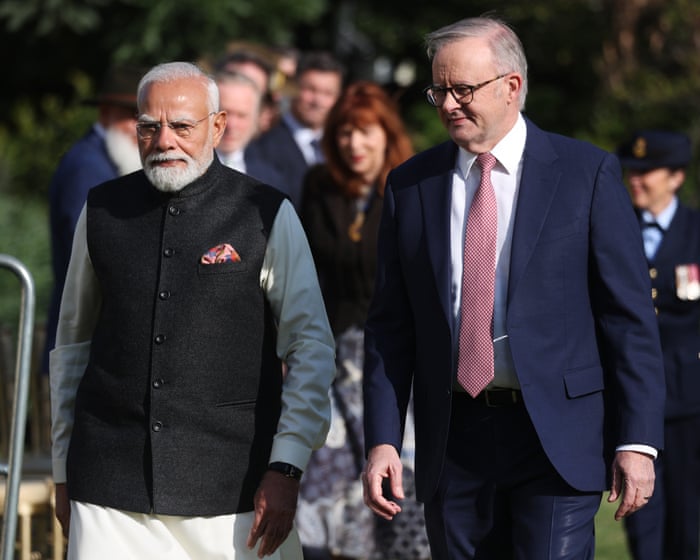
Australian Prime Minister Anthony Albanese is set to sign a significant uranium deal with India during Indian Prime Minister Narendra Modi’s visit to Australia. Modi will address around 30,000 Indian-Australian community members in Melbourne, highlighting strong ties between the two countries.
Key Facts
Australia and India are preparing to finalize a major uranium agreement, ending years of shipment delays.
The two countries signed a civil nuclear deal in 2014, but shipments were paused due to concerns about uranium use in weapons.
Modi’s visit to Australia includes a speech to a large crowd of 30,000 Indian-Australians at Melbourne’s Marvel Stadium.
Prime Minister Albanese praised Modi and business leaders for improving Australia-India relations in recent years.
Modi is a popular figure among the Indian diaspora in Australia, attracting significant attention during his visit.
Some human rights groups criticize Modi’s government for issues like restrictions on journalists and minority targeting in India.
Security concerns arose, including a death threat against Modi and a far-right protester being removed from his hotel.
The visit aims to boost trade, education, and economic connections between Australia and India.
Read the Original
Want the full story? Tap a source to open the original
article.
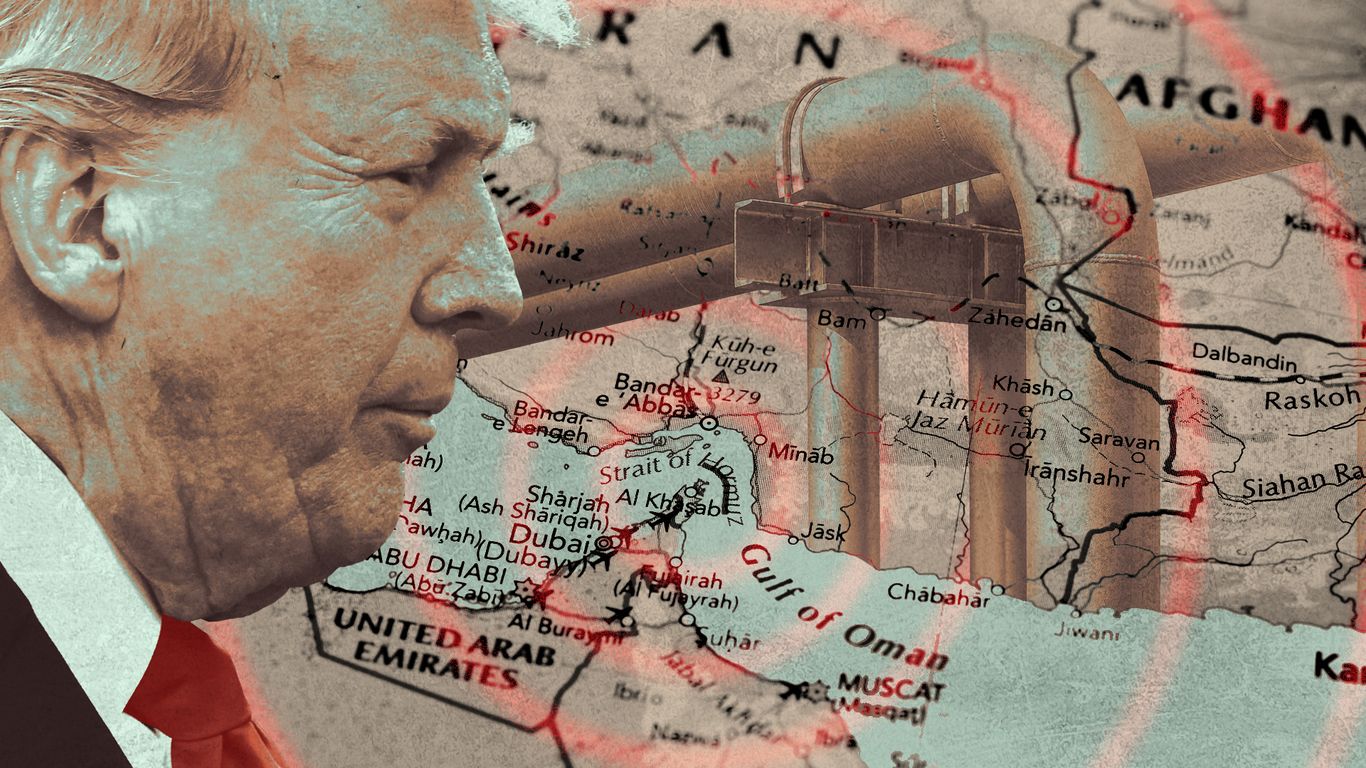
Asian stock markets mostly fell while oil prices rose due to new attacks between Iran and the United States. The conflict resumed after President Donald Trump declared the temporary ceasefire over, leading to U.S. airstrikes on Iran and Iranian attacks on nearby countries.
Key Facts
The United States launched new airstrikes on Iran.
Iran responded by firing on Bahrain, Kuwait, and Qatar.
President Donald Trump said the ceasefire with Iran is over.
Tokyo's Nikkei 225 index gained 1.6%, helped by tech stocks.
South Korea's Kospi index rose slightly 0.1% after dropping 5.4% the day before.
China's Shanghai Composite index fell 0.5%, influenced by higher inflation linked to the Iran conflict.
Oil prices increased, with Brent crude reaching around $79 per barrel, up from $72 before the Iran war.
The Strait of Hormuz remains a key route for oil transport affected by the conflict.
Read the Original
Want the full story? Tap a source to open the original
article.
UK police arrested pro-Palestine activists who blocked a factory run by UAV Engines Ltd, a British company owned by Israeli arms maker Elbit Systems. Activists say Elbit’s weapons are used in the conflict in Gaza.
Key Facts
Activists protested at a UK factory owned by UAV Engines Ltd.
UAV Engines Ltd is a subsidiary of Elbit Systems, an Israeli arms company.
Elbit Systems is one of the largest makers of drone engines worldwide.
The activists blocked access to the factory as part of their protest.
UK police arrested the activists for their actions.
Protesters claim Elbit’s weapons are used in the Israel-Gaza conflict.
The event connects to wider political tensions related to the conflict in Gaza.
Read the Original
Want the full story? Tap a source to open the original
article.
Indian Prime Minister Narendra Modi has received many foreign awards during his international visits, including some created specially for him. These awards recognize his leadership and contributions but have sometimes included errors or been criticized as focused more on his image than on diplomatic relations.
Key Facts
During a June 27-29 visit to Seychelles, Modi received a new award called “Guardian of the Blue Horizon.”
The Seychelles award certificate had spelling mistakes, including the country’s name spelled incorrectly.
Seychelles officials said the image of the certificate was a draft, not the final version.
Modi has received over 30 foreign awards during his time as India’s leader.
On a recent visit to Indonesia, he was given the country’s highest civilian award, the Bintang Adipurna.
Modi received Slovakia’s highest decoration, the Order of the White Double Cross, reserved for foreign nationals.
He was the only person to receive the Speaker of the Knesset Medal in Israel, created just before his visit.
In 2018, Modi shared the UN’s highest environmental honor, the Champions of the Earth Award, with France’s President Macron.
Read the Original
Want the full story? Tap a source to open the original
article.
President Donald Trump met Syrian President Ahmed al-Sharaa during the NATO summit in Turkey. He announced plans to remove Syria from the U.S. state sponsor of terrorism list, which will take effect in 45 days unless blocked by Congress.
Key Facts
President Donald Trump met Syrian President Ahmed al-Sharaa at the NATO summit in Turkey.
Trump said he will take Syria off the U.S. state sponsor of terrorism list.
The removal will become official after 45 days.
Congress has the power to block this decision.
The state sponsor of terrorism list identifies countries the U.S. considers to support terrorism.
Read the Original
Want the full story? Tap a source to open the original
article.
An Italian region called Calabria is allowing Cuban doctors to work in its hospitals despite pressure from the United States to end the program. Over 200 Cuban medical workers help staff hospitals in this poor southern region, improving healthcare where local doctors are scarce.
Key Facts
Calabria is the poorest region in Italy and has serious shortages of healthcare workers.
More than 200 Cuban doctors work in remote hospitals across Calabria.
Cuban doctors are known for treating patients well even with limited resources.
The U.S. government opposes Cuba’s international medical program and wants it stopped.
Some countries in the Caribbean and Central America have ended Cuban medical missions due to U.S. pressure.
Calabria’s governor refused to stop the Cuban program, saying the region depends on these doctors.
Calabria has lower wages, higher unemployment, and weaker public healthcare than northern Italy.
Cuba sent doctors to Italy during the COVID-19 pandemic, and Calabria kept them even after the pandemic ended.
Read the Original
Want the full story? Tap a source to open the original
article.
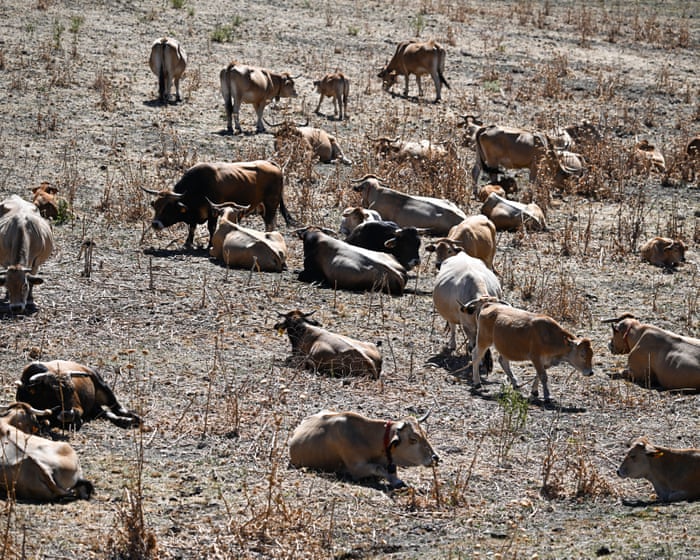
Western Europe experienced its hottest June ever, with temperatures about 3°C above average, causing three heatwaves, widespread wildfires, and record-breaking high temperatures. The EU and UK faced severe challenges, including bigger wildfires than usual and prolonged hot weather, as scientists link these events to ongoing climate change.
Key Facts
Western Europe’s June 2026 temperatures were 3.06°C above recent decade averages.
The hottest June globally was recorded in 2026, with temperatures 0.56°C higher than 1991-2020 average.
Wildfires burned 56% more land in the EU than normal, with France and Spain experiencing fires far above the usual size.
Spain’s Barcelona reached 40.5°C, setting a new local heat record.
A firefighter in France died while fighting wildfires in the Alps.
The UK faced a third heatwave in six weeks, with temperatures reaching 34°C and unusually warm nights causing poor sleep for many people.
Firefighters warn that many wildfires start from small sparks like discarded cigarettes or barbecues.
Scientists link these intense heatwaves and wildfires to climate change caused by pollution and environmental damage.
Read the Original
Want the full story? Tap a source to open the original
article.
Western Europe experienced its hottest June on record due to a strong heatwave and a weather pattern called a "heat dome." The region's average temperature was over 3°C higher than usual for the period 1991-2020, with many countries setting new temperature records. This heatwave caused health problems, drought risks, and wildfires, and experts link it to human-caused climate change.
Key Facts
Western Europe's average temperature in June 2026 was 20.74°C, the highest ever recorded for that month.
Temperatures were more than 3°C above the average from 1991 to 2020.
The heatwave was driven by a "heat dome," a high-pressure system that traps heat like a lid on a pot.
Over two-thirds of Europeans, about 410 million people, experienced temperatures above 35°C during the heatwave.
The Mediterranean Sea also had record-high water temperatures, which reduced nighttime cooling and worsened heat impacts.
The heatwave led to thousands of deaths, mainly in France, Spain, and Belgium.
Human-caused climate change made this severe heatwave much more likely and intense than past natural events.
Experts say many old European buildings were not designed for such hot weather, creating a need for better adaptation to climate change.
Read the Original
Want the full story? Tap a source to open the original
article.
Western Europe experienced its hottest June on record in 2026 due to an intense heatwave caused by a "heat dome," a high-pressure system that traps heat. This heatwave caused extreme temperatures, health problems, and thousands of deaths in several countries, highlighting the effects of climate change on the region.
Key Facts
The average temperature in Western Europe in June 2026 was 20.74°C, over 3°C higher than the 1991-2020 average.
This June was the hottest on record for Western Europe and the second hottest June globally.
The heatwave was caused by a "heat dome," a high-pressure system that traps heat like a lid on a boiling pot.
Thousands of deaths were linked to the heatwave, especially in France, Spain, and Belgium.
More than 410 million Europeans experienced temperatures above 35°C between June 15 and 30.
High humidity during the heatwave made it harder for people to find relief, even at night.
Climate change is making heatwaves more frequent, intense, and longer-lasting in Europe.
Global ocean temperatures were the highest on record for June, partly due to the developing El Niño weather pattern.
Read the Original
Want the full story? Tap a source to open the original
article.
The United States carried out new airstrikes on Iran after Iranian attacks on ships in the Strait of Hormuz ended a temporary ceasefire. In response, Iran launched attacks on Bahrain, Kuwait, and Qatar, which are Gulf Arab states and U.S. allies in the region.
Key Facts
President Donald Trump announced the end of a fragile ceasefire with Iran due to Iranian attacks on commercial ships.
The U.S. airstrikes targeted multiple military sites and port facilities in Iran early Thursday.
Iran responded by firing missiles and drones at Bahrain, Kuwait, and Qatar.
Sirens and alerts sounded in Bahrain, Kuwait, and Qatar, but no immediate damage was reported.
Kuwait's military intercepted some of the incoming Iranian attacks.
The U.S. Central Command said it struck about 90 targets in Iran, including an airport runway and missile launchers.
Iran’s Revolutionary Guard claimed responsibility for attacks on Bahrain and Kuwait.
Bahrain hosts the U.S. Navy’s 5th Fleet headquarters, making the region strategically important.
Read the Original
Want the full story? Tap a source to open the original
article.
The International Monetary Fund (IMF) has lowered its forecast for global economic growth in 2026 to 3 percent, down from 3.1 percent earlier this year. The reduction is mainly due to ongoing effects from the US-Israel war on Iran, which caused energy disruptions, even as technology investments provide some support.
Key Facts
The IMF cut the 2026 global growth forecast to 3 percent from 3.1 percent.
The energy shock caused by the US-Israel war involving Iran is slowing growth.
AI and technology investments are helping ease the slowdown somewhat.
Global growth is expected to improve to 3.4 percent in 2027.
Inflation is forecasted to rise to 4.7 percent in 2026, then fall to 3.9 percent in 2027.
The Strait of Hormuz, a key shipping route for oil, is still disrupted due to conflict risks.
Oil prices have risen following US strikes on Iran after attacks on commercial ships.
The US economy is expected to grow faster than other major advanced economies in 2026, at 2.3 percent growth.
Read the Original
Want the full story? Tap a source to open the original
article.
Jim Townsend, a former US Deputy Assistant Secretary of Defense for NATO, said he is not sure if the US would send troops to defend a NATO ally if attacked. He mentioned doubts about President Donald Trump’s approach and how this uncertainty affects the security plans of NATO allies.
Key Facts
Jim Townsend worked in the US Department of Defense on NATO matters.
He expressed uncertainty about US military support for NATO allies if attacked.
His concern relates to the policies or stance of President Donald Trump.
This uncertainty may impact how NATO allies plan their own defense.
The comments were part of a segment on Al Jazeera’s program “This is America.”
Read the Original
Want the full story? Tap a source to open the original
article.
The UK Parliament's Foreign Affairs Committee wants to have the power to reject political appointments to top diplomatic jobs after problems with Lord Peter Mandelson becoming the UK ambassador to the US. The committee criticized the process for Mandelson's appointment, saying it was not clear and lacked proper security checks before he started the role.
Key Facts
Lord Peter Mandelson was appointed as UK ambassador to the US in 2024 but was removed last year due to links with Jeffrey Epstein.
Mandelson passed Developed Vetting, a security check, after his appointment was announced but before officially starting in February 2025.
The Foreign Affairs Committee said the appointment process seemed to be created during the process, lacking clear rules.
The committee proposes that no public appointments should be made without security clearance first.
They want to hold hearings to review political ambassador appointments before they are finalized.
The committee suggests it should have veto power over appointments it finds unsuitable.
They criticized poor record-keeping by Number 10 and the Foreign, Commonwealth and Development Office (FCDO).
Recommendations include better consultation with the foreign secretary and diplomatic leaders before political ambassador appointments.
Read the Original
Want the full story? Tap a source to open the original
article.
The U.S. government is preparing for ongoing conflict with Iran over the Strait of Hormuz after a ceasefire ended. Fighting has escalated with attacks on ships and U.S. bases, raising concerns about control of this key global energy route.
Key Facts
A ceasefire between the U.S. and Iran has ended, leading to renewed clashes near the Strait of Hormuz.
President Donald Trump said the 60-day ceasefire is over following Iranian attacks on commercial ships.
The U.S. launched strikes on targets inside Iran, and Iran retaliated by attacking U.S. bases in Kuwait and Bahrain.
Iran insists it controls the Strait of Hormuz and will only allow navigation on its terms.
The Strait of Hormuz is a critical passage for global oil transportation, making its control important for world energy markets.
The U.S.-Iran memorandum of understanding required safe passage through the strait, but both sides accuse each other of breaking the deal.
U.S. officials believe there is room to increase military pressure without causing a major oil price spike.
Iran’s leadership is divided, with hardliners unhappy with the agreement’s benefits and continuing nuclear issues complicating relations.
Read the Original
Want the full story? Tap a source to open the original
article.
Iran's Revolutionary Guards fired missiles and drones at US military bases in Kuwait and Bahrain after President Donald Trump said the US-Iran ceasefire ended. The attacks followed US airstrikes on Iran, and both sides warned of further military actions.
Key Facts
Iran's Revolutionary Guards attacked US bases in Kuwait (Arifjan and Ali Al Salem) and Bahrain (Juffair and Sheikh Isa) with missiles and drones.
Kuwait's military said their air defenses intercepted hostile missile and drone attacks.
Explosions and air raid sirens were reported in Bahrain's capital following the attacks.
The US military launched airstrikes hitting 90 targets in Iran.
President Trump declared the US-Iran ceasefire "over," leading to renewed conflict.
Iran's chief negotiator said the Strait of Hormuz would only open under Iran's control.
Iran warned it would expand its responses to other US bases if attacks continue.
Israeli Prime Minister Netanyahu criticized President Trump's plan to sell F-35 jets to Turkey, citing concerns over Middle East power balance.
Read the Original
Want the full story? Tap a source to open the original
article.
June 2026 was the hottest June ever recorded in Western Europe and the second hottest worldwide, according to a report by the Copernicus Climate Change Service. This extreme heat caused deadly heatwaves, wildfires, and droughts across Europe and the United States.
Key Facts
Western Europe experienced its highest June temperatures on record in 2026.
Globally, June 2026 ranked as the second hottest June ever recorded.
Heatwaves in Europe broke monthly and all-time temperature records in several countries.
Wildfires in southern France burned over 11,000 acres, forcing about 10,000 people to evacuate.
More than 1,300 heat-related deaths were reported in Europe after June 21, with about 1,000 excess deaths in France, mainly among elderly people.
Average temperatures in Western Europe were nearly 5.5°F above the 1991-2020 average.
High sea surface temperatures in the tropical Pacific reflect an active El Niño, which is expected to influence global weather and increase the risk of extreme events.
El Niño may cause more flooding along the U.S. West and East Coasts in the coming months, even without storms.
Read the Original
Want the full story? Tap a source to open the original
article.