Neutral summaries of your favorite news sources — just the facts.
Your favorite news sources, one neutral feed — we distill their reporting into fact-first
summaries and always link to the original story. How it works
World News
Comprehensive coverage of international news and global events
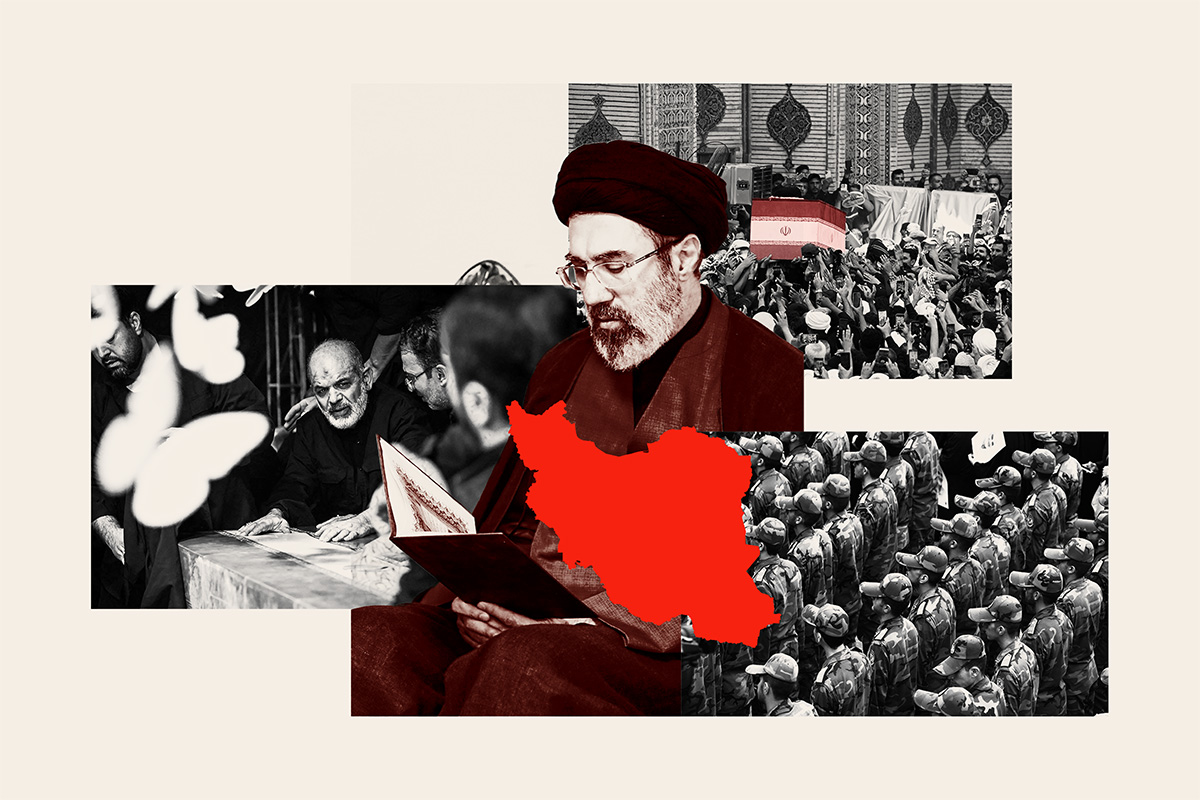
Iran is burying its longtime Supreme Leader Ayatollah Ali Khamenei following his death in an attack. His son, Mojtaba Khamenei, now leads the country with a collective leadership, including the powerful Islamic Revolutionary Guard Corps, shaping a new version of Iran’s ruling system.
Key Facts
Ayatollah Ali Khamenei, Iran’s Supreme Leader for 37 years, was killed in an attack.
Mojtaba Khamenei, his son, is the new Supreme Leader but has not been publicly seen since the attack.
A collective leadership, including political groups and the Islamic Revolutionary Guard Corps (IRGC), shares power in Iran.
Mojtaba Khamenei is expected to maintain strong control and enforce key rules without formally sharing much power.
Past leader Khamenei allowed some reformist political participation; the new leader seems stricter with limits.
The U.S. has interfered in Iran’s domestic affairs, complicating efforts to build national consensus.
Public opinion in Iran matters, but the government uses security forces to control protests and dissent.
Read the Original
Want the full story? Tap a source to open the original
article.
Great Britain’s energy system operator warned that high temperatures during a heatwave could strain power supplies on Thursday night. They asked power generators for extra electricity because many people will use fans and air conditioners. Meanwhile, France is also facing challenges as its nuclear power plants may reduce output due to hot river water needed for cooling.
Key Facts
Great Britain is experiencing its third heatwave of the year with temperatures reaching up to 34°C in parts of southern England.
The National Energy System Operator (Neso) requested extra electricity generation to meet higher demand caused by increased use of cooling devices.
This heatwave follows a record-breaking June heatwave when temperatures hit 37.7°C in Norfolk.
Neso said the electricity system has tight margins but assured there is no risk of power outages for customers.
Higher costs may occur as Neso may pay more to gas power plants to secure enough electricity.
France’s EDF nuclear power plants might reduce electricity output because hot river water limits their cooling ability.
Western Europe is facing its third heatwave in six weeks, causing wildfires in France and Spain, burning large areas of forest.
The heatwaves and power challenges affect multiple European countries, including electricity exports between France, the UK, and Germany.
Read the Original
Want the full story? Tap a source to open the original
article.
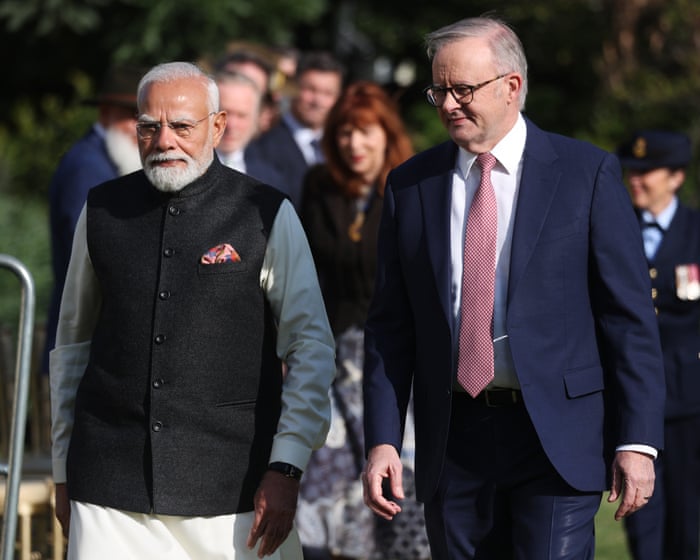
Australia and India have agreed for Australia to sell uranium to India for peaceful uses, ending a long delay caused by concerns over weapons use. The deal was announced by the two prime ministers after a meeting in Melbourne, but details on quantities and timing were not shared.
Key Facts
Australia will sell uranium to India for peaceful purposes like nuclear power.
The agreement was signed by Australian Prime Minister Anthony Albanese and Indian Prime Minister Narendra Modi.
Uranium exports to India were delayed since a 2014 agreement, mainly due to fear it might be used for weapons.
Australia has the world’s largest uranium resources but does not use it for nuclear power or weapons itself.
India aims to produce 100 gigawatts of nuclear power by 2047 to power millions of homes.
India is not part of the Nuclear Non-Proliferation Treaty, which limits uranium sales from countries like Australia to signatories.
The Nuclear Suppliers Group gave India a waiver in 2008 to buy uranium, allowing deals with countries like Canada and now Australia.
Australia’s previous position required India to join the treaty, but this has recently changed, allowing uranium trade without treaty membership.
Read the Original
Want the full story? Tap a source to open the original
article.
The UK Labour Party is holding a leadership election after Prime Minister Keir Starmer announced his resignation. Andy Burnham, former mayor of Greater Manchester, is expected to be the only candidate and likely to become the next UK prime minister.
Key Facts
Keir Starmer will resign as UK prime minister once his successor is chosen.
Andy Burnham is collecting signatures from Labour MPs to run for leader and needs at least 80.
Other potential candidates, including former Defense Minister Al Carns, have decided not to run.
Nominations close on July 16, and Burnham is expected to win and meet King Charles III on July 20 to be appointed prime minister.
Burnham was mayor of Greater Manchester for nearly 10 years and recently returned to Parliament.
He plans to invest in transport, housing, and infrastructure to boost the UK economy, calling this approach "Manchesterism."
Burnham promises to continue current foreign policies, supporting NATO, the UK’s nuclear deterrent, the United States, and Ukraine.
The UK faces challenges like slow economic growth, weak public services, and cost-of-living issues.
Read the Original
Want the full story? Tap a source to open the original
article.
Ayatollah Ali Khamenei, Iran’s supreme leader for more than 30 years, was killed in Israeli strikes and laid to rest amid large funeral processions. His death highlights deep divisions within Iranian society, with some supporting his hard-line rule and others opposing decades of repression and economic problems.
Key Facts
Khamenei ruled Iran from 1989 until his death in early 2026.
He was killed by Israeli strikes on February 28, 2026.
Large crowds of supporters attended his funeral in Tehran and other cities.
Hard-line supporters praised him as a defender of Iran against the West and Israel.
Many Iranians are unhappy with years of repression, sanctions, and economic hardship under his leadership.
Thousands of anti-government protesters were killed in January before his death.
Some mourners at the funeral called for revenge against U.S. President Donald Trump.
Khamenei strengthened Iran’s nuclear program and regional militant alliances during his rule.
Read the Original
Want the full story? Tap a source to open the original
article.
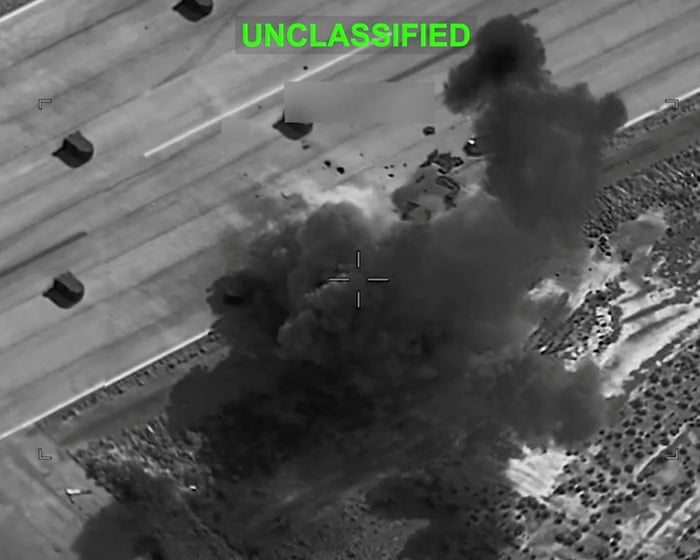
The US military struck 170 targets in Iran over two nights, aiming to reduce Iran’s ability to attack ships in the Strait of Hormuz. Iran responded with attacks on US bases in the region, increasing tensions and putting an interim truce at risk. President Donald Trump said the agreement with Iran is "over" and warned of possible further actions.
Key Facts
The US hit 170 Iranian targets in 48 hours to stop attacks on commercial ships near the Strait of Hormuz.
Iranian state media reported explosions mainly in southern cities after the US strikes.
Iran retaliated by attacking US military bases in Bahrain, Kuwait, and Qatar.
These exchanges threaten the temporary truce between the US and Iran.
President Donald Trump said the US-Iran agreement is finished and expressed unwillingness to negotiate.
Iran's top negotiator said Iran would control the Strait of Hormuz without US threats.
Iranian health officials reported 14 people killed and 78 injured from recent US attacks.
The attacks occurred while Iranians were preparing for the burial of their late supreme leader Ali Khamenei.
Read the Original
Want the full story? Tap a source to open the original
article.
Irish police are investigating the death of an American woman, Jamey Carney, found dead in her home in Killarney, Ireland. The case was changed to a murder inquiry, and authorities are searching for a man they consider an important person of interest.
Key Facts
Jamey Carney, 43, originally from Westchester County, New York, lived in Killarney since 2021 with her 13-year-old daughter.
She was found dead in her rented home on Tuesday after suffering head injuries in an attack.
Police upgraded the investigation to a murder inquiry after examining her body.
Authorities are looking for a man described as a “person of significant interest” but have not shared details about him.
Irish police have warned border and airport officials that this person may try to leave Ireland, possibly to the UK.
The U.S. State Department confirmed the death and is supporting Carney’s family with consular help.
The investigation and search are ongoing.
Read the Original
Want the full story? Tap a source to open the original
article.
Tropical Storm Maysak caused severe flooding in southern China, killing 39 people mainly due to a dam breaking in the city of Nanning. Authorities have evacuated about 130,000 people and are conducting rescue operations using boats and drones.
Key Facts
The dam breach in Nanning caused 26 of the 39 deaths reported.
Heavy rain from the storm caused reservoirs to overflow and led to flooding across Guangxi region.
About 130,000 people were evacuated to safer areas.
Rescue teams deployed over 8,000 people and nearly 5,700 boats to help reach trapped residents.
Rainfall reached up to 90 cm (35 inches) in some places over several days.
Floodwaters are going down but more rain is expected in the next two days in some areas.
More than 60,000 homes have had electricity restored after repairs.
At least 100 zoo animals escaped in Guangxi province after flooding damaged their enclosures; authorities warn people to keep distance from these animals.
Read the Original
Want the full story? Tap a source to open the original
article.
Israeli air attacks and gunfire have killed at least nine Palestinians in Gaza, including children. Despite a declared ceasefire, violence continues, and many Palestinians have died since the ceasefire began in October.
Key Facts
Israeli air raids and gunfire killed nine Palestinians, including two children, in Gaza.
One person died near a school in Gaza City during an Israeli air attack.
A shelter for displaced people in Khan Younis was hit, killing four, including a 10-year-old child.
A six-year-old boy was killed by Israeli gunfire in the Zeitoun neighborhood of Gaza City.
Two other attacks in Gaza City killed three people and injured several others.
A ceasefire is in place but has not stopped the violence in Gaza.
Since the ceasefire started in October, at least 1,084 Palestinians have died in Gaza.
The final agreement to end the conflict has not yet been reached.
Read the Original
Want the full story? Tap a source to open the original
article.
South Korea’s Supreme Court confirmed a seven-year prison sentence for former president Yoon Suk Yeol. He was convicted of crimes related to his failed 2024 martial law declaration, including obstructing government processes and using forged documents.
Key Facts
The Supreme Court upheld Yoon’s seven-year sentence tied to his 2024 martial law declaration.
Charges included obstructing cabinet meetings, forging the prime minister’s signature, and blocking his own arrest.
Yoon is already in detention appealing a separate life sentence for leading an insurrection linked to the martial law order.
Prosecutors originally wanted a 10-year sentence; a lower court gave 5 years, later raised to 7 years on appeal.
Martial law lasted about six hours before lawmakers voted to nullify it, causing protests and market turmoil.
Yoon claimed his actions were for public safety and to counter threats from North Korea.
In a separate case, Yoon received a 30-year sentence for sending drones into North Korea to create a crisis.
Yoon was removed from office in April 2025, and his political party lost power in the following election.
Read the Original
Want the full story? Tap a source to open the original
article.
South Korea’s Supreme Court confirmed a seven-year prison sentence for former President Yoon Suk Yeol for actions related to his brief martial law declaration in 2024. The court found Yoon guilty of bypassing cabinet procedures, falsifying official documents, and resisting arrest after his impeachment.
Key Facts
The Supreme Court upheld an earlier court ruling that sentenced Yoon to seven years in prison.
Yoon declared martial law in December 2024 without proper cabinet approval.
He falsified the martial law proclamation and later destroyed the document.
Yoon used presidential security forces to block law enforcement from arresting him.
Martial law lasted only hours before lawmakers repealed it by breaking a blockade at the National Assembly.
The Constitutional Court removed Yoon from office in April 2025 due to illegal procedures in declaring martial law.
Yoon is also facing a life sentence for rebellion and a 30-year sentence for ordering drone flights near North Korea meant to increase tensions.
The brief martial law caused political instability, affected diplomacy, and unsettled financial markets.
Read the Original
Want the full story? Tap a source to open the original
article.
A Dutch museum reopened a famous artwork called the "Peanut Butter Floor" in honor of Wim T. Schippers, a Dutch artist who died recently. The artwork, made by spreading a thick layer of peanut butter on the museum floor, will be on display for two months.
Key Facts
Wim T. Schippers was a Dutch artist who passed away last month at age 83.
The "Peanut Butter Floor" was first created by Schippers in 1969 as part of a series involving unusual floor coverings.
The artwork involves spreading about 800 pounds of smooth peanut butter over a 25-square-meter floor space.
The peanut butter was spread to a thickness of about 2 centimeters using drywall trowels.
This is the third time the piece has been displayed, with previous shows in 1997 and 2011.
The peanut butter was donated by a Dutch brand called Calvé.
The artwork is known for its strong peanut butter smell inside the museum.
Visitors have interacted with the piece in the past, sometimes stepping into it or adding bread and chocolate sprinkles as a prank.
Read the Original
Want the full story? Tap a source to open the original
article.
Heavy monsoon rains caused landslides in Rohingya refugee camps in Cox’s Bazar, Bangladesh, killing at least 13 refugees, including five children. Authorities used loudspeakers and volunteers to move people from dangerous areas to safer places and evacuated over 1,000 refugees from the risky hills.
Key Facts
Landslides at Rohingya refugee camps in Cox’s Bazar killed at least 13 people in recent days.
Five children died when a landslide hit an Islamic school at the camp.
Refugees began rescue efforts before emergency services arrived.
Authorities relocated more than 1,000 refugees from dangerous hilly areas.
Refugees often hesitate to leave their temporary homes despite warnings.
Bangladesh’s weather office predicts continued heavy rain in the coming days.
Local media reported 22 landslide-related deaths in Bangladesh over three days.
Bangladesh has requested international help to start sending refugees back to Myanmar, but this process is currently stalled.
Read the Original
Want the full story? Tap a source to open the original
article.
Flooding caused by Tropical Storm Maysak in southern China has killed 39 people, mostly due to a dam breaking in Nanning city. The storm brought heavy rain, flooding towns and causing damage, with large rescue efforts ongoing to help those affected.
Key Facts
Tropical Storm Maysak caused flooding in southern China’s Guangxi region.
A dam in Nanning city broke, leading to 26 deaths.
The total death toll from the flooding is 39 people.
Some areas received up to 90 centimeters (35 inches) of rain.
Around 130,000 people were evacuated to safer places.
Rescue teams used drones and 5,700 boats to reach stranded people.
Over 8,000 rescue workers are involved in the relief efforts.
Floodwaters are going down, but more rain is expected in the coming days.
Repairs on roads and power have been made, restoring electricity to over 60,000 homes.
Read the Original
Want the full story? Tap a source to open the original
article.
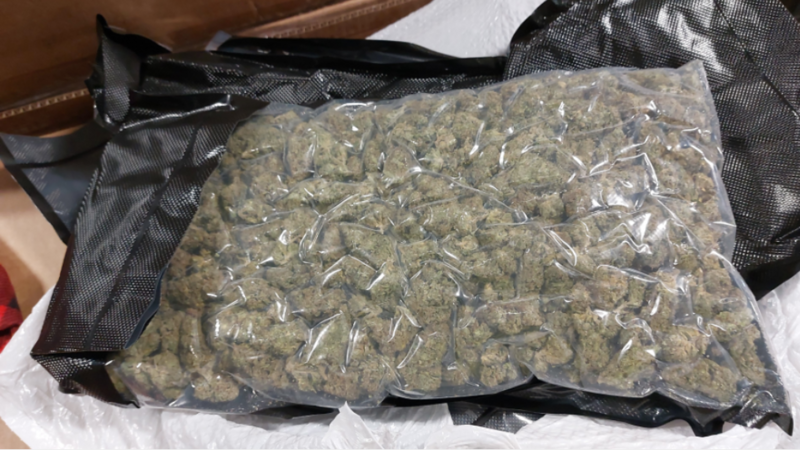
The UK and Thailand are working together to stop a big increase in cannabis smuggling from Thailand to the UK. New strict penalties in Thailand include fines and possible jail time for anyone caught trying to fly cannabis out of the country.
Key Facts
There has been a sharp rise in cannabis smuggling from Thailand to the UK, especially to northern England.
The UK’s National Crime Agency (NCA) is cooperating with Thai authorities and the UK Home Office to fight this problem.
Anyone caught carrying cannabis out of Thailand must pay a fine of about £68 per kilogram to Thai Customs.
If the fine is not paid, the person faces up to two years in jail in Thailand.
In the first half of 2026, 600 drug couriers were caught at UK airports.
The average smuggler carries about 26 kg (57 pounds) of cannabis.
In 2024, UK Border Force seized over 167,000 kg of cannabis, worth an estimated £2 billion.
The UK Foreign Office has updated travel advice for Thailand to warn about the new penalties for smuggling.
Read the Original
Want the full story? Tap a source to open the original
article.
Justin Baldoni and his wife Emily spoke publicly for the first time in nearly two years about their ongoing legal dispute with actress Blake Lively. They said they are healing and grateful, even though the legal battle has been difficult, and they are focusing on their family and recovery.
Key Facts
Justin Baldoni and Blake Lively were involved in a legal dispute related to the 2024 film "It Ends With Us."
Much of Lively’s case, including sexual harassment claims, was dismissed by a federal judge, but a retaliation claim against Baldoni’s PR team was allowed to continue.
Baldoni’s company, Wayfarer Studios, and Lively agreed to settle the case but are still in court over legal fees.
Baldoni and his wife had not spoken publicly about the case until they posted a joint video on Instagram.
They chose not to comment earlier to let the legal process play out without adding to public noise.
The couple expressed gratitude and said they are healing from the experience, even though it has been painful.
Lively’s lawyers recently claimed in court that Baldoni’s company owes over $7 million in attorneys’ fees related to a dismissed defamation lawsuit.
The Baldonis plan to focus on their family and continue the healing process.
Read the Original
Want the full story? Tap a source to open the original
article.
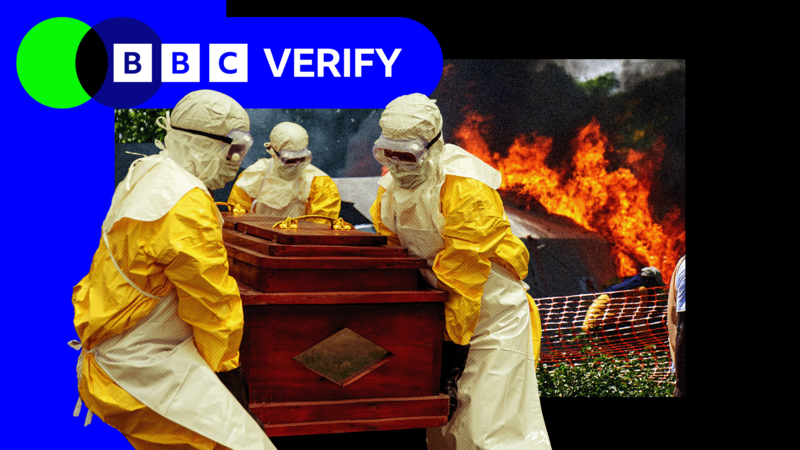
In eastern Democratic Republic of Congo, misinformation about Ebola is causing attacks on health workers and treatment centers. False rumors claim Ebola does not exist or that health workers have harmful intentions, which makes it harder to control the outbreak. Safe burial practices, important to stop the disease spread, face resistance due to these false beliefs.
Key Facts
Over 1,700 people have been infected and 580 have died in the current Ebola outbreak in DR Congo since mid-May.
Health workers trying to conduct safe burials have been attacked, including an incident where four Red Cross volunteers were hurt.
Misinformation includes claims that Ebola is fake, that health workers infect people on purpose, or that the Ebola response is a money scam.
At least 12 violent incidents linked to resistance against Ebola control have been documented, including attacks on treatment centers.
A treatment center was set on fire on 1 July in Bafwabango, with clashes resulting in a police officer's death.
Ebola spreads through direct contact with bodily fluids, and bodies remain infectious after death, making safe burials critical.
No approved vaccine or treatment exists yet for the Bundibugyo species causing this outbreak, but trials for treatments have begun.
Funeral practices involving touching the deceased can spread Ebola, so alternatives have been promoted, but cultural traditions and mistrust complicate acceptance.
Read the Original
Want the full story? Tap a source to open the original
article.
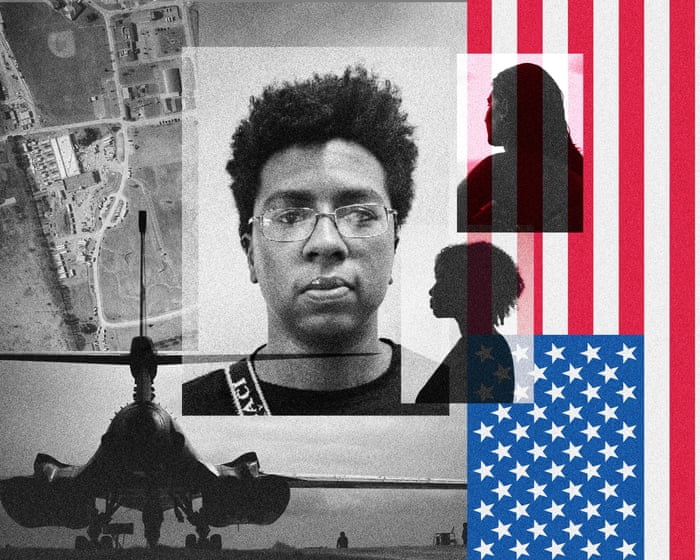
Two British women accused a US airman stationed at RAF Lakenheath in England of sexual assault and rape. Instead of being tried by a British court, the airman was prosecuted in a US military court and was convicted of sexual assault on one woman but acquitted on other charges.
Key Facts
Rebecca reported to police in England that a US airman raped her in June 2020.
The police handed the case over to the US Air Force, so the airman was tried in a military court in England, not in a British court.
The airman, Tyrion Davis, was convicted of sexually assaulting his estranged wife, Emily, but acquitted of other charges.
Both women described traumatic experiences during the investigation and trial process.
Rebecca discovered that the military jury was made up entirely of the airman’s military peers, not regular civilians.
Davis worked at RAF Lakenheath, an American airbase in rural Suffolk, England.
The legal process for US military personnel in the UK can differ significantly from normal British criminal rule.
Both women’s names were changed to protect their privacy.
Read the Original
Want the full story? Tap a source to open the original
article.
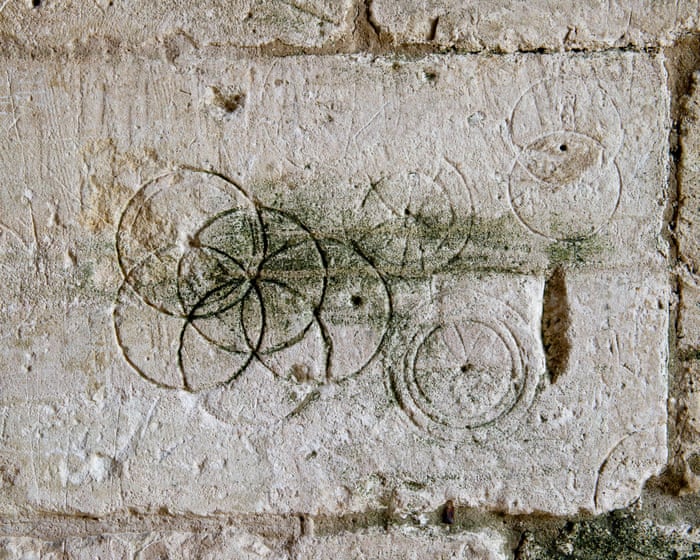
A leading architectural historian, Jennifer Alexander, says there is no proof that marks found on old English buildings are related to witches or magic. Instead, these symbols are likely practical marks made by stonemasons training apprentices and organizing work.
Key Facts
English Heritage and Historic England have identified many marks on historic buildings as "witches’ marks" or ritual protection symbols.
Jennifer Alexander, a professor at Warwick University, says these marks are actually practice designs for stonemason training.
Daisy wheels (also called hexafoils) are common symbols made by apprentices learning to use compasses on stone.
Some marks thought to be magical are practical geometry exercises or mason’s ciphers used to organize building work.
English Heritage found many such marks at Gainsborough Old Hall, describing them as ritual symbols, but this view is disputed.
Historic England has encouraged the public to find witches’ marks but notes different theories about their meaning.
Alexander states that marks like overlapping Vs or letters are practical signs used to help build structures, not magical symbols.
While some symbols might serve to ward off evil, the majority of these marks relate to construction processes.
Read the Original
Want the full story? Tap a source to open the original
article.
Australian Prime Minister Anthony Albanese is set to sign a significant uranium deal with India during Indian Prime Minister Narendra Modi’s visit to Australia. Modi will address around 30,000 Indian-Australian community members in Melbourne, highlighting strong ties between the two countries.
Key Facts
Australia and India are preparing to finalize a major uranium agreement, ending years of shipment delays.
The two countries signed a civil nuclear deal in 2014, but shipments were paused due to concerns about uranium use in weapons.
Modi’s visit to Australia includes a speech to a large crowd of 30,000 Indian-Australians at Melbourne’s Marvel Stadium.
Prime Minister Albanese praised Modi and business leaders for improving Australia-India relations in recent years.
Modi is a popular figure among the Indian diaspora in Australia, attracting significant attention during his visit.
Some human rights groups criticize Modi’s government for issues like restrictions on journalists and minority targeting in India.
Security concerns arose, including a death threat against Modi and a far-right protester being removed from his hotel.
The visit aims to boost trade, education, and economic connections between Australia and India.
Read the Original
Want the full story? Tap a source to open the original
article.