Neutral summaries of your favorite news sources — just the facts.
Your favorite news sources, one neutral feed — we distill their reporting into fact-first
summaries and always link to the original story. How it works
World News
Comprehensive coverage of international news and global events
The United Nations weather agency warns that the El Nino weather pattern is already happening and will likely get stronger between July and September. This could cause extreme weather like heatwaves, droughts, and heavy rain in many parts of the world.
Key Facts
The World Meteorological Organization (WMO) says El Nino has started and will intensify soon.
El Nino usually peaks between November and February.
The WMO has set up warning systems to help governments and aid groups prepare.
El Nino warms the surface of the Pacific Ocean and changes weather worldwide.
It happens every 2 to 7 years and lasts about 9 to 12 months.
El Nino cycles with La Nina as part of the ENSO weather cycle.
Global ocean temperatures reached a new high in June, partly due to El Nino.
The last El Nino helped make 2023 the second-hottest year and 2024 the hottest since the 1800s.
Read the Original
Want the full story? Tap a source to open the original
article.
President Donald Trump called it "ridiculous" for the U.S. to keep giving more support to NATO than other member countries. He said Europe should take charge of its own defense and criticized allies for not helping the U.S. enough, especially about the war in Iran. A NATO meeting in Turkey is planned soon to discuss these issues.
Key Facts
President Trump said the U.S. has a "one sided" relationship with NATO, meaning the U.S. pays more than others.
He posted on Truth Social that NATO countries "were not there for us."
Trump has criticized European allies for limiting U.S. military base use during the Iran conflict.
He suggested the U.S. might leave NATO, but Congress must agree first.
NATO members agreed last year to increase defense spending to 5% of their economies by 2035.
The NATO summit will take place in Ankara, Turkey, with 32 member states attending.
NATO was created in 1949 to protect Europe and maintain U.S. influence in world security.
The U.S. spends much more on NATO than other member countries, shown in a chart shared by Trump.
Read the Original
Want the full story? Tap a source to open the original
article.
Last week, western Europe experienced a heatwave that broke many June and all-time temperature records, with countries like the UK, Germany, Netherlands, and Hungary reaching unusually high temperatures. Meanwhile, north-western China is undergoing a week-long heatwave with temperatures above 45°C, causing health warnings and risks to infrastructure.
Key Facts
The UK reached 37.7°C in Norfolk on 27 June, breaking its June record by 2.1 degrees.
Germany recorded 41.7°C on 28 June, surpassing its previous all-time record three days in a row.
The Netherlands set a new June high of 39.4°C on 26 June.
Hungary hit 42°C in Szécsény on 30 June, breaking its all-time temperature record.
Tropical nights, where temperatures stay above 20°C overnight, were widespread in these countries, with a high minimum temperature of 29.4°C in East Saxony, Germany.
France had multiple days above 40°C, causing some nuclear power plants to shut down.
North-western China is experiencing temperatures around 45-47°C, with extreme heat warnings and risks of heatstroke, fires, and damage to roads and railways.
Local authorities in China advise reducing outdoor work, caring for vulnerable people, and implementing fire prevention.
Read the Original
Want the full story? Tap a source to open the original
article.
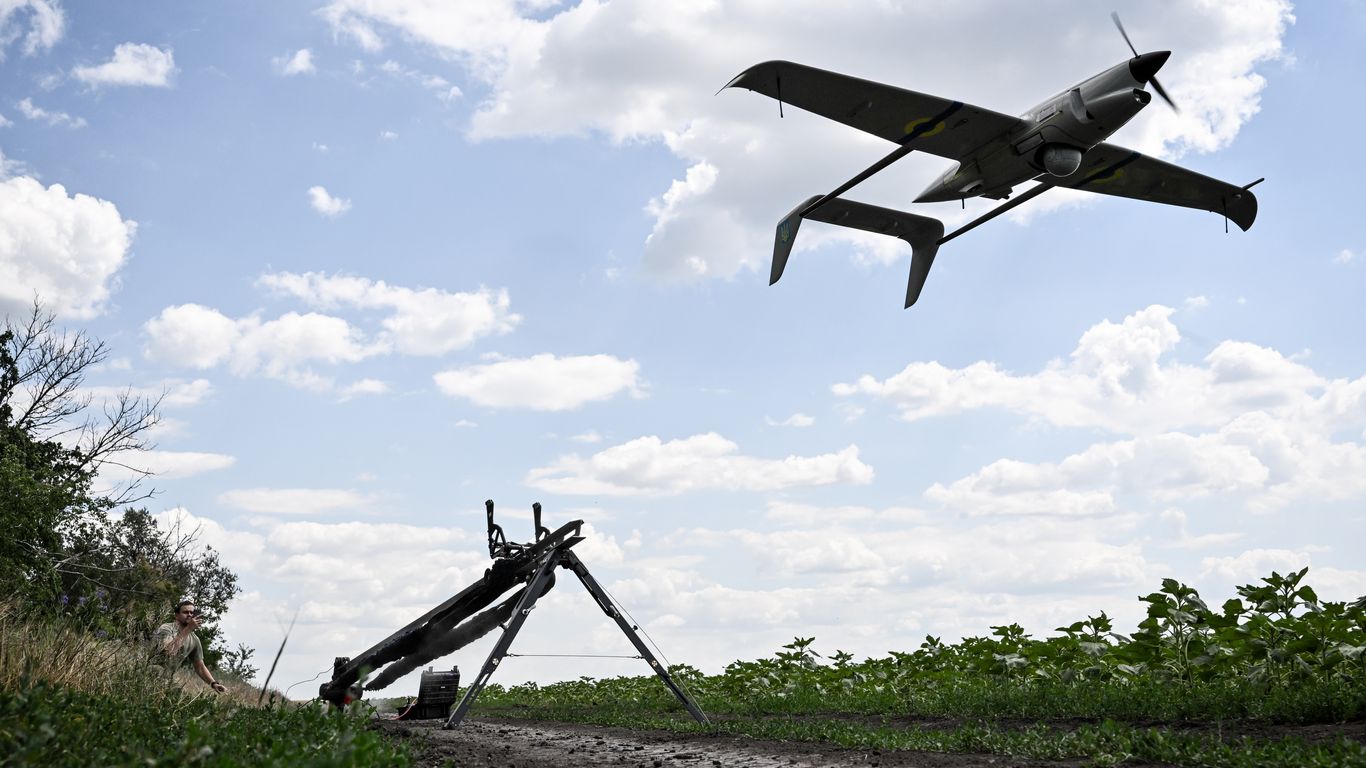
The Ukrainian military has increased its ability to strike targets deep inside Russia, hitting oil refineries, weapons factories, and other key sites. These attacks have caused fuel shortages and disruptions in Russia, while Russian forces continue heavy attacks in Ukraine, particularly around Kyiv and Donetsk.
Key Facts
Ukraine is striking targets far inside Russia, including major cities like Moscow and St. Petersburg.
Russian fuel refineries have been repeatedly hit, causing fuel shortages and explosions visible to civilians.
Russia has moved many air defenses to protect key areas, leaving other targets more vulnerable.
Ukraine uses domestically made drones and modified missiles for these attacks, instead of relying on planes.
Russian President Putin has admitted to supply problems caused by the strikes but downplayed their impact.
Russia has suffered about 1.4 million battlefield casualties since the 2022 invasion of Ukraine.
Russian forces continue heavy shelling and attacks on Ukrainian cities, resulting in civilian deaths.
Ukraine’s President Zelensky announced a 40-day campaign aiming to pressure Russia to negotiate peace.
Read the Original
Want the full story? Tap a source to open the original
article.
A former European Parliament member and Greek journalist, Stelios Kouloglou, was hacked multiple times with Pegasus spyware while investigating the use of this spyware in the EU. A research group called Citizen Lab found the infections happened during Kouloglou’s work on a committee examining illegal surveillance.
Key Facts
Stelios Kouloglou served as a Member of the European Parliament (MEP) from 2015 to 2024.
Kouloglou’s iPhone was infected at least three times with Pegasus spyware in 2022 and 2023.
The infections occurred while Kouloglou worked on the PEGA Committee investigating illegal use of Pegasus spyware.
Pegasus spyware is developed by the Israeli company NSO Group and can take full control of a phone remotely.
Pegasus has been used to spy on journalists, lawyers, activists, and politicians worldwide.
Citizen Lab did not identify who was behind the hacks but found no evidence implicating the Greek government.
The spyware compromises confidential discussions and parliamentary matters related to the Pegasus investigations.
NSO Group claims it sells Pegasus only to vetted law enforcement agencies and denies responsibility for abuses.
Read the Original
Want the full story? Tap a source to open the original
article.
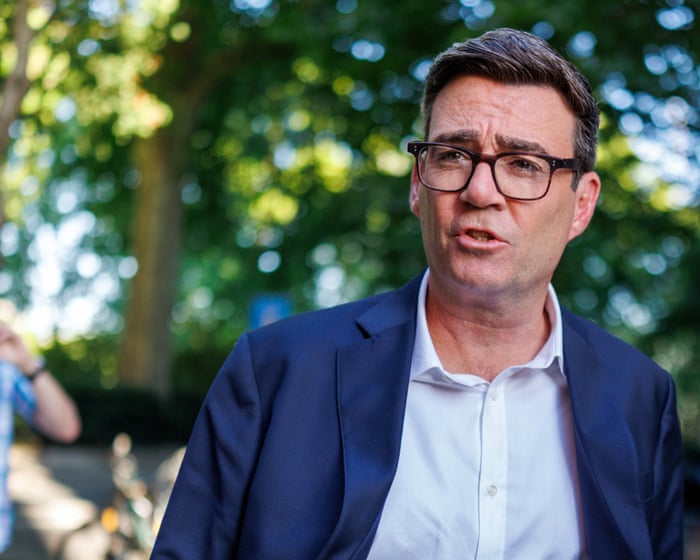
Andy Burnham, a leading candidate to replace UK Prime Minister Keir Starmer, said there is some flexibility in the Labour Party’s tax plans. He wants to raise business taxes on warehouses to cut taxes for small high street businesses like pubs and shops, and plans to help with cost of living by lowering water and energy costs.
Key Facts
Andy Burnham is running to succeed UK Prime Minister Keir Starmer.
He said the Labour manifesto’s promises on not raising income tax, VAT, or personal national insurance contributions will be kept.
Burnham suggested raising business rates on warehouses and large developments outside cities.
He wants to reduce or remove business rates for pubs and small high street businesses.
His goal is to support businesses like bars, restaurants, coffee shops, and hairdressers.
Burnham plans to lower water and energy costs by taking some companies back into public ownership.
He proposes free bus travel for 16- to 18-year-olds.
Burnham will take public questions in a Reddit “Ask Me Anything” session.
Read the Original
Want the full story? Tap a source to open the original
article.
The Egyptian community in Astoria, Queens, New York City, is coming together to celebrate the World Cup. At Kabab Cafe, owner Ali El Sayed shares traditional Egyptian food and supports community pride during the event.
Key Facts
The World Cup is a global soccer tournament.
Astoria, Queens, is home to a large Egyptian community, known as "Little Egypt."
Kabab Cafe is a restaurant in Astoria that serves traditional Egyptian dishes.
Owner Ali El Sayed uses the cafe to maintain Egyptian culinary traditions.
The World Cup event helps bring the Egyptian community closer.
Food and soccer are central parts of the celebration in this community.
The celebration highlights cultural pride among Egyptian Americans in New York.
Read the Original
Want the full story? Tap a source to open the original
article.
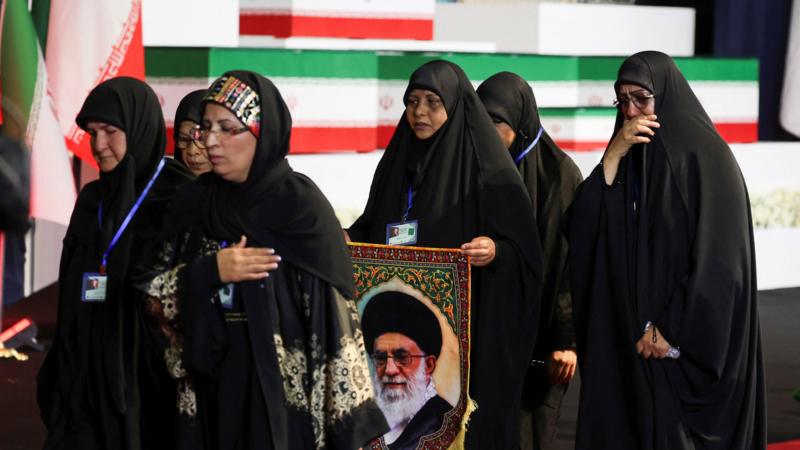
More than 100 countries are expected to send representatives to the funeral of former Iranian Supreme Leader Ali Khamenei, who was killed on February 28. The funeral events will last a week, taking place in Iran and Iraq, with various ceremonies and processions planned.
Key Facts
Khamenei died at age 86 in a U.S.-Israeli air strike on February 28.
The funeral starts on a Friday in Tehran and continues for seven days with ceremonies in multiple cities.
The coffin will be displayed publicly in Tehran and later moved to Qom, then to Iraq, and finally buried in Mashhad, Khamenei’s birthplace.
Leaders attending include Pakistan’s Prime Minister Shehbaz Sharif, Tajikistan’s President Emomali Rahmon, and Armenia’s Prime Minister Nikol Pashinyan.
Other senior officials attending are Turkey’s Vice President Cevdet Yilmaz, India’s deputy foreign minister and state governor, China’s senior lawmaker He Wei, and Russia’s Deputy Security Council Chairman Dmitry Medvedev.
The Taliban’s Foreign Minister and other Afghan leaders also plan to attend.
Pakistan helped mediate peace talks between the U.S. and Iran in recent months.
Read the Original
Want the full story? Tap a source to open the original
article.
A study from Japan found that older adults with lower vitamin C levels in their blood tend to have less gray matter and weaker brain connections linked to memory and attention. This research suggests that diet and lifestyle might play a role in brain health as people age.
Key Facts
The study involved 2,044 Japanese adults over 64 years old.
Researchers used MRI scans and blood tests to measure brain structure and vitamin C levels.
Lower vitamin C was connected to reduced gray matter, which contains brain cells important for memory and decision-making.
Weaker connectivity was found in the brain’s default mode network, a system involved in memory and attention.
The study cannot prove that vitamin C causes these brain changes, only that there is a link.
Experts suggest lifestyle factors like diet, sleep, and exercise together help maintain brain health.
The researchers recommend more studies over time and with diverse groups to understand the effects better.
Early brain changes related to diseases like Alzheimer's may start well before symptoms appear.
Read the Original
Want the full story? Tap a source to open the original
article.
A strike from Ukraine caused a large fire near a power plant in Belgorod, Russia. The attack killed one woman and damaged the energy system, which led to power and water outages.
Key Facts
The strike happened in the Belgorod region of Russia.
A fire broke out near a power facility after the strike.
Russian officials reported one woman was killed.
The energy infrastructure was damaged by the attack.
The damage caused power and water service to stop in the area.
Videos of the fire were shared on the internet.
Russian authorities attributed the strike to Ukraine.
Read the Original
Want the full story? Tap a source to open the original
article.
A 52-year-old man died after setting himself on fire outside the United Nations building in New York while holding a Tibetan flag. Police found him with severe burns, and an investigation is ongoing. He was identified by a pro-Tibet group as Lobga Rangzen, who worked to raise awareness about human rights issues in Tibet.
Key Facts
The man set himself on fire around 6:30 pm near the UN headquarters in New York.
He was seriously burned and taken to a hospital, where he died.
Police have not confirmed his identity or motive, but activists say he was a pro-Tibet campaigner.
Lobga Rangzen was named by the International Campaign for Tibet as the deceased man.
Rangzen opposed China’s new law aiming to promote ethnic unity, which critics say harms ethnic minorities like Tibetans and Uighurs.
Over 150 Tibetans have self-immolated from 2009 to 2022 as a form of protest.
China claimed Tibet has been part of its territory for centuries and sent troops there in 1950.
The Dalai Lama, Tibet’s spiritual leader, lives in exile in India and promotes peaceful dialogue for Tibet’s autonomy.
Read the Original
Want the full story? Tap a source to open the original
article.
A passenger bus fell into a deep ravine in southwestern Pakistan, killing 40 people and injuring at least eight others. The bus lost control while traveling from Quetta to Peshawar, and it was overcrowded because it also carried passengers from a broken-down bus.
Key Facts
The bus crashed into a ravine about 70 to 80 feet deep in the Dana Sar area.
The accident happened early on Friday in a mountainous, remote region near the border of Balochistan and Khyber Pakhtunkhwa provinces.
Officials confirmed 40 people died and at least 8 were injured.
The bus was carrying its own passengers plus extra passengers from another bus that had broken down.
Emergency teams are working to identify the victims.
Pakistan’s President Asif Ali Zardari expressed sorrow and sent condolences to the victims’ families.
Rescue efforts are ongoing in the difficult terrain.
Read the Original
Want the full story? Tap a source to open the original
article.
A passenger bus carrying too many people crashed into a ravine in southwestern Pakistan early Friday, killing 40 people and injuring eight. The accident happened near the border of Balochistan and Khyber Pakhtunkhwa provinces, and both local leaders expressed sorrow and called for medical aid for the injured.
Key Facts
The bus lost control and fell into a rocky ravine in Dana Sar, Pakistan.
It was overcrowded because it also had passengers from another bus that had broken down.
Forty people died and eight were injured in the crash.
Rescue teams are working to identify the victims.
Pakistan’s President Asif Ali Zardari offered condolences and urged good medical care for the injured.
Balochistan Chief Minister Sarfraz Bugti also expressed grief and ordered medical aid.
Road accidents are common in Pakistan due to poor roads, weak traffic law enforcement, and unsafe driving.
A similar deadly accident happened in May when a minibus hit a parked bus, killing 17 people.
Read the Original
Want the full story? Tap a source to open the original
article.
France supported the American colonies in their fight for independence from Britain due to a long-standing rivalry with Britain and the desire to weaken its opponent. This support was influenced by both political goals and shared Enlightenment ideas, not just sympathy for the American cause.
Key Facts
On July 4, 1776, 13 British colonies declared independence, forming the United States.
King Louis XVI of France saw the American rebellion as a chance to hurt Britain, a major rival.
France and Britain had competed for control of territories in North America and globally since the 1600s.
France controlled nearly half the land east of the Mississippi River before losing many territories.
The Seven Years’ War (1756–1763) ended with France losing many colonies to Britain, intensifying the rivalry.
Despite conflicts, trade existed between British colonies and French territories before independence.
The French support helped the American colonies win the Revolutionary War.
Enlightenment ideas encouraged concepts of democracy and liberty, influencing French backing.
Read the Original
Want the full story? Tap a source to open the original
article.
France experienced a heatwave from June 22-28, 2026, that caused about 2,025 extra deaths, a nearly 30% increase compared to the previous week. The Paris area saw a 62% rise in deaths during this period, and officials warn these numbers may be an underestimate.
Key Facts
The heatwave lasted around 11 days and temperatures went above 40°C (104°F) in many areas.
Between June 22 and 28, France recorded about 2,025 more deaths than the previous week.
This increase represents a 29.1% rise in deaths nationwide.
The Paris region experienced a 62% increase in deaths during the same week.
Earlier estimates had put heat-related deaths at around 1,000, but figures were later updated.
The health minister said the final death toll is likely to be higher than currently reported.
A severe heatwave in 2003 caused about 15,000 deaths in France, mainly among elderly people.
Some politicians criticized the government for not doing enough to address rising temperatures.
Read the Original
Want the full story? Tap a source to open the original
article.
A severe heatwave in the US, made much more likely by climate change, threatens to disrupt the 250th anniversary of Independence Day celebrations and World Cup soccer matches. Scientists say this kind of extreme heat would have been almost impossible without the current warming of the planet caused mainly by burning fossil fuels.
Key Facts
Researchers say the US heatwave is linked to climate change and would have been nearly impossible without it.
The heatwave affects much of the eastern and central US and parts of southern Canada.
Such extreme heat events would have been extremely rare before, happening about once every 200 years.
Without global warming of 1.4°C (2.5°F), this event likely would not have occurred even once in thousands of years.
Washington DC is expected to experience very high temperatures during the 250th Independence Day celebrations.
World Cup matches in Philadelphia and Miami will face dangerously high heat and humidity, raising safety concerns for players and fans.
Scientists warn the situation shows the urgent need to reduce greenhouse gas emissions quickly to prevent worse effects.
Climate change is already impacting daily life and events, signaling a need for faster action toward net zero emissions.
Read the Original
Want the full story? Tap a source to open the original
article.
Australian Prime Minister Anthony Albanese criticized senators for delaying new rules to strengthen the ban on children under 16 using social media platforms like Facebook and Instagram. The delay, caused by a Senate inquiry, prevents the government’s online safety commissioner from getting stronger powers to enforce the ban and potentially fines tech companies that do not comply.
Key Facts
Australia has a ban since December that stops children under 16 from having accounts on major social media sites like Facebook, Instagram, and YouTube.
The government proposed changes to give the eSafety Commissioner power to demand documents and information from social media companies to enforce this ban better.
Currently, the commissioner can only request information, not documents.
The proposed changes include increasing fines for companies that fail to stop children from using their platforms, doubling the maximum fine to 99 million Australian dollars (about 68 million US dollars).
Some senators, including from the Liberal Party and Australian Greens, sent the bill to an eight-week Senate inquiry, delaying its passage.
Prime Minister Albanese said the delay gives social media companies time to delete important documents that could show wrongdoing.
Opposition senators criticized the current ban as weak and want tougher rules, while some Greens senators question whether doubling fines will actually protect children online.
The Labor Party government does not have a majority in the Senate, affecting the bill’s progress.
Read the Original
Want the full story? Tap a source to open the original
article.
Iran is holding a multi-day funeral and burial for its late Supreme Leader Ayatollah Ali Khamenei, who was killed in a strike on February 28 at the start of its war with the United States and Israel. The funeral involves ceremonies in Tehran, the religious city of Qom in Iran, and Karbala in Iraq, and will test the government’s ability to gather large public support amid recent unrest.
Key Facts
Ayatollah Ali Khamenei, Iran’s supreme leader for nearly 40 years, was killed on February 28, 2026, during a joint U.S.-Israel strike.
The funeral ceremonies will last several days, starting in Tehran at the Grand Mosalla and then moving to Qom, Iran, and Karbala, Iraq.
The public and government employees are expected to be encouraged to attend as a show of support for the theocratic regime.
The funeral was delayed due to ongoing war conditions but is now held during a pause in fighting and an interim deal with the U.S.
There are concerns about safety during the funeral because past large funerals have experienced deadly stampedes.
Khamenei’s son, Ayatollah Mojtaba Khamenei, who is now Iran’s Supreme Leader and was reportedly wounded in the strike, has not publicly appeared and may remain in hiding.
The funeral will test the strength of Iran’s government after it faced nationwide protests earlier in the year.
The war with the U.S. and Israel has involved targeted killings of Iranian leaders, sometimes tracked through their public appearances.
Read the Original
Want the full story? Tap a source to open the original
article.
Iran has started public mourning and funeral events for Ayatollah Ali Khamenei, its former Supreme Leader, who was killed in February in strikes by the United States and Israel. The funeral will take place in Tehran and then in Mashhad, with millions expected to attend, while Tehran will have traffic and office closures during the ceremonies.
Key Facts
Ayatollah Ali Khamenei, Iran’s former Supreme Leader, was killed in strikes by the US and Israel in February.
Public mourning and funeral ceremonies have begun several months after his death.
His body will lie in state at Tehran’s Grand Mosalla for three days before burial in Mashhad.
Officials expect up to 20 million people to attend the funeral events.
Tehran will close offices and restrict traffic in the city center during the ceremonies.
The airspace over Tehran will be partially closed from Friday and fully closed on Monday.
The body will be taken to the Iraqi holy cities of Najaf and Karbala before burial.
International representatives, including Pakistan’s Prime Minister Shehbaz Sharif, are expected to attend.
Read the Original
Want the full story? Tap a source to open the original
article.
The far-right party Alternative for Germany (AfD) is preparing for a convention to elect leaders and is gaining support, especially in eastern Germany. It performed strongly in recent elections and hopes to win majorities in upcoming regional votes, aiming for significant political power in the east.
Key Facts
AfD is a far-right nationalist party in Germany.
It holds leadership elections every two years and is expected to re-elect co-leaders Alice Weidel and Tino Chrupalla.
In the last national election, AfD was the strongest opposition party and the leading party in eastern Germany.
Recent polls show AfD gaining support, potentially leading some regions.
AfD aims to win over 40% of the vote in the state election on September 6 in Saxony-Anhalt.
Another state election in Mecklenburg-Western Pomerania is coming soon, where AfD also expects good results.
Mainstream German parties refuse to work with AfD, maintaining a political "firewall" against it.
Winning control of a state government would give AfD power over important areas like education and security.
Read the Original
Want the full story? Tap a source to open the original
article.