Neutral summaries of your favorite news sources — just the facts.
Your favorite news sources, one neutral feed — we distill their reporting into fact-first
summaries and always link to the original story. How it works
World News
Comprehensive coverage of international news and global events
A passenger bus fell into a deep ravine in southwestern Pakistan, killing 40 people and injuring at least eight others. The bus lost control while traveling from Quetta to Peshawar, and it was overcrowded because it also carried passengers from a broken-down bus.
Key Facts
The bus crashed into a ravine about 70 to 80 feet deep in the Dana Sar area.
The accident happened early on Friday in a mountainous, remote region near the border of Balochistan and Khyber Pakhtunkhwa provinces.
Officials confirmed 40 people died and at least 8 were injured.
The bus was carrying its own passengers plus extra passengers from another bus that had broken down.
Emergency teams are working to identify the victims.
Pakistan’s President Asif Ali Zardari expressed sorrow and sent condolences to the victims’ families.
Rescue efforts are ongoing in the difficult terrain.
Read the Original
Want the full story? Tap a source to open the original
article.
A passenger bus carrying too many people crashed into a ravine in southwestern Pakistan early Friday, killing 40 people and injuring eight. The accident happened near the border of Balochistan and Khyber Pakhtunkhwa provinces, and both local leaders expressed sorrow and called for medical aid for the injured.
Key Facts
The bus lost control and fell into a rocky ravine in Dana Sar, Pakistan.
It was overcrowded because it also had passengers from another bus that had broken down.
Forty people died and eight were injured in the crash.
Rescue teams are working to identify the victims.
Pakistan’s President Asif Ali Zardari offered condolences and urged good medical care for the injured.
Balochistan Chief Minister Sarfraz Bugti also expressed grief and ordered medical aid.
Road accidents are common in Pakistan due to poor roads, weak traffic law enforcement, and unsafe driving.
A similar deadly accident happened in May when a minibus hit a parked bus, killing 17 people.
Read the Original
Want the full story? Tap a source to open the original
article.
France supported the American colonies in their fight for independence from Britain due to a long-standing rivalry with Britain and the desire to weaken its opponent. This support was influenced by both political goals and shared Enlightenment ideas, not just sympathy for the American cause.
Key Facts
On July 4, 1776, 13 British colonies declared independence, forming the United States.
King Louis XVI of France saw the American rebellion as a chance to hurt Britain, a major rival.
France and Britain had competed for control of territories in North America and globally since the 1600s.
France controlled nearly half the land east of the Mississippi River before losing many territories.
The Seven Years’ War (1756–1763) ended with France losing many colonies to Britain, intensifying the rivalry.
Despite conflicts, trade existed between British colonies and French territories before independence.
The French support helped the American colonies win the Revolutionary War.
Enlightenment ideas encouraged concepts of democracy and liberty, influencing French backing.
Read the Original
Want the full story? Tap a source to open the original
article.
France experienced a heatwave from June 22-28, 2026, that caused about 2,025 extra deaths, a nearly 30% increase compared to the previous week. The Paris area saw a 62% rise in deaths during this period, and officials warn these numbers may be an underestimate.
Key Facts
The heatwave lasted around 11 days and temperatures went above 40°C (104°F) in many areas.
Between June 22 and 28, France recorded about 2,025 more deaths than the previous week.
This increase represents a 29.1% rise in deaths nationwide.
The Paris region experienced a 62% increase in deaths during the same week.
Earlier estimates had put heat-related deaths at around 1,000, but figures were later updated.
The health minister said the final death toll is likely to be higher than currently reported.
A severe heatwave in 2003 caused about 15,000 deaths in France, mainly among elderly people.
Some politicians criticized the government for not doing enough to address rising temperatures.
Read the Original
Want the full story? Tap a source to open the original
article.
A severe heatwave in the US, made much more likely by climate change, threatens to disrupt the 250th anniversary of Independence Day celebrations and World Cup soccer matches. Scientists say this kind of extreme heat would have been almost impossible without the current warming of the planet caused mainly by burning fossil fuels.
Key Facts
Researchers say the US heatwave is linked to climate change and would have been nearly impossible without it.
The heatwave affects much of the eastern and central US and parts of southern Canada.
Such extreme heat events would have been extremely rare before, happening about once every 200 years.
Without global warming of 1.4°C (2.5°F), this event likely would not have occurred even once in thousands of years.
Washington DC is expected to experience very high temperatures during the 250th Independence Day celebrations.
World Cup matches in Philadelphia and Miami will face dangerously high heat and humidity, raising safety concerns for players and fans.
Scientists warn the situation shows the urgent need to reduce greenhouse gas emissions quickly to prevent worse effects.
Climate change is already impacting daily life and events, signaling a need for faster action toward net zero emissions.
Read the Original
Want the full story? Tap a source to open the original
article.
Australian Prime Minister Anthony Albanese criticized senators for delaying new rules to strengthen the ban on children under 16 using social media platforms like Facebook and Instagram. The delay, caused by a Senate inquiry, prevents the government’s online safety commissioner from getting stronger powers to enforce the ban and potentially fines tech companies that do not comply.
Key Facts
Australia has a ban since December that stops children under 16 from having accounts on major social media sites like Facebook, Instagram, and YouTube.
The government proposed changes to give the eSafety Commissioner power to demand documents and information from social media companies to enforce this ban better.
Currently, the commissioner can only request information, not documents.
The proposed changes include increasing fines for companies that fail to stop children from using their platforms, doubling the maximum fine to 99 million Australian dollars (about 68 million US dollars).
Some senators, including from the Liberal Party and Australian Greens, sent the bill to an eight-week Senate inquiry, delaying its passage.
Prime Minister Albanese said the delay gives social media companies time to delete important documents that could show wrongdoing.
Opposition senators criticized the current ban as weak and want tougher rules, while some Greens senators question whether doubling fines will actually protect children online.
The Labor Party government does not have a majority in the Senate, affecting the bill’s progress.
Read the Original
Want the full story? Tap a source to open the original
article.
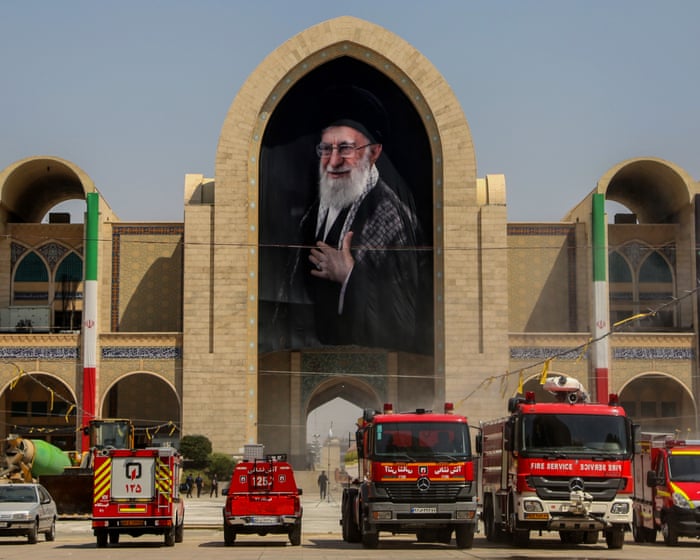
Iran is holding a multi-day funeral and burial for its late Supreme Leader Ayatollah Ali Khamenei, who was killed in a strike on February 28 at the start of its war with the United States and Israel. The funeral involves ceremonies in Tehran, the religious city of Qom in Iran, and Karbala in Iraq, and will test the government’s ability to gather large public support amid recent unrest.
Key Facts
Ayatollah Ali Khamenei, Iran’s supreme leader for nearly 40 years, was killed on February 28, 2026, during a joint U.S.-Israel strike.
The funeral ceremonies will last several days, starting in Tehran at the Grand Mosalla and then moving to Qom, Iran, and Karbala, Iraq.
The public and government employees are expected to be encouraged to attend as a show of support for the theocratic regime.
The funeral was delayed due to ongoing war conditions but is now held during a pause in fighting and an interim deal with the U.S.
There are concerns about safety during the funeral because past large funerals have experienced deadly stampedes.
Khamenei’s son, Ayatollah Mojtaba Khamenei, who is now Iran’s Supreme Leader and was reportedly wounded in the strike, has not publicly appeared and may remain in hiding.
The funeral will test the strength of Iran’s government after it faced nationwide protests earlier in the year.
The war with the U.S. and Israel has involved targeted killings of Iranian leaders, sometimes tracked through their public appearances.
Read the Original
Want the full story? Tap a source to open the original
article.
Iran has started public mourning and funeral events for Ayatollah Ali Khamenei, its former Supreme Leader, who was killed in February in strikes by the United States and Israel. The funeral will take place in Tehran and then in Mashhad, with millions expected to attend, while Tehran will have traffic and office closures during the ceremonies.
Key Facts
Ayatollah Ali Khamenei, Iran’s former Supreme Leader, was killed in strikes by the US and Israel in February.
Public mourning and funeral ceremonies have begun several months after his death.
His body will lie in state at Tehran’s Grand Mosalla for three days before burial in Mashhad.
Officials expect up to 20 million people to attend the funeral events.
Tehran will close offices and restrict traffic in the city center during the ceremonies.
The airspace over Tehran will be partially closed from Friday and fully closed on Monday.
The body will be taken to the Iraqi holy cities of Najaf and Karbala before burial.
International representatives, including Pakistan’s Prime Minister Shehbaz Sharif, are expected to attend.
Read the Original
Want the full story? Tap a source to open the original
article.
The far-right party Alternative for Germany (AfD) is preparing for a convention to elect leaders and is gaining support, especially in eastern Germany. It performed strongly in recent elections and hopes to win majorities in upcoming regional votes, aiming for significant political power in the east.
Key Facts
AfD is a far-right nationalist party in Germany.
It holds leadership elections every two years and is expected to re-elect co-leaders Alice Weidel and Tino Chrupalla.
In the last national election, AfD was the strongest opposition party and the leading party in eastern Germany.
Recent polls show AfD gaining support, potentially leading some regions.
AfD aims to win over 40% of the vote in the state election on September 6 in Saxony-Anhalt.
Another state election in Mecklenburg-Western Pomerania is coming soon, where AfD also expects good results.
Mainstream German parties refuse to work with AfD, maintaining a political "firewall" against it.
Winning control of a state government would give AfD power over important areas like education and security.
Read the Original
Want the full story? Tap a source to open the original
article.
Iran is holding a six-day funeral ceremony for its supreme leader Ali Khamenei, who died in a US-Israeli attack in February. The event is planned to show national unity and resistance and will take place mainly in Tehran and Mashhad, with some parts of the ceremony also held in Shia cities in Iraq.
Key Facts
Ali Khamenei, Iran’s supreme leader for 36 years, was killed in a US-Israeli attack in February.
The funeral ceremony will last six days, starting Saturday in Tehran and ending Thursday with burial in Mashhad.
Millions of Iranians are expected to attend, making it the largest event in Iran since the 1979 revolution.
The funeral aims to send political and religious messages of resistance to the world.
Khamenei’s son, Mojtaba, was seriously injured in the same attack and is not expected to attend.
A ceremony for foreign leaders will precede the public funeral, with about 30 countries expected to send representatives; no European or US leaders were invited.
Iran’s officials have criticized European countries for their stance on the US-Israeli attacks.
The funeral will be held at Tehran’s Grand Mosalla mosque, a site used for major state religious events.
Read the Original
Want the full story? Tap a source to open the original
article.
Europe experienced record-breaking heatwaves this summer, with temperatures reaching as high as 44°C (111.2°F) in some areas. Scientists say this extreme heat is becoming normal due to global warming, as Europe is warming about twice as fast as the global average. These hot summers are expected to happen more often in the future and may lead to more health problems and environmental damage.
Key Facts
Temperatures reached 40°C (104°F) in Germany, the Czech Republic, and Poland, and 44°C (111.2°F) in a town in France.
Last summer’s heatwave caused around 2,300 climate-related deaths across 12 European countries.
Heatwaves in Europe are now tens to hundreds of times more likely than 50 years ago.
Europe has warmed roughly twice as fast as the rest of the world since the 1980s.
A "heat dome," or a high-pressure system, traps heat over an area and leads to extreme temperatures.
Effects of past pollution are causing current warming, and some damage, like shrinking Alpine glaciers, is permanent.
Scientists say future summers could be as hot as this or hotter unless greenhouse gas emissions are reduced.
Europe is likely to experience more severe warming compared to the global average in the coming decades.
Read the Original
Want the full story? Tap a source to open the original
article.
The bird flu outbreak in 2022 caused a large number of deaths among gannets, seabirds that live in big colonies in the UK. Two major colonies, one on Bass Rock in Scotland and another on Grassholm in Wales, lost many adult birds and will take about 15 to 20 years to recover fully.
Key Facts
The 2022 bird flu was identified as the H5N1 virus.
Gannets on Bass Rock and Grassholm saw adult deaths increase by four times during the outbreak.
Bass Rock’s gannet colony decreased in size by 26%, and Grassholm’s colony fell by 38%.
These colonies are among the largest in the world for northern gannets.
The bird flu virus was first found in gannets at Bass Rock in June 2022 and Grassholm in July 2022.
Adult breeding gannets are important because they help the population grow, so their loss affects long-term recovery.
The study suggests updating the gannet’s conservation status from "least concern" to reflect the current threat.
Bass Rock was recently bought by the conservation group RSPB Scotland, ending 320 years of private ownership.
Read the Original
Want the full story? Tap a source to open the original
article.
Kate Forbes, a former Scottish National Party (SNP) minister, said she was likely to win the SNP leadership in 2023 until she shared her personal views on gay marriage, which were based on her Christian faith. Despite losing to Humza Yousaf, she said she gained public respect for standing by her beliefs and faced criticism within her party for speaking at a conference with right-wing figures.
Key Facts
Kate Forbes was considered a strong candidate ("slam dunk") for SNP leadership in 2023.
She lost the leadership contest to Humza Yousaf.
Forbes revealed she would have voted against same-sex marriage but would not try to repeal the law.
She is a member of the Free Church of Scotland and expressed conservative views on issues like families and abortion.
Forbes said she was advised to hide her views but chose to be honest, which earned her public support.
Some SNP members disagreed with her speaking at a conference alongside right-wing politicians like Nigel Farage and Boris Johnson.
The conference discussion noted she faced unfair treatment because of her Christian beliefs.
Forbes said she received thousands of messages supporting her right to express her conscience, even when people disagreed with her views.
Read the Original
Want the full story? Tap a source to open the original
article.
In southern India, robotic elephants are being used in Hindu temples to replace live elephants in rituals and festivals. Animal welfare groups support this change, while some traditionalists oppose it because elephants are considered sacred and an important part of the ceremonies.
Key Facts
Robotic elephants are life-size models made of fiberglass, iron, and rubber.
These robots can move parts like ears, tails, heads, and trunks, and can even squirt water.
The robotic elephants cost about $6,000 each and weigh much less than real elephants.
Around 40 robotic elephants have been donated to temples by animal welfare groups like PETA.
The real elephants are considered sacred in Hinduism and have a major role in temple festivals.
Traditional festivals in Kerala, such as the Thrissur Pooram, feature about 100 live elephants dressed in decoration.
The creator of the robotic elephants, Prasanth Prakashan, says the robots do not yet walk but he is working on it.
The use of robotic elephants seeks to prevent animal abuse and dangers posed by live elephants during festivals.
Read the Original
Want the full story? Tap a source to open the original
article.
A church in St. Paul, Minnesota, called the Church of Saint Agnes, continues to offer traditional Latin Mass while being loyal to Pope Leo XIV and the Vatican. This comes as Pope Leo XIV recently condemned a traditionalist group, the Society of St. Pius X, for breaking away from the Catholic Church by rejecting modern reforms and consecrating bishops without approval.
Key Facts
The Church of Saint Agnes holds both Latin and English Masses in a diverse neighborhood in St. Paul, Minnesota.
The church supports maintaining Catholic traditions while staying in full communion with Pope Leo XIV.
Since the Second Vatican Council over 60 years ago, the Catholic Church has modernized its worship practices, but some groups prefer the old Latin Rite.
The Society of St. Pius X (SSPX) is a group that rejects these reforms and only celebrates the old Latin Mass.
Pope Leo XIV excommunicated SSPX bishops and priests after they appointed new bishops without Vatican approval.
The Church of Saint Agnes is not affiliated with SSPX and has official permission to celebrate Mass in Latin.
Father John Ubel, the pastor at Saint Agnes, preaches about balancing tradition with loyalty to the Vatican.
The recent schism highlights divisions within the Catholic Church between modern reformers and traditionalists.
Read the Original
Want the full story? Tap a source to open the original
article.
Two strong earthquakes hit La Guaira, Venezuela, on June 24, 2026, killing at least 2,295 people. Rescue and forensic teams are working hard to find, identify, and store the bodies, while many families struggle to claim their loved ones.
Key Facts
The earthquakes measured 7.2 and 7.5 in magnitude and struck back-to-back.
La Guaira, on Venezuela’s northern coast, was the hardest-hit area.
Over 2,295 people have died, and thousands remain missing.
Emergency teams face challenges collecting and identifying bodies.
Families often identify bodies by tattoos, scars, or clothes due to changes after death.
Funeral costs are high, and some families cannot afford them.
The local government is helping by giving free burial spaces to some families.
Forensic workers like Joel Mirabal have been working nonstop for days.
Read the Original
Want the full story? Tap a source to open the original
article.
President Donald Trump criticized the United States' relationship with NATO as unfair and one-sided ahead of a NATO summit in Ankara. He said European countries have not supported the US enough, especially regarding the war in Iran, and wants Europe to take more responsibility for its own defense.
Key Facts
President Trump called it "ridiculous" for the US to keep supporting NATO without fair help from other members.
He posted on Truth Social that NATO countries “were not there for us” and that the relationship is not fair to the US.
Several European countries have limited the use of their military bases by the US because of the war in Iran.
Trump wants Europe to lead its own defense, and the US has begun reducing some military commitments in Europe.
NATO members agreed last year to increase defense spending to 5% of their GDP by 2035 under US pressure.
US Secretary of State said Trump is unhappy with NATO allies for not joining more actively in operations against Iran.
Senator Marco Rubio said the tensions will be discussed at the NATO summit in Ankara on July 7-8.
NATO was formed in 1949 and is seen as a US-led alliance that helped maintain security in Europe during the Cold War and after.
Read the Original
Want the full story? Tap a source to open the original
article.
Interim President Delcy Rodriguez of Venezuela reported that 80% of the buildings that collapsed during recent earthquakes were privately built. She also confirmed that over 2,500 people have died and rescue efforts are ongoing.
Key Facts
Two earthquakes recently struck Venezuela.
About 80% of collapsed buildings were built by private developers.
More than 2,500 people have died because of the earthquakes.
Search and rescue teams are still working to find survivors.
The government is responding to public concerns about its disaster handling.
Read the Original
Want the full story? Tap a source to open the original
article.
A hosepipe ban will start on 10 July for about one million people in Hampshire and the Isle of Wight to save water. The ban follows very low river levels and dry weather, and may last until autumn unless there is heavy rain.
Key Facts
The hosepipe ban affects customers of Southern Water in Hampshire and the Isle of Wight.
It begins on 10 July but people are encouraged to stop using hosepipes immediately.
The River Test, the main water source, is at critically low levels due to dry weather and a heatwave.
This is the second year in a row the ban has been introduced by Southern Water.
Hosepipes use about 1,000 litres of water per hour, roughly one person's weekly water use.
Some customers with special health or mobility needs are exempt from the ban.
Southern Water plans a new reservoir by 2040 to reduce pressure on rivers.
The reduction in water leaks this year equals 27 million litres a day saved.
Read the Original
Want the full story? Tap a source to open the original
article.
A member of the European Parliament, Stelios Kouloglou, was repeatedly targeted with spyware made by NSO Group while investigating the misuse of this software in Europe. Researchers from Citizen Lab found signs that the attacks were related to past hacking campaigns against journalists but could not identify which government was responsible.
Key Facts
Stelios Kouloglou, a Greek MEP and journalist, was targeted by Pegasus spyware during his work on a European parliamentary committee investigating spyware abuses.
The spyware used was made by NSO Group, an Israeli company that sells it to governments for security purposes.
Kouloglou’s phone was first infected in October 2022 during an intense period of committee activity, and again in March 2023 as the committee was finalizing its report.
The committee investigating Pegasus abuses is called Pega and was created in March 2022 after the Pegasus Project exposed government spying on journalists and activists.
Citizen Lab could not identify which government used the spyware against Kouloglou but noted similarities to previous attacks on Russian and Belarusian journalists living in Europe.
Kouloglou was hacked while hospitalized and in contact with another journalist who was also targeted by spyware in Greece.
This is the first time a member of the Pega committee has been confirmed as a spyware target.
Experts warn that other European politicians may be unknowingly hacked with spyware.
Read the Original
Want the full story? Tap a source to open the original
article.