Neutral summaries of your favorite news sources — just the facts.
Your favorite news sources, one neutral feed — we distill their reporting into fact-first
summaries and always link to the original story. How it works
World News
Comprehensive coverage of international news and global events
German prosecutors charged a former Ukrainian army officer for causing underwater explosions that damaged the Nord Stream gas pipelines in 2022. These pipelines carried Russian gas to Germany and the explosions disrupted energy supplies amid the war in Ukraine.
Key Facts
The suspect, called Serhii K., faces charges including causing explosions and being an accomplice to war crimes.
The explosions happened on September 26, 2022, damaging Nord Stream 1 and 2 pipelines under the Baltic Sea.
The pipelines were intended to carry Russian natural gas to Germany.
The goal was to stop gas deliveries and prevent Russia from earning money to fund its military.
Serhii K. was caught in Italy in August 2023 and taken to Germany in November.
He allegedly used a yacht hired with fake IDs from Germany to carry out the attack.
Russia blames the U.S. for the explosions, but the U.S. denies this.
Nord Stream 2 never started operating because Germany stopped its approval before the invasion of Ukraine.
Read the Original
Want the full story? Tap a source to open the original
article.
A trade deal between the United Kingdom and the United States on pharmaceuticals allows UK drug exports to the US without tariffs for three years. Research published in the British Medical Journal says the deal will force the UK’s National Health Service (NHS) to spend much more on new US medicines, potentially causing hundreds of thousands of extra deaths due to cuts in other health areas.
Key Facts
The UK-US pharmaceutical deal was signed in December and removes tariffs on UK drug exports to the US for three years.
The UK government agreed to increase NHS spending on new US medicines from 0.3% of GDP in 2026 to 0.6% by 2036.
This spending increase means medicine costs will rise from 10% to 12% of the NHS budget overall.
The deal does not provide extra funding to the NHS, so money will be diverted from other health services.
Researchers estimate this could lead to 229,000 additional deaths in the UK over time.
Scientists say the deal benefits pharmaceutical companies but could harm NHS patients by creating cost pressures elsewhere.
The extra NHS spending required would reach about £8.8 billion annually by 2036, totaling nearly £45 billion over 15 years.
UK officials argue the deal helps patients access new medicines and boosts Britain’s life sciences industry.
Read the Original
Want the full story? Tap a source to open the original
article.
Venezuela is facing a serious health crisis after its worst earthquake in over 100 years killed more than 2,000 people and injured over 11,000. The earthquake damaged nearly half of the hospitals and clinics in the capital, making it harder to care for the injured and showing the weak state of the country’s health system.
Key Facts
The earthquake in Venezuela is the worst in more than a century.
Over 2,000 people died because of the earthquake.
More than 11,000 people were injured.
Nine out of 21 hospitals and clinics in the capital city were severely or critically damaged.
Hospitals are overwhelmed and struggling to treat patients.
Venezuela was already facing food shortages and potential disease outbreaks before the earthquake.
The disaster has exposed the fragile condition of the country’s health care system.
The situation is especially urgent in the capital city, Caracas.
Read the Original
Want the full story? Tap a source to open the original
article.
Eight Buddhist monks were killed and many others injured when an 11-year-old boy drove his family’s truck into their procession in northeastern Thailand. The boy took the vehicle without permission and crashed into the monks who were on a pilgrimage walk.
Key Facts
An 11-year-old boy stole his parents’ pick-up truck.
The truck hit a procession of about 30 Buddhist monks in Mukdahan province, Thailand.
Five monks died at the scene, and three more died later in hospital.
Between 10 and 20 people were injured, including monks and others.
The monks had just started a 260-kilometer pilgrimage walk about 30 minutes before the crash.
Police have taken the boy into custody and are waiting for child protection officers to interview him.
The vehicle is being checked by forensic experts to find out why the crash happened.
Buddhist monks are respected in Thailand and often travel in public processions to share their teachings.
Read the Original
Want the full story? Tap a source to open the original
article.
Algeria is holding parliamentary elections on July 2, 2026, seven years after large pro-democracy protests called Hirak. Although opposition groups are not boycotting these elections, many voters are expected to stay away to show dissatisfaction with politics.
Key Facts
The elections in Algeria are to choose members of the new parliament.
The last major political movement, Hirak protests, took place seven years ago.
In the previous election after Hirak, only 23% of voters participated.
Many people refused to vote last time as a way to show they were unhappy with the political options.
Several opposition parties boycotted the last election but are not boycotting this one.
Despite no boycott, voter turnout for 2026 is expected to remain low.
The elections reflect ongoing political challenges and public discontent in Algeria.
Read the Original
Want the full story? Tap a source to open the original
article.
German Chancellor Friedrich Merz and his government coalition announced a plan with 34 reform measures to improve Germany’s slow economy. The reforms include tax cuts for families, changes to the pension system, stricter sick leave rules, and efforts to reduce bureaucracy.
Key Facts
The reform package aims to boost Germany’s economy, which has been weak in recent years.
Tax cuts will benefit low- and middle-income families, with an example of a family of four saving over 600 euros annually by 2028.
The government plans to update the pension system, which is currently under stress due to an aging population.
New rules will make it harder for employees to take sick leave.
The government wants to cut down on slow and complicated administrative procedures.
Germany’s economy faces challenges from higher energy costs and global competition, including trade tensions involving President Donald Trump.
Merz’s coalition combines center-right and center-left parties and has been in office for just over a year.
The government hopes these reforms will help Germany return to steady economic growth after shrinking for two years.
Read the Original
Want the full story? Tap a source to open the original
article.
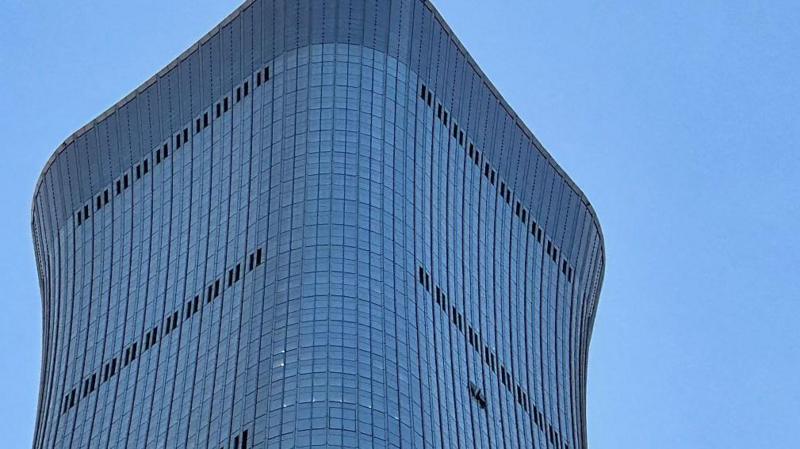
A small plane crashed into Beijing’s tallest building, the CITIC Tower, on June 26, 2026, injuring 13 people and killing the 66-year-old pilot. Chinese authorities said the crash was caused by the pilot’s personal issues, as he wrote about wanting to end his life in his diary.
Key Facts
The crash happened around 6 p.m. in Beijing’s downtown business district.
The plane hit the 108-story CITIC Tower, also called the “Zun” building.
The pilot was a 66-year-old man named Liu who had no permanent job and lived alone.
Liu flew with another person before taking a solo flight and deviating from his planned route.
Contact with the pilot was lost before the crash.
Liu had insomnia and anxiety and wrote about suicide in his diary.
Thirteen people were injured, but none had life-threatening injuries; one person has already been discharged.
The crash raised safety concerns in Beijing’s capital city.
Read the Original
Want the full story? Tap a source to open the original
article.
In Bangladesh, excitement for the 2026 World Cup has led to a dispute involving football fans and a religious leader. A hardline preacher urged people to replace football team flags, especially those of Argentina and Brazil, with Islamic flags, causing police concern over public order.
Key Facts
Football is very popular in Bangladesh, where many fans support teams like Argentina and Brazil.
Mufti Harun Izhar, a religious leader, called for removing Argentina and Brazil flags and raising white Islamic flags with the Kalima (Islamic profession of faith).
These Islamic flags have appeared in more than a dozen districts in Bangladesh.
Police are on alert and said they will act if the flags cause law and order problems.
Supporters have held rallies with these flags and religious songs after the preacher's speech spread online.
The preacher said the white flags should not be confused with Taliban or Islamic State flags.
Government officials are watching the situation closely because it may affect Bangladesh's image globally.
Some football fans oppose the move, saying football helps people escape everyday difficulties and is a key form of entertainment.
Read the Original
Want the full story? Tap a source to open the original
article.
A large Russian attack struck Kyiv overnight, hitting residential areas and causing significant damage. At least 13 people died and over 56 were injured in the strikes while many residents were asleep.
Key Facts
The attack on Kyiv is the largest Russian assault on the city to date.
The strikes targeted residential neighborhoods, affecting civilians.
At least 13 people were killed in the overnight attacks.
More than 56 people were wounded after the attack.
The Russian government stated it would increase pressure on Ukraine following the assault.
Emergency teams responded to fires and destruction caused by the strikes.
The attacks occurred while many residents were sleeping, increasing casualties.
Kyiv officials reported the damages and casualty figures to the public.
Read the Original
Want the full story? Tap a source to open the original
article.
Thousands of people have left South Africa to return to Malawi because of violent attacks against foreigners. The violence is linked to protests calling for undocumented migrants to leave South Africa, with accusations that migrants cause job losses and crime. South African leaders and human rights groups reject these claims.
Key Facts
On June 30, many people marched across South Africa demanding undocumented foreigners leave the country.
The protests have lasted several weeks and caused violence that killed four people.
About 15,000 Malawian citizens have returned home due to this violence.
Protesters blame migrants for causing unemployment and crime.
President Cyril Ramaphosa and human rights organizations say these claims are not true.
Xenophobic violence has occurred multiple times over the past twenty years in South Africa.
This wave of protests and violence is part of a larger, ongoing tension over immigration in South Africa.
Read the Original
Want the full story? Tap a source to open the original
article.
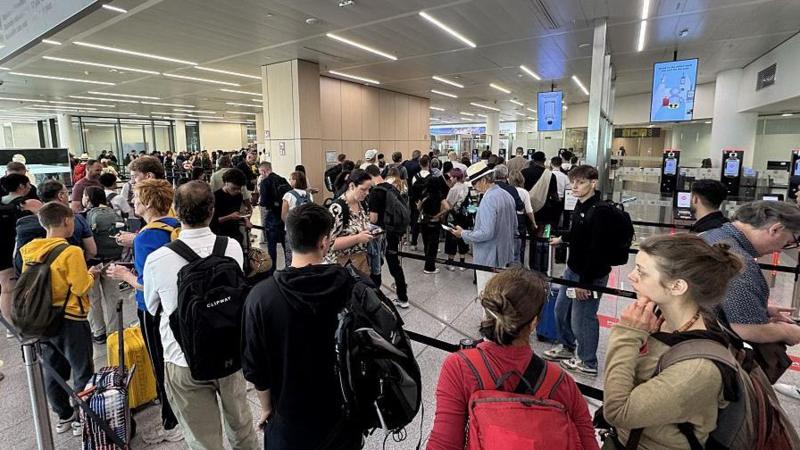
A new digital border system called the Entry-Exit System (EES) has caused long waiting times of up to two hours for non-EU travelers arriving in Berlin and other European airports. The system, designed to record biometric data to improve security, has faced technical issues and inconsistent implementation, leading to passenger delays and missed flights.
Key Facts
The Entry-Exit System (EES) requires travelers from outside the EU to register biometric data when entering and leaving many European countries.
EES fully started operating in April and aims to modernize and speed up border controls.
Berlin Airport reports wait times of one to two hours, especially at terminals used by budget airlines Ryanair and Wizz Air.
Different EU countries use various sub-systems under EES, causing complexity and slower processing at borders.
Some EES machines have been reported to be broken or out of order at airports.
Passengers, like Anne Robinson from the UK, missed flights due to the delayed checks and had to pay extra for replacement tickets.
Airlines and airport officials say the system is not working well and call for contingency plans or pauses in checks where needed.
The European Commission says it is willing to provide more support to help fix the issues.
Read the Original
Want the full story? Tap a source to open the original
article.
A strong heatwave affected many countries in eastern Europe, including Hungary, Ukraine, Slovakia, and the Balkans. The heat caused record-high temperatures and problems like power outages in Ukraine and storms in Romania.
Key Facts
Eastern European countries such as the Czech Republic, Slovakia, Hungary, and the Balkans experienced record-breaking hot temperatures.
Ukraine's electricity grid struggled due to high demand during the heatwave, leading to planned power outages.
Romania faced a violent storm after its heatwave.
The summer heat arrived early and was deadly, challenging how communities cope with extreme weather.
Western European countries like France, Italy, and the UK also experienced a heatwave recently.
France reported about 1,000 deaths in one week due to extreme heat.
The heatwave highlights increasing temperature extremes across Europe during June.
Read the Original
Want the full story? Tap a source to open the original
article.
Ukraine has launched repeated drone attacks on Russian oil refineries, causing fuel shortages in Russia. In response, Russian President Vladimir Putin has said they face a shortage of fuel and are looking to improve air defense and possibly increase fuel imports.
Key Facts
Ukraine has used drones to strike Russian oil refineries multiple times during their ongoing conflict.
These attacks have led to fuel shortages in Russia.
Russian President Putin acknowledged the fuel shortage publicly.
Russia plans to boost its air defense systems to protect key sites.
Russia may need to import fuel to cover the shortage caused by these strikes.
The attacks show that Ukraine’s drone industry is becoming stronger.
The conflict between Russia and Ukraine has been ongoing for four years.
The information was reported by FRANCE 24 and includes analysis by Rochelle Ferguson-Bouyahi.
Read the Original
Want the full story? Tap a source to open the original
article.
Ukrainian drone attacks on Russian oil refineries have caused fuel shortages in Moscow, a first for the Russian capital. President Vladimir Putin acknowledged that the Russian military is facing fuel supply problems, and surveys show that Russians are feeling very pessimistic about the economy.
Key Facts
Ukraine has been using drones to attack Russian oil infrastructure for several months.
These attacks have caused fuel shortages in Moscow, which usually does not feel such shortages quickly.
President Putin admitted that the Russian army is experiencing a fuel shortage.
A recent Gallup poll reports Russia’s economic pessimism is at its highest level in 20 years.
The fuel shortages are linked to damage sustained by Russian refineries from the drone strikes.
The rising economic pessimism reflects concerns about Russia’s overall economic health.
The situation illustrates the impact of Ukraine’s growing drone capabilities on the conflict.
This report was published in early July 2026.
Read the Original
Want the full story? Tap a source to open the original
article.
French far-right leader Marine Le Pen says she will not run for president in 2027 if a Paris appeals court requires her to wear an electronic bracelet due to accusations of misusing European Union funds. The court will announce its verdict soon, and Le Pen is appealing a previous ruling that banned her from elected office and ordered house arrest with an electronic tag.
Key Facts
Marine Le Pen faces a court decision about misusing EU Parliament funds by hiring aides for party work instead of parliamentary tasks.
A March 2025 Paris court found her guilty of leading a fraudulent system that took 2.9 million euros from the EU Parliament budget.
She was sentenced to a five-year ban from holding elected office and two years of house arrest with an electronic bracelet.
Le Pen says she cannot campaign freely if she must wear the electronic tag or depend on judges’ permission to move.
France’s next presidential election first round is on April 18, 2027, with a runoff on May 2.
If Le Pen is banned from running, her protege Jordan Bardella is expected to be the far-right candidate.
Le Pen has said she will appeal to the Court of Cassation if she is not allowed to run.
She has run for president three times before and considers herself the experienced candidate compared to Bardella’s youth and energy.
Read the Original
Want the full story? Tap a source to open the original
article.
European health officials reported 106 cases of salmonella infections linked to flavored noodle products in 14 countries. Most cases affected children and young adults, with nearly half requiring hospital care. The outbreak is associated with a Ukrainian producer.
Key Facts
There have been 106 confirmed salmonella infections across 14 European countries.
Most affected people are children and young adults.
About 49 people needed to go to the hospital.
The salmonella strain involved is called Stanley.
The outbreak is linked to flavored noodle products from a Ukrainian manufacturer, Euro Food Service.
The company Reeva Foods recalled certain batches of instant noodles and started an internal investigation.
Countries affected include Austria, Britain, France, Germany, Poland, Sweden, and others.
Salmonella symptoms include diarrhea, fever, vomiting, dehydration, and stomach pain; most people recover in a week but it can be serious for vulnerable groups.
Read the Original
Want the full story? Tap a source to open the original
article.
The UK government will officially apologize for separating many unmarried mothers from their babies through forced adoptions that lasted until the 1970s. Prime Minister Keir Starmer will acknowledge the state's role and apologize to those affected in a statement to Parliament.
Key Facts
The UK will apologize for forced adoptions of babies from unmarried mothers between 1949 and 1976.
About 185,000 babies were adopted in England and Wales during this period.
Mothers were often pressured, deceived, or threatened into giving up their children.
Scotland and Wales have already issued apologies, but the UK government had not until now.
The apology comes after the Church of England also apologized for its part in forced adoptions.
Similar apologies have been made in other countries like Australia and Ireland for related abuses.
This issue relates to social shame and government policies targeting unmarried mothers.
The apology aims to recognize the pain and suffering caused and seek to correct these past wrongs.
Read the Original
Want the full story? Tap a source to open the original
article.
A small plane crashed into Beijing’s tallest skyscraper, the CITIC Tower, killing the pilot and injuring 13 people. Chinese authorities said the pilot acted for personal reasons, suffering from insomnia and anxiety, and that the crash was a case of endangering public safety.
Key Facts
The pilot, identified only as Liu, was 66 years old, divorced, and lived alone in Beijing.
Liu had chronic insomnia and anxiety and had written about ending his life in his diary.
The crash happened last Friday when Liu flew off his designated path during a solo flight and hit the CITIC Tower.
The CITIC Tower, also called China Zun, is 109 stories high and located near China’s Communist Party headquarters.
Videos and photos of the crash were quickly removed from Chinese social media during the investigation.
Aviation companies were told to suspend light aircraft flights after the crash.
Liu earned a sport pilot’s license in 2021 and a private pilot’s license in 2024.
The plane was a two-seat, single-engine Aurora SA60L made by Sunward Aircraft, used for touring and recreation.
Read the Original
Want the full story? Tap a source to open the original
article.
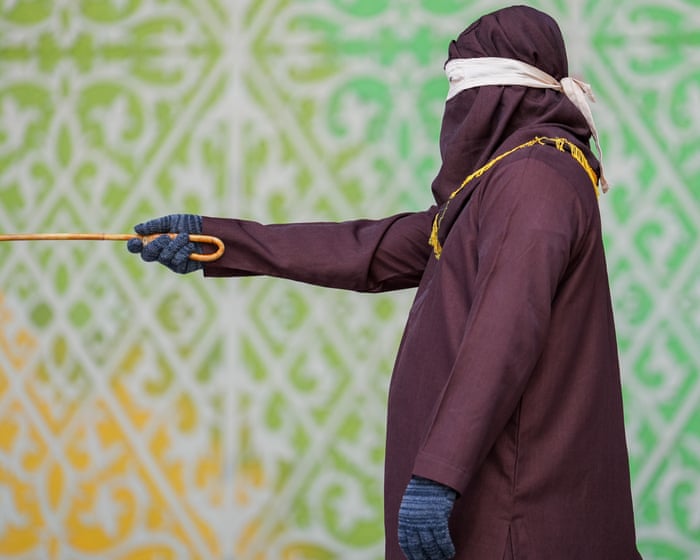
A young couple in Indonesia’s Aceh province was publicly caned for kissing during a TikTok live video. The local Sharia court found them guilty of breaking Islamic law because they were not married.
Key Facts
The man is 22 years old, and the woman is 25.
They were sentenced to 21 lashes each with a rattan cane in a public event.
The caning happened in Banda Aceh city park and was witnessed by around 100 people.
Aceh is the only Indonesian province that enforces Islamic law, allowed since 2006.
The law covers both Muslims and non-Muslims in Aceh for certain morality crimes.
Public caning is also used in Aceh for crimes like gambling, adultery, or not praying.
The couple’s sentence was reduced from 25 lashes because they spent four months in jail.
Amnesty International Indonesia called the caning a violation of human rights and said it is cruel and inhumane.
Read the Original
Want the full story? Tap a source to open the original
article.
The United States and Iran held indirect talks in Doha but did not reach a lasting peace agreement. They discussed past issues, the release of frozen Iranian funds, and regional concerns like the Strait of Hormuz, with Qatar and Pakistan mediating the talks and planning further discussions.
Key Facts
The US and Iran met indirectly in Doha for technical talks to address ongoing conflicts.
Qatar and Pakistan acted as mediators between the two countries.
Iran’s Deputy Foreign Minister led the talks; top Iranian officials did not attend.
The talks covered the US’s alleged violations and the release of $6 billion in Iranian frozen funds.
A communication channel between the countries was agreed upon to resolve future disputes.
Discussions also included Iran’s nuclear program, the Strait of Hormuz, and the conflict in Lebanon.
Commercial shipping through the Strait of Hormuz increased by over 50% recently.
Further talks are planned after funeral processions for the late Iranian Supreme Leader Ali Khamenei begin.
Read the Original
Want the full story? Tap a source to open the original
article.