Neutral summaries of your favorite news sources — just the facts.
Your favorite news sources, one neutral feed — we distill their reporting into fact-first
summaries and always link to the original story. How it works
World News
Comprehensive coverage of international news and global events
Ukraine has launched repeated drone attacks on Russian oil refineries, causing fuel shortages in Russia. In response, Russian President Vladimir Putin has said they face a shortage of fuel and are looking to improve air defense and possibly increase fuel imports.
Key Facts
Ukraine has used drones to strike Russian oil refineries multiple times during their ongoing conflict.
These attacks have led to fuel shortages in Russia.
Russian President Putin acknowledged the fuel shortage publicly.
Russia plans to boost its air defense systems to protect key sites.
Russia may need to import fuel to cover the shortage caused by these strikes.
The attacks show that Ukraine’s drone industry is becoming stronger.
The conflict between Russia and Ukraine has been ongoing for four years.
The information was reported by FRANCE 24 and includes analysis by Rochelle Ferguson-Bouyahi.
Read the Original
Want the full story? Tap a source to open the original
article.
Ukrainian drone attacks on Russian oil refineries have caused fuel shortages in Moscow, a first for the Russian capital. President Vladimir Putin acknowledged that the Russian military is facing fuel supply problems, and surveys show that Russians are feeling very pessimistic about the economy.
Key Facts
Ukraine has been using drones to attack Russian oil infrastructure for several months.
These attacks have caused fuel shortages in Moscow, which usually does not feel such shortages quickly.
President Putin admitted that the Russian army is experiencing a fuel shortage.
A recent Gallup poll reports Russia’s economic pessimism is at its highest level in 20 years.
The fuel shortages are linked to damage sustained by Russian refineries from the drone strikes.
The rising economic pessimism reflects concerns about Russia’s overall economic health.
The situation illustrates the impact of Ukraine’s growing drone capabilities on the conflict.
This report was published in early July 2026.
Read the Original
Want the full story? Tap a source to open the original
article.
French far-right leader Marine Le Pen says she will not run for president in 2027 if a Paris appeals court requires her to wear an electronic bracelet due to accusations of misusing European Union funds. The court will announce its verdict soon, and Le Pen is appealing a previous ruling that banned her from elected office and ordered house arrest with an electronic tag.
Key Facts
Marine Le Pen faces a court decision about misusing EU Parliament funds by hiring aides for party work instead of parliamentary tasks.
A March 2025 Paris court found her guilty of leading a fraudulent system that took 2.9 million euros from the EU Parliament budget.
She was sentenced to a five-year ban from holding elected office and two years of house arrest with an electronic bracelet.
Le Pen says she cannot campaign freely if she must wear the electronic tag or depend on judges’ permission to move.
France’s next presidential election first round is on April 18, 2027, with a runoff on May 2.
If Le Pen is banned from running, her protege Jordan Bardella is expected to be the far-right candidate.
Le Pen has said she will appeal to the Court of Cassation if she is not allowed to run.
She has run for president three times before and considers herself the experienced candidate compared to Bardella’s youth and energy.
Read the Original
Want the full story? Tap a source to open the original
article.
European health officials reported 106 cases of salmonella infections linked to flavored noodle products in 14 countries. Most cases affected children and young adults, with nearly half requiring hospital care. The outbreak is associated with a Ukrainian producer.
Key Facts
There have been 106 confirmed salmonella infections across 14 European countries.
Most affected people are children and young adults.
About 49 people needed to go to the hospital.
The salmonella strain involved is called Stanley.
The outbreak is linked to flavored noodle products from a Ukrainian manufacturer, Euro Food Service.
The company Reeva Foods recalled certain batches of instant noodles and started an internal investigation.
Countries affected include Austria, Britain, France, Germany, Poland, Sweden, and others.
Salmonella symptoms include diarrhea, fever, vomiting, dehydration, and stomach pain; most people recover in a week but it can be serious for vulnerable groups.
Read the Original
Want the full story? Tap a source to open the original
article.
The UK government will officially apologize for separating many unmarried mothers from their babies through forced adoptions that lasted until the 1970s. Prime Minister Keir Starmer will acknowledge the state's role and apologize to those affected in a statement to Parliament.
Key Facts
The UK will apologize for forced adoptions of babies from unmarried mothers between 1949 and 1976.
About 185,000 babies were adopted in England and Wales during this period.
Mothers were often pressured, deceived, or threatened into giving up their children.
Scotland and Wales have already issued apologies, but the UK government had not until now.
The apology comes after the Church of England also apologized for its part in forced adoptions.
Similar apologies have been made in other countries like Australia and Ireland for related abuses.
This issue relates to social shame and government policies targeting unmarried mothers.
The apology aims to recognize the pain and suffering caused and seek to correct these past wrongs.
Read the Original
Want the full story? Tap a source to open the original
article.
A small plane crashed into Beijing’s tallest skyscraper, the CITIC Tower, killing the pilot and injuring 13 people. Chinese authorities said the pilot acted for personal reasons, suffering from insomnia and anxiety, and that the crash was a case of endangering public safety.
Key Facts
The pilot, identified only as Liu, was 66 years old, divorced, and lived alone in Beijing.
Liu had chronic insomnia and anxiety and had written about ending his life in his diary.
The crash happened last Friday when Liu flew off his designated path during a solo flight and hit the CITIC Tower.
The CITIC Tower, also called China Zun, is 109 stories high and located near China’s Communist Party headquarters.
Videos and photos of the crash were quickly removed from Chinese social media during the investigation.
Aviation companies were told to suspend light aircraft flights after the crash.
Liu earned a sport pilot’s license in 2021 and a private pilot’s license in 2024.
The plane was a two-seat, single-engine Aurora SA60L made by Sunward Aircraft, used for touring and recreation.
Read the Original
Want the full story? Tap a source to open the original
article.
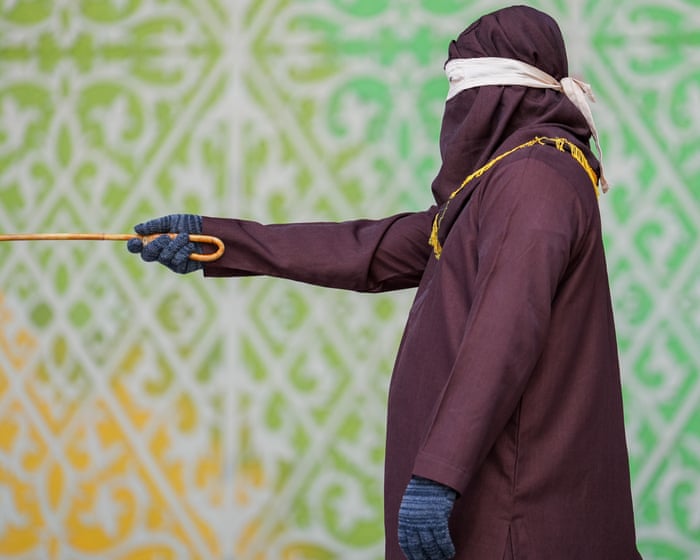
A young couple in Indonesia’s Aceh province was publicly caned for kissing during a TikTok live video. The local Sharia court found them guilty of breaking Islamic law because they were not married.
Key Facts
The man is 22 years old, and the woman is 25.
They were sentenced to 21 lashes each with a rattan cane in a public event.
The caning happened in Banda Aceh city park and was witnessed by around 100 people.
Aceh is the only Indonesian province that enforces Islamic law, allowed since 2006.
The law covers both Muslims and non-Muslims in Aceh for certain morality crimes.
Public caning is also used in Aceh for crimes like gambling, adultery, or not praying.
The couple’s sentence was reduced from 25 lashes because they spent four months in jail.
Amnesty International Indonesia called the caning a violation of human rights and said it is cruel and inhumane.
Read the Original
Want the full story? Tap a source to open the original
article.
The United States and Iran held indirect talks in Doha but did not reach a lasting peace agreement. They discussed past issues, the release of frozen Iranian funds, and regional concerns like the Strait of Hormuz, with Qatar and Pakistan mediating the talks and planning further discussions.
Key Facts
The US and Iran met indirectly in Doha for technical talks to address ongoing conflicts.
Qatar and Pakistan acted as mediators between the two countries.
Iran’s Deputy Foreign Minister led the talks; top Iranian officials did not attend.
The talks covered the US’s alleged violations and the release of $6 billion in Iranian frozen funds.
A communication channel between the countries was agreed upon to resolve future disputes.
Discussions also included Iran’s nuclear program, the Strait of Hormuz, and the conflict in Lebanon.
Commercial shipping through the Strait of Hormuz increased by over 50% recently.
Further talks are planned after funeral processions for the late Iranian Supreme Leader Ali Khamenei begin.
Read the Original
Want the full story? Tap a source to open the original
article.
European Union public institutions have signed many contracts worth billions of euros with Israeli companies between 2022 and 2025. This business continues despite ongoing international court rulings warning about Israel’s actions in Gaza and the occupied West Bank.
Key Facts
EU public institutions agreed to 194 contracts with Israeli companies, totaling nearly 2.7 billion euros ($3.1 billion).
Spain signed 14 contracts worth almost 227 million euros ($257 million) in the same period, including a large defense contract.
The number and value of contracts increased after Israel launched its war on Gaza in 2023.
The International Court of Justice (ICJ) found in 2024 that there is a serious risk of harm to Palestinians and said states should not support Israel’s presence in occupied territories.
EU contracts included military equipment, advanced technology, cybersecurity, lab tools, and medical gear.
Hungary, a strong supporter of Israel, signed the most contracts (42) worth about 603 million euros ($684 million).
Countries like Sweden and Spain, which have spoken out against Israel’s military actions, still bought goods and services from Israeli companies.
Germany also signed many contracts with Israeli companies for defense and technology products.
Read the Original
Want the full story? Tap a source to open the original
article.
The article compares the U.S. military in 1776 to its modern form in 2026, showing how it evolved from local militias with basic muskets into a global military power with advanced weapons and technology. Key moments in this transformation include the Revolutionary War, the Civil War, and World War I, which introduced industrial and technological changes that shaped the current armed forces.
Key Facts
In 1776, the U.S. military consisted of Continental Army soldiers and local militias using muskets and cannons borrowed from British and French sources.
The Continental Navy and Marine Corps were formed in 1775 and 1776, starting with only 27 warships.
After the Revolutionary War, the U.S. reduced its standing army but established the West Point Military Academy in 1802 to train officers professionally.
The War of 1812 and later conflicts showed the need for a coordinated, professional military including army and navy cooperation.
The American Civil War was the first “industrial war,” where economic and manufacturing strength, especially of the Union, heavily influenced the outcome.
By World War I, the U.S. military became a major global force with machine guns, improved artillery, and better logistics.
Over time, the military added new branches like the Air Force, as well as cyber and space forces, reflecting advances in technology and warfare.
The 250th anniversary of U.S. independence highlights this long development from a ragtag militia to a powerful, modern military.
Read the Original
Want the full story? Tap a source to open the original
article.
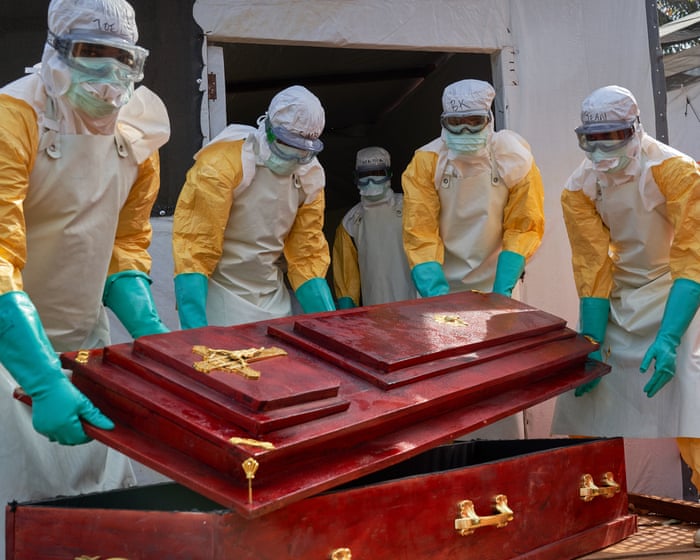
There is a current outbreak of the Bundibugyo virus, a type of Ebola, in the Democratic Republic of the Congo with over 1,250 cases and at least 362 deaths. Scientists do not yet fully understand where the virus comes from in nature, which makes preventing future outbreaks difficult.
Key Facts
The Bundibugyo virus causes severe symptoms including headaches, diarrhea, kidney and liver failure, and sometimes bleeding.
The virus can still spread after the infected person dies, especially during traditional funeral practices.
There is no proven vaccine for Bundibugyo virus, so controlling the outbreak relies on isolating patients and tracking their contacts.
Bundibugyo is related to the Zaire Ebola virus, responsible for past Ebola outbreaks and the 2014-2016 West Africa epidemic.
It is not confirmed which wild animals carry Bundibugyo virus; bats are suspected but unproven as the source.
Other animals like forest antelopes, gorillas, chimpanzees, and pigs may also play roles in spreading Ebola viruses.
Understanding how these viruses live and spread in wildlife is complicated by challenges in collecting samples and political instability in affected regions.
Reduced funding for health research in some countries hinders the ability to investigate and prevent outbreaks.
Read the Original
Want the full story? Tap a source to open the original
article.
Indian authorities want to bring down the body of a climber called “Green Boots” from Mount Everest, nearly 30 years after he died there. The climber is believed to be Dorje Morup, who died in a deadly 1996 storm while climbing Everest’s northern side in Tibet.
Key Facts
Dorje Morup was part of the Indo-Tibetan Border Police expedition that climbed Everest in May 1996.
Morup and two others died in a storm that killed eight climbers during one of Everest’s deadliest accidents.
Morup’s body, known as “Green Boots” because of his bright green boots, has been a well-known landmark on Everest’s northeast route.
His remains lie high in the “death zone” above 8,000 meters, where oxygen is low and conditions are very dangerous.
India’s Indo-Tibetan Border Police are hiring experts to recover the body, but need permission from Chinese authorities who control the Tibetan side of Everest.
China has recently limited climbing on Everest’s Tibetan side but has not commented on this recovery plan.
Recovering bodies at this altitude is risky, costly, and requires climbers to carry remains down steep, dangerous slopes on foot.
About 350 people have died on Mount Everest since it was first climbed in 1953, with many bodies still left on the mountain.
Read the Original
Want the full story? Tap a source to open the original
article.
Iran’s military command warned that all oil tankers passing through the Strait of Hormuz must follow Iran’s approved routes or face a strong military response. This warning increases tensions in an important waterway for global oil shipments amid ongoing negotiations to end the Iran war.
Key Facts
Iran’s Khatam al-Anbiya military command issued a warning about oil tankers using only Iran-approved routes in the Strait of Hormuz.
The Strait of Hormuz is a narrow but vital passage for international energy supplies.
Iran said any vessels that do not follow its navigation rules will face “immediate and forceful” military action.
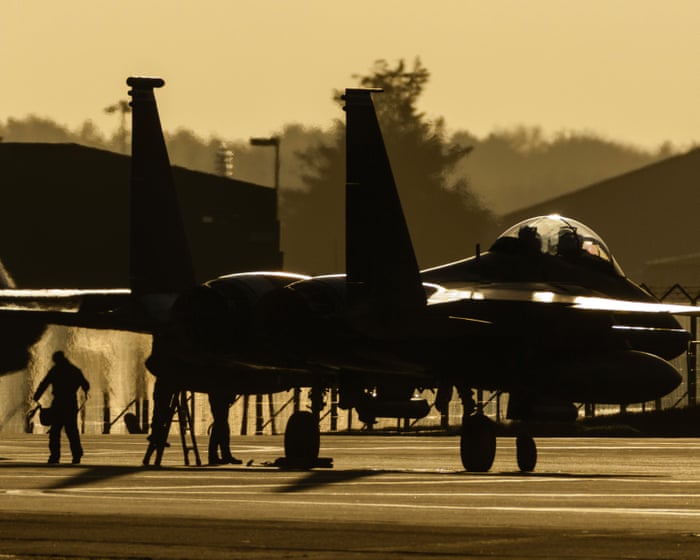
Iran criticized the presence of U.S. fighter jets in the area, saying they threaten regional security.
Iran considers any U.S. interference in the strait’s security a threat to its national sovereignty and will respond quickly.
Iran and the U.S. agreed to a temporary deal letting ships pass without fees for 60 days, but Iran wants to control and charge for passage afterward.
The U.S. and Gulf Arab states oppose Iran’s planned fees for ships passing through the strait.
Recent attempts to create a new shipping route near Oman led to attacks in the Middle East, showing high tensions in the region.
Read the Original
Want the full story? Tap a source to open the original
article.
A fire broke out early Thursday at a hospital in Ludwigslust, Germany, killing two patients and injuring 34 others, mostly due to smoke inhalation. Emergency workers evacuated 82 patients, and the fire is now under control while investigations continue.
Key Facts
The fire started in a patient’s room at Helene-von-Bulow-Klinikum hospital.
It spread quickly to the roof area above the radiology department.
Two patients died as a result of the fire.
Thirty-four others were hurt, mainly from breathing in smoke; none are in critical condition.
Emergency teams evacuated 82 patients from the hospital.
More than 100 emergency workers responded to the fire.
The hospital’s emergency room was temporarily closed but has now reopened.
Police are investigating the cause of the fire, which is still unknown.
Ludwigslust is in northeastern Germany, about 40 km south of Schwerin.
Read the Original
Want the full story? Tap a source to open the original
article.
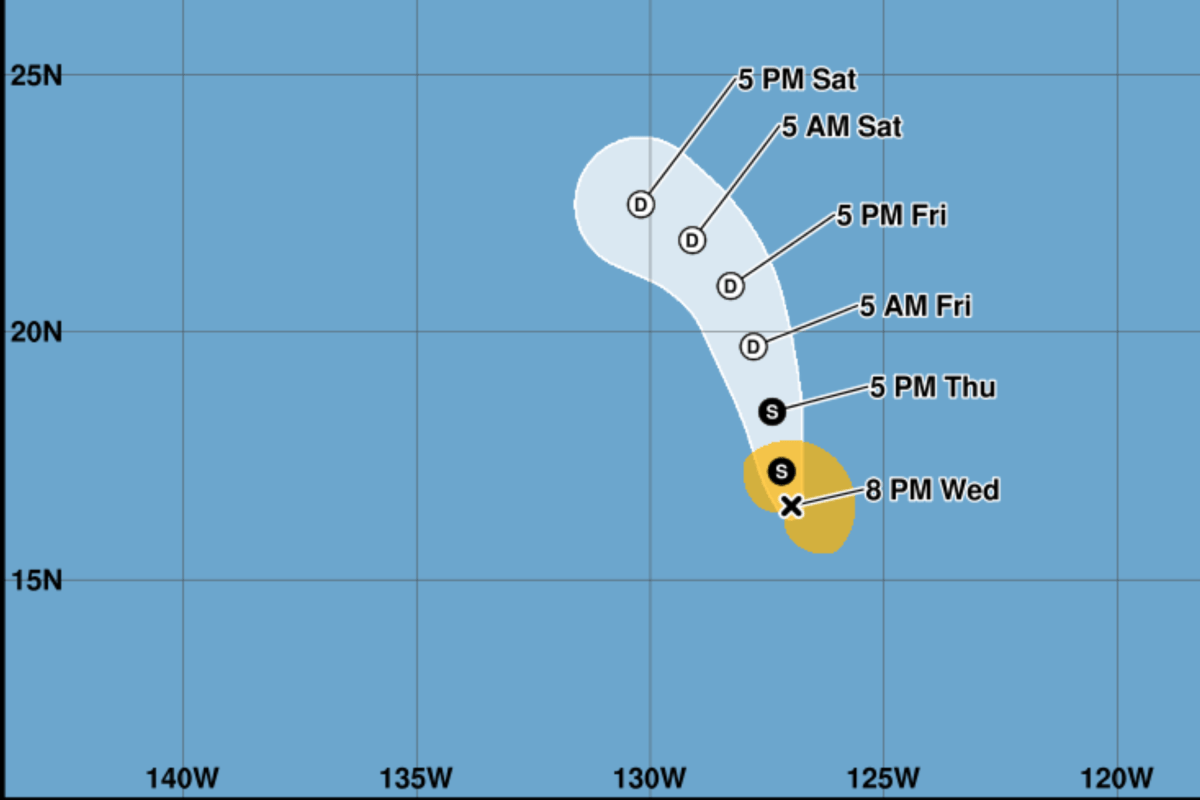
Tropical Storm Douglas formed in the eastern Pacific Ocean on July 1, 2026. It is currently far from land and expected to stay over open water while slowly strengthening before weakening and losing tropical storm status by Friday.
Key Facts
Douglas formed about 1,220 miles west-southwest of Baja California, Mexico.
The storm's maximum sustained winds are 40 mph.
Douglas is moving north at about 7 mph.
Tropical-storm-force winds can reach 90 miles from the storm’s center.
Forecasters expect Douglas to gain strength through Wednesday night, then weaken by Thursday.
Douglas is not expected to become a hurricane (which requires winds of 74 mph or higher).
The storm’s path keeps it far from land, so no warnings or watches have been issued.
Douglas will likely weaken into a tropical depression and then a remnant low by Friday.
Read the Original
Want the full story? Tap a source to open the original
article.
Researchers found that Russia used drones launched from hidden ships over 18 months to spy on nuclear sites in several European countries including the UK, France, Belgium, and the Netherlands. The drones were not intercepted by Western militaries, revealing weaknesses in NATO’s air defenses.
Key Facts
The surveillance lasted about 18 months, starting in late 2024.
Russia’s drones flew over nuclear sites and military airbases in more than a dozen NATO countries plus Ireland.
Some targeted sites were RAF Lakenheath in the UK and the Île Longue submarine base in France.
Drones were launched from “shadow fleet” vessels that turned off tracking devices to stay hidden.
Western military forces did not shoot down or capture these drones despite repeated sightings.
The drone campaign showed NATO’s defenses struggled with small, low-flying unmanned aircraft.
Russia’s goals included spying on nuclear forces, gathering military logistics info, and applying pressure through psychological tactics.
Drone sightings decreased after European navies started capturing these shadow vessels in 2026.
Read the Original
Want the full story? Tap a source to open the original
article.
A bus traveling from Cape Town to Eastern Cape in South Africa overturned early Thursday, killing 16 people and injuring 20. The crash happened after the bus driver tried to avoid hitting another vehicle and lost control.
Key Facts
The bus was carrying 78 passengers from Cape Town (Western Cape) to Idutywa (Eastern Cape).
The driver swerved to avoid a delivery vehicle and then lost control, causing the bus to overturn.
Initial reports said 9 people died, but later the death toll rose to 16.
Twenty injured passengers were taken to a hospital in Worcester, about 120 km from Cape Town.
Forty-three passengers refused medical treatment at the scene.
The crash is under investigation by the Road Traffic Management Corporation (RTMC) and South African Police Services.
Authorities warned about dangerous winter driving conditions like fog, smoke, black ice, and poor visibility.
This is the second deadly bus accident in South Africa this week; another bus overturned in Limpopo on Wednesday, killing the driver.
Read the Original
Want the full story? Tap a source to open the original
article.
A young couple in Indonesia’s Aceh province was publicly caned for kissing during a TikTok livestream, which violated local Islamic law. The couple each received 21 lashes, a reduced sentence from 25 due to time already spent in jail.
Key Facts
The couple kissed during a TikTok livestream in Banda Aceh, Aceh’s capital.
They were arrested in April after the video went viral in February.
Aceh is the only Indonesian province that enforces Islamic Sharia law.
The law includes punishments such as caning for moral offenses like adultery and public displays of affection by unmarried couples.
The couple was sentenced to 25 lashes but got 21 because of four months already served in prison.
Public canings are held openly, witnessed by many people.
Amnesty International criticized the caning as cruel and a human rights violation.
The court confiscated the couple’s cell phone and a USB drive with the video to destroy as evidence.
Read the Original
Want the full story? Tap a source to open the original
article.
Russia is facing serious fuel shortages after Ukrainian drone attacks damaged many of its oil refineries. The government is controlling fuel sales, banning fuel exports, and importing fuel from other countries to manage the crisis while the war in Ukraine continues.
Key Facts
Ukrainian drone strikes have disabled about 25% of Russia’s oil refining capacity.
Fuel shortages have caused long lines at gas stations and empty pumps in cities like Moscow.
Russia limits fuel sales to about 20-30 liters per vehicle and prohibits filling extra containers.
The government has banned petrol and jet fuel exports and is considering banning diesel exports.
Russia is allowing lower-grade fuels temporarily to ease the shortage.
Crimea declared a state of emergency due to fuel shortages affecting essential services.
Russia is importing fuel from countries like Belarus, India, and other Asian markets.
President Putin says the fuel shortage is not “critical” but acknowledges there are problems.
Read the Original
Want the full story? Tap a source to open the original
article.
A 19-year-old man named Peter Stokes was arrested in Finland and sent to the US for hacking crimes linked to a group called Scattered Spider. The US Department of Justice says the group carried out expensive cyberattacks, including one on a luxury jewelry company and others that affected millions of people in the UK.
Key Facts
Peter Stokes was arrested in Finland in April and extradited to the US.
He is charged with computer intrusion, conspiracy, and fraud.
Scattered Spider hackers demanded about $8 million in cryptocurrency from a jewelry company after stealing its data.
The jewelry company did not pay the ransom but lost at least $2 million from disruption and recovery costs.
The group is linked to hacks causing over $100 million in ransom payments overall.
Two men previously pleaded guilty to crimes linked to the group’s 2024 cyberattack on Transport for London, which exposed data on 10 million people.
The group also targeted British retailers like Co-op and M&S.
The hackers are believed to be young, English-speaking people from the US and UK.
Read the Original
Want the full story? Tap a source to open the original
article.