Neutral summaries of your favorite news sources — just the facts.
Your favorite news sources, one neutral feed — we distill their reporting into fact-first
summaries and always link to the original story. How it works
World News
Comprehensive coverage of international news and global events
Visitors from many countries are enjoying their time in the United States during the 2026 World Cup. These tourists are amazed by everyday things that Americans usually take for granted, like large homes, popular restaurants, and wide shopping stores, showing a different view of America than what some public polls suggest.
Key Facts
The 2026 World Cup is hosted by the United States, Canada, and Mexico.
Many international soccer fans are sharing positive experiences about America on social media.
A German fan named Freddy has become popular for his enthusiastic posts about American culture and places.
Visitors have expressed surprise and delight over common American features such as Waffle House, Taco Bell, and large football stadiums.
Some tourists see American abundance and friendliness, contrasting with negative opinions often shown in polls and media.
The Transportation Security Administration joked about tourists discovering ranch dressing and packing it to take home.
The article suggests that outsiders help Americans appreciate their country’s achievements and lifestyle.
It reminds readers that the United States remains a leading nation in economy, military, and culture.
Read the Original
Want the full story? Tap a source to open the original
article.
Rescuers helped a mother give birth in La Guaira, Venezuela, during the recovery efforts after a strong earthquake struck the area. They are also searching for people who are missing because of the disaster.
Key Facts
A strong earthquake hit La Guaira, Venezuela.
The earthquake caused significant damage in the region.
Rescuers found a mother who was about to give birth during the disaster.
They assisted her in safely delivering the baby.
Rescue teams are looking for people who remain missing after the earthquake.
The event shows how emergency workers continue to help amid crisis.
The situation remains serious due to the earthquake’s effects.
Read the Original
Want the full story? Tap a source to open the original
article.
Two strong earthquakes hit Venezuela, causing severe damage, killing about 235 people, and injuring over 4,300. Many families use social media and online lists to find their missing loved ones since official information and communication are limited.
Key Facts
Two earthquakes measuring 7.2 and 7.5 hit Venezuela on June 24, 2026.
The quakes caused widespread damage, especially in Caracas and La Guaira.
Around 235 people have died and more than 4,300 were injured.
Communication systems were damaged, making it hard to get information.
People are using social media and online missing persons lists to search for relatives.
Independent registries list up to 40,000 people missing, much more than official reports.
Families post photos and details of missing relatives on platforms like WhatsApp, Facebook, and X.
Rescue efforts include people digging through rubble to find survivors.
Read the Original
Want the full story? Tap a source to open the original
article.
Ukraine is using drones to attack key infrastructure in Crimea, a peninsula annexed by Russia in 2014. These attacks are causing fuel and power shortages and forcing Russian-installed leaders to take temporary measures.
Key Facts
Crimea was annexed by Russia in 2014.
Ukraine has increased drone attacks on bridges, ferries, and oil storage in Crimea.
The attacks aim to weaken Russian control over the region.
Fuel and power shortages have become more common in Crimea because of these strikes.
Russian-installed leaders in Crimea have introduced temporary measures to address these shortages.
The situation is causing significant disruption to daily life in Crimea.
Ukraine uses advanced drones, like AI-powered Hornet drones, to launch attacks deep into Russian-controlled areas.
Read the Original
Want the full story? Tap a source to open the original
article.
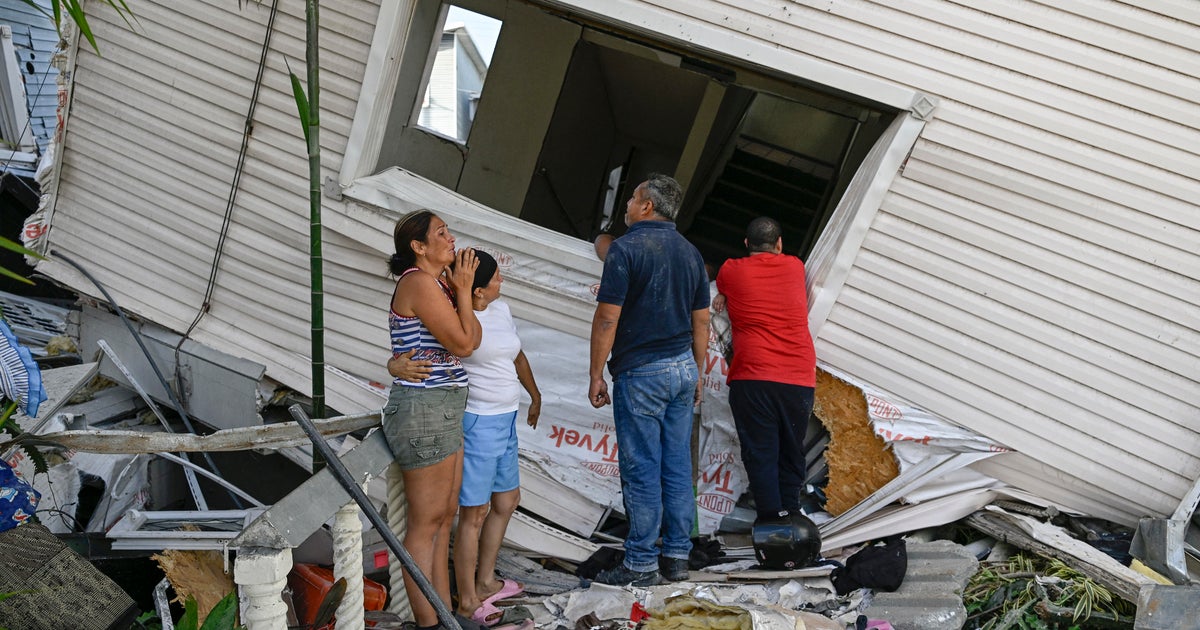
Powerful earthquakes with magnitudes of 7.2 and 7.5 hit northern Venezuela, causing heavy damage and killing over 230 people. Thousands are injured, and many remain missing as rescue efforts continue, especially in the coastal region of La Guaira.
Key Facts
Two strong earthquakes struck northern Venezuela on Wednesday evening.
Official reports show around 235 people dead and at least 4,300 injured.
Thousands are still missing amid ongoing rescue efforts.
La Guaira, a coastal area north of Caracas, suffered heavy damage and many casualties.
The main airport in La Guaira was damaged and closed, making aid delivery harder.
Many buildings were destroyed, and streets cracked open due to the quakes.
Residents and neighbors are helping each other search through rubble for survivors.
Phone services were disrupted, making it hard for Venezuelans abroad to reach family.
Read the Original
Want the full story? Tap a source to open the original
article.
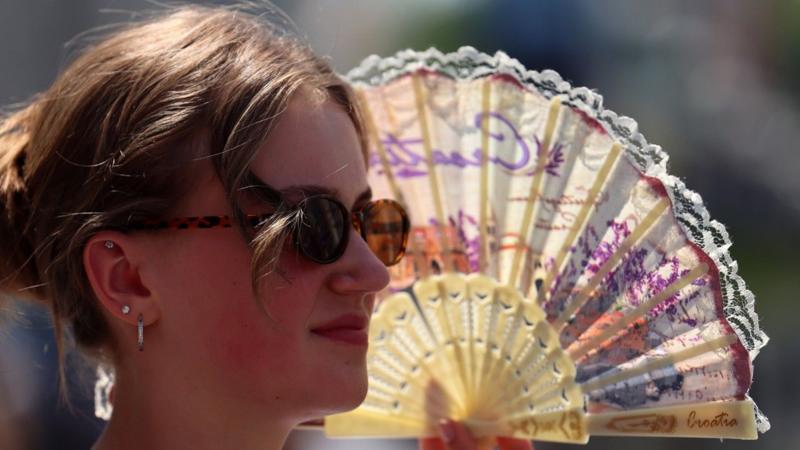
Three-quarters of mainland France is under a highest-level heat warning due to a strong heatwave. However, the southeastern Mediterranean coast, known as the French Riviera or Côte d'Azur, is experiencing cooler temperatures because the Mediterranean Sea helps lower the heat there.
Key Facts
Most of mainland France is on "red alert" for extreme heat.
The southeastern coast of France is not under the highest heat warning.
The Mediterranean Sea cools the air near the French Riviera.
This sea cooling effect keeps temperatures lower than in the northwest parts of France.
France is dealing with record-breaking heat during this heatwave.
Extreme heat is affecting public life and emergency services in some areas.
The heatwave is linked to climate change, according to experts.
Coastal waters in France are also warming due to the heatwave.
Read the Original
Want the full story? Tap a source to open the original
article.
Paris police asked organizers to cancel major public events scheduled for the weekend of June 27 because of a severe heatwave. Emergency services and hospitals are overwhelmed due to record-high temperatures in the city.
Key Facts
Paris police requested the cancellation of events including the pride march and the Solidays music festival.
Organizers risk being banned if they do not comply with the cancellation request.
The heatwave has caused emergency services and hospitals in Paris to become overwhelmed.
Temperatures in Paris have reached record-breaking highs.
Residents living in top-floor apartments are especially affected by the extreme heat.
Authorities also banned public alcohol consumption due to the heatwave.
The heatwave is part of a wider trend linked to climate change in France.
Parts of the French Riviera were spared from this extreme heatwave.
Read the Original
Want the full story? Tap a source to open the original
article.
Two strong earthquakes hit Venezuela on June 24, causing at least 235 deaths and leaving tens of thousands missing. Rescue teams from various countries are helping, and the United States is sending military planes and easing sanctions to support earthquake relief.
Key Facts
Venezuela was struck by two powerful earthquakes on June 24, 2026.
At least 235 people have died due to the quakes.
Tens of thousands of people are still missing after the disaster.
Emergency workers are searching through rubble for survivors.
Rescue teams from around the world have arrived to assist.
The United States is sending military planes to help with logistics.
The U.S. Treasury issued a license allowing transactions for earthquake aid despite existing sanctions.
This license is valid until October 2026 to help ease the delivery of humanitarian assistance.
Read the Original
Want the full story? Tap a source to open the original
article.
Two strong earthquakes struck near Caracas, Venezuela, causing heavy damage and killing at least 235 people. Many buildings collapsed, power outages occurred, and thousands were injured, with rescue efforts ongoing.
Key Facts
Two earthquakes hit west of Caracas on Wednesday, measuring 7.2 and 7.5 in magnitude.
At least 235 people have died and about 4,300 have been injured.
Around 250 buildings were damaged or destroyed nationwide, including hospitals and the Red Cross headquarters.
Caracas is in a valley with soft ground that makes earthquake shaking worse.
Many buildings are not built to withstand earthquakes and are on unstable land.
Venezuela’s economy is weakened and under sanctions, limiting resources for stronger building codes.
Past earthquakes in Caracas have caused major destruction, including deaths and collapsed buildings.
Rescue teams are still searching for people trapped under rubble, especially in the Altamira district.
Read the Original
Want the full story? Tap a source to open the original
article.
Europe is experiencing a severe heatwave that scientists say is definitely caused by human-driven climate change. The current heat is much hotter than similar events in the past, including the deadly 2003 heatwave.
Key Facts
The heatwave is making temperatures much higher than usual for June.
Scientists say climate change caused by humans made this heatwave more intense.
Today’s heatwave is 3.5°C hotter than a similar event in June 1976.
The 2003 European heatwave caused tens of thousands of deaths.
France has recorded its hottest day since temperature records began in 1947.
Paris has restricted public alcohol consumption due to the heat.
Emergency services in France are overwhelmed by the heatwave.
Experts say adapting to climate change means redesigning cities to handle hotter weather.
Read the Original
Want the full story? Tap a source to open the original
article.
A record-breaking heatwave in Europe has caused health and safety problems, including a rise in drowning deaths in France. Because emergency services are overwhelmed, public events like the Paris Pride March have been postponed or canceled.
Key Facts
Paris Pride March, originally planned for Saturday, was postponed after police asked organizers to change the date.
At least 55 people have drowned in France linked to the heatwave, with warnings the number may increase.
Hospitals in Paris and nearby areas are overwhelmed due to high temperatures.
Public alcohol consumption and sales in Paris were banned starting June 26 to reduce pressure on emergency services.
Other public events, such as concerts and a track and field meet in Paris, were postponed to avoid overwhelming response teams.
Over 150 million people in Europe are expected to face temperatures above 35°C, including large populations in Germany and France.
Around 70% of Europe's population will experience temperatures above 30°C during the heatwave.
The heatwave has caused multiple challenges, including increased deaths, strain on hospitals, and changes to public events.
Read the Original
Want the full story? Tap a source to open the original
article.
Paris is experiencing a record-breaking heatwave that has overwhelmed hospitals and emergency services. In response, authorities have banned public alcohol sales and consumption starting June 26 and asked organizers to cancel major public events, including the pride march, to reduce the strain on services.
Key Facts
Paris hospitals are overwhelmed due to an intense heatwave.
Authorities have banned alcohol sales and drinking in public spaces from June 26.
Police have asked event organizers to cancel several public events, including the pride march.
The heatwave is described as record-breaking and extreme.
Emergency services are under heavy pressure due to the high temperatures.
The French Riviera has been mostly spared from the heatwave.
Climate experts link the heatwave to climate change.
Homeless migrants in Paris face additional challenges during the extreme heat.
Read the Original
Want the full story? Tap a source to open the original
article.
London cancelled a climate change event called "Extreme Heat" because temperatures were too high, showing the UK is not prepared for extreme heat. The UK has broken temperature records, causing disruptions in transport, school closures, and health risks, especially for vulnerable people.
Key Facts
The UK reached a record temperature of 36.1°C (97°F) in June 2026.
Air conditioning sales in the UK increased by 420% compared to the previous year.
The RAC reported 20% more vehicle breakdowns due to the heat.
Over 2,600 rail services were delayed or cancelled because hot tracks can derail trains.
More than 1,000 schools and nurseries closed due to the heatwave.
The 2022 heatwave caused around 3,000 heat-related deaths, mostly among people over 65.
UK homes are built to keep heat inside in winter, making them prone to overheating in summer.
Vulnerable groups like older adults, low-income families, and renters have the least access to cooling.
Read the Original
Want the full story? Tap a source to open the original
article.
A red heat warning is active in parts of south-east and central southern England, with temperatures expected to reach up to 37°C (98.6°F). Cooler weather and thunderstorms are forecast to arrive from the west during the weekend, ending the heatwave.
Key Facts
Overnight temperatures in southern England and Wales stayed above 20°C recently.
A record June temperature of 36.7°C (98°F) was set in Merryfield, Somerset.
Wales reached a new June high of 36.6°C in Cardiff.
Scotland and Northern Ireland had their highest temperatures this year at 31.2°C and 30°C respectively.
A tropical night means the temperature does not drop below 20°C during a full day.
Thunderstorms with heavy rain, lightning, hail, and strong winds are expected in some areas.
The heatwave will move eastwards on Friday, with cooler weather arriving from the west this weekend.
Temperatures will return closer to normal levels by Sunday, with highs in the high teens to mid twenties Celsius.
Read the Original
Want the full story? Tap a source to open the original
article.
The home secretary, Shabana Mahmood, wants the migration minister, Mike Tapp, to be fired after he wrote a newspaper article without permission. Tapp defended his actions on social media and said he will not be intimidated, while the prime minister has not yet decided to remove him. This disagreement shows tension in the government as a new administration prepares to take power soon.
Key Facts
Mike Tapp wrote an article in the Times supporting exemptions for overseas care workers from immigration rule changes.
Shabana Mahmood, the home secretary, said Tapp should be fired for writing the article without approval.
Tapp posted on social media that he will not be intimidated and shared that he has been working on this policy for months.
The prime minister has not made a decision about firing Tapp yet.
Other government members think it is unwise for junior ministers to publicly share their views like this.
Tapp’s article was seen as trying to claim credit for an idea from internal ministerial talks.
The disagreement happens just before a new government, led by Andy Burnham, is expected to take office soon.
A justice minister advised the Home Office to remain calm and address the issue internally.
Read the Original
Want the full story? Tap a source to open the original
article.
The number of Americans applying for Irish citizenship through their Irish family roots has greatly increased over the past decade, reaching a new high in 2025. At the same time, more people moved from the U.S. to Ireland last year than from Ireland to the U.S., marking a notable change in migration patterns.
Key Facts
Irish citizenship applications by U.S. citizens grew from about 2,000 in 2015 to nearly 19,000 in 2025.
The biggest increases happened between 2023-2024 and 2024-2025.
More Americans are seeking a second passport from Ireland as a backup plan amid political and economic uncertainty.
From April 2024 to April 2025, nearly 9,600 people moved from the U.S. to Ireland, almost double the number from the previous year.
In the same period, about 6,100 people moved from Ireland to the U.S., which is less than the number going to Ireland.
The U.S. experienced more people leaving than arriving last year, according to the Brookings Institution.
Some Americans are drawn to Ireland for financial reasons and political changes at home.
Personal stories include individuals moving for opportunities or family reasons, such as a couple relocating to Ireland for work and education.
Read the Original
Want the full story? Tap a source to open the original
article.
The United Nations nuclear agency says Iran’s promise not to build nuclear weapons needs very strong checks to make sure it is true. Iran and the United States are negotiating a lasting peace deal after a recent war, with talks focusing on Iran’s nuclear program and allowing UN inspectors access to nuclear sites.
Key Facts
The UN nuclear chief, Rafael Grossi, says verification is needed to ensure Iran is not making nuclear weapons.
Iran and the US signed a preliminary deal last week to end the conflict that began in February.
There is disagreement between Tehran and Washington about whether UN inspectors can visit Iran’s nuclear facilities.
Before the war, Iran had 440 kilograms of uranium enriched to 60%, below the amount needed for a bomb.
The US and Israel bombed Iranian nuclear sites last year, which affected Iran’s uranium stockpile.
Iran previously agreed to a nuclear deal in 2015 but stopped cooperating after the US and Israeli attacks.
Iran closed the Strait of Hormuz during the war, a key passageway for global energy shipments.
An attack in the Strait of Hormuz recently caused the UN to halt evacuation efforts for stranded sailors.
Read the Original
Want the full story? Tap a source to open the original
article.
The International Atomic Energy Agency (IAEA) chief, Rafael Grossi, said a strong system to check Iran’s nuclear program is needed to ensure Iran does not develop nuclear weapons after the ongoing Middle East conflict ends. Iran and the United States recently signed a preliminary deal to stop the war and plan to negotiate further, but disagreements remain about how much access UN inspectors will have to Iranian nuclear sites.
Key Facts
IAEA head Rafael Grossi says Iran must have strict nuclear inspections to prevent weapon development.
Iran and the US signed a preliminary deal aimed at ending the conflict in the Middle East.
The war began in February after large US and Israeli airstrikes on Iranian nuclear facilities.
Iran declared it does not intend to develop nuclear weapons, but verification is necessary.
The IAEA wants Iran’s enriched uranium stockpile to be reduced under its supervision.
Before the war, Iran had about 440 kilograms of uranium enriched to 60%, below weapons level.
Iran stopped cooperating with the IAEA last year after US and Israeli attacks.
US President Trump said Iran agreed to allow UN inspectors to return, but Iran denies this.
The conflict’s resolution also involves disputes over strategic locations like the Strait of Hormuz.
Read the Original
Want the full story? Tap a source to open the original
article.
People from Venezuela living in Doral, Florida, have organized to send help to Venezuela after two earthquakes hit the country. Many Venezuelans in Doral fled their home country due to economic problems and insecurity.
Key Facts
Doral, Florida has the largest number of Venezuelan residents in the US, with over 40% of its population being of Venezuelan origin.
Two earthquakes occurred in Venezuela on a recent Wednesday.
The Venezuelan community in Doral is collecting aid to send to Venezuela.
Simón Peña, a member of the community, donated drinking water while hoping to hear news about missing family members.
Many Venezuelans left their country after President Nicolás Maduro took office in 2013, following years under former President Hugo Chávez.
The aid effort is driven by people wanting to support those affected from outside Venezuela.
The video report was produced by Jose Rodero and Ayelén Oliva for BBC Mundo.
Read the Original
Want the full story? Tap a source to open the original
article.
In 2026, many Western countries face a serious housing affordability problem, with rising rents and home prices outpacing wages. Governments in the UK, Europe, and the US are introducing new laws and plans to increase affordable housing and protect renters.
Key Facts
England and Wales started a new renters’ law on May 1, ending “no-fault” evictions.
The European Commission and Parliament are focusing on making housing more affordable.
The US Senate passed a bipartisan bill to reduce building barriers and increase affordable homes.
Housing costs have been rising faster than incomes in many cities like London, Berlin, Toronto, and Sydney.
Housing is considered unaffordable when it costs more than 30-40% of household income.
Governments and experts debate whether housing should be a basic need or treated as an investment.
Some Western countries reduced public spending on social housing since the late 1970s and 1980s, making the crisis worse.
The Netherlands plans to build 100,000 new homes yearly to address the problem.
Read the Original
Want the full story? Tap a source to open the original
article.