Neutral summaries of your favorite news sources — just the facts.
Your favorite news sources, one neutral feed — we distill their reporting into fact-first
summaries and always link to the original story. How it works
World News
Comprehensive coverage of international news and global events
The United States and Iran have signed a temporary peace agreement that could help end their conflict and improve global energy supply. Oil prices fell and Asian stock markets rose after the announcement, while shipping in the crucial Strait of Hormuz may become safer if the terms are followed.
Key Facts
The US and Iran signed a memorandum of understanding (MoU) aiming to end hostilities.
Brent crude oil prices dropped by up to 1.6% after the agreement was announced.
President Donald Trump had warned the US might restart military attacks on Iran if it misbehaved.
Asian stock markets, including Japan’s Nikkei 225 and South Korea’s Kospi, reached record highs.
The US naval blockade of Iranian ports is expected to end immediately under the agreement.
Iran will reopen the Strait of Hormuz, a vital shipping route for global oil supply.
Despite the agreement, shipping companies still worry about safety due to unclear details on routes and timing.
The Baltic and International Maritime Council advises caution and careful risk checks before resuming shipping through the strait.
Read the Original
Want the full story? Tap a source to open the original
article.
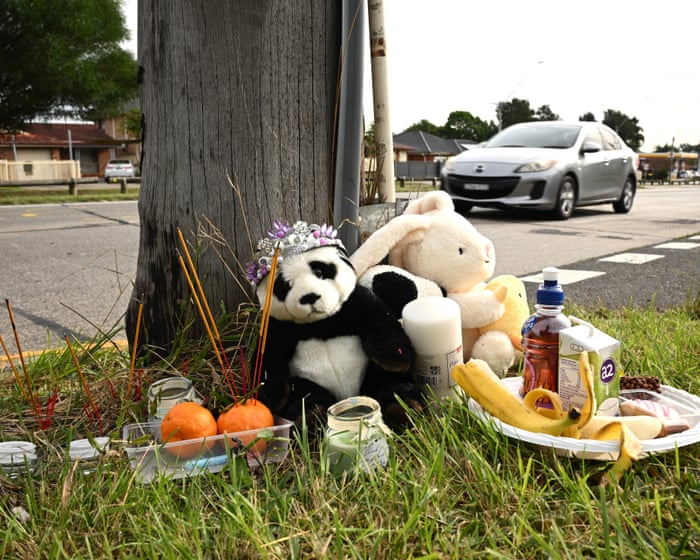
A five-year-old girl and her 14-month-old baby brother were killed when a car hit their pram in Sydney’s southwest while crossing the street with their mother. The children were taken to hospital but died shortly after; the driver was taken for testing and police are investigating the crash.
Key Facts
The children were Katherine (5 years old) and Harry (14 months old).
Their mother, Sok Ram, was with them and treated for minor injuries.
The accident happened around 3:15 p.m. in Cabramatta, Sydney.
Witnesses and bystanders tried to save the children and performed CPR.
A GoFundMe page raised over $115,000 for the family by the next day.
The 56-year-old driver was uninjured and taken for mandatory testing.
Police crash investigators are looking into the cause of the collision.
The community placed a memorial with candles and toys at the crash site.
Read the Original
Want the full story? Tap a source to open the original
article.
A wildfire called the Upriver fire burned about 250 acres near Spokane, Washington, destroying around a dozen homes. Officials found possible human remains in a burned home where a resident had refused to evacuate, and authorities are working to confirm the identity and cause of death.
Key Facts
The Upriver fire began on Tuesday around 12:30 p.m. near Spokane, Washington.
The fire has burned about 250 acres and destroyed about a dozen homes.
Thousands of people were ordered to evacuate the area due to the dangerous fire.
Possible human remains were found in one of the burned homes where a resident did not leave.
Law enforcement officers tried to contact the resident but received no response before evacuating themselves.
The fire was driven by strong winds, making it move very quickly and creating tough conditions for firefighters.
About 10 to 15 aircraft were involved in fighting the fire, with more expected to arrive.
Washington Governor Bob Ferguson requested federal help from FEMA to support firefighting efforts.
Read the Original
Want the full story? Tap a source to open the original
article.
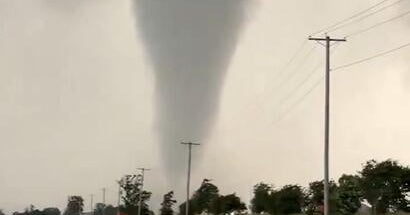
Tornadoes were confirmed in Illinois and Iowa on Wednesday evening, causing damage and power outages. The National Weather Service warned that these tornadoes could be very strong, and several areas in the Midwest experienced severe weather including large hail and dangerous winds.
Key Facts
A tornado was confirmed near Harpers Ferry, Iowa, at 5:10 p.m., and another in Charleston, Illinois, around 6:40 p.m.
The weather service called the situation "particularly dangerous," meaning strong tornadoes were likely.
Charleston experienced significant damage with downed trees, power lines, and very large hail (2.75 inches).
Charleston declared a local state of emergency, and its police advised people not to drive unless necessary.
A tornado also hit Effingham, Illinois, causing building and power line damage and knocking out internet.
At least seven tornadoes were reported during this event, and about 55,000 power customers lost electricity in Illinois.
More than 125 million people were under severe weather alerts in the U.S. on Wednesday, including flood warnings on the Gulf Coast because of Tropical Storm Arthur.
Meteorologists said such strong tornado conditions in June are unusual, caused by a mix of fast winds, warm moist air, and cold air creating rotation.
Read the Original
Want the full story? Tap a source to open the original
article.
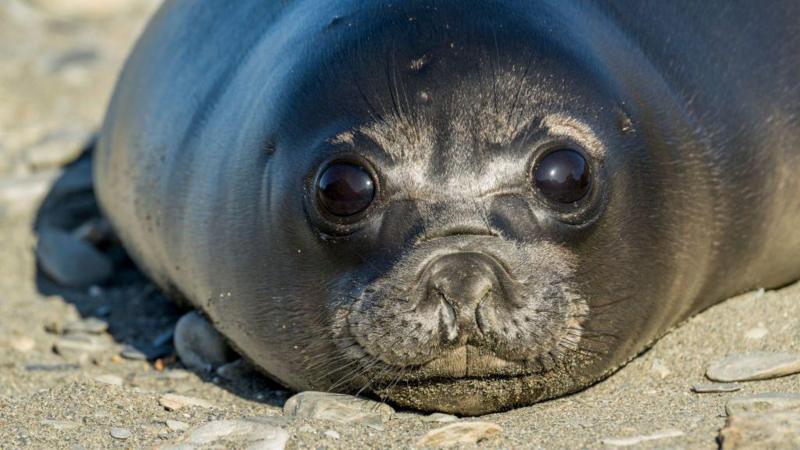
Bird flu has killed more than 75% of baby southern elephant seals on Heard Island, a remote Australian territory. Scientists found the H5N1 bird flu strain affected seals and some penguin species, marking the first detection of this virus in an Australian external territory.
Key Facts
Heard and McDonald Islands are remote Antarctic islands owned by Australia, located about 4,000 km southwest of the mainland.
Scientists estimate around 13,000 baby southern elephant seals died from bird flu out of a population of about 17,000 on Heard Island.
The bird flu strain involved is H5N1, which has spread globally among birds and some mammals.
Six species tested positive for the virus, including southern elephant seals, king and gentoo penguins, Antarctic fur seals, and South Georgia diving petrels.
The mortality rate in some areas was as high as 97% for baby seals.
No unusual deaths were seen in albatrosses or two native species on the islands.
Researchers think bird flu arrived at these islands in August 2023, likely from migrating birds from nearby French islands.
Australia's Environment Minister said the deaths show the need to prepare for possible spread to the Australian mainland.
Monitoring will continue through the Australian Antarctic Program to track bird flu in these territories.
Read the Original
Want the full story? Tap a source to open the original
article.
A heatwave is developing across Europe, causing temperatures to rise above 30°C in parts of the UK. The UK Health Security Agency has issued heat health alerts, especially for the Midlands and south-east England, where temperatures could reach heatwave levels by Tuesday.
Key Facts
Temperatures in the UK are expected to go above 30°C in some areas this weekend.
Heat health alerts are active from Wednesday afternoon until Monday evening in parts of the Midlands and south-east England.
A "heat dome," which traps warm air under a high-pressure area, is causing high temperatures across Europe.
Southern and eastern England could see temperatures from 27°C to 32°C between Friday and Monday.
Other parts of the UK will stay cooler, with temperatures generally between 17°C and 26°C.
Some areas in France may reach temperatures over 40°C, potentially breaking June records.
Thunderstorms might develop in England and Wales by Monday.
The heatwave threshold varies, ranging from 25°C in parts of Scotland and Wales to 28°C in London.
Read the Original
Want the full story? Tap a source to open the original
article.
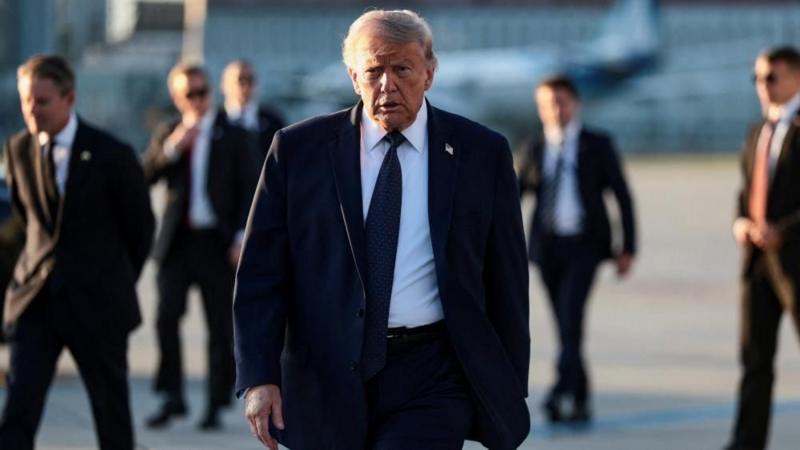
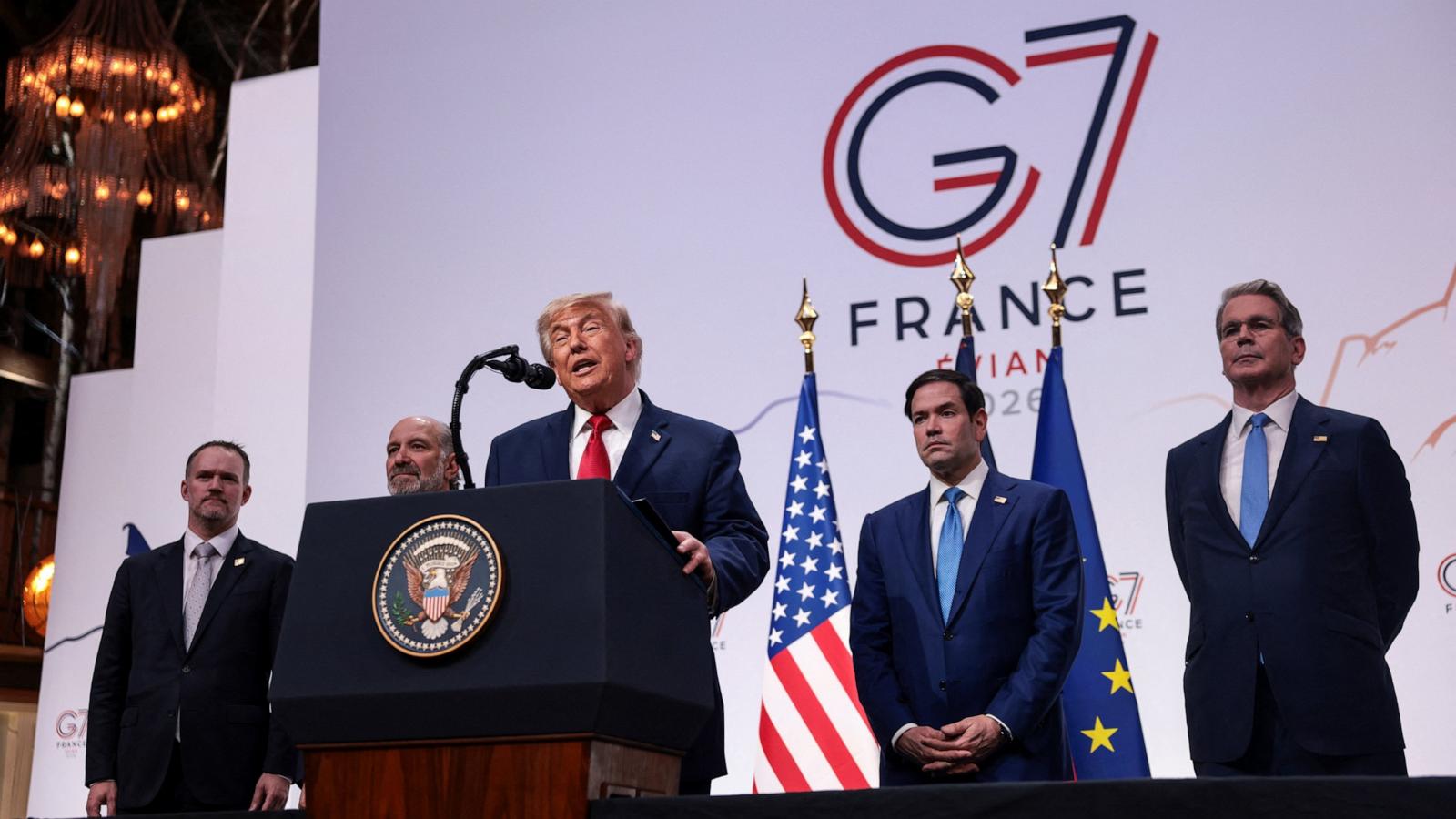
US President Donald Trump and Iran's President Masoud Pezeshkian signed an initial peace deal aimed at ending the war between the two countries. The deal allows for immediate reopening of the Strait of Hormuz, stops US sanctions on Iran, and starts a $300 billion reconstruction plan, while negotiations on Iran’s nuclear program will continue for up to 60 days.
Key Facts
The US and Iran signed a preliminary peace agreement in France during the G7 summit.
The deal reopens the Strait of Hormuz, a vital waterway for global oil and gas trade.
The US agreed to end all types of sanctions on Iran as part of the agreement.
A $300 billion plan is included for Iran’s reconstruction after the conflict.
The nuclear issue remains unresolved, with up to 60 days to negotiate a final deal.
Iran agreed not to develop nuclear weapons and to dilute enriched uranium on site under UN supervision.
Iran may start charging fees for ships passing through the Strait of Hormuz after 60 days.
President Trump warned the US would respond strongly if a final deal is not reached.
Read the Original
Want the full story? Tap a source to open the original
article.
The Trump administration released a 14-point agreement with Iran aimed at reopening the Strait of Hormuz and avoiding global economic collapse. Both the US and Iranian leaders claimed success, while Iran highlighted the agreement as a US failure and praised its benefits.
Key Facts
The Trump administration calls the 14-point US-Iran deal a “major win.”
Iran’s chief negotiator says the deal shows US failure and surpasses goals of military action.
The agreement allows Iran to enrich uranium for civilian use and keeps ballistic missile programs untouched.
President Trump signed the memorandum during the G7 summit in France.
The deal includes returning billions of dollars in frozen Iranian assets.
Hezbollah’s leader also called the agreement a “great victory.”
The deal aims to keep the Strait of Hormuz open, a key shipping route.
The article also mentions other unrelated US political and military updates.
Read the Original
Want the full story? Tap a source to open the original
article.
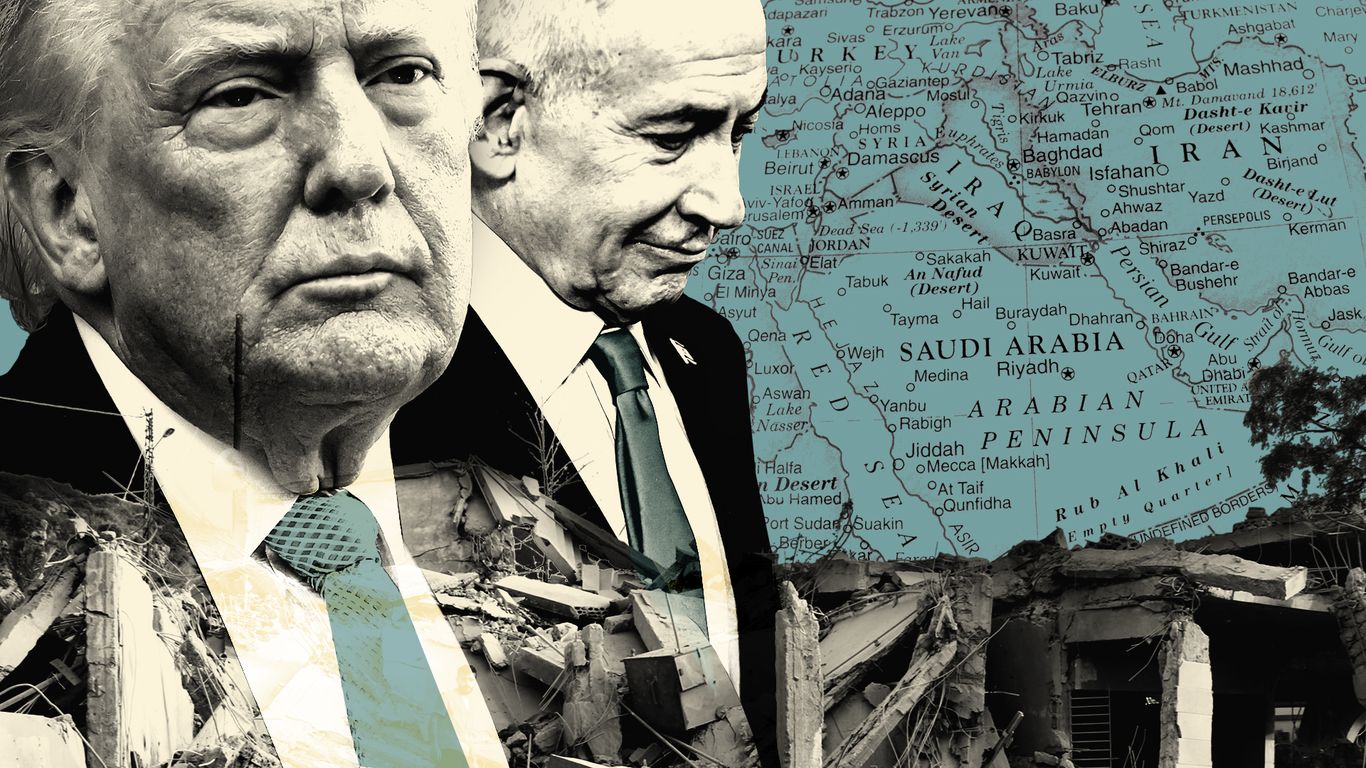
President Trump signed a new agreement with Iran that Israeli Prime Minister Benjamin Netanyahu and his allies strongly oppose. Netanyahu believes the deal is a mistake and worries about its impact on Israel's security, especially regarding Lebanon and Hezbollah.
Key Facts
President Trump released and signed a memorandum of understanding (MOU) with Iran.
Netanyahu wanted to continue the war with Iran but ended up accepting the deal publicly.
The United Arab Emirates and other Gulf states support the deal, unlike Netanyahu.
Netanyahu and his allies are cautious about openly opposing the deal in the U.S. due to Trump's involvement.
Israeli officials complain they had little chance to review the final deal before it was announced.
The deal includes a ceasefire covering fighting between Israel and Hezbollah in Lebanon and may require Israeli withdrawal from Lebanon.
Netanyahu says Israel will not withdraw from Lebanon unless Hezbollah disarms.
Trump said Israel could still respond if Hezbollah attacks and criticized some Israeli military actions in Lebanon.
Read the Original
Want the full story? Tap a source to open the original
article.
Israeli Prime Minister Benjamin Netanyahu is under pressure after being excluded from a new agreement between the United States and Iran. The agreement, called a Memorandum of Understanding, also involves Israel’s conflict with Lebanon.
Key Facts
Israeli Prime Minister Benjamin Netanyahu was not included in the recent US-Iran agreement.
The agreement is called a Memorandum of Understanding.
It relates to the situation involving Israel and Lebanon.
The US and Iran reached the agreement without involving Israel.
Netanyahu is facing increased political pressure because of this exclusion.
The source reporting this information is Al Jazeera’s Nour Odeh.
The agreement links regional conflicts in the Middle East, including Israel’s war on Lebanon.
The situation highlights tensions between Israel, Iran, and the US.
Read the Original
Want the full story? Tap a source to open the original
article.
G7 leaders met in France to discuss ways to increase pressure on Russia to end the war in Ukraine. During the summit, U.S. President Donald Trump showed a tougher stance on Russia and signed an agreement aimed at ending the conflict with Iran.
Key Facts
The G7 includes Britain, Canada, France, Germany, Italy, Japan, and the United States.
The leaders agreed to increase sanctions on Russia, especially targeting its fossil fuel revenues.
They decided to provide more air defense equipment and allow Ukrainian companies to produce long-range missiles and defense systems.
President Trump signed a memorandum of understanding to help end the conflict between the U.S. and Iran.
Ukrainian President Volodymyr Zelensky attended the summit and held talks with President Trump.
European leaders noted a change in the U.S. approach to the Ukraine conflict, with Trump adopting a harder line on Russia.
Discussions about regulating artificial intelligence also took place, with some European countries pushing for stronger protections for minors.
Leading AI experts from major companies like OpenAI and DeepMind attended part of the summit.
Read the Original
Want the full story? Tap a source to open the original
article.
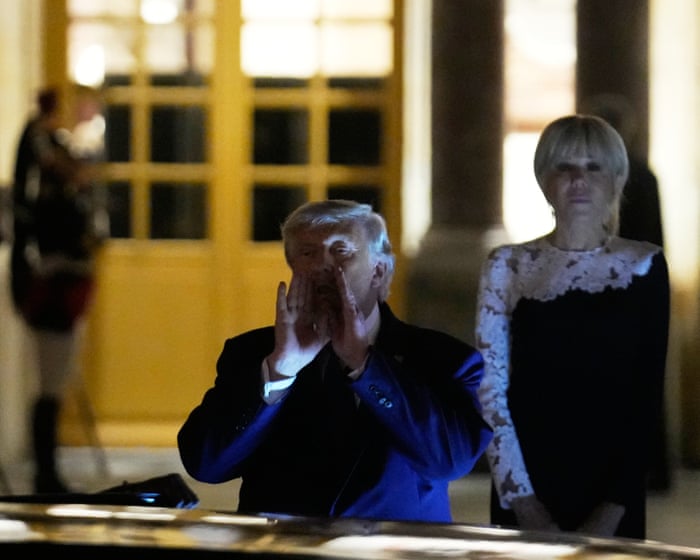
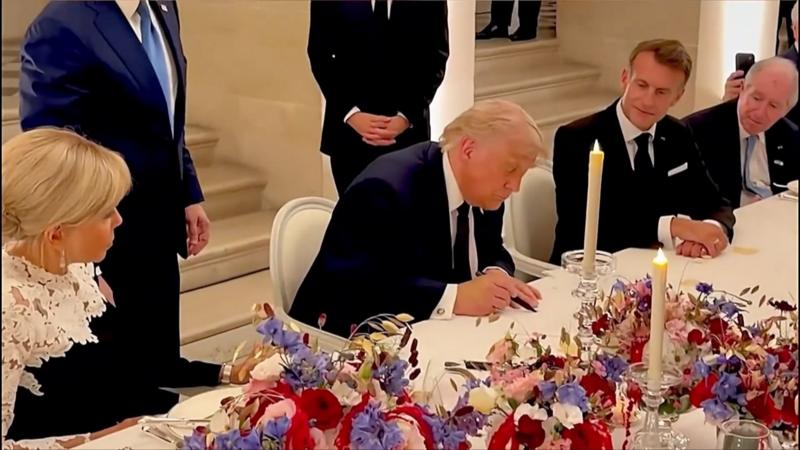
President Donald Trump signed a 14-point agreement to extend a ceasefire with Iran at the Palace of Versailles in France. The agreement, called a Memorandum of Understanding, was signed after a G7 dinner with French President Emmanuel Macron and First Lady Brigitte Macron.
Key Facts
The agreement extends the ceasefire between the United States and Iran.
It was signed at the historic Palace of Versailles near Paris.
The agreement is a Memorandum of Understanding with 14 points.
The signing took place following a G7 summit dinner.
French President Emmanuel Macron and First Lady Brigitte Macron were present.
The event marks continued diplomatic efforts between the US and Iran.
President Trump also mentioned that the US is importing millions of barrels of oil from Iran.
The article references recent tensions and missile strikes exchanged between Israel and Iran.
Read the Original
Want the full story? Tap a source to open the original
article.
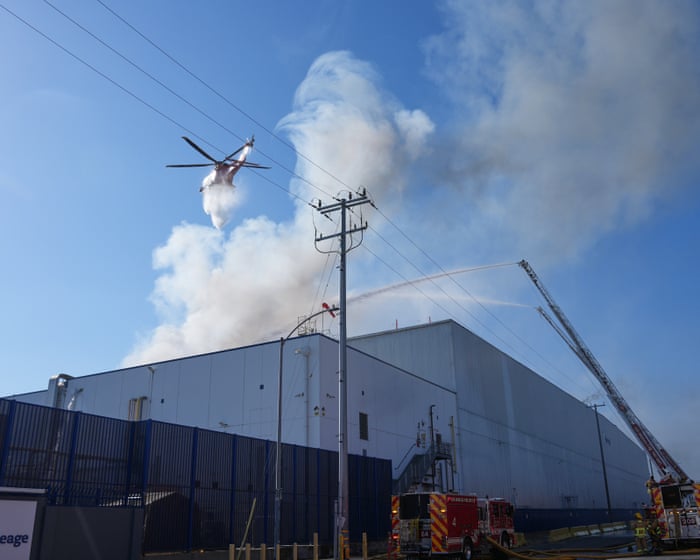
A fire broke out on the solar panel-covered roof of a large cold storage warehouse in Los Angeles, causing thick smoke and the release of ammonia gas. City officials ordered nearby residents to stay indoors while firefighters and hazmat teams worked to control the blaze.
Key Facts
The fire happened at a 500,000 square-foot cold storage facility owned by Lineage in the Boyle Heights area.
About 110 firefighters responded to the fire, along with hazmat teams from the city and county.
The fire started on the solar panel-covered roof; the cause is still under investigation.
An ammonia line burst, releasing toxic and flammable ammonia gas into the air.
Officials advised people nearby to stay inside, keep windows and doors closed, turn off air conditioning, and avoid travel near the site.
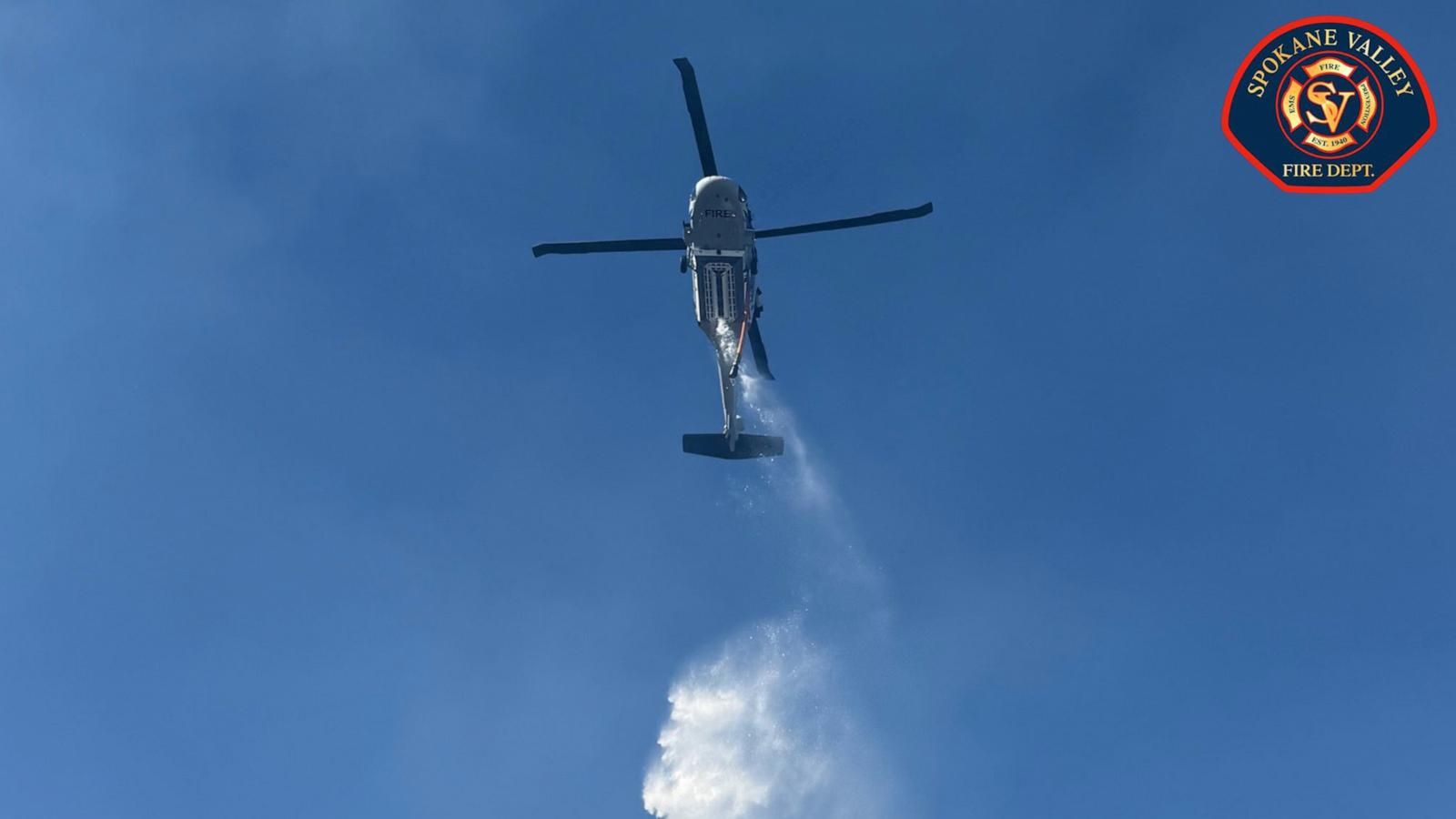
Firefighters used helicopters to drop water on the fire because it was too dangerous to fight from the roof.
The roof showed signs of sagging, and there was concern about lithium ion batteries that store solar energy being on the roof.
Lithium ion battery fires are difficult and dangerous to put out due to a process called thermal runaway.
Read the Original
Want the full story? Tap a source to open the original
article.
Brazilian President Luiz Inácio Lula da Silva warned US President Donald Trump not to interfere in Brazil’s October presidential election. The warning came after Trump criticized Brazil’s judiciary for actions against Lula’s political opponents and amid other tensions including new US tariffs and the designation of Brazilian drug gangs as terrorist groups.
Key Facts
Lula warned Trump against meddling in Brazil’s upcoming presidential election.
Trump criticized Brazil’s judicial actions targeting Lula’s political rivals.
Tensions between Brazil and the US have increased due to proposed US tariffs on Brazilian imports.
The US government labeled Brazil’s largest drug gangs, First Command Capital and Red Command, as foreign terrorist organizations, a move opposed by Lula.
Lula believes the US sanctions and tariffs ignore Brazil’s sovereignty and unfairly target Brazilian officials.
Brazil’s Supreme Court sentenced Eduardo Bolsonaro, son of former President Jair Bolsonaro, to prison for interfering in his father’s coup trial.
Trump said Brazil had become “dangerous politically” and mentioned wanting to arrest “Bolsonaro junior,” referring either to Eduardo or Flávio Bolsonaro, who is running for president against Lula.
Bolsonaro’s sons recently met US officials, including Trump, shortly before the drug gang terrorism designations.
Read the Original
Want the full story? Tap a source to open the original
article.
Iranian negotiator Mohammad Bagher Ghalibaf said that talks and diplomacy achieved better results than war. He also mentioned that a recent Israeli strike on Beirut motivated President Donald Trump to take action.
Key Facts
Mohammad Bagher Ghalibaf is an Iranian negotiator.
Ghalibaf believes diplomacy was more effective than military action.
Israel carried out a strike on Beirut, the capital of Lebanon.
Ghalibaf called the strike a last-ditch attempt to disrupt an agreement (MOU).
He said this strike pushed President Donald Trump to respond.
The focus of the comments was on the importance of talks over conflict.
Read the Original
Want the full story? Tap a source to open the original
article.
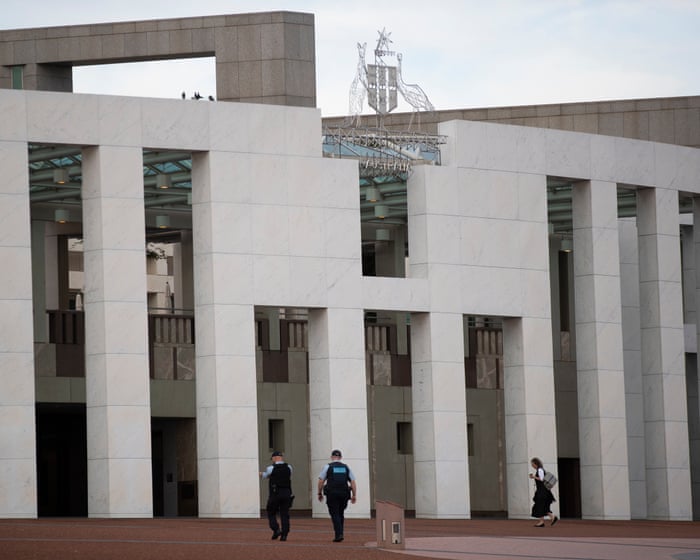
Australia will soon make public the names of political lobbyists who have special access to Parliament House and the MPs who sponsor their entry passes. New rules will require two MPs to approve each lobbyist’s pass, introduce fees, restrict access times, and increase transparency through an online register.
Key Facts
Political lobbyists with access passes to Parliament House will be publicly named in an online register.
Two MPs must now approve a lobbyist’s access pass, with the main sponsor held responsible for their conduct.
Fees will be introduced for lobbyist and commercial passes.
Over 2,050 sponsored passes existed as of mid-2024, but it is unclear how many belong to paid lobbyists.
The pass system review was led by House Speaker Milton Dick and Senate President Sue Lines, following a request from the Prime Minister.
Lobbyists will keep orange passes, while commercial and community groups will get light blue passes showing sponsoring MPs and organizations, but not individual names.
Access will be restricted to certain hours and days; passes will not allow free movement on weekends or late at night.
Former state and territory parliamentarians’ passes will be limited to former premiers, chief ministers, and ministers.
Read the Original
Want the full story? Tap a source to open the original
article.
President Donald Trump and Iranian President Masoud Pezeshkian have signed an agreement called a Memorandum of Understanding to end the war between the United States and Iran. Negotiators from both countries will meet in Geneva to continue working on the details of the agreement.
Key Facts
President Donald Trump and Iranian President Masoud Pezeshkian signed a Memorandum of Understanding.
The agreement aims to end the war between the U.S. and Iran.
Negotiating teams from both countries will meet in Geneva on Friday.
The meeting will work on further details of the agreement.
The Memorandum of Understanding is a formal agreement showing intent to cooperate.
Mike Hanna provided the details about the situation.
Read the Original
Want the full story? Tap a source to open the original
article.
President Donald Trump announced a new agreement with Iran aimed at preventing economic disaster and stopping Iran from obtaining nuclear weapons. He said Iran could keep some ballistic missiles, similar to other countries in the region, and warned that bombing could resume if Iran breaks the deal.
Key Facts
President Trump finalized a memorandum of understanding with Iran to avoid economic problems and war.
Trump compared avoiding economic collapse to not wanting to be like Herbert Hoover, a U.S. president linked to the Great Depression.
The deal was signed on Wednesday night in France, but the full text has not been made public.
Trump described the deal as historic and strong but said bombing Iran could restart if they violate the terms within 60 days.
Iran agreed not to develop nuclear weapons under the deal.
Trump said Iran can keep some ballistic missiles since neighboring countries like Saudi Arabia have them.
The president mentioned working with Gulf nations to address missile issues beyond nuclear concerns.
Trump expressed that it would be unfair for Iran to be disarmed of missiles while other countries in the region keep theirs.
Read the Original
Want the full story? Tap a source to open the original
article.
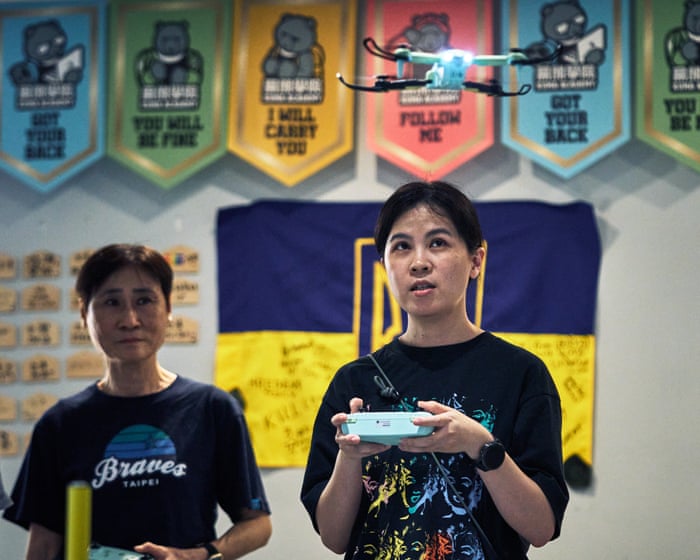
Taiwan has started its first civil defence drone training program to teach citizens how to use drones for emergency and defence purposes. This effort is inspired by Ukraine’s use of drones in its conflict with Russia and aims to prepare Taiwanese people amid concerns about China’s military threat.
Key Facts
Taiwan launched its first civil defence drone training program in May.
The program teaches people to pilot drones for surveillance and rescue tasks.
Ukraine’s use of drones against Russia influenced Taiwan’s new training efforts.
Over 30 volunteer civil defence groups are active in Taiwan.
The number of registered drones in Taiwan passed 39,000 by December 2023.
Taiwan’s Civil Aviation Administration lowered drone registration age to 14 in 2024.
Some Taipei high schools run drone-building summer camps for students.
The drone course participants range widely in age and include many women.
The training aims to help civilians actively observe risks, not directly fight in war.
Read the Original
Want the full story? Tap a source to open the original
article.