Neutral summaries of your favorite news sources — just the facts.
Your favorite news sources, one neutral feed — we distill their reporting into fact-first
summaries and always link to the original story. How it works
World News
Comprehensive coverage of international news and global events
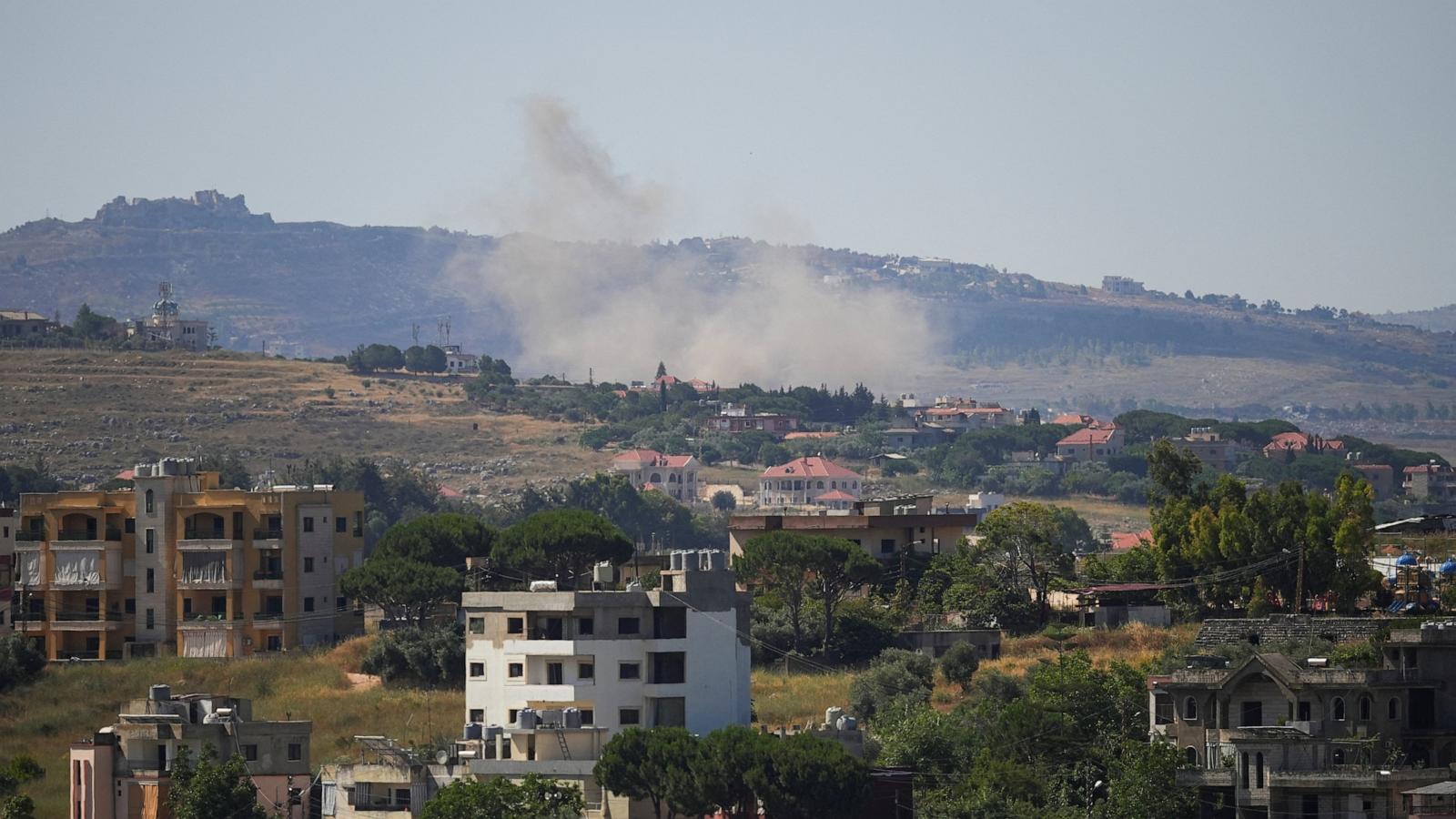
President Donald Trump announced that the U.S. and Iran have reached a peace deal that will be signed on Friday, ending military actions and reopening the Strait of Hormuz for oil flow. Despite the agreement, Israeli officials said Israel will not withdraw troops from Lebanon or other occupied areas, maintaining a strong military presence.
Key Facts
President Trump declared "major combat operations" against Iran started in February 2026 with U.S.-Israeli strikes.
A two-week ceasefire began but initial peace talks in Pakistan failed, leading to an open-ended ceasefire extension and continued U.S. blockade.
On Sunday, Trump announced a "great deal" with Iran, scheduled for signing on Friday.
The deal includes reopening the Strait of Hormuz, allowing oil to flow once mines are cleared.
Iran confirmed the agreement would be signed in Switzerland and includes all key points from both sides.
Israel’s National Security Minister and Defense Minister said Israel will not pull troops from Lebanon, Syria, or Gaza despite the U.S.-Iran deal.
Israeli officials stated they will clear security zones of terrorists and may destroy houses used as terrorist bases.
Pakistan’s Prime Minister confirmed the peace deal involves an immediate and permanent stop to military operations.
Read the Original
Want the full story? Tap a source to open the original
article.
EU and G7 leaders are meeting in France and Luxembourg to discuss urgent issues like Ukraine, Gaza, and Iran. The talks come after a deadly Russian strike on Kyiv, which damaged a historic monastery and killed at least nine people.
Key Facts
G7 leaders, including President Donald Trump, are gathering in Évian-les-Bains, France.
Ukraine, Gaza, and Iran are the main topics on the G7 agenda.
President Trump will update leaders on a new Iran peace deal made overnight.
Russia launched a heavy attack on Kyiv, killing nine and injuring more than 20.
The Russian strike hit the Unesco-listed Kyiv Pechersk Lavra monastery, a significant religious and cultural site.
Ukrainian President Volodymyr Zelenskyy called the attack a serious crime against Christian culture.
French Foreign Minister Jean-Noël Barrot compared the monastery attack to bombing Notre Dame, showing the strong condemnation from France.
France's President Emmanuel Macron urged for a ceasefire and renewed efforts for peace at the summit.
Read the Original
Want the full story? Tap a source to open the original
article.
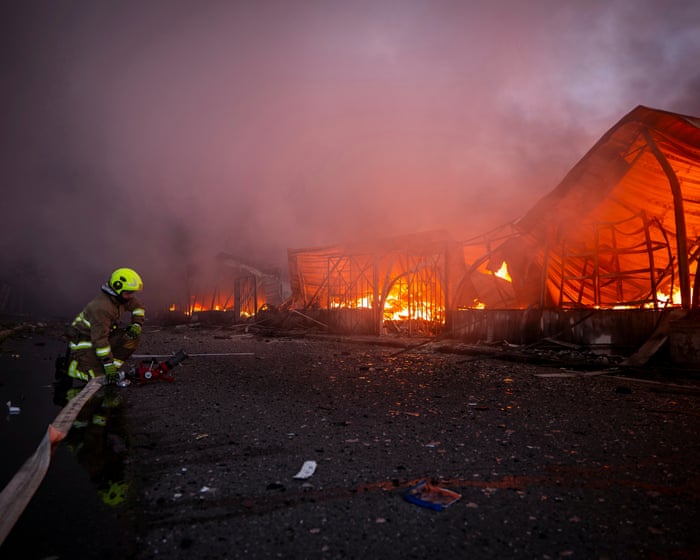
Russian missile and drone attacks killed at least nine people in Ukraine, damaged many buildings, and caused a large fire at Kyiv’s historic Dormition Cathedral. The strikes hit several cities, including Kyiv and Kharkiv, damaging cultural sites and civilian areas.
Key Facts
The attacks used missiles and kamikaze drones, striking multiple cities in Ukraine.
Around 140,000 households lost electricity due to the assault.
A drone hit the roof of the 11th-century Dormition Cathedral in Kyiv, causing a large fire.
Monks and rescue workers saved religious icons and relics from the burning cathedral.
The nearby Oleksandr Dovzhenko National Film Studios lost its main costume collection of about 100,000 items.
At least 20 people were wounded in Kyiv, including a child and a pregnant woman.
In Kharkiv, five emergency rescuers died in a double attack while fighting fires from earlier strikes.
Presidents Zelenskyy, Putin, and Trump spoke separately by phone about efforts to find peace in Ukraine.
Read the Original
Want the full story? Tap a source to open the original
article.
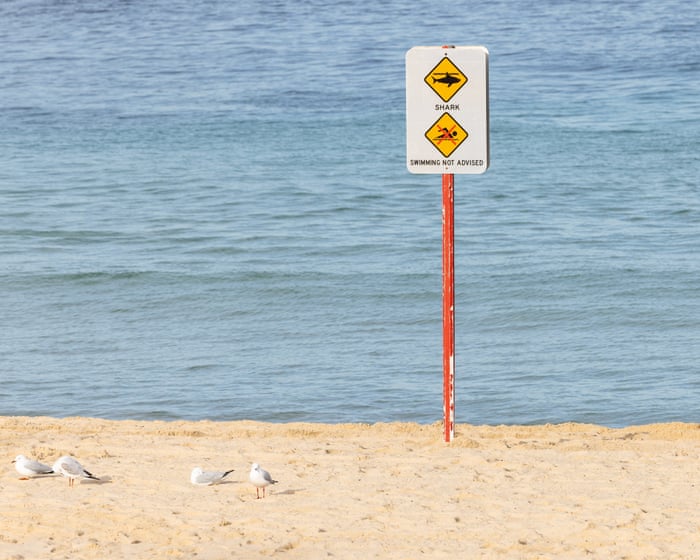
A 35-year-old woman named Leah Stewart was attacked by a great white shark while swimming at Coogee beach in Sydney. She lost one arm due to the attack and is in critical condition at St Vincent’s hospital, with her family asking for privacy as she recovers.
Key Facts
Leah Stewart was attacked by a 3.5-metre great white shark around 11 a.m. on Saturday.
She was swimming between the flags, which is generally considered a safe area.
Stewart suffered multiple bite wounds, broken bones, and heavy blood loss.
Her left arm was amputated due to the severity of the injuries.
A paddle boarder and rescue teams helped save her life immediately after the attack.
The NSW government allowed drone surveillance over Coogee beach to monitor sharks.
Former Prime Minister Tony Abbott called for a shark cull, but experts and NSW leaders rejected this idea.
Great white sharks are a protected species in New South Wales.
Read the Original
Want the full story? Tap a source to open the original
article.
The UK government, led by Keir Starmer, will ban children under 16 from using social media to protect their happiness and safety. Starmer says this rule will help parents and addresses concerns about the negative impact of social media on young people.
Key Facts
The UK will ban social media access for all children under 16 years old.
The ban aims to improve children's safety and mental health.
Starmer acknowledges some teenagers might try to bypass the ban but says the law is still important.
The government will also introduce strict rules on gaming services and live streaming to protect children.
Starmer compares today’s teenagers’ challenges with those of the 1970s, noting social media is a new and demanding presence in youths’ lives.
The ban is part of a broader effort to regulate powerful tech companies and support parents.
Starmer emphasizes that social media can harm children by encouraging bullying and making them unhappy.
The decision is based on listening to campaigners and concerns shared by parents.
Read the Original
Want the full story? Tap a source to open the original
article.
The United States and Iran have agreed on a deal to end the conflict involving the US, Israel, and Iran, including attacks on Lebanon. The agreement includes reopening the Strait of Hormuz, an important waterway for global oil shipments, and aims for a broader ceasefire and sanctions relief within 60 days.
Key Facts
President Donald Trump announced the deal on social media, highlighting the reopening of the Strait of Hormuz for oil transportation.
Iran’s deputy foreign minister said a broader agreement covering sanctions relief will be worked out during a 60-day ceasefire.
The full agreement is expected to be signed in Switzerland, described as a major breakthrough after months of fighting.
Several countries including Qatar, Pakistan, Türkiye, the UK, France, and the UN welcomed the deal as a positive step toward peace and stability.
The Strait of Hormuz is a key global shipping route for oil, and reopening it is expected to help lower energy prices.
The UK emphasized that Iran’s nuclear program commitments must be strong and verified for any lasting peace.
France called for the immediate and unconditional reopening of the Strait of Hormuz and supports Lebanese efforts for stability.
The deal is seen as a critical step toward resolving the wider conflict and restoring regional calm.
Read the Original
Want the full story? Tap a source to open the original
article.
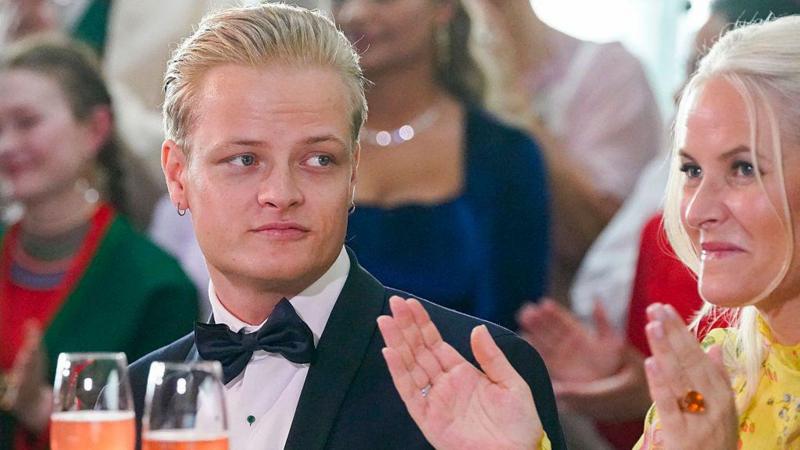
Marius Borg Høiby, son of Norway’s crown princess, was found guilty of multiple crimes, including two counts of rape, and sentenced to four years in prison by an Oslo court. He was also given a two-year restraining order and must pay compensation to four women.
Key Facts
Marius Borg Høiby was convicted of two rapes and other offences by the Oslo district court.
He received a four-year prison sentence and a two-year restraining order related to one victim.
The trial lasted six weeks and involved 40 charges, including rape, assault, restraining order violations, and drug and driving offences.
Høiby was acquitted of two other rape charges and one restraining order violation was overturned.
He pleaded not guilty to the most serious charges but admitted to some lesser offences.
Prosecutors wanted a prison term over seven years, while his defense asked for acquittal on rape charges and up to 18 months for admitted offences.
The rape accusations involved four women between 2018 and 2024, all alleging they were sleeping or incapacitated.
The case attracted widespread attention and happened while his mother, Crown Princess Mette-Marit, is seriously ill and awaiting a lung transplant.
Read the Original
Want the full story? Tap a source to open the original
article.
Marius Borg Høiby, the 29-year-old son of Norway's Crown Princess Mette-Marit, has been found guilty of two counts of rape and sentenced to four years in prison. He was cleared of two other rape charges but found guilty of several other offenses.
Key Facts
Marius Borg Høiby is the son of Crown Princess Mette-Marit but is not a member of the royal family.
He was found guilty of two counts of rape and sentenced to four years in prison by Oslo District Court.
He was acquitted of two other rape charges but guilty of many other offenses.
Prosecutors wanted a prison term of over seven years, while his defense asked for 18 months.
Høiby attended the verdict session via video link and was not physically present.
His mother, Crown Princess Mette-Marit, is seriously ill with pulmonary fibrosis and on a lung transplant waiting list.
His lawyers have requested early release so he can spend time with his sick mother.
The court’s ruling totals 128 pages and was explained by one of the judges at the start of the session.
Read the Original
Want the full story? Tap a source to open the original
article.
US musician Oliver Tree died in a helicopter crash in Rio de Janeiro, Brazil. The accident involved two helicopters colliding, causing one to fall and start a fire in a nearby car park.
Key Facts
Oliver Tree was a 32-year-old US musician and internet personality.
The crash happened during his world tour over Rio de Janeiro on Sunday.
Six people died in the collision, including Oliver Tree and Argentine content creator Gaspar Prim Diaz.
One helicopter fell onto a car dealership parking lot, causing a fire that burned about 20 cars.
Authorities in Rio de Janeiro started an investigation into the crash.
Oliver Tree was known for songs like "Life Goes On," "Miss You," and "Alien Boy."
He had recently performed in São Paulo and was scheduled to play in Europe later in the year.
Other notable figures like YouTuber KSI and Jackass star Steve-O publicly expressed their condolences.
Read the Original
Want the full story? Tap a source to open the original
article.
Iranian Americans in Los Angeles have mixed feelings about supporting Iran’s soccer team, Team Melli, in the World Cup. While some view the team as representing the Iranian government and plan protests, others choose to separate politics from sports and want to enjoy the games.
Key Facts
Los Angeles’s Westwood neighborhood has a large Iranian community with strong opposition to Iran’s current government.
The community displays Iran’s old lion-and-sun flag used before the 1979 revolution, along with images of opposition leader Reza Pahlavi.
Some Iranian Americans plan to protest Team Melli, seeing the team as linked to the Tehran government.
Others want to support the players and watch the games without focusing on politics.
The Trump administration did not allow Iran’s team to stay in the U.S. and made them base in Mexico during the World Cup.
Iran played matches near the U.S., including two in Los Angeles and one in Seattle.
A ceasefire between Iran and the U.S. was agreed upon just as the team arrived, easing some tensions.
The use of the old Iranian flag at matches is controversial, as FIFA prohibits political symbols in stadiums.
Read the Original
Want the full story? Tap a source to open the original
article.
After the US and Israel assassinated Iran’s supreme leader Ayatollah Ali Khamenei using AI-analyzed video footage, Russian security services temporarily disconnected parts of their surveillance system protecting President Putin and his close aides. This move reflects concerns about vulnerabilities from AI-based video analysis, leading Russia to increase its security measures and internet controls.
Key Facts
The US and Israel killed Iran’s supreme leader Ayatollah Ali Khamenei on February 28, 2026, using video footage analyzed by artificial intelligence (AI).
Russian security services disconnected parts of a surveillance system protecting President Putin and his inner circle after this event.
The assassination showed how AI can quickly analyze millions of hours of video from many cameras to find patterns and details.
Since Russia’s invasion of Ukraine in 2022, the country often cuts internet access during major events or in conflict zones to control information.
Russia began using AI-powered “smart” cameras in 2015 to analyze and monitor public spaces and residential buildings.
In 2023, Russia had about 508,000 AI-enabled cameras, with Moscow alone having 216,000 of them.
These cameras cover 74% of public spaces and 90% of residential buildings in Moscow.
Russian companies like NTech Lab and internet providers cooperate to expand this surveillance system.
Read the Original
Want the full story? Tap a source to open the original
article.
President Donald Trump is traveling to the G7 summit in France after announcing a deal aimed at ending the U.S. war with Iran. The agreement, though not fully detailed, involves lifting the U.S. blockade of the Strait of Hormuz, a key route for global oil shipments, and will lead to talks on Iran’s nuclear program.
Key Facts
President Trump announced a deal expected to end the U.S. war with Iran.
The deal intends to stop the U.S. blockade of the Strait of Hormuz, which carries about 20% of the world's crude oil.
Iran has said it will keep the strait closed until the agreement is officially signed.
Neither the White House nor Iran revealed the full details of the agreement.
Pakistan acted as a mediator in the negotiations between the U.S. and Iran.
"Pre-implementation discussions" will start soon, followed by 60 days of technical talks on Iran’s nuclear program.
The deal could change President Trump’s relations with other G7 leaders, who criticized his handling of the conflict.
Britain and France want to help clear mines from the Strait of Hormuz once the fighting pauses to restore safe shipping.
Read the Original
Want the full story? Tap a source to open the original
article.
The United States and Iran have reached a temporary agreement aimed at ending the war and reopening the Strait of Hormuz, with plans to sign the deal in Switzerland. The article also reviews key moments in Iran’s nuclear program and its tense relations with the U.S. since the 1960s.
Key Facts
Iran received a research reactor from the U.S. in 1967 under the “Atoms for Peace” program.
The Islamic Revolution in 1979 ended U.S.-Iran cooperation and led to a 444-day hostage crisis at the U.S. Embassy in Tehran.
Iran’s secret nuclear enrichment facility was revealed in 2002, leading to negotiations and suspensions of uranium enrichment under international pressure.
Iran restarted uranium enrichment in 2006 after electing hard-line President Mahmoud Ahmadinejad.
A comprehensive nuclear deal was signed in 2015 between Iran and world powers but collapsed when President Donald Trump withdrew the U.S. in 2018.
Iran began violating the deal in 2019, leading to regional attacks blamed on Iran.
In 2020, a U.S. drone strike killed Iranian General Qassem Soleimani, prompting Iran to launch missile attacks on bases housing U.S. troops.
The current interim deal aims to end conflict and allow reopening of the Strait of Hormuz, a key global oil shipping route.
Read the Original
Want the full story? Tap a source to open the original
article.
British Prime Minister Keir Starmer plans to introduce a social media ban for children under 16 to protect them from harmful content and limit screen time. The UK’s new rules would go beyond Australia’s similar ban and might also limit chatbots, gaming app features, and set curfews for older teens using social media.
Key Facts
The UK government is proposing a ban on children under 16 using popular social media platforms like TikTok, Instagram, Facebook, X, YouTube, Snapchat, and others.
This move aims to reduce exposure to harmful content and excessive screen time among young teenagers.
The UK’s planned ban is expected to be stricter than Australia’s existing ban for under-16s.
Restrictions could also include chatbots and gaming features, plus a curfew to stop late-night social media use by older teens.
The proposal follows a public consultation that received 116,000 responses, mostly supporting the ban.
Culture Secretary Lisa Nandy said the ban is part of a wider effort to improve online safety for children.
The U.S. Embassy in London expressed concern the ban might go too far and create problems for American tech companies.
Experts warn that strict bans could push children to less regulated online spaces and that enforcing the rules will be technically difficult.
Read the Original
Want the full story? Tap a source to open the original
article.
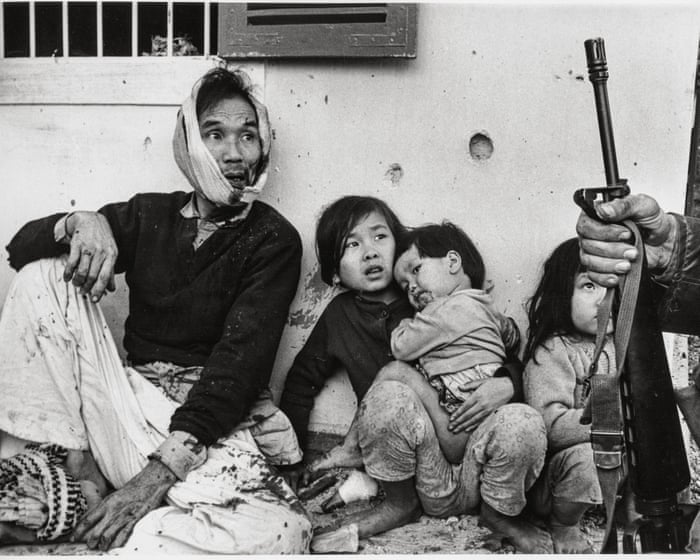
Don McCullin, a British photographer famous for his war images, will publish his final book focusing on the Vietnam War. He covered many conflicts over 70 years and made 16 trips to Vietnam, where his photos helped show the war's harsh realities.
Key Facts
Don McCullin started his photography career at age 23.
He covered the Battle of Hue in Vietnam in 1968, taking iconic war photos.
His images helped influence U.S. public opinion against the Vietnam War.
McCullin made 16 trips to Vietnam during and after the war.
He retired from war photography at age 75 after visiting Aleppo, Syria.
The final book, titled *Vietnam*, will include over 100 images and personal war items.
McCullin is 91 years old and is considered one of Britain's most celebrated photographers.
He doubts his photos changed the course of wars but aims to share the truth about their impacts.
Read the Original
Want the full story? Tap a source to open the original
article.
President Donald Trump announced that a deal with Iran is now complete, signaling an end to the recent conflict in the Middle East. Iranian officials and Pakistan, which mediated the deal, confirm the agreement aims to stop the fighting, including in Lebanon.
Key Facts
President Trump announced on social media that the deal with Iran is finished.
Iran’s deputy foreign minister said the agreement will immediately end the war and associated conflicts.
Pakistan acted as a mediator between the US and Iran.
The conflict included fighting in Lebanon and involved several countries in the region.
The war began with a US and Israel air strike on Iran and the killing of Iran’s supreme leader.
Iran responded with attacks that closed the Strait of Hormuz, a key oil shipping route.
Thousands of people died in Iran, Lebanon, Israel, and Gulf countries during the conflict.
Some questions remain about the future, including issues around Iran’s nuclear program and regional stability.
Read the Original
Want the full story? Tap a source to open the original
article.
The United States and Iran have agreed on a temporary deal aimed at ending their conflict and reopening the Strait of Hormuz. The deal is expected to be signed soon, but previous announcements were not finalized, and details remain unclear.
Key Facts
Iran received its first U.S.-supplied nuclear reactor in 1967 as part of a peace program.
The 1979 Islamic Revolution led to the U.S. Embassy hostage crisis in Tehran and halted Iran’s nuclear program for a time.
In 2002, Iran’s secret nuclear enrichment site at Natanz was revealed, leading to international concern.
In 2015, Iran agreed to limit uranium enrichment in exchange for lifting economic sanctions, but the U.S. left the deal in 2018 under President Trump.
After the U.S. withdrew, Iran gradually stopped following the agreement and increased uranium enrichment.
In 2020, U.S. forces killed Iran’s General Qassem Soleimani, escalating regional tensions.
Attacks damaged Iran’s nuclear facilities in 2020 and 2021, suspected to be Israeli actions.
Indirect talks between Iran and the U.S. to restore the nuclear deal began in 2021 but did not succeed until recent developments.
Read the Original
Want the full story? Tap a source to open the original
article.
The conflict between the US and Iran continues with ongoing military strikes, political tension, and economic disruption. Despite repeated announcements by President Trump of peace agreements, violence and instability persist in the Middle East, affecting countries like Iran, Jordan, Kuwait, Bahrain, and Gulf Arab states.
Key Facts
President Trump announced military strikes on Iran and expressed interest in controlling Kharg Island, a key oil export hub.
President Trump declared the war with Iran ended multiple times, but peace has not been achieved.
Iran has launched retaliatory attacks on several Gulf Arab countries perceived as US allies, including Jordan, Kuwait, and Bahrain.
The Strait of Hormuz, a vital global shipping route for oil and gas, has been temporarily closed, disrupting energy supplies.
Qatar lost 17% of its liquefied natural gas supply due to the conflict.
Gulf economies such as Saudi Arabia and Dubai are shifting priorities and facing economic challenges from the instability.
The ongoing violence has led to thousands of deaths, many of them civilians and children, and displaced large populations in Lebanon and Gaza.
Ceasefires have been fragile and often violated, contributing to a cycle of attacks and counterattacks across the region.
Read the Original
Want the full story? Tap a source to open the original
article.
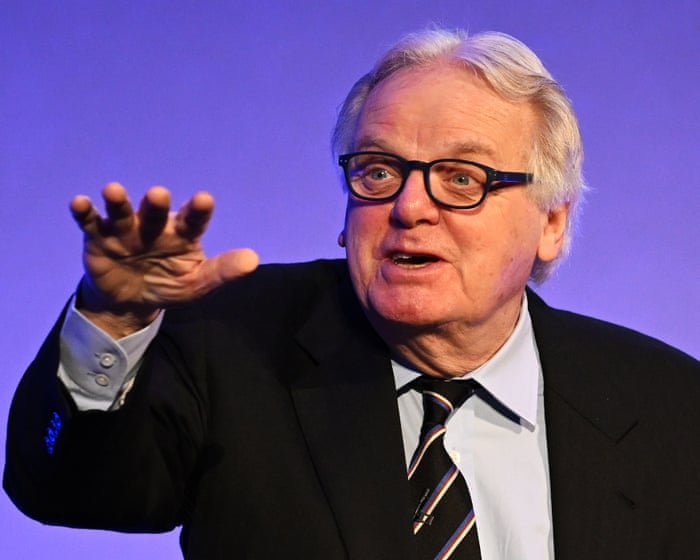
Michael Grade, the former chair of Britain’s media regulator Ofcom, said critics of GB News want to limit free speech to a liberal viewpoint centered in London. He defended GB News as giving a voice to opinions ignored for years and argued that the white majority in Britain has not been properly heard in national debates.
Key Facts
Michael Grade was the chair of Ofcom, the UK media watchdog, and left the role recently.
He described critics of GB News as part of a "liberal, Islington consensus" trying to restrict freedom of expression.
Grade supports GB News for bringing plurality, meaning different views, to British TV.
He believes that not giving the white majority a voice harms social integration in Britain.
Ofcom faced complaints over how it handled GB News under Grade's leadership but did not heavily intervene.
Grade said impartiality rules allow broadcasters to show different opinions except politicians delivering news bulletins.
GB News said it aims to serve the general public, not media elites, and follows broadcasting rules.
The article mentions a controversial interview on GB News with President Donald Trump, which Ofcom is investigating after complaints.
Read the Original
Want the full story? Tap a source to open the original
article.
The article discusses the complex relationship between President Donald Trump and the nuclear situations in North Korea and Iran. It suggests that understanding this dynamic might help find a way to resolve tensions with both countries.
Key Facts
President Donald Trump is involved in dealings related to North Korea's and Iran's nuclear programs.
North Korea and Iran both have developed or seek nuclear weapons, causing international concern.
The article considers the possibility of future changes in relations between President Trump and Iran’s current leader.
Resolving nuclear issues with these countries remains a significant challenge for global security.
Understanding the differences and similarities in these cases may help create solutions.
The article speculates on the potential for improved diplomatic relationships.
It highlights the importance of diplomacy in managing nuclear threats.
The focus is on international nuclear negotiations and conflict resolution efforts.
Read the Original
Want the full story? Tap a source to open the original
article.