Asos, an online clothing store, told customers that hackers stole detailed information on millions of users, including names, addresses, phone numbers, emails, and search history on the site. The company said no bank details or passwords were taken but warned customers to be careful of fake messages or calls pretending to be from Asos.
Key Facts
Hackers accessed detailed customer profiles after breaking into an Asos employee’s account.
The stolen data includes personal information and customers' search terms on the website.
No payment details or passwords were compromised.
Hackers used a pop-up notification in the Asos app to contact users.
The attack involved gaining access through a service called Snowflake and a platform called Simon AI.
Asos confirmed the unauthorized access and is investigating how the breach happened.
Customers are advised to be cautious of phishing scams but do not need to take specific actions now.
Cybersecurity experts suggest changing passwords and watching for suspicious activity as a precaution.
Read the Original
Want the full story? Tap a source to open the original
article.
In Cairo, the Manshiyet Nasser district recycles about a third of the city’s waste every day. Due to problems importing raw plastic materials caused by tensions in the Strait of Hormuz, Egyptian factories now rely more on recycled plastic from this area.
Key Facts
Manshiyet Nasser is a neighborhood in Cairo with nearly 120,000 residents who work in informal recycling.
These residents process around 8,000 tonnes of waste daily, including plastics.
Normally, polyethylene (a common plastic) comes through the Strait of Hormuz from the Gulf region.
Political tensions in the Strait of Hormuz have disrupted this plastic supply.
New plastic prices in Egypt have roughly doubled because of shortages.
Egyptian factories now buy more recycled plastic from local recyclers in Manshiyet Nasser.
About 90% of the plastic waste in this district is recycled and reused.
Read the Original
Want the full story? Tap a source to open the original
article.
A Royal Navy member in the UK, Teddy Young, was arrested and charged with spying for a foreign power. He is accused of taking protected information between November 2024 and May 2025 and planning to share it with the foreign power.
Key Facts
Teddy Young, 24, is a serving Royal Navy officer.
He faces two charges under the National Security Act 2023.
The charges relate to obtaining and planning to share protected information.
The alleged actions happened from November 2024 to May 2025.
Young was arrested at his home in Bedfordshire and taken to London for custody.
The investigation involved UK counterterrorism police and the Ministry of Defence.
Authorities say this case is unrelated to a separate investigation at RAF Fairford airbase.
Young will appear at Westminster Magistrates’ Court.
Read the Original
Want the full story? Tap a source to open the original
article.
Plans to add direct train services from London to Wrexham and Rochdale have been rejected due to heavy traffic on the west coast main line. The rail regulator said the line is too crowded to safely allow more trains without causing delays.
Key Facts
The Office of Rail and Road (ORR) rejected new London to Wrexham and London to Rochdale train services.
The west coast main line is already very busy, with limited room for extra trains.
ORR also denied more London to Blackpool trains from Avanti.
One additional evening London-Chester train from Avanti was approved to avoid empty returns.
Similar service requests were turned down in 2025 for the same reasons.
The ORR says gaps in the schedule help keep the whole rail network reliable by allowing time to recover from delays.
Private train companies want more open-access routes as the government returns some rail services to public control under Great British Railways.
Direct London to Wrexham trains ran from 2008 to 2011 but stopped due to losses.
Read the Original
Want the full story? Tap a source to open the original
article.
The recent general elections in Bosnia and Herzegovina followed a long-standing pattern where ethnic-based parties, often described as nationalist, won the most support. These results continue political deadlock and division, making progress toward joining the European Union and NATO unlikely in the near future.
Key Facts
Elections took place on October 4 in Bosnia and Herzegovina.
Ethnic-based parties, mainly Croatian and Serbian nationalist groups, won significant votes.
The political system is very complex, involving two entities, a district, and 144 local areas.
The House of Peoples, a key parliamentary body, has been used to block decisions and progress.
Croatian Democratic Union of Bosnia and Herzegovina (HDZ BiH) and Alliance of Independent Social Democrats (SNSD) continue to dominate.
These parties have prevented Bosnia from moving closer to EU and NATO membership.
Pro-Bosnian (Bosniak) parties are divided and struggle to present a united front.
The political situation is seen as an ongoing conflict by peaceful means, maintaining ethnic tensions rather than resolving them.
Read the Original
Want the full story? Tap a source to open the original
article.
Actor Simon Pegg has revealed he has been diagnosed with ADHD, a condition that affects attention, hyperactivity, and impulsivity. He said the diagnosis helped explain difficulties he had faced and confirmed things he had wondered about for years.
Key Facts
Simon Pegg, known for films like Shaun of the Dead and Mission: Impossible, was diagnosed with ADHD at age 56.
ADHD involves problems with attention, hyperactivity, impulsiveness, and concentration.
Pegg previously thought his symptoms were personal flaws or caused by depression and drinking.
His wife has been supportive and adjusts to his forgetfulness and concentration issues.
Pegg connected his poor driving and accidents to ADHD symptoms before seeking diagnosis.
ADHD diagnosis and awareness have increased greatly in the UK, with long NHS waiting lists for assessment.
Other UK celebrities like Johnny Vegas and Ant McPartlin have also been diagnosed with ADHD as adults.
The NHS estimates around 2.5 million people in England may have ADHD, diagnosed or not.
Read the Original
Want the full story? Tap a source to open the original
article.
At least five people have been arrested in France after the theft of two Renoir paintings from the Renoir Museum near Nice. The stolen artworks are still missing, while two other stolen pieces were left behind as the thieves fled.
Key Facts
The theft happened at the Renoir Museum in Cagnes-sur-Mer, a suburb of Nice, on September 8.
Thieves cut through a fence, smashed a window, and used an electric saw to remove the paintings.
The two missing paintings are "Portrait of Madame Colonna Romano" (1910) and "Jeune fille au puits" (1886).
At least five people, including two suspected burglars, have been arrested in connection with the theft.
Authorities believe the suspects might be part of an organized crime group.
The Renoir Museum holds 12 paintings by the artist and was his last home before his death in 1919.
Recent months have seen several major art thefts in Europe, including a quick theft in Italy and the stealing of the French crown jewels from the Louvre.
French officials have not yet confirmed the arrests publicly.
Read the Original
Want the full story? Tap a source to open the original
article.
Bryan Johnson spends over $2 million a year on health experiments to extend human life and promote longevity. He shares data about his health publicly and runs companies that sell health products and offer expensive longevity care.
Key Facts
Bryan Johnson is a well-known biohacker working on life extension and health improvement.
He tracks many personal health details, including sleep, diet, exercise, and more unusual metrics like nighttime erections.
Johnson uses advanced technology and AI to analyze over 4.2 billion data points on his body.
He owns companies like Blueprint, which makes health supplements, and Immortals, which provides high-cost personalized longevity care.
His longevity service prices range from $75,000 to $1 million per year.
Johnson talks openly about his health efforts as a form of performance to engage the public.
He advises basic health steps like sleep, diet, and exercise and warns most social media health claims do not work.
Johnson says he receives calls from world leaders and tech figures asking for his health advice.
Read the Original
Want the full story? Tap a source to open the original
article.
France's Prime Minister Sebastien Lecornu announced that the government will release 10 million barrels of diesel to fuel distributors at cost price. This move aims to reduce fuel prices at gas stations by about 12 to 18 cents per litre.
Key Facts
France will release 10 million barrels of diesel fuel to distributors.
The diesel was bought before recent price increases.
It will be sold at cost price, meaning no profit will be added.
The government expects fuel prices to drop by 12 to 18 cents per litre.
The measure aims to help reduce the financial burden on drivers.
The announcement was made in a televised address by Prime Minister Sebastien Lecornu.
Diesel prices had been rising, causing concerns across the country.
Read the Original
Want the full story? Tap a source to open the original
article.
Bodycam footage from January 2023 shows a six-year-old boy who shot his teacher at a school in Virginia. The video captures the boy using bad language and threatening police officers after the shooting, and police later found a handgun in the classroom.
Key Facts
The incident happened at Richneck Elementary School in Newport News, Virginia.
The boy involved was six years old and in first grade.
He shot his teacher, Abby Zwerner, and seriously injured her.
The gun jammed during the shooting, allowing a teacher to restrain the boy.
The boy shouted insults and threats at both educators and police officers in the footage.
Police found a handgun in the classroom, a few feet from the boy.
The video was recorded by Officer Brian Torrez’s body camera and shared by local news outlets.
The footage was viewed more than 27 million times online and had been used in a court case against a former school official.
Read the Original
Want the full story? Tap a source to open the original
article.
Yemen's Houthi rebels attacked Riyadh, Saudi Arabia's capital, claiming to have hit the international airport with a missile. Diplomats and students in Riyadh took shelter as explosions were heard, while Turkey decided not to send troops to support Saudi Arabia against the Houthis.
Key Facts
The Houthis, an Iran-backed group from Yemen, claimed a missile attack on Riyadh's international airport.
Saudi forces said they intercepted two missiles aimed at Riyadh.
Explosions were heard across Riyadh, causing safety measures for diplomats and international school students.
At least one school moved students into basements for protection.
Turkey announced it would not send troops to fight the Houthis despite a defense agreement with Saudi Arabia.
Saudi Arabia and Yemeni government forces are trying to stop the Houthis' advance in Yemen.
Flights at Riyadh's King Khalid International Airport faced delays and cancellations after the attack.
Saudi authorities warned residents not to share unauthorized images or videos related to the missile attacks.
Read the Original
Want the full story? Tap a source to open the original
article.
Explosions were heard in Riyadh, Saudi Arabia, after Houthi fighters from Yemen claimed an attack on the capital and its airport. Diplomats were told to stay inside their embassies, international schools took safety steps, and some flights were delayed or canceled as a result.
Key Facts
Diplomats in Riyadh were instructed to shelter in place in their embassies after explosions were heard.
International schools in Riyadh took safety measures, such as moving children to basements.
The explosions happened hours after the Houthis, an Iran-backed group in Yemen, claimed attacks on Riyadh and its international airport.
The Houthis have launched many attacks on Saudi Arabia amid Yemen’s ongoing civil war.
Fighting in Yemen has displaced over 200,000 people since July.
The Houthis control large parts of Yemen, including the capital Sanaa.
Saudi Arabia and Yemen’s government are trying to stop the Houthis’ advance but face difficulties.
Riyadh’s King Khalid International Airport had flight delays and cancellations due to security concerns.
Read the Original
Want the full story? Tap a source to open the original
article.
High school students in France held new protests despite the government trying to calm the situation. The protests come during a time when many people are worried about rising living costs and the upcoming presidential elections.
Key Facts
The protests involve high school students across France.
The government has made efforts to reduce tensions but the protests continue.
Many schools have closed because of the protests.
Over 6,000 people have been arrested since the protests began.
The protests happen amid a broader crisis about the cost of living in France.
There is public concern linked to the upcoming presidential vote.
Authorities have suspended the use of stun grenades after a student lost a hand during protests.
Read the Original
Want the full story? Tap a source to open the original
article.
President Trump criticized Fox News for giving a positive interview to Abdul El-Sayed, a Democratic candidate for the U.S. Senate from Michigan. Republicans are concerned that Fox News is helping El-Sayed appear more moderate and reach voters outside the Democratic base.
Key Facts
President Trump called a Fox News interview with El-Sayed "softball" and accused the network of supporting Democrats.
Republicans have privately complained for months that Fox's coverage helps El-Sayed's image.
El-Sayed, who would be the first Muslim U.S. Senator, is in a close race with Republican Mike Rogers.
Fox News aired many ads and interviews featuring El-Sayed, helping him reach more voters.
GOP strategists say Fox News coverage is helping El-Sayed appeal to moderate and center-right voters.
Fox News defended its coverage, saying it shows topics their audience may not want to hear.
Fox News invited Mike Rogers to be interviewed but he did not respond.
President Trump and White House officials have expressed frustration publicly and privately with Fox over this coverage.
Read the Original
Want the full story? Tap a source to open the original
article.
OpenAI has released hundreds of new mathematical proofs created by a powerful AI model, showing significant AI progress in the field of mathematics. This release has sparked mixed reactions, with some experts excited about the potential and others questioning the originality and practical use of these AI-generated results.
Key Facts
OpenAI published 722 manuscripts grouped into 372 sets addressing long-standing math problems.
The proofs were generated by a powerful AI model not yet released to the public.
Some mathematicians see the results as potentially groundbreaking, comparable to major math awards.
Others doubt whether the AI results are original or mostly derived from existing human work.
AI-generated math can be checked for correctness, similar to how AI-generated code is tested.
AI has already transformed computer programming by helping write and debug code.
Mathematicians worry about how AI might change education and the future role of human theorists.
Experts note that meaningful math advances often require human creativity and organizing ideas, which AI may not replicate soon.
Read the Original
Want the full story? Tap a source to open the original
article.
Lawmakers have introduced a new bipartisan bill that would make data centers pay more for the energy infrastructure they use while also speeding up the building of power plants and transmission lines to support their growth. The bill aims to balance faster energy development with protecting other customers from bearing the costs caused by data centers.
Key Facts
The new legislation targets large data centers that use a lot of electricity, especially due to the AI boom.
Data centers would pay their share of the existing and new costs for electricity transmission, changing a long-standing federal policy.
New data centers consuming at least 20 megawatts must cover all incremental costs for power generation, storage, transmission, and distribution caused by their operations.
Regulators can charge data centers even more than their incremental costs and use extra funds to lower bills for other customers.
Data centers must still pay infrastructure costs even if they stop buying electricity before those costs are recovered.
States can impose stricter rules, including limiting electricity use or requiring new power supplies for data centers.
The bill also requires utilities to get financial guarantees before building power infrastructure for data centers to protect other customers.
Major tech companies like Microsoft, Google, Nvidia, Meta, and Amazon have not publicly commented on the bill yet.
Read the Original
Want the full story? Tap a source to open the original
article.
Co-op Legal Services has started using artificial intelligence (AI) to listen to and score phone calls between workers and customers who need legal advice. The AI rates employees on many parts of their calls and gives pass or fail scores to managers to help check worker performance.
Key Facts
Co-op Legal Services uses AI to record and analyze calls about probate, wills, and estates.
The AI model assesses over 50 different aspects of each call and provides scores.
Managers use these scores to review how employees perform and find ways to improve sales.
Some workers feel the AI monitoring is constant and creates distrust.
Co-op says the AI helps support workers and improve the quality of advice for clients.
Trade unions have raised concerns about AI increasing workplace stress and being unfair.
Similar AI monitoring is used by companies like Burger King and was paused by Meta after staff complaints.
The International Labour Organization warned about mental health risks from AI surveillance at work and said regulations are needed.
Read the Original
Want the full story? Tap a source to open the original
article.
A study found that major events like Brexit, Covid-19 lockdowns, Russia’s invasion of Ukraine, and Liz Truss’s mini-budget caused a lasting decline in mental health in the UK over the past decade. These events led to big increases in depression and anxiety, with many more people visiting doctors for mental health issues.
Key Facts
The study used data from 87,857 UK people collected between 2009 and 2024.
Brexit in 2016 and the first Covid lockdown in 2020 caused the biggest rises in mental health problems.
Brexit led to about 120,000 more people seeking medical help for depression.
The first Covid lockdown caused around 900,000 more doctor visits for depression.
Russia’s invasion of Ukraine added about 15,000 more monthly depression cases.
Liz Truss’s mini-budget in 2022 led to 23,000 more monthly doctor visits due to depression.
Mental health decline has stayed high and has not returned to pre-2016 levels.
Poor mental health in the UK costs the economy around £300 billion each year.
Read the Original
Want the full story? Tap a source to open the original
article.
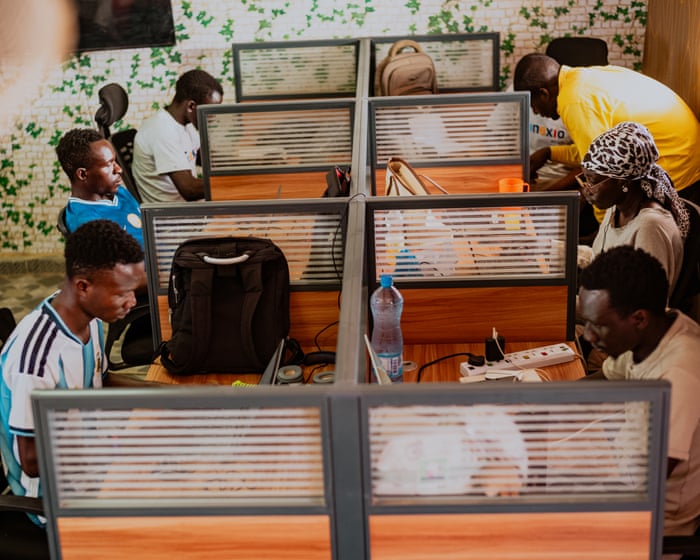
Refugees in Kenya’s Kakuma camp are doing small online tech jobs, like translating hymns, using tools like ChatGPT. They work through a platform called AOP Connect run by a British company, but their pay is irregular, often very low, and many don’t know how their work quality is judged or if they will be paid.
Key Facts
Refugees in Kakuma camp use ChatGPT for research tasks such as translating texts.
They perform digital “microwork” for companies like RWS through the AOP Connect platform.
Workers can earn discretionary rewards up to $500 but are not guaranteed payment.
Many refugees earn less than the promise and lack transparency about payment criteria.
The platform requires confidentiality agreements and individual task completion.
Tech companies rely on low-paid workers in poor countries to improve AI tools.
The number of tech-related jobs available to refugees is shrinking.
Organizations training refugees in digital skills express concern about unclear pay and job conditions.
Read the Original
Want the full story? Tap a source to open the original
article.
Arturo Béjar worked at Meta (formerly Facebook) for eight years and raised concerns about harm to young users on Instagram. After his warnings were ignored, he left the company and has testified multiple times to the US Senate about Meta’s knowledge of these issues.
Key Facts
Arturo Béjar was a consultant on Instagram’s wellbeing team at Meta.
He sent a detailed email in 2021 to Mark Zuckerberg and other executives about high rates of bullying and unwanted advances on Instagram.
His email revealed that more than half of Instagram users experienced harm weekly, but very few reports led to content removal.
Zuckerberg did not respond to Béjar’s warnings and emphasized impact and winning over user safety.
Béjar compared Zuckerberg’s behavior to the portrayal of him in the movie The Social Reckoning.
In 2023, Béjar testified under oath before the US Senate about Meta’s internal knowledge of harm caused by its platforms.
Béjar has testified at least seven times in trials and hearings against Meta.
The article mentions a major 2023 lawsuit by 29 US states accusing Meta of knowingly harming users.
Read the Original
Want the full story? Tap a source to open the original
article.