The International Energy Agency (IEA) released a report showing that electricity is becoming cheaper, cleaner, and more secure than other energy sources. This alignment points to a global shift toward using more electricity for things like cars and heating, but some challenges remain in fully adopting electrification worldwide.
Key Facts
The IEA report says electricity is now the most affordable, reliable, and clean energy option, a situation called the "energy trilemma."
Electric vehicles can travel about 2,310 miles with $100 worth of electricity, compared to 862 miles for gasoline cars.
Heat pumps can provide 42 days of home heating for $100, while gas boilers provide about 30 days.
The share of energy used from electricity worldwide rose from 16.7% in 2000 to 23.4% in 2025.
China has led the increase in electrification, while North America saw smaller growth, mainly due to renewable energy and electric vehicle use.
Some experts say obstacles such as politics, trade barriers, and industry resistance could slow down the electrification process.
Heavy transport technologies like trucks, ships, and planes are less likely to shift quickly to electric power.
Some decision-makers prioritize profits from fossil fuels, which can delay the move to cleaner energy sources.
Read the Original
Want the full story? Tap a source to open the original
article.
Ethiopian government forces and their allies have taken control of Mekelle, the main city in the northern Tigray region, after the Tigray People’s Liberation Front (TPLF) withdrew. This comes amid renewed fighting following the collapse of a 2022 peace deal, raising concerns about wider conflict in the region.
Key Facts
The TPLF announced it had temporarily left Mekelle to operate elsewhere following advances by government forces.
Ethiopian federal troops and pro-government militias recaptured Mekelle’s main airport and entered the city center.
Fighting started again on September 23 after seven armed groups formed an alliance against Prime Minister Abiy Ahmed’s government.
The 2022 peace deal that ended a previous war between the Tigray region and federal government has now collapsed.
Ethiopia accuses Eritrea, Sudan, and Egypt of supporting the opposition groups; the latter two countries deny this.
Eritrea cut diplomatic ties with Ethiopia after these accusations.
The US urged Ethiopia and Eritrea to respect borders, show restraint, and return to peaceful talks.
The TPLF was once a ruling political coalition but became an armed group after relations with the federal government worsened, leading to war starting in 2020.
Read the Original
Want the full story? Tap a source to open the original
article.
A UK court ruled that the government's decision to stop mothers and children in Gaza from joining their families in the UK was unlawful. The families are living in very poor and unsafe conditions, and the court said the children’s best interests must come first. The UK government plans to appeal this decision.
Key Facts
The UK Home Office blocked some mothers and children in Gaza from reuniting with family in the UK.
Gaza’s visa application center has been closed since October 2023, making it hard to complete biometric checks like fingerprinting.
A judge in the upper tribunal ruled the Home Office acted unlawfully in blocking two families with young children.
The affected families live in tents with poor conditions, risks of illness, and danger from the conflict in Gaza.
About 250-300 people in Gaza are waiting to reunite with family who have refugee status in the UK.
The UK government says biometrics must be done before travel, and the Foreign Office has offered to evacuate some families to Jordan to complete this.
The Home Office announced new refugee resettlement routes but suspended the larger family reunion scheme, with no restart until at least 2027.
The court emphasized the children’s best interests and health, calling the current separation harmful.
Read the Original
Want the full story? Tap a source to open the original
article.
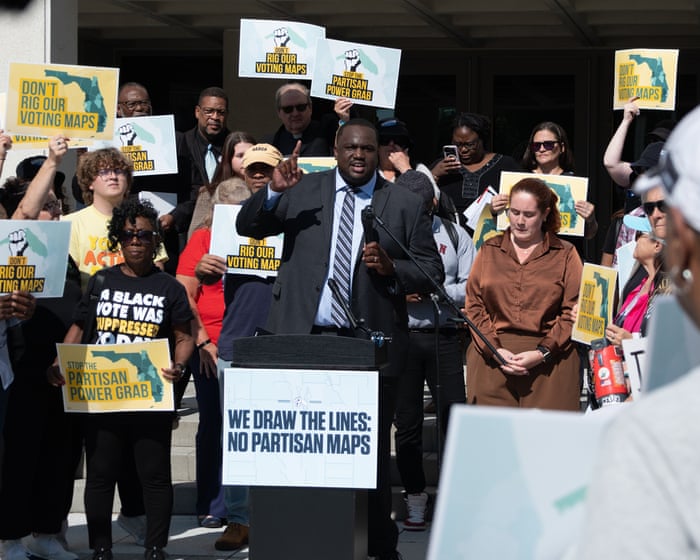
In Florida, redistricting has changed congressional districts, leading to a contested race in the 20th district. Veteran Congresswoman Debbie Wasserman Schultz, who is white and does not live in the district, is running against several Black candidates seeking to keep the seat traditionally held by Black representatives.
Key Facts
Florida’s congressional districts were redrawn after a court decision that allowed the state legislature to engage in partisan gerrymandering.
Governor Ron DeSantis urged the redrawing of district lines, affecting several Democratic seats including Debbie Wasserman Schultz’s.
Debbie Wasserman Schultz decided to run in Florida’s 20th congressional district, which has a 42% Black population.
The 20th district seat has been held by Black representatives since 1992.
Four Black candidates, including former Broward County mayor Dale Holness and former congresswoman Sheila Cherfilus-McCormick, sought to unite behind one candidate to keep the seat Black.
Wasserman Schultz has been in Congress for 21 years and has significant campaign funding compared to her opponents.
Meetings were held among Black candidates to try to consolidate support, but no agreement was reached.
The situation raises questions about representation, community experience, and the impact of redistricting on minority political power.
Read the Original
Want the full story? Tap a source to open the original
article.
President Donald Trump is starting a 32-day campaign tour to support Republican candidates before the midterm elections. While his rallies are known for energizing his supporters, some Republicans worry that his presence might hurt their chances because his approval ratings are very low.
Key Facts
President Trump began a long campaign tour to help Republicans keep control of Congress in the upcoming midterms.
His attendance at rallies has been a core part of his political strategy since 2015.
Trump’s approval ratings are currently at their lowest point.
Many voters are upset about issues like the cost of living, the ongoing situation in Iran, and strict immigration enforcement.
Some Republican politicians are trying to distance themselves from Trump, fearing he could lose them votes.
Despite skepticism, Trump's supporters still find his rallies exciting and motivating.
Trump himself asked supporters to imagine him running again and encouraged them to get more people to vote.
Political experts say Trump's rallies might actually harm Republican candidates by making the election focus too much on him.
Read the Original
Want the full story? Tap a source to open the original
article.
The article discusses the U.S. government’s recent focus on testosterone therapy, especially within the military. Defense Secretary Pete Hegseth supports testing soldiers for testosterone levels and providing therapy to those with low levels, while Health Secretary Robert F. Kennedy Jr. removed restrictions to allow more men to get prescribed testosterone legally.
Key Facts
Defense Secretary Pete Hegseth wants soldiers tested for testosterone and offered testosterone replacement therapy (TRT) if levels are low.
Hegseth believes testosterone helps restore natural strength and supports long-term health for soldiers.
Health Secretary Robert F. Kennedy Jr. lifted limits on testosterone prescriptions in June 2024.
TRT’s benefits for men are debated and not scientifically settled.
The article’s author expresses skepticism about needing testosterone therapy for daily life or sexual function.
The Trump administration supports hormone therapy for cisgender men but has been opposed to such treatments for transgender troops.
Some believe testosterone therapy can increase athletic ability and sexual drive but it may worsen hair loss.
The author humorously contrasts the push for testosterone therapy with his own lifestyle and frustrations.
Read the Original
Want the full story? Tap a source to open the original
article.
President Donald Trump has increased government ownership in key U.S. industries during his term, focusing on national security and control over important companies. This shift towards more state involvement in the economy contrasts with past market-focused presidents in both parties.
Key Facts
Data from the V-Dem project shows U.S. state ownership of the economy dropped from 2nd to 16th place globally in 2025 during Trump’s term.
By late 2023, the Trump administration invested over $10 billion in critical companies like Intel and mineral producers.
The government secured special control rights ("golden share") in some firms, including US Steel, through negotiations.
Although increased, U.S. government ownership remains less than in 163 other countries.
State ownership is common globally; for example, Norway has majority control of its oil company, and China’s private companies make up 60% of its economy.
Trump’s approach differs from prior presidents by focusing more on protectionism and state control rather than global market openness.
He has threatened to stop trade with countries where the U.S. has trade deficits.
Trump’s political ads against communism are funded with taxpayer money, despite his own government expansion policies.
Read the Original
Want the full story? Tap a source to open the original
article.
President Donald Trump aims to increase U.S. influence in Latin America by supporting right-wing leaders and interfering in local politics. His administration financially backed Argentina, threatened Colombia's president, and acted against Venezuela’s leader. Now, Trump is focusing on Brazil’s presidential election, backing Flávio Bolsonaro against the current president, Luiz Inácio Lula da Silva.
Key Facts
Trump’s national security plan seeks to restore U.S. dominance in the Western Hemisphere.
The U.S. gave $40 billion to Argentina and linked continued support to election outcomes.
Trump sanctioned Colombia’s leftwing president Gustavo Petro and accused him of drug-related crimes.
The U.S. took the Venezuelan president Nicolás Maduro into custody and promoted this move.
Seven right-wing or far-right candidates have recently won presidential elections in Latin America, often with Trump’s backing.
In Brazil, Trump supports Flávio Bolsonaro, son of former President Jair Bolsonaro, against incumbent Luiz Inácio Lula da Silva.
Jair Bolsonaro was arrested after a failed conspiracy to overturn Brazil’s 2022 election, including plots to kill political leaders.
Trump imposed high tariffs on Brazilian goods, calling the legal actions against Bolsonaro a “witch hunt,” but Lula resisted U.S. pressure and gained support.
Read the Original
Want the full story? Tap a source to open the original
article.
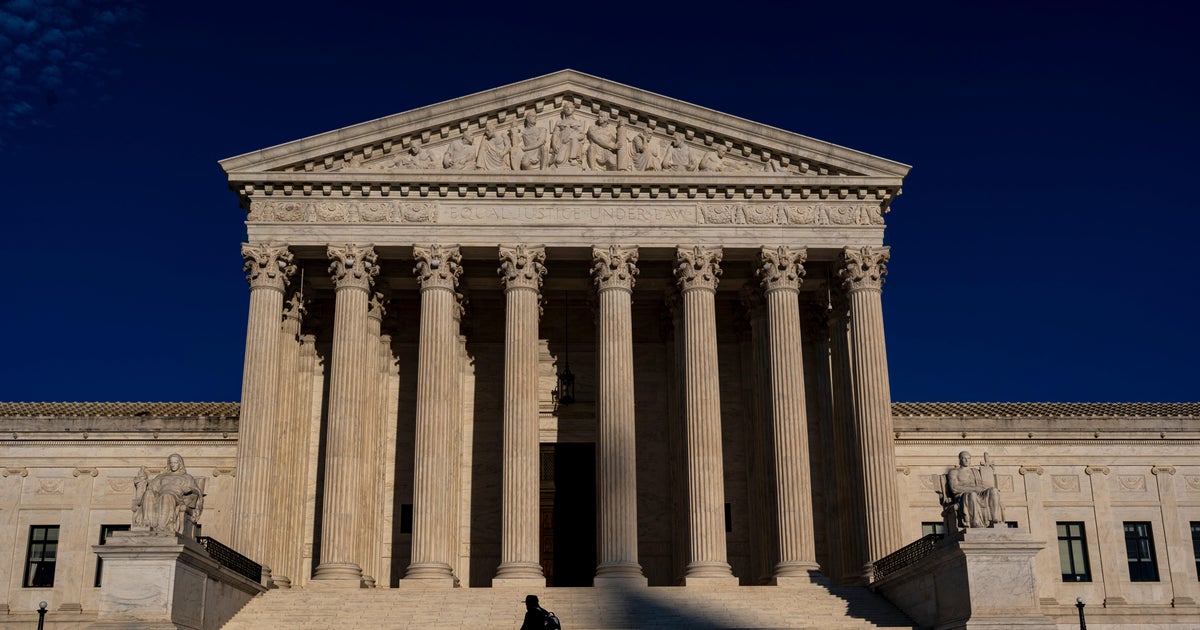
The U.S. Supreme Court will hear a case about whether the city and county of Boulder, Colorado, can sue fossil-fuel companies like Exxon Mobil and Suncor Energy for climate change harms in state court. The main question is if federal law stops these local claims, with the Court deciding if Boulder's lawsuit can continue.
Key Facts
Boulder, Colorado, sued Exxon Mobil and Suncor Energy in 2018 for causing climate change harm like extreme heat and wildfires.
The lawsuit claims these companies produced and marketed fossil fuels in ways that contributed to rising greenhouse gases.
Exxon and Suncor tried to move the case to federal court and dismiss it, saying federal law stops state climate change lawsuits.
The Colorado Supreme Court allowed Boulder's suit to proceed, so Exxon and Suncor appealed to the U.S. Supreme Court.
The Supreme Court will decide if federal law bars Boulder's claims and if it can review the state court decision.
Justice Samuel Alito recused himself from the case, possibly creating a 4-4 tie; if so, the Colorado Supreme Court’s ruling stands.
Exxon and Suncor argue that allowing this case could lead to hundreds of climate lawsuits nationwide with conflicting rules.
The case involves questions about the Clean Air Act and how state laws interact with federal laws on pollution.
Read the Original
Want the full story? Tap a source to open the original
article.
The Supreme Court will start its new term on October 5 with important cases about climate change, President Donald Trump’s immigration policies, and gun rights. One key case involves Boulder County, Colorado, suing energy companies over climate change damages, which could affect similar lawsuits across the U.S.
Key Facts
The Supreme Court begins its new term on October 5, 2026.
Boulder County is suing energy companies Suncor Energy and Exxon Mobil for damages related to climate change.
The main legal question is whether federal law stops states from suing energy companies in local courts for climate harms.
The case could influence many other state and local climate lawsuits across the country.
Energy companies argue these lawsuits would act like a carbon tax and harm the fossil fuel industry.
Boulder County says states have the right to address local harms caused by climate change.
Justice Samuel Alito is not participating in this case because he has financial interests in energy companies.
The Supreme Court will also hear cases about President Trump’s immigration policies and gun rights this term.
Read the Original
Want the full story? Tap a source to open the original
article.
Israel is preparing to mark the third anniversary of the October 7 attack by Hamas, which killed about 1,200 Israelis and took more than 250 hostages. Recent Israeli strikes in Gaza have killed one Palestinian and injured others, as fighting and airstrikes continue in the region with heavy casualties.
Key Facts
An Israeli strike hit a civilian vehicle in Gaza, killing one Palestinian and wounding at least 11.
Israel’s military stated it targeted a Hamas militant in that strike.
There has been a rise in Israeli fire and airstrikes in Gaza over the past month.
More than 75,000 people have died and much of Gaza has been destroyed during the conflict.
Israelis held weekly protests in Tel Aviv, with the last before the October 7 anniversary.
Protesters want to remember the victims and call for an independent investigation of the attack and response.
The October 7 attack by Hamas killed about 1,200 Israelis and led to over 250 hostages being taken.
The conflict between Israel and Hamas remains tense with no current diplomatic solution.
Read the Original
Want the full story? Tap a source to open the original
article.
The Sudanese army has recently captured the town of al-Mazroub from the Rapid Support Forces (RSF), marking progress in their ongoing civil war. The conflict, which began in April 2023, has expanded across much of Sudan and caused a severe humanitarian crisis.
Key Facts
The Sudanese army took control of al-Mazroub, an important RSF town in North Kordofan, after intense battles.
Capturing al-Mazroub helps the army cut RSF supply routes between North and West Kordofan.
Fighting has increased in the Kordofan region since late 2025, following the RSF capture of el-Fasher in Darfur.
The Sudanese army claims to have inflicted heavy losses on the RSF and its ally SPLM-N in Blue Nile state.
The RSF reportedly launched drone attacks on the Blue Nile governor’s house but were stopped by air defenses.
The Sudanese Armed Forces (SAF) control Khartoum, and most northern, eastern, and central areas.
The RSF controls much of western Sudan, including nearly all of Darfur and parts of Kordofan.
The civil war has displaced about 14 million people, creating a humanitarian crisis.
Read the Original
Want the full story? Tap a source to open the original
article.
Brazil is holding a presidential election between current President Luiz Inacio Lula da Silva and Senator Flavio Bolsonaro, son of former President Jair Bolsonaro. The vote may decide if Brazil continues under left-wing leadership or joins a recent trend in Latin America toward right-wing governments.
Key Facts
Luiz Inacio Lula da Silva is Brazil’s current president and leader of the Workers’ Party (PT).
Lula has served two previous terms (2003–2011) and started his third term in 2023.
Lula introduced social programs to reduce poverty and has worked to strengthen democracy after Brazil’s past military dictatorship.
Flavio Bolsonaro is a right-wing candidate and son of former President Jair Bolsonaro.
Flavio supports tough crime policies and closer ties with the U.S., including plans for fiscal limits on government spending.
Lula portrays Flavio as part of a broader right-wing trend in Latin America, while Flavio criticizes Brazil’s democratic institutions as ineffective.
Recent polls show a close race with Lula slightly ahead before the first-round vote.
If no candidate wins outright, a run-off is expected between Lula and Flavio.
Read the Original
Want the full story? Tap a source to open the original
article.
Jacob Rees-Mogg, a former British politician, invited American commentator Tucker Carlson to his home for an interview. During the talk, Carlson suggested the West provoked Russia and questioned the importance of Britain fighting Hitler in World War II, which Rees-Mogg strongly disagreed with.
Key Facts
Jacob Rees-Mogg hosted Tucker Carlson, a US commentator known for his pro-Russia views and criticism of President Donald Trump’s foreign policies.
Carlson said the West invited Russian aggression and questioned Britain’s decision to fight Nazi Germany in World War II.
Carlson claimed Germany had a "legitimate" claim on parts of Poland, sparking controversy.
Rees-Mogg defended Britain’s role in defeating Hitler, warning that Germany would have invaded the UK otherwise.
Rees-Mogg expressed surprise that Carlson’s comments were "verging on defending Hitler."
Carlson denied being a Nazi and made sarcastic remarks about it.
The discussion has caused concern and criticism in both the UK and US.
US ambassador to Israel Mike Huckabee criticized Carlson’s remarks on social media.
Read the Original
Want the full story? Tap a source to open the original
article.
Tickets for the Glastonbury Festival 2027 sold out in 42 minutes after going on sale, despite a price increase to £408 per ticket. The festival will take place from June 23 to 27 at Worthy Farm in Somerset, returning after a break year.
Key Facts
Glastonbury Festival tickets sold out within 42 minutes on the morning they went on sale.
The 2027 ticket price is £408 each, the highest ever, including a £5 booking fee.
The festival will run from June 23 to June 27, 2027, at Worthy Farm in Somerset.
Headline performers for 2027 have not yet been announced.
Tickets for coach packages sold out even faster, in less than 30 minutes.
There will be a resale of cancelled or returned tickets in spring 2027.
Ticket prices have increased steadily since 2010, with sharper rises after the pandemic.
Some people who wanted tickets were not successful despite many trying to buy online.
Read the Original
Want the full story? Tap a source to open the original
article.
Russia has many old nuclear power plants, some over 50 years old, that will need expensive and long processes to safely shut down and dismantle. While Russia builds new plants abroad, it faces a large funding gap for dismantling its own aging reactors and managing radioactive waste, raising concerns about future safety and costs.
Key Facts
Some Russian nuclear reactors are over 50 years old and will soon need to be shut down.
Decommissioning nuclear plants means safely closing and taking apart reactors, which costs a lot of money and takes many years.
Lithuania had to close Soviet-built reactors as part of joining the EU; it has spent billions and delayed completion until 2049.
Russia plans to close 35 reactors but estimates it will fall short by about 18.7 billion euros for dismantling work.
Actual cleanup costs usually end up much higher than first predicted.
Russia often stores reactors in long-term “safe” storage instead of fully dismantling them soon after closing.
Decommissioning delays increase financial, technical, and safety risks.
Russia faces an existing large amount of radioactive waste and expects to generate much more from future decommissioning.
Economic problems in Russia raise concerns about who will pay for the expensive cleanup and waste management in the future.
Countries where Russia is building new nuclear plants should consider the risks if Russia cannot maintain or safely close these plants later.
Read the Original
Want the full story? Tap a source to open the original
article.
A new digital pocket camera inspired by the 1970s Kodak 110 film cameras has been released. The Camp Snap 110 D is rechargeable, uses no film, and has no screen, encouraging users to focus on taking photos without digital distractions.
Key Facts
The Camp Snap 110 D is a modern digital camera designed to look like the 1972 Kodak 110 film camera.
It does not use film and has no preview screen, only showing battery life and photo count.
Users cannot review photos immediately; images must be transferred to another device to be seen.
This delay recreates the experience of waiting to develop film photographs.
Film and analogue camera markets are growing, with a projected increase from $36.84 million in 2026 to $52 million by 2035.
Consumers want more personal, less automated photography experiences than smartphone cameras provide.
The camera encourages being present in the moment without digital distractions from social media or messages.
Younger generations are adopting analogue and retro technology as a way to combat digital burnout.
Read the Original
Want the full story? Tap a source to open the original
article.
Ethiopian federal forces entered and took control of Mekelle, the regional capital of Tigray, after the Tigray People's Liberation Front (TPLF) withdrew. Meanwhile, leaders from Egypt, Eritrea, Sudan, and Somalia met in Egypt to discuss peaceful solutions to regional conflicts amid fears the fighting could spread.
Key Facts
Ethiopian federal forces advanced into Mekelle on Saturday without fighting, as TPLF forces left the city.
Federal troops are now patrolling Mekelle and running important institutions.
Communications in Mekelle were restored for the first time in over a week.
Businesses in Mekelle remained closed, with many owners moving goods to avoid theft or damage.
Fighting resumed between Ethiopian federal forces and TPLF on September 23, raising concerns about restarting a civil war.
Eritrea, Sudan, and Egypt deny supporting the TPLF, despite Ethiopia's accusations.
Leaders from Egypt, Eritrea, Sudan, and Somalia held talks in El-Alamein, Egypt, calling for peaceful conflict resolution.
All parties emphasized respect for international law and avoiding interference in each other's affairs in the Horn of Africa.
Read the Original
Want the full story? Tap a source to open the original
article.
Ethiopian federal forces have taken full control of Mekelle, the capital of the Tigray region, after the Tigray People's Liberation Front (TPLF) abandoned the city. Leaders from neighboring countries Egypt, Somalia, Sudan, and Eritrea met in Egypt to call for peaceful solutions to regional conflicts and respect for international law.
Key Facts
Fighting between Ethiopian federal forces and the TPLF resumed on September 23, raising fears of a return to civil war.
Ethiopian troops entered Mekelle on Saturday without resistance as TPLF forces left.
Federal troops are now patrolling Mekelle and managing key institutions.
Local residents report no police presence and took steps to ensure their own security.
A summit was held in El-Alamein, Egypt, with leaders from Egypt, Somalia, Sudan, and Eritrea to discuss the conflict.
These leaders emphasized resolving disputes peacefully and respecting international law and non-interference.
Ethiopia accuses Eritrea of supporting the TPLF rebels, a claim Eritrea denies.
The TPLF leader indicated continued guerrilla-style attacks despite losing Mekelle.
Read the Original
Want the full story? Tap a source to open the original
article.
Two porridge champions from different countries won awards at the World Porridge Making Championship held in the Scottish Highlands. Gina Saarberg from the Netherlands won the main prize with a simple recipe, while Rob Reid from Australia won the specialty category with a creative porridge dessert.
Key Facts
The championship took place in Carrbridge, Scotland, with 30 competitors from 14 countries.
Gina Saarberg, 28, won the Golden Spurtle using organic oats, salt, and water from her home city.
The contest main category allows only oats, water, and salt as ingredients.
Rob Reid, 36, won the specialty category with a porridge cannoli, blending Scottish and Sicilian culinary traditions.
The specialty category lets competitors add any ingredients to their porridge.
The championship started in 1994 to promote porridge and the local area.
Gina believes the soft water she brought helped improve her porridge flavor.
Rob used his free time to experiment with recipes after winning the Australian title before competing in Scotland.
Read the Original
Want the full story? Tap a source to open the original
article.