Five Israelis were hurt and two suspected Palestinian attackers were killed in a shooting at a military checkpoint near Hebron in the West Bank. Israeli security forces said they found many bullets in the attackers’ vehicle and believe a larger attack was planned.
Key Facts
The shooting happened at a military checkpoint at the entrance to Hebron.
Five Israelis sustained injuries in the attack.
Two suspected Palestinian attackers were killed by Israeli forces.
Israeli military found a large amount of ammunition in the attackers’ car.
The military believes the attackers planned a bigger attack.
The city of Hebron was put on lockdown by the Israeli government.
Israeli Prime Minister Benjamin Netanyahu canceled campaign events in the morning.
The attack occurred during rising tensions in the West Bank, including settler violence and an upcoming Israeli election.
Read the Original
Want the full story? Tap a source to open the original
article.
In Texas, many Hispanic voters supported President Donald Trump in 2024 because of his focus on border security. However, concerns about deportations affecting families and communities are causing some political changes in the region ahead of the midterm elections.
Key Facts
Father Roy Snipes, known as the Cowboy Priest, resisted border wall construction near his chapel in Texas during President Trump’s first term.
Texas accounted for about one-third of all ICE arrests in the U.S. in July 2026, more than any other state.
The Rio Grande Valley has a large Hispanic community affected by immigration enforcement, with many families facing deportations.
Border crossings have dropped to their lowest levels in decades during President Trump’s current term.
President Trump received a record 55% of Hispanic votes in Texas in the 2024 presidential election.
Local leaders generally support deporting criminals but are concerned about deporting hardworking, law-abiding people.
Democrats hope to gain political ground in Texas during the upcoming midterm elections on November 3.
Read the Original
Want the full story? Tap a source to open the original
article.
Diesel fuel prices in the U.S. have reached record highs, rising faster than gasoline due to global oil supply issues related to the war with Iran. Despite higher costs, industries like farming and trucking continue to rely heavily on diesel, using efficiency measures and some renewable fuels to manage expenses rather than switching fully to alternatives like electric vehicles.
Key Facts
Diesel prices hit an average of $6.31 per gallon, up 74% from last year; gasoline is $4.27, up 39%.
Diesel powers many critical sectors: trucks, tractors, trains, construction, hospital generators, and school buses.
Farmers face high diesel costs they cannot easily pass on, impacting their profits significantly during harvest.
President Trump announced $8 billion in one-time aid to help farmers cope with fuel price increases.
Truckers reduce diesel use by slowing down, minimizing engine idling, and using battery power for sleeping quarters.
Precision agriculture uses GPS technology to save fuel by avoiding repeated ground coverage.
Biodiesel and renewable diesel use is growing mainly due to government blending rules, not just price pressures.
Switching from diesel to alternatives is difficult because equipment lasts years and requires new infrastructure.
Read the Original
Want the full story? Tap a source to open the original
article.
Israel’s Prime Minister has ordered the military to get ready to shut down the occupied West Bank after a shooting near Hebron. Israeli forces killed two Palestinians who were suspected of attacking near a military checkpoint.
Key Facts
A shooting took place near a military checkpoint in Hebron, in the occupied West Bank.
Israeli forces killed two Palestinians suspected of carrying out the shooting.
The Israeli Prime Minister has instructed the army to prepare for a full shutdown of the West Bank.
The shutdown means restricting movement and activities in that area.
This event is part of ongoing tensions and conflicts in the West Bank region.
Al Jazeera reported on the situation through correspondent Nida Ibrahim.
Read the Original
Want the full story? Tap a source to open the original
article.
Heineken has warned that the growing use of weight-loss drugs called GLP-1s, like Ozempic and Wegovy, may reduce alcohol drinking in British pubs. This could lead to fewer pints sold and changes in how people buy drinks, such as choosing smaller or lower-alcohol options.
Key Facts
GLP-1 drugs, used for weight loss, are becoming very popular and may lower people’s desire to drink alcohol.
Heineken, the world’s second largest beer maker, shared a report with UK pubs about this trend.
The company advised pubs to offer half-pints, low- or no-alcohol drinks, and small food portions to keep customers.
About 10 million people in the US used GLP-1 weight-loss drugs last year.
Heineken noted that drinkers on GLP-1 drugs tend to buy smaller servings, lower alcohol drinks, and more premium products.
Beer sales in British pubs and bars totaled nearly £14 billion in a recent year, with only a small part from low-alcohol options.
Other brewers like Diageo and Carlsberg say the impact of these drugs on beer sales is still unclear or manageable.
Research surveys also show that GLP-1 users often reduce their alcohol consumption.
Read the Original
Want the full story? Tap a source to open the original
article.
Young people in France, Albania, Italy, and India are organizing protests driven by concerns about their economic situations and fairness. These protests show that Gen Z is becoming aware of their financial struggles and demanding solidarity and social justice.
Key Facts
Protests involve youth from Gen Z in four countries: France, Albania, Italy, and India.
The movement reflects worries about material insecurity, meaning people don’t feel financially safe or stable.
Young protesters are also frustrated with institutions like governments that they feel have let them down.
They are asking for fairness, social justice, and solidarity, which means support among people.
The protests are not just isolated events but part of a wider political awareness among this generation.
Sociologist Gökçe Tuncel studies this trend and highlights the strong connection between the protests and young people’s living conditions.
The protests include activities like strikes and demonstrations.
Read the Original
Want the full story? Tap a source to open the original
article.
Israel faces an election debate over whether ultra-Orthodox Jewish men should be required to serve in the military. About 80,000 young Haredi men currently avoid military service, causing political tension and protests ahead of the October 27 election.
Key Facts
Around 80,000 ultra-Orthodox Jewish men aged 18 to 24 do not serve in the Israeli army.
Haredi political parties argue their supporters preserve Israel’s religious identity through Torah study instead of military service.
Critics say these men avoid their military duty, especially after the Hamas attack in 2023 increased security concerns.
A 2024 Supreme Court ruling ordered the military to draft more ultra-Orthodox men, sparking protests and political crises.
Prime Minister Benjamin Netanyahu’s coalition depends on Haredi party support, which has softened military draft laws for them.
Netanyahu opposes arresting draft evaders and says protecting Torah study is important for Israel’s survival.
Public opinion polls show about 72% of Israelis want the ultra-Orthodox to serve in the military like other citizens.
Netanyahu’s political rivals use the issue to criticize his government and pressure for universal conscription.
Read the Original
Want the full story? Tap a source to open the original
article.
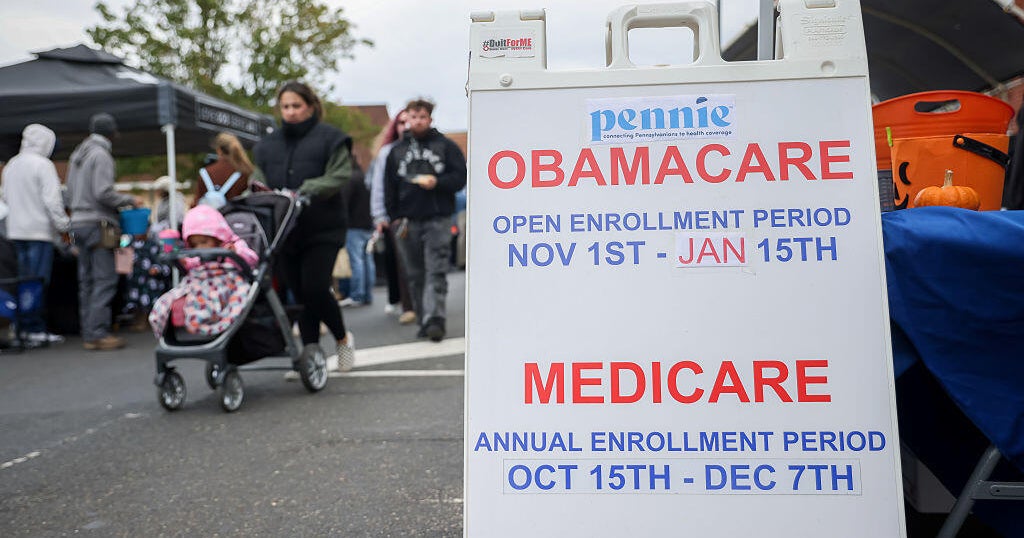
The Affordable Care Act open enrollment for 2027 starts November 1 in most states with several new rules. These changes include higher insurance costs, extra identity checks for some buyers, and limits on subsidies for certain immigrants.
Key Facts
Open enrollment begins November 1, except in Idaho, Connecticut, and Massachusetts where it starts earlier.
Overall enrollment is expected to drop because special extra subsidies ended at the end of 2025.
Increased identity checks will apply to consumers using agents or brokers in the federal marketplace, which covers 29 states.
People working with agents must get a code or link sent to them to authorize the agent to enroll or change coverage.
"High-risk" consumers, such as those enrolling for the first time or changing states, must prove their identity using services like Experian.
Plans costing $30 or less per month get special scrutiny because some agents might misuse them for profit.
Consumers who fail identity checks may need to provide official ID documents or apply on their own through healthcare.gov.
These new rules aim to reduce fraud but may slow down enrollment for some people.
Read the Original
Want the full story? Tap a source to open the original
article.
The article argues that President Donald Trump’s time in office involved serious ethical problems, including using his position for personal profit and ignoring established rules. It calls for ending these practices to restore moral standards in American leadership.
Key Facts
President Trump planned to hold the Group of 20 summit at his private golf club, raising conflict of interest concerns.
His social media platform, Truth Social, may charge expensive fees for early access to his posts that could influence the stock market.
Trump’s family has business interests linked to the presidency, including trademarking “Trump TV” and launching a cryptocurrency stablecoin before related laws were passed.
Trump’s wife received large payments from a film by Amazon, a major government contractor.
His son’s wedding was partly funded by a Russian oligarch close to Vladimir Putin.
The article says Trump obtained immunity for his family concerning unpaid taxes and penalties.
It describes Trump’s foreign policy as ignoring traditional allies, such as backing Putin over Ukraine and attacking Iran without Congress’s approval.
The piece criticizes Trump for disregarding the authority of Congress and ignoring Supreme Court orders.
Read the Original
Want the full story? Tap a source to open the original
article.
A British man living in Sweden faces deportation, which could separate him from his 16-month-old son. Swedish authorities denied his request to stay, saying the country's immigration rules are more important than his family life, though he is appealing the decision based on his son's rights as a German citizen.
Key Facts
Simon Montgomery, a British photographer, lives in Sweden with his son, who is a German citizen through his mother.
Montgomery applied to stay in Sweden after his son was born but was rejected by the migration agency and court.
He is appealing the decision to a higher migration court, citing EU freedom of movement rights.
The couple separated after the child's birth, but Montgomery has joint custody and a parenting plan.
Swedish authorities said he has no proof of “actual care” for the child when the son stayed overnight with his mother.
The court prioritized Sweden’s immigration rules over the father’s private and family life rights.
Montgomery cannot leave Sweden to visit elderly relatives without risking being barred from returning.
His lawyer argues deportation would harm the child’s stability.
Read the Original
Want the full story? Tap a source to open the original
article.
Thousands of Israelis living abroad plan to fly back to Israel to vote in the October 27 election, as Israeli law requires voters to be physically present in the country. Many are motivated by concerns over Prime Minister Benjamin Netanyahu’s potential re-election and its effects on Israel’s future.
Key Facts
About 53,000 Israelis living abroad are expected to return to Israel to vote in the upcoming election.
Israeli law generally does not allow absentee voting for citizens abroad, except for diplomats and some government workers.
Travel to Israel for voting can be costly, with round-trip flights from New York to Tel Aviv costing around $1,800.
Fly&Vote, an organization helping Israeli voters abroad, assists with travel logistics but does not subsidize airfare.
Netanyahu’s Likud party challenged Fly&Vote, claiming the assistance might break election rules, but a compromise was reached.
Some activists involved in recent protests and hostage aid efforts are now helping organize voter turnout among Israelis abroad.
Some expatriates see the election as important not only for Israel but for Jewish communities outside Israel, including in the U.S.
Concerns about rising antisemitism in places like New York also motivate some Israelis abroad to vote.
Read the Original
Want the full story? Tap a source to open the original
article.
Texas Republicans redesigned the congressional districts expecting Latino voters who supported President Donald Trump in 2024 to continue backing the GOP. However, recent polls show Latino voters are moving toward Democrats in key districts, influenced by issues such as immigration raids and rising costs of living.
Key Facts
Texas GOP redrew districts last year, focusing on majority Hispanic areas that voted for President Trump.
Governor Greg Abbott called the new districts "Hispanic Republican districts."
Polls now show Democrats leading in several districts once held or targeted by Republicans.
Latino voter support for Trump in Texas dropped after gains in 2024.
Latino voters favored Democrat James Talarico over Republican Ken Paxton by wide margins in recent polls.
In the 15th District, Democrat Bobby Pulido leads Republican Monica De La Cruz according to polls.
Republican efforts to flip districts have faced setbacks partly due to concerns over immigration enforcement and economic issues like grocery and gas prices.
Latino voters along the Texas border report feeling targeted by current policies, affecting their political preferences.
Read the Original
Want the full story? Tap a source to open the original
article.
Google planned to build two large data centers in Finland but started cutting down forests before completing required environmental checks. Finnish authorities stopped the work and are investigating possible pollution, while Google says it takes responsibility and will plant new trees.
Key Facts
Google announced a €13 billion investment to build data centers in Finland, promising jobs and growth.
The company cut down about 400,000 trees and removed topsoil before completing environmental studies.
Regulators found that drainage ditches were dug without notifying officials, raising pollution concerns.
Finland’s Licensing and Supervision Authority ordered Google to stop work until assessments are finished.
Google apologized and said they made decisions based on their understanding of laws at the time.
Google stopped work after the order and is awaiting approval to continue construction.
The company plans to plant new trees on 130 hectares as part of environmental restoration efforts.
The situation has increased public distrust regarding the building of large, power-hungry data centers.
Read the Original
Want the full story? Tap a source to open the original
article.
A Newsweek analysis looks at three possible results for the 2024 U.S. midterm elections based on current polling and possible errors. It shows Democrats are likely to keep control of the House, while control of the Senate is less certain and depends on how close the polls are to actual votes.
Key Facts
If current polls are exactly right, Democrats would win both the House and the Senate.
Democrats have about a 7.9-point lead in the national generic ballot, predicting roughly 235 House seats.
A 2-point shift towards Republicans would narrow the Senate to a 51-49 Democratic majority and reduce the House majority to about 228 seats.
A 4-point Republican shift would keep the Senate majority with Republicans at 53-47 but still give Democrats a slim House majority of about 220 seats.
Polls do not predict results perfectly because people’s opinions can change and some groups are harder to poll.
The 2024 polling is considered fairly accurate compared to past elections in 2016 and 2020.
Differences in state-level races can lead to big differences from national polling averages.
Read the Original
Want the full story? Tap a source to open the original
article.
Many governments face higher borrowing costs, making it harder to fund promises like lower taxes and more benefits. France and the U.S. both struggle with rising debt and slow economic growth, which may lead to bigger budget deficits and higher interest expenses.
Key Facts
France’s 10-year borrowing rate recently rose above 5%, increasing the cost of government debt.
Marine Le Pen, a far-right French presidential candidate, promises earlier retirement and deficit reduction but will face higher borrowing costs.
The IMF reports that G7 countries see their average 10-year government bond yields at the highest level in 20 years.
Aging populations and demands for defense, energy, and infrastructure increase government spending needs.
France’s public debt is expected to reach 118.5% of GDP in 2024 with slow economic growth of 0.4%.
Interest expenses for France’s debt are projected to rise from 2.2% of GDP in 2025 to 3.7% in 2030.
In the U.S., new tax and spending laws under President Trump could add $4.7 trillion to deficits over 2026-2035.
Rising interest payments in both countries reduce money available for other government services or tax cuts.
Read the Original
Want the full story? Tap a source to open the original
article.
Apple introduced the iPod in 2001, changing how people listen to music. Although Apple stopped making iPods by 2022, a new group of young people is buying and using them again because the devices offer a simple way to listen to music without internet distractions.
Key Facts
The iPod was launched on October 23, 2001, by Steve Jobs.
Apple stopped making the iPod touch in 2022, ending the iPod product line.
Some young people buy and use iPods to avoid the distractions of smartphones and streaming services.
iPods let users own and control their music libraries without needing internet access.
Interest in physical music formats like CDs and vinyl has grown alongside iPod use.
A 2025 survey found 81% of Gen Z adults want to disconnect from digital devices more often.
Refurbished iPod sales increased 48% in 2025 compared to the previous year.
20% of U.S. adults had used a digital music player like an iPod or Zune in the past year.
Read the Original
Want the full story? Tap a source to open the original
article.
Democratic candidates in Texas and Kansas are focusing on their Christian faith to connect with voters in states that usually vote Republican. These campaigns challenge the traditional hold of conservative Christians on religious voters and could help Democrats win important Senate seats.
Key Facts
James Talarico (Texas) and Adam Hamilton (Kansas) are Democrats who highlight their Christian faith in their campaigns.
Both Texas and Kansas are strongly Republican states, with President Trump winning them by large margins in 2024.
Neither state has elected a Democratic senator in many years; Kansas last did in 1932.
White evangelical Christians mostly support Republicans, but other Christian groups are more mixed or lean Democratic.
Talarico is a Presbyterian seminary student and visits Black churches to broaden support.
Hamilton is a United Methodist pastor aiming to appeal to moderate and less active Christian voters.
Democratic Senator Raphael Warnock, a Black pastor, was elected in 2021, showing faith can play a role for Democrats.
Some Democratic candidates in other states with religious backgrounds are also running and seeking to connect with faith-based voters.
Read the Original
Want the full story? Tap a source to open the original
article.
President Emmanuel Macron will meet with high school student representatives in France amid ongoing protests about the education system. Students want better schools, more teachers, and changes to the university admissions process, while the government plans increased police presence and some funding increases.
Key Facts
Macron will meet students for the first time since protests began in September.
Students protest against teacher shortages, overcrowded classrooms, and poor school buildings.
Students want a major change to Parcoursup, the university admissions system, which they find unfair.
They demand more funding for schools, permanent teacher contracts, and more university places.
The government announced 3,000 more substitute teachers and an extra 1.1 billion euros for education by 2027.
Police will increase their presence by 20 percent during upcoming protests, with curfews in Paris and protest bans in other cities.
Students say the protests show a breakdown in communication between young people and the government.
Higher Education Minister Philippe Baptiste rejects abolishing Parcoursup but is open to major reforms.
Read the Original
Want the full story? Tap a source to open the original
article.
French President Emmanuel Macron announced plans to ban protests he called "illegitimate" following recent riots and looting. French shop owners and authorities are preparing for more unrest as tensions remain high.
Key Facts
Recent protests in France included riots and looting.
President Macron criticized ultra-left groups and vandals for causing violence.
Macron said some protests would be banned in the coming days.
French shopkeepers are worried about future looting during new protests.
A curfew has been set in parts of Paris until Monday morning to help control unrest.
French students continue to protest despite school holidays.
French Prime Minister Sebastien Lecornu is meeting political leaders to address the issues.
An NGO found that pro-Russian accounts amplified anger in France before the protests.
Read the Original
Want the full story? Tap a source to open the original
article.
Typhoon Champi caused hundreds of flight cancellations and closed schools and offices in Taiwan as it approached the island’s northeast coast. The storm brought heavy rain, strong winds, injuries, and one death, while it also affected parts of Japan and the Philippines.
Key Facts
Hundreds of flights in East Asia were cancelled due to Typhoon Champi.
Schools and offices across Taiwan were closed on Friday to prepare for the storm.
The typhoon brought 90 cm (35 inches) of rain and wind gusts up to 191 km/h (119 mph).
One person died after being swept away by waves; 171 people were injured and around 1,000 were evacuated in Taiwan.
Taiwan’s stock exchange was closed because of the severe weather.
Power outages affected over 8,400 homes in Japan’s Okinawa region.
Champi passed northeast of Taiwan and is expected to move near China’s coast and then northeast toward Japan.
This is part of an active typhoon season influenced by a strong El Niño event warming the Pacific Ocean.
Read the Original
Want the full story? Tap a source to open the original
article.