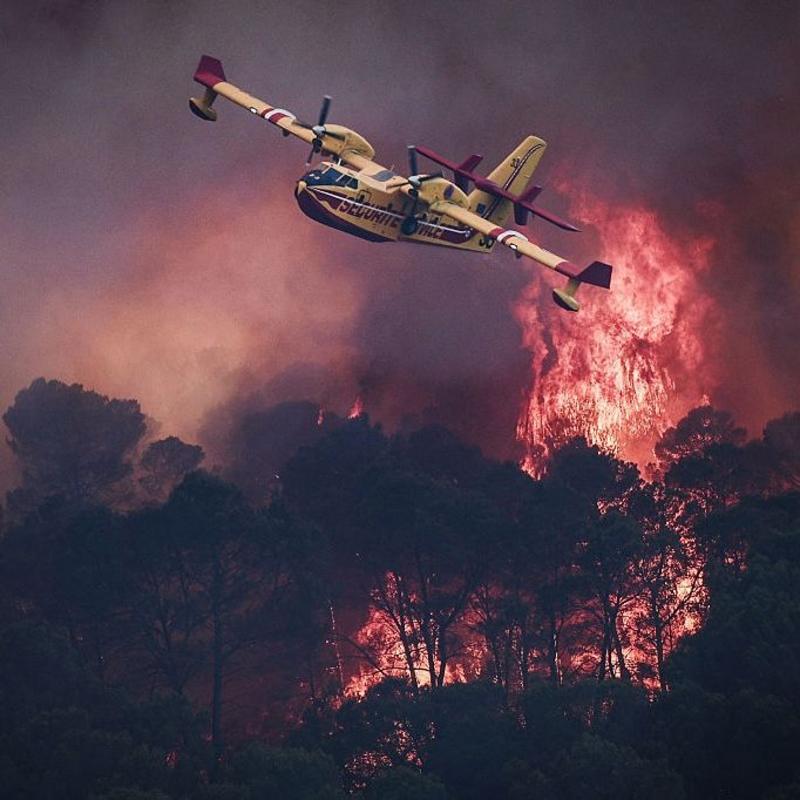
A large wildfire in southwest France created a rare giant storm cloud called a pyrocumulonimbus. This cloud produced lightning that sparked new fires and strong winds that changed the fire's behavior, making the situation worse.
Key Facts
The wildfire started near Saumos in the Gironde region on July 22, 2026.
It has burned more than 420 square kilometers (162 square miles) of land.
Over 240 homes have been damaged or destroyed, and 220,000 people were forced to evacuate.
The fire created a pyrocumulonimbus, a thunderstorm cloud formed by intense heat.
This cloud produced lightning that ignited additional fires beyond the original blaze.
The phenomenon caused violent and unpredictable winds that spread the flames.
Pyrocumulonimbus clouds are rare in Europe and more common in North America and Australia.
Firefighters in France had never recorded such a cloud before this event.
Read the Original
Want the full story? Tap a source to open the original
article.
Large wildfires are burning in France and Spain, forcing over 300,000 people to leave their homes. The fires are some of the worst in recent memory, fueled by a very hot and dry summer, and are being fought using planes, firefighters, and firebreaks.
Key Facts
Wildfires have forced more than 300,000 evacuations in France and Spain.
France has seen more land burned in this year than any other time this century.
The Gironde area near Bordeaux is heavily affected, with fires burning about 162 square miles in four days.
The fires are close to sensitive military and industrial sites, including French ballistic missile facilities.
The fires have created rare fire thunderstorms, which produce lightning that can start new fires.
Firefighters use planes that drop water and retardant to control the flames.
Bulldozers create firebreaks—clear areas with no plants—to stop fire from spreading.
Climate change and the summer heatwaves have made conditions drier and hotter, worsening the fires.
Read the Original
Want the full story? Tap a source to open the original
article.
Almost half of Americans do not understand the One Big Beautiful Bill Act that President Donald Trump signed into law last summer. A new Politico poll shows many either have not heard of the law or cannot explain what it does.
Key Facts
49% of people surveyed could not explain the law.
Some respondents said they have not heard of the legislation at all.
The law was signed by President Donald Trump last summer.
The poll was conducted by Politico.
The name of the law is the One Big Beautiful Bill Act.
The poll measures public awareness and understanding of this law.
Read the Original
Want the full story? Tap a source to open the original
article.
Cracker Barrel announced that CEO Julie Masino will step down and be replaced by David Deno on August 10. Masino led a controversial logo redesign in 2025 that faced public criticism and caused the company’s value to drop, leading to the decision to keep the original logo.
Key Facts
Julie Masino was CEO of Cracker Barrel since 2023.
Masino led a new logo redesign in 2025 that removed an iconic image from the branding.
The redesign caused public backlash and a nearly $100 million drop in Cracker Barrel’s value.
Cracker Barrel decided to keep the original logo after the negative response.
David Deno, former CEO of Bloomin’ Brands, will become the new Cracker Barrel CEO on August 10.
Masino will stay as an advisor until October 9 to help with the transition.
Masino also changed the restaurant’s menu, aiming to make it more relevant.
David Deno expressed enthusiasm about leading Cracker Barrel and its traditional brand.
Read the Original
Want the full story? Tap a source to open the original
article.
Two strangers from different generations met on a train ride and formed a strong connection. Their meeting led to regular dinners together and a shared trip to Puerto Rico.
Key Facts
The two people met while riding a train.
They come from different age groups or generations.
Their meeting resulted in weekly dinners.
They took a trip to Puerto Rico together.
Their encounter created a lasting bond between them.
Read the Original
Want the full story? Tap a source to open the original
article.
Daniel Adongo, the first Kenyan to play in the NFL, was deported from the US in June after overstaying his visa and facing several arrests. Immigration officials said he was a risk to the community, while supporters argue he had mental health issues and did not receive proper treatment during detention.
Key Facts
Daniel Adongo played two seasons as a linebacker for the Indianapolis Colts.
He was deported in June due to visa overstay and multiple arrests.
His visa expired in 2016, but he stayed in the US without legal status.
ICE described him as a threat due to several criminal charges, including felony intimidation and battery.
Supporters claim many charges were dismissed and he has serious mental health problems, possibly linked to brain injury from sports.
Adongo spent months in immigration detention, where his mental illness reportedly worsened.
He moved to the US in 2013 after playing professional rugby in South Africa.
The deportation comes as part of President Trump’s immigration crackdown during his second term.
Read the Original
Want the full story? Tap a source to open the original
article.
The article explains that the cost of living is higher in states that voted for Democrats and lower in states that voted for Republicans in the 2024 U.S. presidential election. It also shows that while some Democratic states have a higher cost of living, they score better in areas like education and economic mobility.
Key Facts
Many U.S. voters worry about inflation and the rising cost of food and gas.
54% of registered voters believe Democrats would handle the economy better than Republicans, according to a Fox News poll.
67% of voters disapprove of how President Donald Trump is handling the economy.
The Newsweek American Dream Index ranks U.S. ZIP codes on six factors, including cost of living.
States like Hawaii, California, and New York have high costs of living and mostly voted Democratic.
States like North Dakota, Iowa, and South Dakota have lower costs of living and mostly voted Republican.
Some Democratic-leaning states score higher on economic mobility and education than Republican-leaning states.
Cost of living measures how far a household’s paycheck can go.
Read the Original
Want the full story? Tap a source to open the original
article.
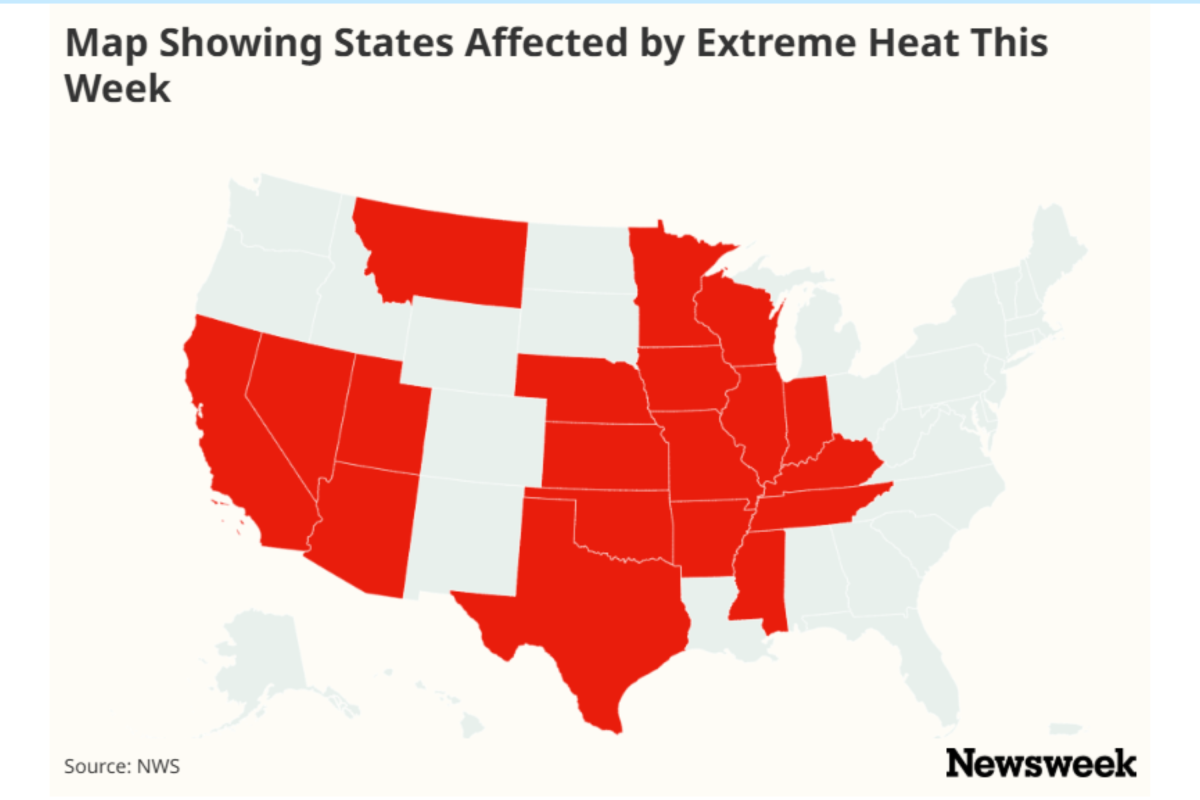
An intense heat wave is affecting 19 U.S. states, with the National Weather Service issuing Extreme Heat Warnings. The heat is driven by a "heat dome," causing dangerously high temperatures and humidity, especially in the Southwest and parts of the Midwest and South.
Key Facts
Extreme Heat Warnings are in effect in 19 states, including Arizona, California, Illinois, Texas, and Wisconsin.
Temperatures in some areas of Arizona, California, and Nevada may reach 108 to 116 degrees Fahrenheit, with Death Valley possibly hitting 120 degrees.
High humidity causes "feels like" temperatures between 110 and 117 degrees in parts of the South and Midwest.
Some northern states also face unusual heat, with Montana near 100 degrees and Minnesota and Wisconsin feeling close to 110 degrees.
A "heat dome" traps hot air under a high-pressure system, causing prolonged heat waves.
Overnight temperatures staying in the 80s and 90s provide little relief from the heat.
Heat warnings will last from Monday through at least Wednesday in some areas, with conditions easing later in the week for parts of the Midwest.
Officials advise drinking water, staying indoors in air-conditioned places, and avoiding outdoor activities during the hottest hours.
Read the Original
Want the full story? Tap a source to open the original
article.
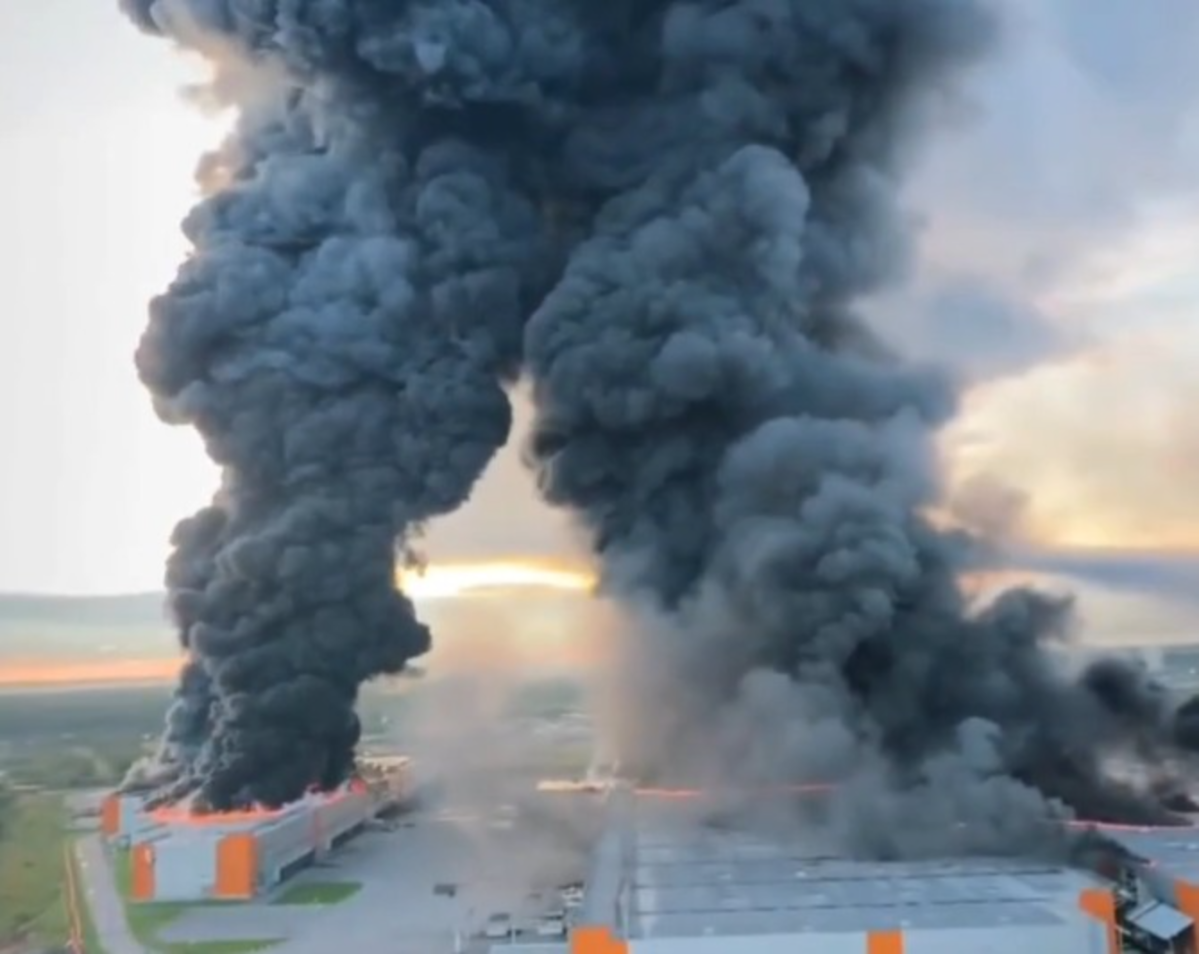
Ukrainian drone attacks have damaged at least 12 warehouses of Wildberries, Russia's largest online retailer, which handles various goods like clothing and electronics. These strikes, stretching hundreds of miles into Russian territory, have caused injuries and deaths, and represent a shift in Ukraine’s efforts by targeting Russian commercial infrastructure during the ongoing war.
Key Facts
Wildberries is Russia’s biggest online retailer, similar to Amazon, delivering many types of products across Russia.
Since July 17, Ukrainian drones have hit at least 12 Wildberries warehouses in Russia and occupied Ukraine.
The attacks have damaged about 10% of Wildberries’ logistics capacity, or nearly 6 million square feet.
Some strikes caused casualties, including seven workers killed in Tambov region and others injured in Moscow region and southern Russia.
Ukrainian President Zelensky said the warehouses held parts used to make drones and that the strikes responded to Russian attacks on Ukraine.
Wildberries removed military-related products and references to the war from its online store after the attacks.
Strikes also reached far locations including St. Petersburg and Crimea, areas usually protected by Russia’s air defenses.
The founder of Wildberries, Tatyana Kim, confirmed the attacks and reported some warehouses were saved thanks to quick evacuations.
Read the Original
Want the full story? Tap a source to open the original
article.
Oil prices dropped nearly 10 percent on Monday after fighting between the U.S. and Iran paused over the weekend. The price of Brent Crude fell from above $100 per barrel on Friday to under $91, while U.S. WTI crude also saw a significant decrease.
Key Facts
Oil prices dropped almost 10% on Monday.
The drop followed a pause in conflict between the U.S. and Iran over the weekend.
Brent Crude oil price fell from over $100 per barrel on Friday to below $91.
U.S. benchmark WTI crude also decreased, trading around $84 per barrel.
The decrease reflects reduced tensions in the Middle East affecting oil markets.
Brent Crude is a global standard for oil prices.
WTI (West Texas Intermediate) is a U.S. oil price benchmark.
Oil futures are contracts to buy or sell oil at a set price on a future date.
Read the Original
Want the full story? Tap a source to open the original
article.
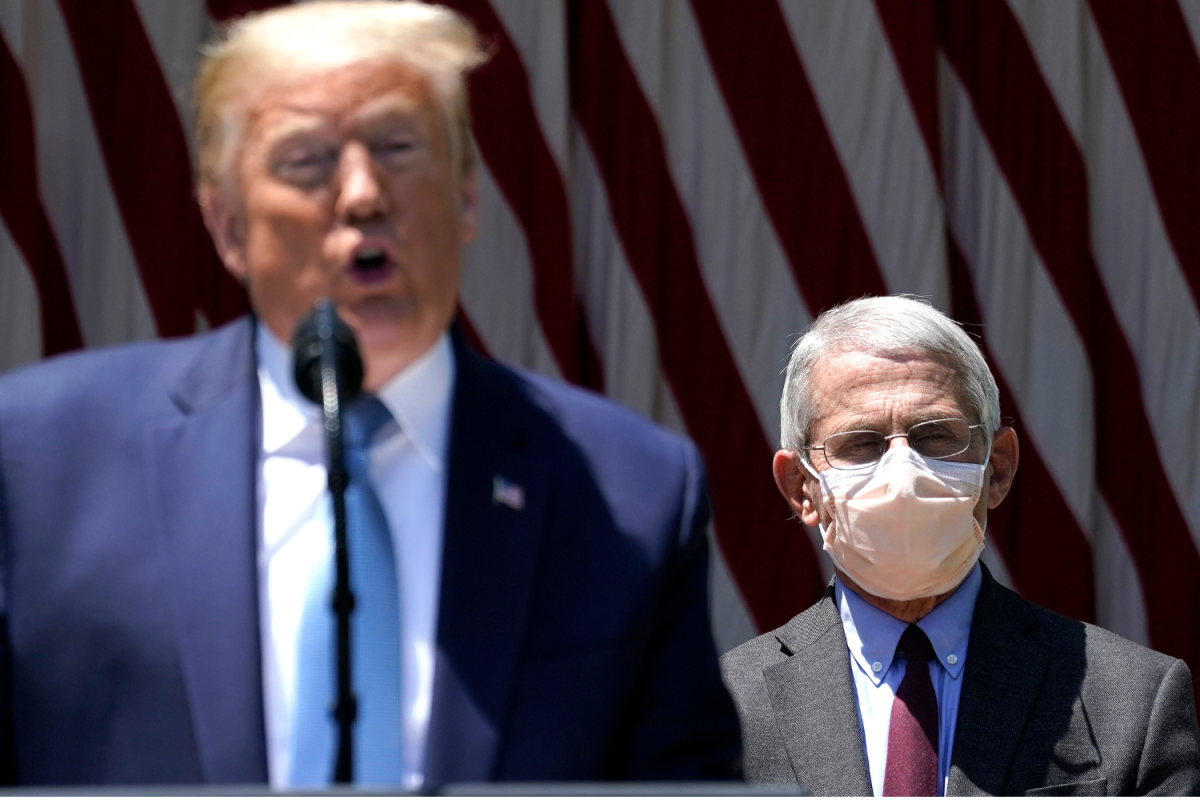
Dr. Anthony Fauci will testify before the Senate about the U.S. government’s response to the COVID-19 pandemic. Diary entries released by Senator Rand Paul’s office reveal internal discussions about the virus’s origins, travel restrictions, and concerns about President Donald Trump’s public statements on COVID-19.
Key Facts
Fauci’s diaries mention debates about whether COVID-19 came from a natural source or a lab leak, especially focusing on a virus feature called the furin cleavage site.
On January 26, 2020, Fauci noted White House officials wanted to close travel from China, but he and others preferred more limited measures like screening and quarantines.
Fauci warned President Trump several times not to downplay the seriousness of COVID-19 to avoid problems later.
Despite public disagreements, Fauci’s diaries suggest he and President Trump had a warmer private relationship early in the pandemic.
Fauci joined calls with other scientists and officials to investigate the virus’s origin and consider government actions.
The diaries show Fauci’s concern about conflicting messages between health experts and political leaders.
Fauci’s diary entry from early 2020 quotes Trump praising him and expressing trust in his advice.
The diaries were released to provide insight into the government’s handling of the early stages of the COVID-19 crisis.
Read the Original
Want the full story? Tap a source to open the original
article.
Federal officials are investigating a video showing a person kicking a protected sea lion at a California beach. The incident took place at La Jolla Cove in San Diego, and authorities have not identified the person involved.
Key Facts
The video shows a person kicking a sea lion while another individual laughs in the background.
The sea lion tried to move away but was repeatedly kicked.
The incident occurred at La Jolla Cove, San Diego, California.
NOAA Fisheries’ Office of Law Enforcement is leading the investigation.
Sea lions are protected under the Marine Mammal Protection Act.
People are advised to stay at least 50 feet (15 meters) away from protected marine animals.
San Diego’s mayor, Todd Gloria, called the act animal cruelty and asked local police to review the video.
No further details about the investigation or the person in the video have been released.
Read the Original
Want the full story? Tap a source to open the original
article.
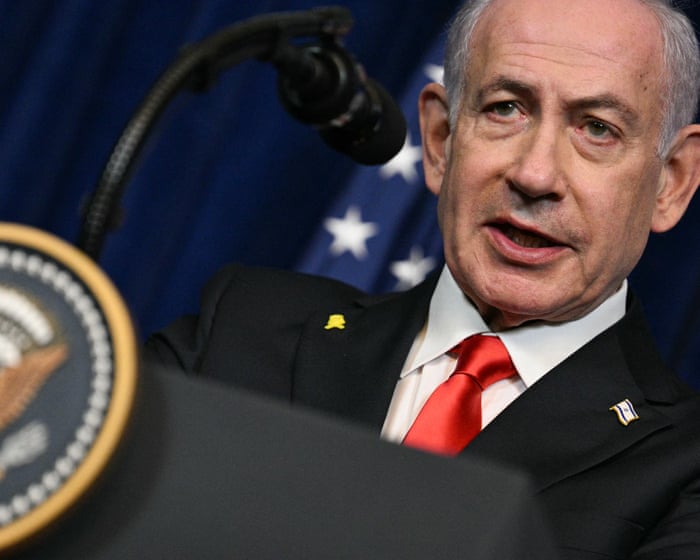
Israeli Prime Minister Benjamin Netanyahu and Ukrainian President Volodymyr Zelenskyy are visiting Washington to attend the funeral of former Senator Lindsey Graham and hope to meet with President Donald Trump. Their meetings come at a time when U.S. policies on the conflicts in Iran and Ukraine are changing.
Key Facts
Netanyahu and Zelenskyy will attend Lindsey Graham’s funeral on Tuesday in Washington.
Lindsey Graham was a close ally of President Trump and died suddenly on July 11 at age 71.
Netanyahu and Trump have had tensions due to unclear U.S. policy on Iran and disagreements over military actions.
The U.S. recently made a deal aiming for a 60-day ceasefire involving Iran reopening the Strait of Hormuz and starting nuclear talks.
Trump later rejected this deal as Iran continued attacks on commercial ships, leading to U.S. strikes on Iranian targets.
Netanyahu is unhappy about a new U.S.-Saudi Arabia deal supporting a peaceful Saudi nuclear program.
Zelenskyy’s visit comes as the Trump administration appears more supportive of Ukraine amid its war with Russia.
Zelenskyy shared intelligence with the U.S. on Russian support for Iran and Russian surveillance of U.S. military sites.
Read the Original
Want the full story? Tap a source to open the original
article.
Israeli Prime Minister Netanyahu is expected to discourage peace efforts between the US and Iran during his meeting with President Trump. Historically, Israel has worked to keep the US and Iran in conflict through various methods to maintain its influence on US Middle East policy.
Key Facts
Over five decades, Israel has tried to stop efforts to reduce conflict between the US and Iran.
Israel’s strategies include intelligence actions, public diplomacy, lobbying, and political pressure.
During the Iran-Iraq War, Israel preferred a prolonged conflict to weaken both countries.
Israeli media broadcasts aimed to influence public opinion in Iran and Iraq to continue the war.
In 1991, Israel hindered the release of American hostages in Lebanon by delaying agreements involving prisoner exchanges.
These actions complicated US-Iran diplomatic efforts and reinforced mistrust.
American Israel Public Affairs Committee (AIPAC) influenced US politics to limit diplomatic flexibility regarding Israel.
This historical pattern shows Israel’s strategic aim to keep US-Iran tensions high to protect its own interests.
Read the Original
Want the full story? Tap a source to open the original
article.
Carly Simon, a singer-songwriter, has shared that she has Parkinson's disease, a condition that affects movement and brain function. Despite the challenges, including recent surgery for skin cancer and mental health struggles, she continues to work and plans to release a new album in August 2026.
Key Facts
Carly Simon is 83 years old and diagnosed with Parkinson's disease.
Parkinson's affects brain, nerves, and muscle control and is a growing neurological illness.
She had knee and hip arthritis, which led to her Parkinson's diagnosis after tests at the Mayo Clinic.
Simon experiences tiredness, anxiety, depression, and apathy due to Parkinson's.
She underwent surgery to remove a cancerous growth on her face, affecting her self-image.
Simon is currently taking medication and receiving treatment for Parkinson's.
Despite her condition, she is releasing a new album called *Comes In Waves* in August 2026.
The first single from the album, "Howl," was released recently and focuses on emotional themes.
Read the Original
Want the full story? Tap a source to open the original
article.
Houthi forces attacked Saudi oil depots near the Red Sea, resulting in fewer ships passing through the nearby Bab el-Mandeb Strait. This caused the lowest level of ship traffic in the strait for several months.
Key Facts
The attacks targeted Saudi oil depots along the Red Sea.
The Bab el-Mandeb Strait is a key route for cargo ships.
Only 11 cargo ships passed through the strait on Sunday.
This number is the lowest reported in months.
Data on ship movements was provided by the analytics platform Kpler.
The traffic drop is linked to security concerns after the attacks.
Read the Original
Want the full story? Tap a source to open the original
article.
Five years after President Kais Saied suspended Tunisia’s parliament in 2021, the country has not improved economically or politically. President Saied consolidated power, reducing freedoms and political activity, while economic problems like unemployment and debt remain unchanged.
Key Facts
On July 27, 2021, President Kais Saied suspended Tunisia’s parliament, ending the country’s functioning democracy at that time.
The U.S. reduced military aid to Tunisia by half in response to these political changes.
In 2023, the U.S. sent a new ambassador to encourage a return to democracy amid arrests of political and civil society leaders.
Tunisia’s freedom ranking dropped from 70 to 42 between 2020 and 2026, showing a decline in civil liberties.
The country’s economic growth and unemployment rates in 2026 are similar to those in 2018 before Saied’s takeover.
Tunisia’s government debt rose from about 73% to over 81% of GDP during this period.
Security cooperation with the U.S. has been effective in fighting terrorism despite political troubles.
Political instability continues, with government ministers rarely staying in their roles for more than six months.
Read the Original
Want the full story? Tap a source to open the original
article.
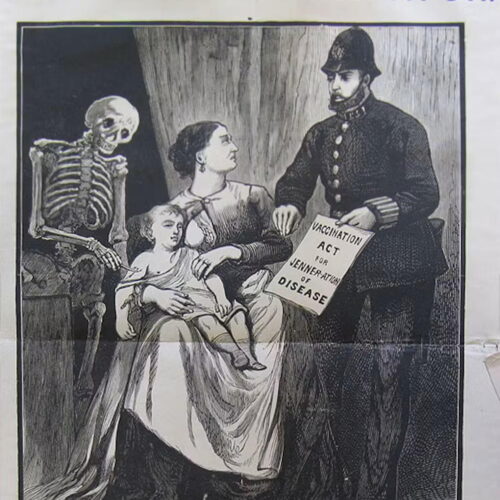
The article explains that vaccine hesitancy, or doubt about vaccines, has existed for a long time and is still common today. It highlights that simply giving people facts about vaccines does not always change their minds because vaccine hesitancy is influenced by many issues including trust, social connections, and personal beliefs. It also notes that anti-vaccine groups use powerful stories to spread their message, which can be more effective than just facts.
Key Facts
Vaccine hesitancy means refusing or delaying vaccines despite medical advice.
Vaccine doubt has existed since at least the 19th century, including riots against the smallpox vaccine in England.
In the U.S., anti-vaccine groups have been around since the 1890s.
Simply providing more scientific information has limited success in changing vaccine-hesitant views.
Vaccine hesitancy is called a “wicked problem” because it is caused by many factors like misinformation, distrust, and personal beliefs.
People who hesitate to vaccinate are not all the same; they can be well-educated and know about health.
Anti-vaccine groups use emotional and dramatic stories to influence people, which often focus on personal freedom or distrust rather than just vaccine facts.
Public health messages based on facts can seem less exciting compared to the stories told by vaccine skeptics.
Read the Original
Want the full story? Tap a source to open the original
article.
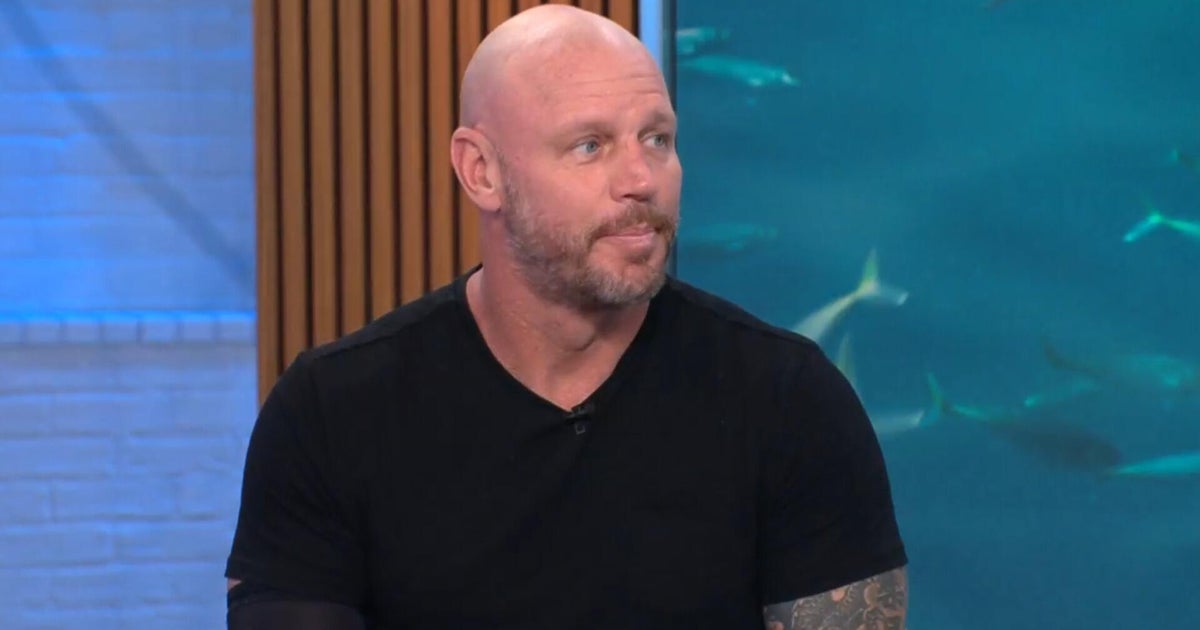
Paul de Gelder, a survivor of a shark attack, shared his experience on CBS Mornings about a risky mission to find one of the largest great white sharks in the North Atlantic. This mission was part of the Discovery Channel's Shark Week.
Key Facts
Paul de Gelder survived a shark attack in the past.
He participated in a mission to track a large great white shark.
The shark is located in the North Atlantic Ocean.
The mission was featured during Shark Week on the Discovery Channel.
Paul de Gelder talked about how he overcame his fear of sharks.
The interview was shown on CBS Mornings.
He is an advocate for shark safety and awareness.
Read the Original
Want the full story? Tap a source to open the original
article.
The U.S. is building millions of new homes to address a housing shortage, but the focus on speed and low costs risks creating future problems like high maintenance costs and environmental harm. Experts say housing should be designed with long-term quality, sustainability, and residents’ health in mind, not just quick construction.
Key Facts
The U.S. needs over four million more housing units to meet demand.
Home prices and rents are rising faster than wages in many areas.
Current housing debates focus mainly on how fast and how much to build.
Building quickly often ignores long-term costs, energy use, and residents’ health.
Developers face high interest rates, materials costs, and supply chain problems.
Sustainability and good design are often cut to save money in the short term.
Energy-efficient homes can reduce monthly costs and improve health.
Long-lasting housing benefits communities over decades, not just at construction.
Read the Original
Want the full story? Tap a source to open the original
article.