A chocolate snack called SkinnyDipped Dark Chocolate Coconut Almond Bites is being recalled across the U.S. because it may contain peanuts that are not listed on the label. The recall aims to protect people with peanut allergies from serious or life-threatening reactions.
Key Facts
The recalled product is SkinnyDipped Dark Chocolate Coconut Almond Bites.
The issue was found after a consumer reported peanut butter inside the product.
This chocolate snack usually contains coconut and almonds coated in dark chocolate.
The recall affects products sold nationwide in specific batches with best by dates in December 2026.
No illnesses have been reported so far.
People with peanut allergies could have severe reactions if they eat the product.
The FDA requires clear labeling of major allergens, including peanuts.
Consumers should check packaging for affected lot codes, avoid eating the product, and return it for a refund.
Read the Original
Want the full story? Tap a source to open the original
article.
Sports wagering apps and prediction markets use games and internet memes to attract young people. These platforms let users bet money on real or unusual events, often making it seem like a game instead of gambling. Studies show most users lose money, and experts worry this easy access may lead to gambling addiction among young people.
Key Facts
Prediction markets like Kalshi and Polymarket use memes and casual messages on social media to attract younger users.
Users can bet on real events (like sports outcomes) or unusual predictions (like alien existence).
Most users lose money; research on Polymarket found 69% of users lost money, with profits going mainly to a few top traders.
These platforms allow users 18 years and older to bet, which is younger than the 21-year minimum age for gambling in many U.S. states.
Experts say the 18-21 age range is critical for brain development and young people are more vulnerable to gambling addiction.
Researchers and doctors warn that easy access and fast-paced betting make young people more at risk for harmful gambling habits.
Senators Katie Britt and Richard Blumenthal proposed a law to stop sports betting ads targeting minors on social media.
Marketing experts say these companies use memes and internet humor deliberately to reach young audiences.
Read the Original
Want the full story? Tap a source to open the original
article.
A government-backed report warns that over 1 million young people in the UK are not in work, education, or training, risking a £125 billion annual cost to the economy. The report highlights that this situation harms the country’s finances and the future prospects of young people, urging policy changes to address the issue.
Key Facts
More than 1 million young people aged 16-24 in the UK are not in education, employment, or training (known as "Neet").
This is the first time since 2013 that the number of Neet young people has risen above 1 million.
The report estimates the annual cost of youth worklessness to the UK economy and public finances at £125 billion.
Being Neet causes long-term harm to young people’s confidence, health, and future income, with an average lifetime earnings loss of £52,000.
If all Neet young people aged 18-24 had jobs, the UK economy would gain £38 billion in gross domestic product.
The government spends about £8.1 billion a year on benefits for young people, with £4.4 billion going to those who are Neet.
The longer young people stay without work or education, the harder and more costly it is to help them re-enter the workforce.
The report recommends changes in policies for schools, health services, welfare, and employment support to reduce youth disengagement.
Read the Original
Want the full story? Tap a source to open the original
article.
A frozen treat called De Dios’s Ice Pops II is being recalled in four U.S. states because it may have undeclared ingredients that can cause serious allergic reactions. The Food and Drug Administration (FDA) warned that these allergen risks stem from problems found during an inspection of the company's production process.
Key Facts
The recall affects ice pops sold in New Jersey, New York, Pennsylvania, and Connecticut.
Undeclared ingredients include milk, pecans, pistachios, and two synthetic food dyes: Yellow #5 and Red #40.
The recall applies to products made before April 27, 2026, across multiple flavors.
The FDA found issues with the company’s manufacturing that allowed allergen contamination.
No illnesses have been reported related to these popsicles so far.
Food allergies can cause mild to life-threatening reactions, such as difficulty breathing.
The FDA and health officials plan to phase out Yellow #5 and Red #40 due to health concerns.
Consumers should not eat these popsicles if they have allergies and should return them for a refund.
Read the Original
Want the full story? Tap a source to open the original
article.
The head of the UK’s biggest homebuilder says buying a first home is as hard now as it was after the 2008 financial crisis. Rising interest rates, student debt, and low wage growth are making it difficult for young people to afford homes, especially in London and the southeast.
Key Facts
David Thomas, CEO of Barratt Redrow, said first-time buying is very challenging, similar to after the 2008 crisis.
Higher student loan repayments reduce young people’s ability to get mortgages.
The average age of first-time buyers is increasing, causing concerns about fairness between generations.
Barratt Redrow and other builders want the government to create a support package for first-time buyers.
Fewer first-time buyers are in the market now (6% less than last year).
Those buying are looking for homes about £10,000 more expensive than last year.
Average first-time buyer homes cost £254,750, rising by 4.3%, faster than overall UK house price growth of 1.5%.
In London, the average price for first-time buyer homes passed £500,000 for the first time.
Read the Original
Want the full story? Tap a source to open the original
article.
The Albanese government’s proposed tax reforms are expected to financially benefit 90% of young Australians, according to Treasury modelling. The changes include a $1,000 tax deduction, a $250 tax offset for working Australians, and updates to capital gains tax and negative gearing rules.
Key Facts
Treasury modelling shows 90% of young Australians will gain from the new tax reforms.
The reforms include a $1,000 automatic tax deduction and a $250 working Australians tax offset (Wato).
Capital gains tax and negative gearing rules are also being changed as part of the reforms.
Young people in the top 10% of lifetime income are expected to pay more tax under the new system.
The proportion of property investors under 40 has dropped from 35% in 2000 to about 20% in 2023.
Only about 10% of Australians under 35 own shares, according to tax office data.
Some critics worry people with large share investments might pay more tax, but Treasury says investors will still benefit after tax.
Labor faces internal disagreements over whether to give exemptions for small or start-up businesses affected by the capital gains tax changes.
Read the Original
Want the full story? Tap a source to open the original
article.
Young people, especially those in Generation Z, are using social media platforms like Instagram, TikTok, and LinkedIn in new ways to find jobs during a difficult job market. They create videos, personal posts, and creative presentations to catch the attention of employers directly because traditional job applications are not leading to many interviews.
Key Facts
Generation Z workers face a tough job market with fewer openings and more competition.
The global hiring rate is at a five-year low, and job applicants per position have increased by nearly 30%.
Many young job seekers use social media content, such as videos and slide decks, as part of their job search.
Some Gen Z candidates send over 300 to 1,000 applications without success before trying new strategies.
Video résumés help job seekers show personality, creativity, and passion beyond a paper résumé.
Young workers’ creative posts can lead to referrals, interviews, and job offers.
Employers are using AI tools to screen résumés, making it harder to stand out with traditional applications.
Social media is becoming an important tool for networking and landing job opportunities for young candidates.
Read the Original
Want the full story? Tap a source to open the original
article.
A recent survey found that CEOs of major global companies have lost confidence in the economy, mainly due to the ongoing war in Iran. This drop in confidence may slow down hiring and investment, which could affect economic growth.
Key Facts
CEO confidence fell 12 points in the second quarter to a level of 47; a number below 50 means more CEOs feel negative than positive.
The survey included 141 CEOs from Fortune Global 500 companies and was conducted from May 4 to May 18.
Nearly half (47%) of CEOs said economic conditions have worsened compared to earlier this year, up from just 8%.
Only 15% of CEOs think economic conditions are better now than six months ago, down from 39% in the first quarter.
CEO confidence had increased after President Donald Trump took office due to hopes for reduced regulation and tax cuts.
Optimism fell after changes in tariff policies and has now dropped further because of the Iran war.
Despite lower confidence, many CEOs still plan to increase spending on investments in the coming year.
General American optimism about the economy is also low, according to other recent surveys.
Read the Original
Want the full story? Tap a source to open the original
article.
Albert Manifold was removed from his role as BP chairman due to serious concerns about governance and conduct. He denies the accusations against him and says no issues about his behavior were raised during his time as chairman.
Key Facts
Albert Manifold was BP’s chairman for less than a year before being removed.
BP’s board cited "serious concerns" about governance, oversight, and conduct for his dismissal.
Manifold disputes the negative claims about his behavior and calls them lies.
He says no one raised concerns about his conduct or relationships while he was chairman.
Manifold emphasized he focused on protecting shareholder interests and controlling company expenses.
He stated he did not misuse company benefits like private flights or sports tickets.
Manifold said he personally made his own coffee and bought his lunch at a local cafe.
The removal was immediate and followed reports about bullying and overbearing behavior.
Read the Original
Want the full story? Tap a source to open the original
article.
Oil prices increased after Iran attacked a U.S. airbase in response to American air strikes. The amount of commercial shipping passing through the Strait of Hormuz dropped to nearly zero due to the rising conflict.
Key Facts
Iran said it attacked a U.S. airbase after U.S. strikes near the Strait of Hormuz.
The Strait of Hormuz is a key route for oil shipments.
Commercial traffic through the Strait of Hormuz fell sharply to almost none.
Benchmark crude oil prices rose on May 28, 2026.
The U.S. and Iran are engaged in escalating military actions in the region.
President Trump stated no country would control the Strait of Hormuz under future agreements.
Other related business news includes Australia suing 3M over chemicals and Brazil supporting more oil exploration in the Amazon.
Read the Original
Want the full story? Tap a source to open the original
article.
The unemployment rate for recent college graduates is higher than the general rate, with some experts suggesting artificial intelligence (AI) may be a factor. Studies show AI might reduce entry-level jobs in some fields, but economists disagree on how much AI is causing the hiring slowdown.
Key Facts
The unemployment rate for recent college graduates is 5.6%, compared to 4.2% overall.
The job market for college graduates in early 2026 is considered challenging by the New York Federal Reserve.
AI technology could cut U.S. entry-level jobs by half by 2030, according to Anthropic CEO Dario Amodei.
Some industries vulnerable to AI, like customer service and software development, saw a 16% decline in jobs for young workers aged 22-25.
A Stanford study linked this decline to the release of ChatGPT in late 2022.
In industries less affected by AI, young worker employment kept pace with older employees.
Experts disagree if AI is the main reason for the weak job market or if other factors like a general slowdown in hiring explain it.
Healthcare jobs, less vulnerable to AI, may offer quicker hiring opportunities for graduates.
Read the Original
Want the full story? Tap a source to open the original
article.
French President Emmanuel Macron announced large private investments to support France’s plan to use more electricity and less fossil fuels. About 200 companies agreed to help increase electricity’s share of the country’s energy to 60% by 2030, including a €1 billion electric vehicle project by Stellantis.
Key Facts
President Macron supports moving France away from fossil fuels toward more electricity use.
The goal is to have electricity make up 60% of France’s energy by 2030, doubling the current amount.
Around 200 companies signed a national agreement to support this energy shift.
Stellantis, a car maker, plans a €1 billion project focused on electric vehicles (EVs).
The meeting is called the "electrification team" gathering.
BP’s chairman Albert Manifold was fired over serious concerns about governance and conduct.
The French government aims to boost electric vehicle production and use.
This initiative is part of France’s broader efforts to reduce climate change impacts.
Read the Original
Want the full story? Tap a source to open the original
article.
Albert Manifold, the former chair of BP, denied allegations of aggressive behavior and misconduct that led to his sudden removal after less than a year. BP said it had serious concerns about his governance and conduct, but plans to continue the current company strategy under new leadership.
Key Facts
Albert Manifold was removed as BP chair less than eight months after starting in October 2025.
BP cited serious concerns about Manifold’s governance, oversight, and conduct for his immediate departure.
Manifold denied the accusations, calling them lies and saying no one raised issues about his behavior while he was chairman.
Media reports described Manifold's behavior as aggressive and claimed he wanted too much control, which he disputed.
Manifold said he pushed hard on cutting costs and improving performance but rejected claims about his conduct.
He avoided usual executive perks like chauffeur-driven cars, private jets, and corporate hospitality to set an example during cost cuts.
BP named Ian Tyler as interim chair and said Chief Executive Meg O’Neill will continue the company’s strategy.
BP stated it supports its employees and stands by its statement about Manifold’s behavior.
Read the Original
Want the full story? Tap a source to open the original
article.
Many big companies spent a lot of money on artificial intelligence (AI) but are now unsure if it is worth the cost. They face high bills, unclear benefits, and workers who do not always support using AI at work.
Key Facts
Microsoft cut back on most of its AI software licenses partly due to high costs.
Uber’s chief operations officer said AI expenses are becoming difficult to justify.
One company spent $500 million in a single month because it did not limit employee AI use.
Some companies use AI as a reason to reduce their workforce, though this may be mainly to manage expenses.
Workers and customers are becoming less positive about AI use.
AI currently works best for coding tasks but not as well for other business areas.
Companies often automate tasks they dislike instead of those that bring the most money.
AI costs can increase quickly because many AI services charge based on how much they are used, even for simple questions.
Read the Original
Want the full story? Tap a source to open the original
article.
The UK government announced that from mid-2027, new rules will remove many paperwork and border checks on British food exports to the EU. This change aims to help UK food businesses sell products more easily in Europe, reduce costs, and support jobs.
Key Facts
Starting mid-2027, UK meat exporters will no longer need veterinary certificates to prove their products meet EU rules.
Plant and wood packaging exports to the EU will also be free from certain health paperwork.
Businesses selling food to Northern Ireland will not need health labels anymore.
The deal covers rules on additives, animal breeding, pesticides, organic products, and farm feed.
The government expects this deal to add about £5.1 billion each year to the UK economy.
Around 16,000 UK food companies stopped exporting to the EU after Brexit due to complex paperwork.
Current paperwork fees can be up to £200 per shipment, causing delays and extra costs.
UK and EU officials aim to complete the agreement before their summit on 13 July 2024.
Read the Original
Want the full story? Tap a source to open the original
article.
Morocco has become the top industrialized country in Africa, surpassing South Africa for the first time since 2010, according to the African Development Bank’s 2025 Africa Industrialisation Index. The report highlights Morocco’s steady industrial growth, export variety, and strategic policies, while noting that overall industrial progress in Africa remains slow and uneven.
Key Facts
Morocco leads Africa’s industrialisation index with a score of 0.8415, just ahead of South Africa’s 0.8396.
South Africa’s industrial competitiveness score declined from 0.8819 in 2010 to 0.8396 in 2024.
The index measures industrialisation based on performance, direct drivers (like investment and infrastructure), and indirect factors (such as business environment and inflation).
Four Arab countries (Morocco, Egypt, Tunisia, Algeria) rank among the top six industrial economies in Africa.
North Africa is the most industrialised region, followed by Southern Africa, Central, West, and East Africa.
Africa’s manufacturing value added grew from $285 billion in 2020 to $351 billion in 2025, but the continent still makes less than 2% of the world’s manufacturing output.
Intra-African trade is low at 14.4% of total trade, much less than Asia (60%) and Europe (57%), partly due to trade barriers and weak infrastructure.
The African Continental Free Trade Area (AfCFTA) could boost incomes by 7% and add up to $450 billion in value if it shifts focus from trade alone to also supporting production and regional supply chains.
Read the Original
Want the full story? Tap a source to open the original
article.
The price of coffee, such as a latte in London, has risen significantly due to many global economic factors. Weather problems in major coffee-growing countries have raised the cost of coffee beans, pushing prices to levels not seen in decades.
Key Facts
A latte in central London can cost close to £5, reflecting higher coffee prices.
Starbucks' CEO described a $9 coffee experience in the US as "affordable," sparking debate.
Coffee carts pay lower fees than shops but still face rising costs at every step.
Coffee prices reveal wider global economic issues, including inflation, trade problems, climate change, and demand in China.
Coffee farming dates back to 1895 with espresso’s invention in Italy.
Arabica beans are hand-picked in countries like Brazil, Ethiopia, and Kenya; robusta beans are mostly machine-harvested in Vietnam.
Climate events like droughts, typhoons, and frosts have caused coffee prices to rise sharply in recent years.
Arabica prices peaked above $4 per pound in 2023, up from about $1.20 historically; robusta prices also surged.
Read the Original
Want the full story? Tap a source to open the original
article.
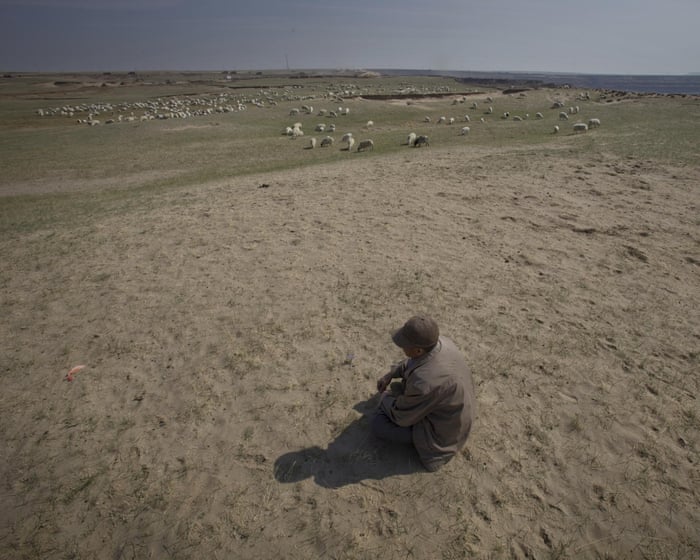
A Chinese farm owner in Inner Mongolia successfully hired four shepherds after his job ad went viral on social media, attracting many applicants from crowded cities. His offer of higher-than-average pay and simple rural work drew attention amid China's tough job market and widespread long working hours culture.
Key Facts
Zuo Xiaoyong posted an ad seeking two shepherds to care for 3,000 sheep on his Inner Mongolia ranch.
The job pays about 8,000 yuan ($1,180) monthly, above China’s urban average salary of 6,000 yuan.
The job involves outdoor work in summer and indoor tasks in winter with temperatures below -30°C.
The ad gained about 59 million views on Weibo, China’s social media platform.
Over 700 people applied, including recent graduates, factory workers, and office employees.
China’s official unemployment rate is 5.2%, but youth unemployment is higher at 16.9%.
Many workers want to escape the "996" work culture: working from 9 a.m. to 9 p.m., six days a week.
Zuo ended up hiring four shepherds (two couples) with prior farm experience and prefers couples due to the remote location.
Read the Original
Want the full story? Tap a source to open the original
article.
Experts warn that Britain is facing a growing food crisis due to extreme weather, high inflation, and the effects of the war in Iran. They say the government is not doing enough to prepare for problems like lower crop yields, higher food prices, and supply chain disruptions.
Key Facts
Britain is experiencing a heatwave and dry spring causing stress to crops and livestock.
Food prices are expected to be 50% higher this November compared to five years ago.
The Iran war is contributing to high fuel and fertiliser costs, affecting food production.
The government has avoided imposing price controls on staple foods despite inflation concerns.
A group of food experts wrote to ministers urging an update to the national food strategy.
Experts want more focus on domestic food production, supply chain preparedness, and affordable healthy food.
Some experts say food security should be treated as a national security issue.
There is concern that food supply problems could cause social unrest and economic strain.
Read the Original
Want the full story? Tap a source to open the original
article.
Luton Council in England is using crime scene tactics, like yellow "crime scene" tape and investigations, to catch people who illegally dump rubbish, called fly-tipping. This new method aims to identify those responsible by searching for evidence in dumped waste and has been introduced because fly-tipping has increased and traditional clean-ups were not working.
Key Facts
Luton Council started a trial in September using crime scene methods to fight fly-tipping, marking dumped rubbish with tape and searching for clues like delivery labels.
Fly-tipping includes illegal dumping of items like furniture, mattresses, toys, and household waste on streets.
Luton has the highest fly-tipping incidents in the East of England region.
In 2024-25, local authorities in England dealt with 1.26 million fly-tipping cases, a 9% rise from the previous year.
The council leaves dumped rubbish for 3 days marked with tape to show it is under investigation, while food waste in bins is cleared faster.
CCTV cameras have been added in problem spots to help catch offenders.
Causes of fly-tipping include expensive housing, more shared housing (HMOs), illegal dumping by waste operators, and confusion over who is responsible for rubbish.
Fly-tipping causes health risks, harms wildlife, and costs local councils and landowners money to clean up.
Read the Original
Want the full story? Tap a source to open the original
article.