The Dangote Refinery in Nigeria has extended its Initial Public Offering (IPO) deadline to October 27, 2026, following strong public interest. The refinery has become important for Africa and Europe due to higher fuel prices caused by conflict in the Middle East and supply problems.
Key Facts
The Dangote Refinery IPO extended for two weeks, ending on October 27, 2026.
Conflict in the Middle East and the closure of the Strait of Hormuz raised global crude oil prices.
Higher prices and supply shortages led African and European countries to rely more on Dangote Refinery.
Dangote is Africa’s top crude oil producer.
The refinery aims to become a key regional center for refining and making petrochemicals.
The IPO’s success shows strong public interest in investing in the refinery.
The refinery is reshaping Nigeria’s fuel market and has regional economic importance.
Read the Original
Want the full story? Tap a source to open the original
article.
Nvidia CEO Jensen Huang visited Paris to announce new investments in French technology companies that use artificial intelligence (AI). The investments include stakes in firms like Doctolib, a medical appointment booking site.
Key Facts
Nvidia’s CEO Jensen Huang is investing in French AI technology companies.
One of the companies Nvidia invested in is Doctolib, which helps people book medical appointments online.
This move is part of Nvidia’s plan to expand its presence in Europe’s AI sector.
The announcement was made during Huang’s visit to Paris.
The investments aim to support the growth of French technology firms.
Nvidia recently announced a major AI-related purchase of Hugging Face for nearly $13 billion.
The news highlights increasing interest in AI development in Europe.
Read the Original
Want the full story? Tap a source to open the original
article.
Bentley Motors is shifting its focus back to sporty, high-performance cars while maintaining its luxury style. The company has launched several new models, including a powerful Supersports version, hybrid Speed variants, and an all-electric SUV called Torcal, and is also updating its stores and merchandise.
Key Facts
Bentley is returning to its origins by focusing more on sporty, performance-driven cars.
The Supersports model, featuring a 4.0-liter V8 engine with 657 horsepower, sold out in eight weeks.
New Speed versions of Bentley models combine modern looks with hybrid engines for better performance.
The Bentayga Speed SUV and Bentayga X Concept highlight Bentley's push into dynamic and off-road vehicles.
The latest Flying Spur S variant is 20% more powerful than previous versions.
Bentley introduced the Torcal, an all-electric SUV that accelerates from 0-60 mph in 2.8 seconds.
Bentley is updating its retail showrooms in over 60 markets to focus on personalization and customer experience.
The company launched new limited-edition clothing and a collectible magazine to enhance its brand presence.
Read the Original
Want the full story? Tap a source to open the original
article.
Wayfair, Appliances Direct, and Gold's Gym have been fined a total of £6 million by the UK competition watchdog for using misleading sales tactics. Some customers of Appliances Direct and Gold's Gym will receive refunds because the companies did not give clear price information.
Key Facts
The Competition Markets Authority (CMA) fined Wayfair £4.8 million.
Appliances Direct was fined £1.2 million.
Gold's Gym was fined £48,000.
Wayfair and Appliances Direct used misleading "time-limited" sales offers.
Gold's Gym did not clearly tell customers the full cost of memberships.
Appliances Direct and Gold's Gym must pay back £440,000 to customers as refunds.
The fines aim to stop unfair sales practices and protect consumers.
The BBC contacted these companies for their response.
Read the Original
Want the full story? Tap a source to open the original
article.
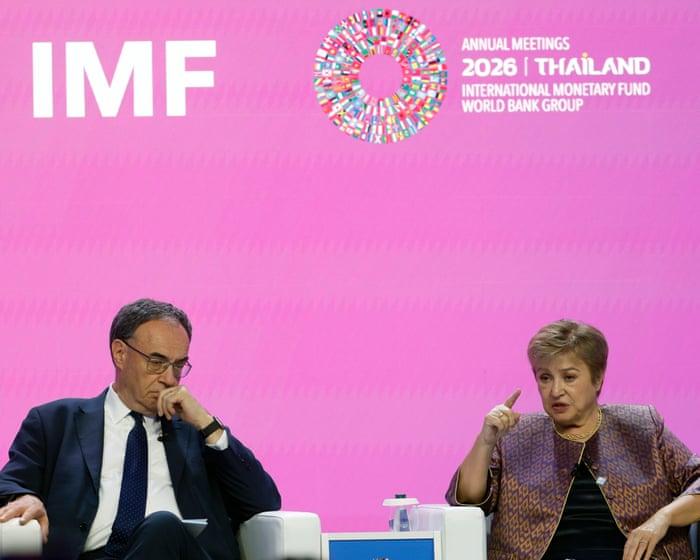
The heads of the Bank of England and the International Monetary Fund warned that rising cyber-attacks could damage trust in the financial system. They stressed the need for stronger responsibility, especially from social media companies, and the use of technology to both attack and defend against fraud.
Key Facts
Andrew Bailey, governor of the Bank of England, highlighted risks like AI agents hijacking devices and cyber-attacks causing physical harm, such as heating fridges.
Bailey said trust in technology and money is critical for society to function.
Kristalina Georgieva, IMF managing director, warned that widespread cyber fraud might cause people to avoid formal financial systems entirely.
Georgieva compared today’s distrust in financial systems to her experience growing up behind the iron curtain, where people kept cash hidden at home.
The IMF raised the global financial stability threat level to “elevated” partly because of cyber-attack risks.
Fraud now often happens through social media and apps, not just traditional financial channels.
Bailey urged social media companies to take responsibility for stopping fraud on their platforms.
A new set of international principles to prevent cyber fraud in financial institutions, called the Bangkok blueprint, was launched at the IMF and World Bank meetings.
Read the Original
Want the full story? Tap a source to open the original
article.
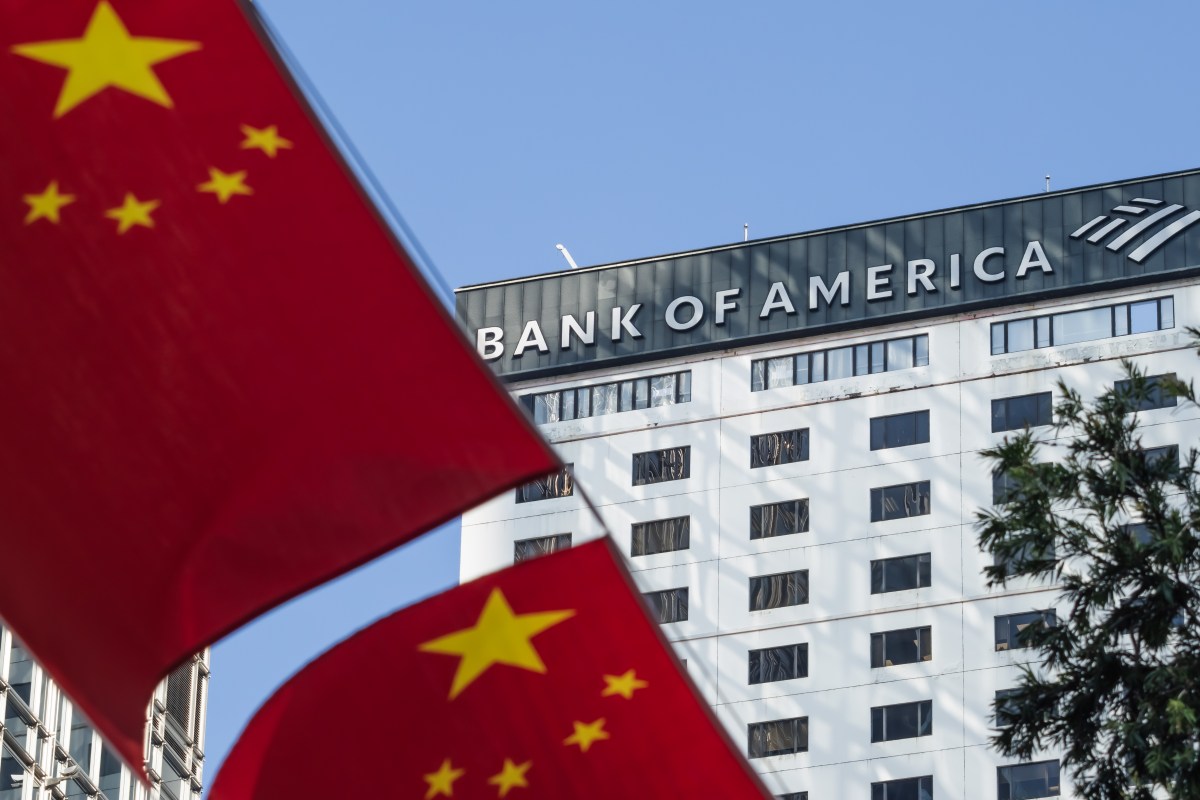
Bank of America has been fined $1.2 billion by U.S. federal regulators for not reporting over $5 billion in suspicious transactions. This penalty is one of the largest ever issued by the Treasury Department’s Financial Crimes Enforcement Network (FinCEN), related to failures in anti-money laundering rules.
Key Facts
Bank of America failed to report suspicious transactions potentially connected to Chinese money laundering and illegal finance near the U.S.-Mexico border.
The $1.2 billion fine is the third-largest penalty in FinCEN’s history.
Treasury Secretary Scott Bessent highlighted the broader risks this failure posed to the U.S. financial system.
The bank was found to have willfully violated the Bank Secrecy Act, a law requiring banks to guard against money laundering.
The Treasury Department also fined Bank of America $11.6 million for sanctions violations involving Iran and Russia.
The Office of the Comptroller of the Currency imposed a $750 million penalty, but this amount counts toward the $1.2 billion fine, not in addition to it.
Previous large bank fines, such as Bank of America’s $16.65 billion settlement in 2014, included various issues like mortgage securities misconduct.
The current penalty warns of ongoing efforts to enforce anti-money laundering and sanctions compliance in major banks.
Read the Original
Want the full story? Tap a source to open the original
article.
China’s exports grew by 36.3% in September compared to last year, reaching $447.18 billion. This increase was mainly due to higher demand for technology products, especially those related to artificial intelligence (AI), while imports also rose by 31%.
Key Facts
China’s exports in September rose 36.3% year-on-year, the biggest monthly increase since 2021.
Semiconductor exports more than doubled with a 108% rise, and automatic data processing machine shipments grew nearly 55%.
Imports increased 31% compared to the previous year, up from a 28.2% rise in August.
China’s total exports in the first nine months of 2024 reached $3.37 trillion, an increase of 21.3%.
The trade surplus for the first three quarters was $938.1 billion, meaning exports exceeded imports by this amount.
ASEAN countries were China’s largest export market, with a 52% rise in exports to $81.7 billion in September.
Exports to the European Union and the United States also grew by 25.3% and 39.6%, respectively.
Despite strong export growth, China faces challenges like a shrinking population, a weak housing market, and slow domestic spending.
Read the Original
Want the full story? Tap a source to open the original
article.
Paramount and Warner Bros. have merged into a new company called Skydance, but their streaming services, Paramount+ and HBO Max, will stay separate for now. The merger created $80 billion in debt, which may lead to higher prices for subscribers and possible job cuts at the new company.
Key Facts
Paramount and Warner Bros. have officially merged into one company named Skydance.
Paramount+ and HBO Max continue to operate as separate streaming services at this time.
The merged company has taken on $80 billion in debt from the deal.
Due to the debt, streaming subscription prices may increase in the future.
The company might lay off employees to reduce costs, following a trend seen at other media companies like Disney.
Netflix released a documentary about comedian Norm Macdonald, highlighting his influence in comedy.
Peacock is launching a prequel series called Crystal Lake starring Linda Cardellini, focused on the character Pamela Voorhees from Friday the 13th.
Fans of Gilmore Girls can enjoy an immersive recreation of the show's town, Stars Hollow, alongside a yearlong tribute to musician David Bowie for his 80th birthday.
Read the Original
Want the full story? Tap a source to open the original
article.
Many Americans want to make ethical and eco-friendly choices when buying food, but find it hard to do so. General Mills is working to make its products more sustainable by improving farming methods, packaging, and supply chain practices.
Key Facts
A 2025 survey found the average American feels “eco guilt” for 48 days each year, worrying they could act more sustainably.
General Mills has been focusing on sustainability for over ten years to build a more resilient food system.
The company’s Supplier Code of Conduct includes rules about human rights, health, safety, the environment, and business ethics.
General Mills partners with farmers and suppliers to improve farming methods, reduce greenhouse gases, and create recyclable or reusable packaging.
Their Cascadian Farm Climate Smart cereals include Kernza, a grain that helps soil and water health.
By 2025, 95% of General Mills’ packaging meets the company’s standards for food protection and recyclability.
Changes in farming take time due to factors like weather, location, and economics.
General Mills aims to improve sustainability across the entire food system, not just in one area.
Read the Original
Want the full story? Tap a source to open the original
article.
A man died and four others were injured on the Goliath roller coaster at Six Flags Over Georgia on October 12, 2024. Following the incident, Six Flags closed nine similar roller coasters at other parks to check safety. Roller coaster injuries are rare but have slightly increased according to a 2024 safety survey by the National Safety Council.
Key Facts
The accident happened on a 200-foot roller coaster called Goliath at Six Flags Over Georgia.
One man died after falling from his seat and hitting the ride several times; four other riders were injured.
Riders stuck on the lift hill were safely walked down an emergency stairway.
Police and safety inspectors arrived at the park to investigate the accident.
Six Flags closed nine similar roller coasters at other parks to review them for safety.
A 2024 safety survey found roller coaster injuries occur at about 1.27 per million rides, up from 0.88 the previous year.
Serious injuries requiring hospital stays longer than 24 hours or causing death are much rarer, about 8% of all ride injuries.
The amusement ride industry is mostly regulated by state inspectors; no federal agency oversees fixed-site rides.
Read the Original
Want the full story? Tap a source to open the original
article.
John Healey, the UK chancellor, is planning to change tax rules so online marketplaces like Amazon and eBay must collect VAT (a type of sales tax) from sellers on their sites. This change aims to raise up to £1 billion for the Treasury and help reduce business taxes for physical shops.
Key Facts
Online marketplaces will be responsible for collecting VAT from retailers with sales over £90,000 a year.
The plan targets foreign sellers who avoid paying VAT by using online platforms.
The extra tax money could reach £1 billion and be used to cut taxes for high street shops.
Healey’s budget will be announced on 28 October.
There is growing pressure to provide financial relief to small businesses on the high street.
The Institute for Fiscal Studies warned Healey that he needs a clear plan to manage £35 billion in spending pressures.
The International Monetary Fund raised the UK growth forecast to 1.3% for this year but advised continuing efforts to fix public finances.
The Treasury said it does not comment on rumors and will share decisions at official budget events.
Read the Original
Want the full story? Tap a source to open the original
article.
Water companies in England are seeking permission to limit how businesses use water because of ongoing drought conditions. These limits could stop golf clubs, private schools, and car washes from using water for non-essential purposes to protect rivers, wildlife, and water supplies.
Key Facts
Most of England is still in drought, with water levels in reservoirs at 54%, which is 21% below normal for autumn.
Eleven areas in England remain officially in drought, with Yorkshire the latest area declared on October 9.
Rivers and groundwater levels are very low, putting wildlife and fish habitats under stress.
Water companies want to apply "non-essential use bans" to restrict water for business activities like watering sports fields and washing cars.
Businesses have not been subject to hosepipe bans so far, but this may change with these new restrictions.
The UK government department Defra has not yet responded to the water companies’ requests for permission.
Southern Water seeks a special permit to take more water from the River Test, a sensitive chalk stream habitat, due to supply risks.
The drought requires long periods of above-average rainfall to end; recent rainfall has been well below normal, especially in eastern and southern England.
Read the Original
Want the full story? Tap a source to open the original
article.
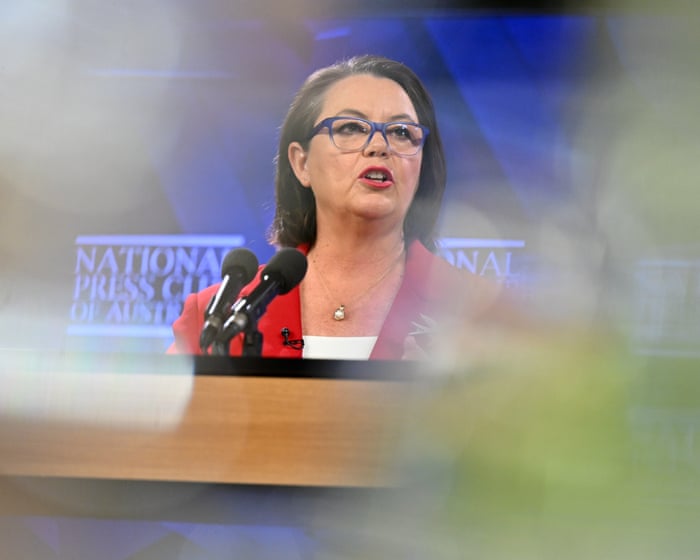
Australia's resources minister, Madeleine King, said the country will need gas for industry and homes for the foreseeable future. The government plans a new gas reservation scheme that requires gas companies to keep 20% of their supply for local use to help lower energy prices.
Key Facts
The gas reservation scheme will start around January 2028.
Gas companies must reserve 20% of their exported gas for domestic use.
The Australian Energy Regulator can require companies to supply 110% of expected demand annually.
The scheme will replace an older domestic gas security mechanism.
The plan aims to reduce power prices by increasing local gas supply.
Gas is important for heating homes, manufacturing, mineral processing, and supporting renewable energy.
There is currently no alternative energy that can fully replace gas for these uses.
The government supports research to find lower emissions or alternative fuels for the future.
Read the Original
Want the full story? Tap a source to open the original
article.
Heating oil prices in the UK have nearly doubled since last year due to the Iran war, causing financial strain on users, especially in rural areas without mains gas. The government plans to introduce new rules to improve competition and protect customers, but no price cap similar to gas and electricity tariffs has been promised.
Key Facts
Heating oil users face much higher prices and have to buy fuel at nearly double last year’s cost.
Rising heating oil costs force some people to limit their purchase amounts to manage expenses.
Around 15% of households in Shropshire rely on oil heating, with some rural areas having over 50% off the mains gas grid.
The government will review minimum order levels and promote clearer customer compensation.
Campaigners want a price cap and VAT cuts on heating oil like those for gas and electricity.
Buying heating oil is harder for many because it requires large, upfront payments instead of monthly bills.
Some communities have formed groups to buy heating oil in bulk for lower prices.
The government aims to develop new regulations to protect heating oil consumers and boost competition.
Read the Original
Want the full story? Tap a source to open the original
article.
A report has found that Black and South Asian music events in London face more cancellations and restrictions than white events. These barriers lead to an estimated loss of up to £141 million a year for the city’s live music industry.
Key Facts
The Race Equality in Music Event Licensing (REMEL) report was led by Black Lives in Music after two years of research.
Disproportionate restrictions mostly affect genres like Afrobeats, drill, dancehall, reggae, and jazz.
White music events, such as indie, pop, and rock, face much less scrutiny.
The cost of event cancellations and restrictions is between £127 million and £141 million annually, with a potential loss of over £650 million in five years.
The report highlights issues with unverified police intelligence used to cancel events, often without clear explanations to promoters.
The study was backed by the Mayor’s office, Greater London Authority, Metropolitan Police, UK Music, and others.
Some venues owned by Black people have had licenses suspended unfairly, while white-owned venues often get quicker support after incidents.
The report suggests racial discrimination continues despite past efforts, like the removal of Metropolitan Police’s Form 696 in 2017, which was criticized for its bias against Black music events.
Read the Original
Want the full story? Tap a source to open the original
article.
Heathrow Airport’s chief executive warned that not building a third runway would be a big missed chance for the UK. The airport’s owners may take their investment money elsewhere if the project does not go ahead. The government is still reviewing plans and consulting on whether to support the runway expansion.
Key Facts
Heathrow Airport is the busiest in the UK and serves over 80 million travelers yearly.
A third runway could increase annual flights from 480,000 to 720,000.
The runway’s cost is estimated at £33 billion and would involve demolishing homes and rerouting roads.
The current owners include investors from France, Qatar, Saudi Arabia, and China.
If the project is not approved, investors may spend their money outside the UK.
The expansion is expected to create jobs and provide an economic benefit of around £40 billion.
The new runway was originally planned to open by 2035 but might be delayed to 2039.
The government supports airport expansion that fits growth and environmental goals but has not yet confirmed backing for Heathrow’s runway.
Read the Original
Want the full story? Tap a source to open the original
article.
Singapore’s economy grew 5.4% in the latest quarter, driven by a boom in artificial intelligence (AI) and the semiconductor industry. Manufacturing and construction expanded strongly, but the central bank expects AI-driven growth to slow by 2027.
Key Facts
Singapore’s GDP grew 5.4% year-on-year between July and September 2025.
Growth was driven by the semiconductor industry, manufacturing, and AI-related investments like data centers.
Manufacturing output rose 7.5%, led by electronics, precision engineering, and transport engineering.
Construction grew 8.8%, partly due to AI-related projects.
The Monetary Authority of Singapore kept monetary policy unchanged, expecting AI demand to cool in 2027.
Singapore produces about 10% of the world’s semiconductors and 20% of semiconductor equipment.
The IMF forecasts Singapore’s economy to grow 5% in 2026, one of the fastest rates among advanced economies.
Singapore’s economy has seen over 5% growth for two years in a row, a first since 2010 and 2011.
Read the Original
Want the full story? Tap a source to open the original
article.
Bank of America was fined $1.2 billion by the U.S. Treasury Department for failing to detect and report suspicious financial activities that could be related to money laundering. The bank admitted it did not properly follow laws to prevent illegal money flow and will include this fine in its financial results.
Key Facts
Bank of America failed to report more than $5 billion in suspicious activities to the government.
About $1 billion in those transactions had risks linked to national security and illegal finance.
The bank missed signs of possible money laundering involving Chinese networks and trade near the U.S. southwest border.
The $1.2 billion fine is the third-largest ever given by the Treasury Department.
The penalty includes fines from the Office of the Comptroller of the Currency and the Office of Foreign Assets Control.
Bank of America admitted it "willfully violated" the Bank Secrecy Act by not maintaining proper anti-money laundering programs.
The bank relied too much on outside parties instead of using its own systems to detect illegal money flows.
The bank will report this fine as a charge in its upcoming financial report, lowering its net income.
Read the Original
Want the full story? Tap a source to open the original
article.
A federal court overturned a protection order that blocked a goldmine project in central west New South Wales. The order was issued under Indigenous heritage laws to protect culturally important sites but was found invalid, allowing the mining company to continue plans.
Key Facts
The protection order was made under the Aboriginal and Torres Strait Islander Heritage Protection Act by former environment minister Tanya Plibersek in 2024.
The order aimed to protect the headwaters and springs of the Belubula River, important to the Wiradyuri Traditional Owners.
It prevented Regis Resources from building a tailings dam needed for the McPhillamys goldmine at Blayney.
Justice James Stellios ruled the protection order invalid, saying the court could not judge the merits of the heritage claim.
Regis Resources argued it was denied a fair process and presented legal challenges based on procedural errors.
The company plans to pursue a new development method avoiding the protection area if the order is reconsidered.
Regis Resources sees the ruling as a positive step for advancing the gold project, which they say could benefit the local economy.
The current environment minister, Murray Watt, is expected to reassess the protection order application.
Read the Original
Want the full story? Tap a source to open the original
article.
Many job seekers and employers are using AI to help with job applications, such as writing CVs and cover letters. While some employers accept limited AI use, there are concerns about fairness and honesty when AI is used during interviews or assessments.
Key Facts
Job seekers often use AI to improve CVs and cover letters or to find important keywords that employers look for.
Employers accept AI use more at early stages like writing applications but worry about misuse in interviews and assessments.
A survey of UK graduate employers found 92% had seen or suspected AI misuse in hiring, up from 85% the previous year.
AI helps candidates apply for many jobs quickly, increasing competition and pressure, especially for students.
Some employers, like EDF, are trying to control AI use by giving guidelines and changing how they review applications.
The use of AI in hiring raises questions about fairness since some candidates use AI heavily while others do not.
Employers use AI themselves to screen candidates, creating complex questions about acceptable AI use.
The job market is very competitive, which partly explains why job seekers rely on AI tools.
Read the Original
Want the full story? Tap a source to open the original
article.