The article explains that the rise in spending on artificial intelligence (AI) is helping the economy grow. It also mentions that US government bond yields, which affect borrowing costs, are increasing during this time.
Key Facts
There is a current boom in investing money into AI technologies.
This AI investment is supporting economic growth.
At the same time, US government bond yields are rising.
Higher bond yields can influence loan interest rates and financial markets.
The AI buildout refers to expanding AI systems and infrastructure.
The economic effects combine both AI spending and changes in bond yields.
Read the Original
Want the full story? Tap a source to open the original
article.
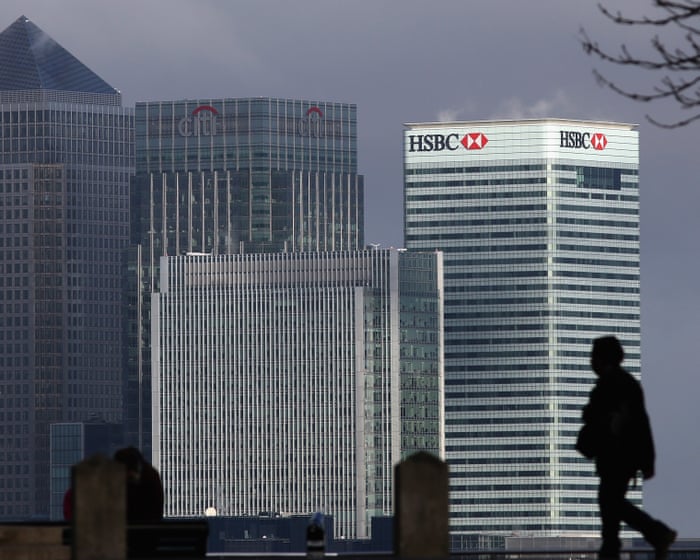
Tax cuts for big banks in the UK have reduced government revenue by £6 billion over three years, according to the Trades Union Congress (TUC). The TUC urges the government to raise taxes on banks to help fund public services and ease the cost of living.
Key Facts
In 2023, the UK government cut the bank surcharge tax from 8% to 3% for banks.
This tax cut happened alongside a rise in corporation tax from 19% to 25%.
The four largest UK banks made £200 billion in pre-tax profits over five years.
The TUC estimates the tax cut will reduce government revenue by £2.3 billion in 2023-24, £1.7 billion in 2024-25, and £2 billion in 2025-26.
Campaigners want to increase the bank surcharge to raise up to £60 billion to help with household bills.
Bank leaders have warned that higher taxes could harm investment and jobs.
Proposals include raising the surcharge to 16%, 35%, or restoring it to 8%, with varying expected revenues.
Some groups argue banks are making record profits thanks to high interest rates and can afford to pay more tax.
Read the Original
Want the full story? Tap a source to open the original
article.
Prime Minister Andy Burnham said the government will limit the use of non-compete clauses in job contracts because they stop workers from easily changing jobs or starting new businesses. These changes aim to help UK companies grow, keep innovative firms in the country, and encourage investment in the economy.
Key Facts
Non-compete clauses stop workers from joining rival companies or starting similar businesses after leaving a job.
About 5 million jobs in the UK are affected by these clauses, which usually last around six months.
Burnham said these rules are hurting innovation and making it harder for companies to hire new staff.
The government plans new laws to reduce the impact of non-compete clauses, with details expected in the October 28 Budget.
Possible changes include bans or limits on these clauses for everyday jobs, not just high-paid sectors like finance or tech.
The previous Conservative government rejected a total ban due to worries about investor confidence and company information sharing.
Burnham also mentioned plans to improve tax policies and public investment to keep growing companies and jobs in the UK.
He wants all UK regions to have funds to support startups, similar to the Greater Manchester Good Growth Fund.
Read the Original
Want the full story? Tap a source to open the original
article.
A new report shows that strict immigration policies under President Donald Trump have caused a loss of 1.2 million foreign-born workers in the U.S., which has led to higher food prices, fewer new homes being built, and fewer job opportunities for Americans. The report predicts that these economic effects could reduce Social Security payments for elderly Americans by about $2,152 per year starting in 2034.
Key Facts
The Trump administration’s anti-immigration policies caused 1.2 million foreign-born workers to leave the U.S. over two years.
Elderly Americans could lose an average of $2,152 annually in Social Security benefits due to this economic impact.
Food prices for items relying on immigrant labor, like milk, canned vegetables, and apples, have increased more than average grocery prices since early 2025.
The agricultural sector lost many workers, causing produce to go to waste.
The construction industry, where almost one-third of workers are immigrants, has seen a 10.9% increase in the cost of building new single-family homes in 2026.
New housing permits for single-family homes have dropped by 10.6% across the country since January 2025, with larger drops in areas relying more on immigrant workers.
Native-born Americans are experiencing fewer job opportunities in states especially affected by these changes.
The report was produced by Economic Insights and Research Consulting and commissioned by the pro-immigration group America’s Voice.
Read the Original
Want the full story? Tap a source to open the original
article.
Investors are wondering if it matters which political party wins the midterm elections for the stock markets. Some think investors do not care, while others believe they ignore negative predictions about the market losses under Republican leadership.
Key Facts
The article discusses the potential impact of the midterm elections on financial markets.
There is uncertainty about whether investors care which party controls the government.
Some experts predict market losses if Republicans win.
Others suggest investors are not reacting to these warnings.
The term "blue wave" refers to a large victory for the Democratic Party.
The article questions whether a Democratic victory would hurt markets.
Investor behavior and market reactions are the central focus.
The article does not provide a clear conclusion on how markets will perform.
Read the Original
Want the full story? Tap a source to open the original
article.
A group of 40 states and the NFL are asking the U.S. Supreme Court to decide if sports prediction markets, like the one run by Kalshi, should follow federal financial laws or state gambling rules. The states and NFL want these markets to be regulated by state gambling authorities to protect consumers and game integrity.
Key Facts
Attorneys general from 39 states and Washington D.C. support New Jersey’s request for Supreme Court intervention.
The dispute is whether sports prediction contracts are financial products under federal law or sports bets regulated by states.
Different federal courts have ruled differently, creating confusion and legal disagreement.
The NFL argues that sports prediction markets involve gambling and should be regulated by state gaming agencies.
$1.8 billion of the $3.3 billion traded on prediction markets during the first Sunday of the NFL season involved football contracts.
The states’ filing highlights protections in state gambling laws, like age limits and spending controls, to prevent problem gambling.
The NFL wants stronger rules for sports prediction markets, such as a minimum age of 21 and safeguards for game integrity.
Kalshi claims it is a federally regulated financial exchange and that federal law applies, not state gambling laws.
Read the Original
Want the full story? Tap a source to open the original
article.
Shein, a Chinese online fast-fashion retailer, grew its UK sales by 26% last year, reaching £2.58 billion and surpassing the British company Asos. The company’s profits and workforce in the UK also increased, supported by marketing events and festival partnerships.
Key Facts
Shein’s UK sales rose 26% in one year to £2.58 billion.
Pre-tax profits grew 18% to £45.2 million in the UK.
Shein employed 113 people in the UK, up from 91 the previous year.
The company paid £11.2 million in taxes in the UK, mostly corporation tax.
Marketing activities included partnerships with Wireless and Creamfields music festivals and pop-up shops.
Shein’s business model avoids import duties by shipping small, cheap orders from Chinese factories.
The UK government plans to end the “de minimis” tax rule by 2028, which currently lets low-value imports enter tax-free.
Shein’s global valuation dropped from $100 billion in 2022 to about $26 billion after going public in Hong Kong.
Read the Original
Want the full story? Tap a source to open the original
article.
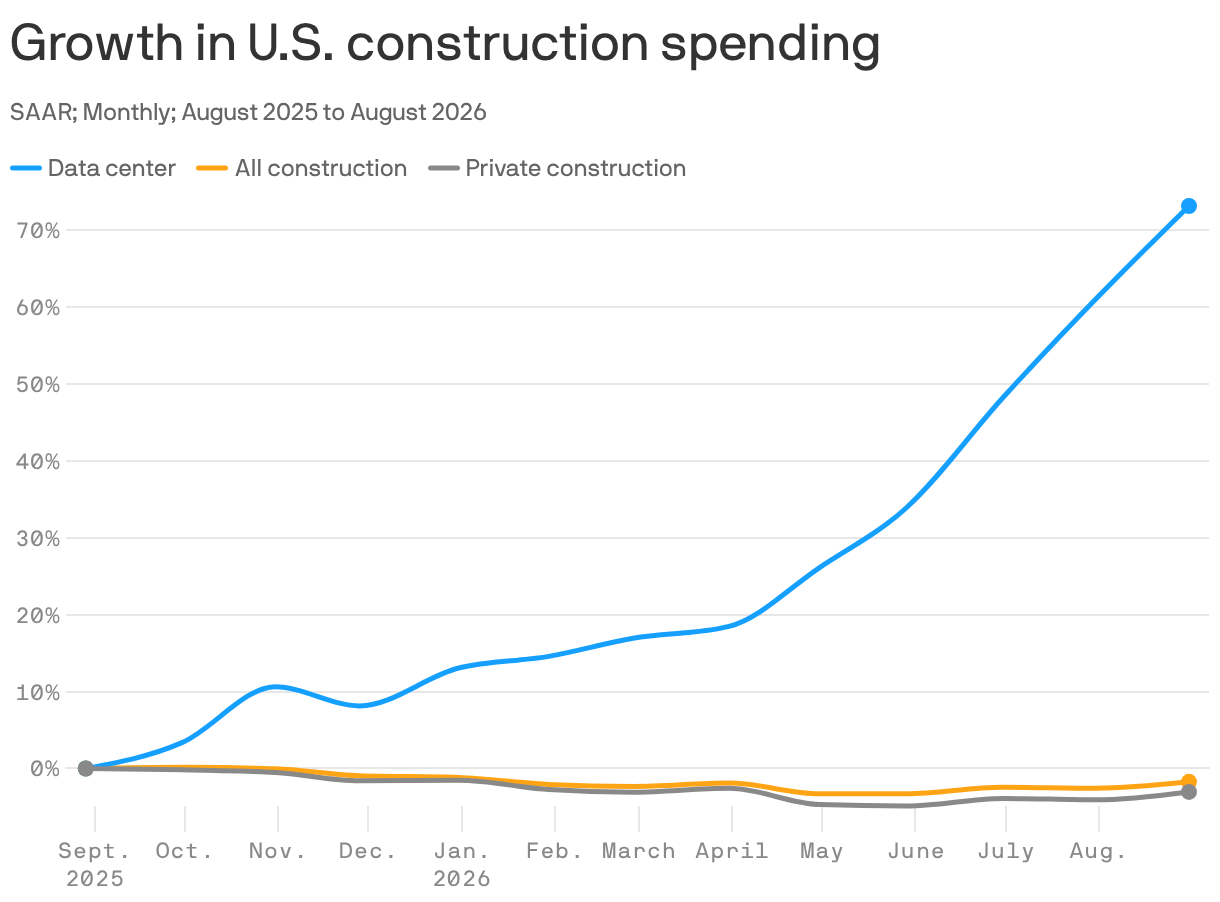
Spending on AI-related technology and construction is growing much faster than in the rest of the economy. This has boosted AI companies’ stock values and increased their share of U.S. market investments significantly.
Key Facts
Construction spending on data centers (used for AI) is rising rapidly, including costs like labor and materials.
AI-related corporate bonds made up more than half of new investment-grade bond issues in the U.S. through August 2024.
The technology sector accounts for about 40% of the S&P 500 market value, higher than during the dot-com bubble peak.
If you add AI-related companies like Meta and Amazon, the combined market share approaches 50% of the S&P 500.
AI stocks like Nvidia and large cloud companies have seen strong increases in market value.
The U.S. economy and financial markets are becoming increasingly dependent on AI growth.
This growing gap between AI and the wider economy carries certain risks linked to that dependence.
Read the Original
Want the full story? Tap a source to open the original
article.
Many people on social media use humor to talk about private equity, a big finance industry that buys many companies. They show how private equity changes everyday businesses like sports, health care, and stores, often making them more expensive or lowering quality. These funny videos help people understand the real impacts of private equity on their lives.
Key Facts
Johnny Hilbrant Partridge created a character called “The PE Guy” to make fun of private equity workers.
The private equity industry manages trillions of dollars and buys companies in many areas, including youth sports, health care, and retail.
Private equity often uses methods like raising prices or cutting costs to make more profit.
Some well-known brands owned by private equity, like JoAnn Fabrics and Toys “R” Us, have gone bankrupt or lost quality.
Influencers on TikTok and Instagram post videos and skits that explain how private equity affects their lives and businesses.
The term “private equity” is often used online to describe hard cost-cutting and taking on debt to increase profits.
Some finance industry people also enjoy the humor and invite these influencers to speak at their events.
Private equity firms spend money on influencer marketing and buy tools to promote their business, but criticism still grows.
Read the Original
Want the full story? Tap a source to open the original
article.
Many young people took out loans to pay for college, expecting that their degrees would help them get good jobs. Now that they have to start paying back the loans, they find that their degrees are not leading to well-paying work as promised.
Key Facts
Young people borrowed money to pay for college education.
They believed their college degrees would guarantee good jobs.
Loan payments are now due for these borrowers.
Many graduates are finding it hard to get well-paying jobs.
The promise of a better financial future from college degrees is not being fulfilled.
Read the Original
Want the full story? Tap a source to open the original
article.
The energy crisis today is similar to the one in the 1970s, and experts are focusing on "soft energy," which means using renewable energy smarter rather than just producing more. Technologies like virtual power plants (VPPs) let homes and businesses generate and manage their electricity, helping the grid meet rising demand faster and cheaper than building new power plants.
Key Facts
Soft energy uses renewable sources combined with smarter consumption and supply strategies.
U.S. electricity demand is expected to rise by 78% from 2023 to 2050 due to data centers, manufacturing, and electrification.
Virtual power plants (VPPs) use existing technologies like rooftop solar, batteries, and smart thermostats near homes and businesses.
The global market for VPPs is about $7.4 billion and is growing around 22.6% annually through 2033.
VPPs can be set up in 6 to 12 months, much faster than building new power plants, which take years.
Companies like Sunrun, Tesla, and Renew Home are working together to provide VPP capacity to meet AI data center needs.
VPPs help balance the grid by changing power use, such as pausing electric vehicle charging during high demand times.
Federal policies and programs, like FERC Order 2222 and the U.S. Department of Energy loans, support VPP development and grid modernization.
Read the Original
Want the full story? Tap a source to open the original
article.
Volkswagen is replacing its ID.4 electric crossover with a new model called the ID. Tiguan. This new electric vehicle features updated designs, improved battery options, and a more premium interior with physical controls instead of touch-only interfaces.
Key Facts
The ID.4, Volkswagen’s electric crossover launched in 2021, is being discontinued.
The new model is named ID. Tiguan, merging the popular Tiguan name with VW’s electric vehicle line.
The ID. Tiguan uses the updated MEB+ electric vehicle platform and offers two battery sizes: 58 kWh and 77 kWh.
Power options include a 187 hp rear motor with the smaller battery, and either 281 hp rear drive or 295 hp all-wheel drive with the larger battery.
The vehicle’s electric range can reach up to 373 miles based on European testing standards.
Volkswagen introduced a new design language called Pure Positive for this model, aiming for a more premium look and feel.
The interior includes physical buttons and switches for climate, windows, and steering controls, moving away from fully touchscreen controls.
Production moved away from Chattanooga, Tennessee, and VW has sold almost one million ID.4 and ID.5 vehicles globally.
Read the Original
Want the full story? Tap a source to open the original
article.
The US government, under President Donald Trump, has introduced new restrictions on the H-1B visa program. Vice President JD Vance said companies like Microsoft have misused the program by hiring cheaper foreign workers, which he says harms American workers. Microsoft disagrees and defends how it hires people.
Key Facts
The US government is tightening rules for the H-1B visa, which lets skilled foreign workers come to the US.
Vice President JD Vance accused Microsoft of abusing this visa system to hire low-cost foreign workers.
The crackdown aims to protect American workers from competition with cheaper foreign labor.
Microsoft has responded by defending its hiring practices against these claims.
Adobe is also mentioned as a target of the new visa restrictions.
The changes are part of ongoing immigration controls by President Donald Trump’s administration.
The H-1B visa is key for tech companies to recruit skilled workers from other countries.
The new policy may increase costs for companies that rely on this visa to hire foreign employees.
Read the Original
Want the full story? Tap a source to open the original
article.
OpenAI now expects to make about $20 billion less in revenue this year than it previously told investors. The company projects $50 billion in revenue for 2024, down from an earlier $70 billion forecast, affecting tech stock prices and raising questions about AI market growth.
Key Facts
OpenAI's revised revenue forecast for 2024 is $50 billion, down from $70 billion reported last month.
The $20 billion difference is partly due to how revenue is counted compared to rival company Anthropic.
Anthropic includes revenue from cloud partners like Amazon AWS and Google Cloud; OpenAI does not.
OpenAI is in early talks to raise $30 billion, valuing the company at about $1.4 trillion.
OpenAI’s last funding round was $12 billion in March 2024, valuing it at $852 billion.
Anthropic raised $6.5 billion recently, valuing it at $965 billion.
OpenAI’s CEO Sam Altman said the company will not go public this year due to AI safety concerns.
Politicians from both parties are calling for AI regulations amid worries about risks and rapid AI development.
Read the Original
Want the full story? Tap a source to open the original
article.
Elon Musk, CEO of SpaceX and Starlink, has accused Indian billionaire Mukesh Ambani of blocking Starlink's satellite internet service from launching in India. The Indian government said the rules for satellite internet approvals are fair and not biased. Starlink is still waiting for final permission to start commercial services alongside other competing companies like Reliance Jio and Bharti Airtel.
Key Facts
Elon Musk accused Mukesh Ambani and unnamed powerful business groups of preventing Starlink from entering India’s internet market.
India’s Ministry of Communications said the approval process is fair and that Starlink, Jio Satellite Communications, and Eutelsat OneWeb are at similar stages waiting for security clearance and spectrum allocation.
Starlink wants to provide satellite internet, especially to remote areas where normal internet is hard to install.
Starlink has been trying to launch in India since 2021 and already has some important licenses but needs final government approvals.
Reliance Jio and Bharti Airtel, owned by Indian companies, are also preparing to offer satellite internet services.
SpaceX signed agreements with Reliance Jio and Bharti Airtel to distribute Starlink services, pending government approval.
Security concerns have slowed Starlink’s entry, but SpaceX says it has built strong security into its system to meet India’s demands.
Executives from the companies discussed their plans during the India Mobile Congress, but representatives from Reliance Jio and Bharti Airtel declined to comment on Musk’s accusations.
Read the Original
Want the full story? Tap a source to open the original
article.
Adidas is suing Australian clothing company White Fox in the Federal Court for using a four-stripe design that Adidas says is too similar to its famous three-stripe trademark. White Fox says their stripes are just decoration and not meant to copy Adidas’s design. The case will be heard in early 2027.
Key Facts
Adidas claims White Fox is illegally using four stripes to benefit from Adidas’s reputation.
Adidas has owned the three-stripe trademark in Australia for over 50 years.
White Fox sells fast-fashion clothes online and denies copying Adidas’s trademark.
Adidas won a similar legal case in 2013 against another company using four stripes on shoes.
White Fox plans to argue that their stripes are decorative, not a trademark.
Adidas wants a court order to stop White Fox from selling the four-stripe clothes and to get any profits made.
The case is set to be heard in early 2027 by Justice Ian Jackman.
White Fox started in Sydney in 2013 and made $542 million in revenue for the year ending in June 2025, while Adidas had $39.9 billion in 2025.
Read the Original
Want the full story? Tap a source to open the original
article.
Virgin has revealed a model of its new train for travel between London and Europe, aiming to start service in 2030. This will be the first competition for Eurostar on this route since the Channel Tunnel opened.
Key Facts
Virgin plans to run cross-Channel trains from London to Europe starting in 2030.
The company ordered 12 trains from the maker Alstom.
Virgin wants to improve passenger experience with designs inspired by its airlines, cruise ships, and hotels.
The train interiors will include lounge areas like Virgin Atlantic’s airport Clubhouses and food inspired by its cruise line menus.
Virgin’s CEO, Josh Bayliss, said they expect more people to travel by train between the UK and Europe.
Virgin will connect its train and airline networks, possibly linking passengers from France to Virgin Atlantic flights.
Virgin has an agreement to maintain its trains in London and has UK track access until at least 2040.
Italy’s Trenitalia also plans to offer high-speed cross-Channel train services with 19 new trains ordered from Hitachi.
Read the Original
Want the full story? Tap a source to open the original
article.
More than 260 business, finance, and law leaders met to discuss Jersey’s High Value Residency program, which grants special tax status to wealthy, skilled individuals who move to the island. Some defend the program for its economic benefits and charity donations, while others criticize it for low tax contributions and increasing living costs.
Key Facts
Jersey’s High Value Residency program allows wealthy, skilled people to live on the island with a special tax rate.
High value residents pay 20% tax on the first £1.25 million of worldwide income, and 1% on income above this amount.
About 260 families currently live in Jersey through this program.
Supporters say these residents contribute a lot to the local economy and to charitable causes.
Critics argue that the tax these residents pay is very low and does not benefit local young people.
Some experts warn that increasing taxes on these wealthy residents could drive them away to other places with lower taxes.
There are concerns about the program causing higher house prices and living costs on the island.
The meeting included private bankers, lawyers, tax advisors, and other professionals who work with high net worth individuals.
Read the Original
Want the full story? Tap a source to open the original
article.
A British carmaker named Longbow will start making a limited-edition electric sports car called the Speedster next year in Warwickshire. The project, supported by £3 million from a government fund, will create over 200 skilled jobs and aims to produce more than 10,000 cars a year.
Key Facts
Longbow plans to produce the hand-built Speedster electric sports car at Mira Tech Park in Nuneaton.
The West Midlands mayor supported the project with £3 million from a government fund to help grow the electric vehicle industry.
Longbow says the region has the right talent and supply chain to build the car, which they say cannot be built anywhere else in the world.
The Speedster costs around £85,000 and has a waiting list of buyers worldwide.
The company aims to follow the Speedster with another model called the Roadster.
Longbow expects to create more than 200 skilled jobs with this project.
The UK region is known for building lightweight sports cars and has strong engineering and design expertise.
The production is supported by the West Midlands Supplier Readiness and Transformation fund, aiming to boost the UK’s electric vehicle manufacturing.
Read the Original
Want the full story? Tap a source to open the original
article.
Two major UK health organizations, the Royal College of Nursing and the Royal College of Pharmacy, have ended sponsorship deals with Teva UK, an Israeli pharmaceutical company. These decisions followed pressure from pro-Palestine campaigners and concerns about the company’s activities, alongside Teva's recent legal fines for anti-competitive practices.
Key Facts
The Royal College of Pharmacy canceled Teva UK’s sponsorship and exhibition at its annual conference.
The Royal College of Nursing dropped Teva as a sponsor of nursing events and its union.
Both decisions came after reviews flagged Teva’s activities as not aligned with these bodies’ values.
Pro-Palestine activists influenced the move by circulating an open letter urging ethical scrutiny of partnerships related to Israel.
Teva specializes in generic drugs and has faced large fines for blocking competition and price fixing.
The European Commission fined Teva €462.6 million in 2024 for anti-competitive practices with its multiple sclerosis drug.
In 2023, Teva paid $225 million to settle US Department of Justice charges related to drug price fixing.
Campaigners want other UK medical royal colleges to also cut ties with Teva.
Read the Original
Want the full story? Tap a source to open the original
article.