Two major UK health organizations, the Royal College of Nursing and the Royal College of Pharmacy, have ended sponsorship deals with Teva UK, an Israeli pharmaceutical company. These decisions followed pressure from pro-Palestine campaigners and concerns about the company’s activities, alongside Teva's recent legal fines for anti-competitive practices.
Key Facts
The Royal College of Pharmacy canceled Teva UK’s sponsorship and exhibition at its annual conference.
The Royal College of Nursing dropped Teva as a sponsor of nursing events and its union.
Both decisions came after reviews flagged Teva’s activities as not aligned with these bodies’ values.
Pro-Palestine activists influenced the move by circulating an open letter urging ethical scrutiny of partnerships related to Israel.
Teva specializes in generic drugs and has faced large fines for blocking competition and price fixing.
The European Commission fined Teva €462.6 million in 2024 for anti-competitive practices with its multiple sclerosis drug.
In 2023, Teva paid $225 million to settle US Department of Justice charges related to drug price fixing.
Campaigners want other UK medical royal colleges to also cut ties with Teva.
Read the Original
Want the full story? Tap a source to open the original
article.
UK water companies earned over £340 million last year by accepting industrial and commercial wastewater to treat at sewage works. Many sewage plants use treatment methods that do not remove harmful chemicals, so pollutants often go into rivers, seas, or farmland. Currently, water companies regulate this wastewater trade without independent oversight.
Key Facts
UK water companies earned more than £340 million in revenue last year from industrial and commercial wastewater.
About 608 billion litres of industrial wastewater were sent to sewage treatment works from various sites like power stations and hospitals.
Water companies issue permits called “trade-effluent consents” for businesses to send wastewater but regulate these without an independent body.
Most sewage works use treatment that removes organic material but not many industrial chemicals, such as solvents, flame retardants, and heavy metals.
Pollutants left in treated water flow into rivers, seas, and farmland via sludge used as fertilizer.
United Utilities earned the most revenue from industrial wastewater at £61.6 million, and Thames Water received the highest volume of waste at 113 billion litres.
Industrial and commercial wastewater volumes and related revenues have risen sharply across UK water companies in recent years.
Experts say the permit system is outdated and lacks full understanding of how much toxic waste enters waterworks annually.
Read the Original
Want the full story? Tap a source to open the original
article.
Firmus, an AI data center company supported by Nvidia, has canceled its planned stock market listing in Australia due to market conditions and concerns about its valuation. Instead, the company will seek funding through private markets and explore other financial options.
Key Facts
Firmus builds and runs liquid-cooled data centers, called "AI factories," for clients like OpenAI and Meta.
The company planned to list on the Australian stock market with a valuation over $30 billion AUD.
Market volatility and concerns from investors about the company’s high valuation led to the cancellation.
Major investors like UniSuper chose not to participate in the initial public offering (IPO).
Firmus is backed by Nvidia, Blackstone, and Jane Street.
The company will now focus on raising money privately and consider other public and private options.
OpenAI’s CEO recently expressed caution about public listings in AI technology because of safety and market concerns.
AI-related stocks, including Nvidia and Oracle, have seen share price drops amid worries over AI industry returns.
Read the Original
Want the full story? Tap a source to open the original
article.
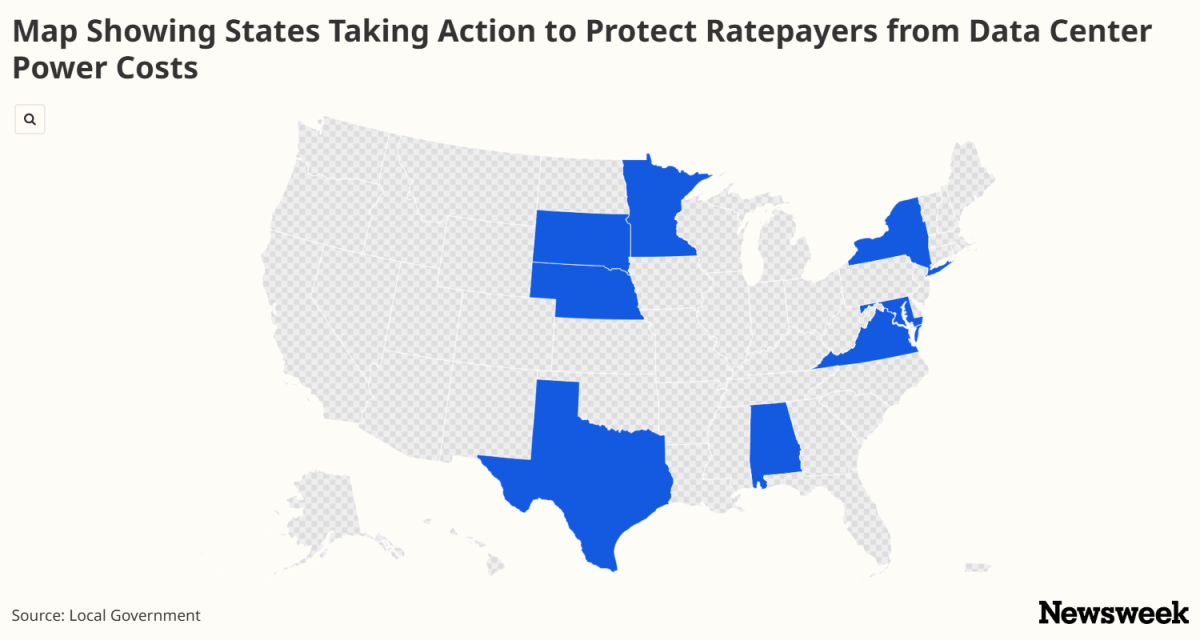
States across the U.S. are creating new rules to manage the high electricity use of data centers, aiming to protect regular residents and businesses from higher power costs. Some states require data centers to pay for the electric grid upgrades they need, while others have not passed such laws, which could lead to higher bills for all consumers.
Key Facts
Data centers use a lot of electricity as they support cloud computing and artificial intelligence.
Some states are making data centers pay for the cost of upgrading the electric grid to handle their demand.
Maryland reviews large data center projects over 25 megawatts to study their effects on electricity users, communities, and the environment.
South Dakota requires data centers to reimburse utilities for the costs related to their electricity use, protecting other customers.
Alabama mandates electric contracts for large data centers (150+ megawatts) be reviewed to ensure they cover additional electricity costs and benefit local communities.
Minnesota charges large data centers annual fees based on electricity demand, funding state energy conservation programs.
States vary in their approach: some have laws in place, others have stalled or vetoed measures, which risks increasing costs for regular electricity customers.
Read the Original
Want the full story? Tap a source to open the original
article.
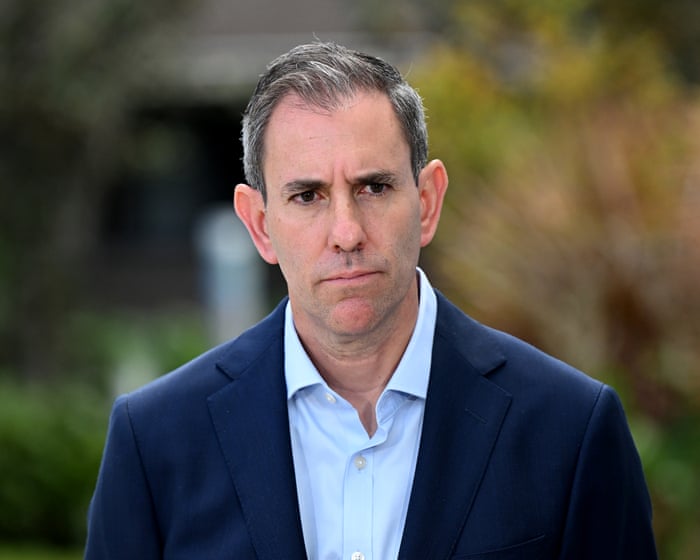
The federal government has delayed a planned ban on paying tax bills by credit card for over six months after pushback from small businesses. Treasurer Jim Chalmers announced temporary funding to allow credit card payments to continue until the end of June next year, giving more time to consult and find a better solution.
Key Facts
The Australian Taxation Office (ATO) planned to stop accepting credit card payments for tax bills from December 1.
The ban was because accepting credit cards would cost the ATO nearly $200 million a year, costs that can't be passed to taxpayers by law.
About 5% of small businesses use credit cards to pay tax bills as a way to manage cash flow.
The federal government overruled the ATO, providing extra funding to keep credit card payments through third parties until June 30 next year.
Treasurer Jim Chalmers said this delay allows more consultation with small businesses to find a better approach.
The Reserve Bank banned credit card surcharges, and the government had tried to take credit for that move.
Business groups and political opposition pressured the government to act, citing the importance of clear payment options for small businesses.
The ATO is an independent entity, so the government cannot directly order it, but stepping in with funding influenced the decision.
Read the Original
Want the full story? Tap a source to open the original
article.
The National Football League (NFL) has asked the U.S. Supreme Court to decide if states should be allowed to control prediction markets. Prediction markets are systems where people can bet on the outcome of future events.
Key Facts
The NFL wants the Supreme Court to make a ruling on whether state governments can regulate prediction markets.
Prediction markets allow individuals to predict and bet on what might happen in the future.
The dispute involves who holds the legal authority to oversee these markets—states or possibly other entities.
The NFL is involved because prediction markets can relate to sports outcomes.
The case has reached the highest court in the United States.
The decision could affect how prediction markets operate across the country.
This news was reported by CBS News and Front Office Sports.
The discussion was featured in a CBS News segment with reporter Ben Horney.
Read the Original
Want the full story? Tap a source to open the original
article.
Young people in France and Spain are protesting about schooling and housing problems. The episode also discusses the $110 billion merger deal where Paramount Skydance will take over Warner Bros Discovery.
Key Facts
Students in France are protesting about the conditions in schools.
In Spain, young people are demonstrating over housing issues.
The episode questions if young people today are worse off than their parents.
Paramount Skydance plans to take control of Warner Bros Discovery in a $110 billion merger.
The discussion includes viewpoints from correspondents in the UK, Malaysia, and the US.
The program is part of the Business Daily series on World Service.
The episode was broadcast on October 9, 2026.
Read the Original
Want the full story? Tap a source to open the original
article.
Firmus Technologies canceled its plan to list on the Australian Stock Exchange (ASX) after investors showed little interest in its AI data center business. The company will now look for funding from private investors and consider other ways to raise money.
Key Facts
Firmus Technologies planned to have one of the largest company listings on the ASX in decades.
The company was valued at about $44 billion before the planned listing.
Investor demand for Firmus’s AI data center business was low.
The board decided to stop the public offering to protect the company and shareholders.
Firmus will now seek capital from private markets instead of going public.
The company may explore other public or private funding options in the future.
The last biggest ASX listing like this was Telstra in 1997.
Read the Original
Want the full story? Tap a source to open the original
article.
A group of Democrats and Republicans in Congress is worried about Google’s plan to use data from Spirit Airlines to train its artificial intelligence (AI) systems. The lawmakers sent a letter to the CEOs of Google and Spirit Airlines expressing their concerns about the deal.
Key Facts
A bipartisan group of lawmakers is raising concerns about Google acquiring data from Spirit Airlines.
The group is led by Representative Steven Horsford and Senator Elizabeth Warren.
The lawmakers wrote a letter to Google CEO Sundar Pichai and Spirit CEO Dave Davis.
The letter challenges a proposed $10 million deal involving Spirit Airlines data.
The data would be used to train Google’s AI models.
Lawmakers are worried about privacy and how the data might be used.
Google and Spirit Airlines have not announced final terms of the agreement.
Read the Original
Want the full story? Tap a source to open the original
article.
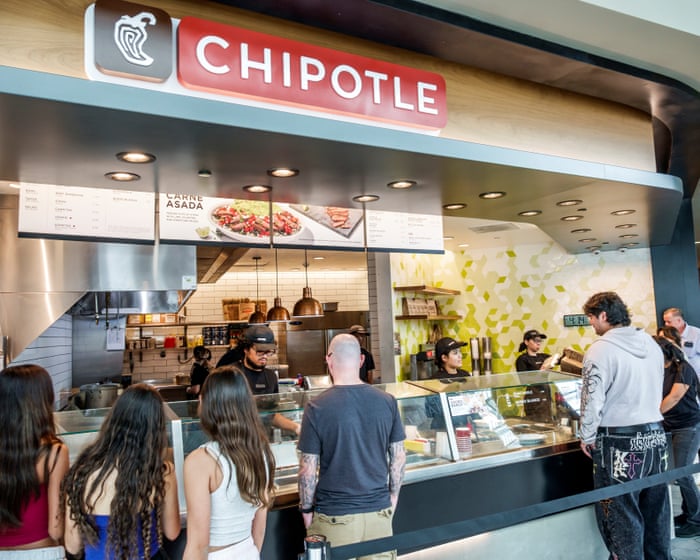
Starbucks has looked into buying Chipotle Mexican Grill, which caused Chipotle’s stock to rise by up to 8% on Thursday. It is not clear if Starbucks has made a formal offer, and analysts say the deal would be one of the biggest restaurant acquisitions ever.
Key Facts
Chipotle’s stock rose sharply after reports that Starbucks considered buying the company.
Starbucks CEO Brian Niccol was previously CEO of Chipotle until August 2024.
Chipotle’s stock price has dropped about 50% since Niccol left.
Starbucks shares fell about 4.4% during the day but ended mostly unchanged.
The reported deal would be one of the largest restaurant deals in history.
Starbucks has sought advice on a possible takeover but has not confirmed any formal bid.
Analysts are unsure if the companies would benefit from combining and see the deal as unlikely.
Niccol’s main focus at Starbucks remains on improving the company’s U.S. operations.
Read the Original
Want the full story? Tap a source to open the original
article.
Mortgage rates for a 30-year loan rose to 7.4 percent this week, the highest since November 2023. Rates have increased for seven weeks in a row, going up by 0.12 percentage points from last week.
Key Facts
The average 30-year mortgage rate is now 7.4 percent.
This is the highest level since November 2023.
Rates increased by 12 basis points (0.12 percentage points) from last week.
The previous week's average rate was 7.28 percent.
Mortgage rates have been rising every week for seven weeks straight.
The data comes from Freddie Mac, a government-backed company.
Higher mortgage rates usually mean higher monthly payments for homebuyers.
Read the Original
Want the full story? Tap a source to open the original
article.
The average long-term U.S. mortgage rate has risen to 7.40%, the highest level in nearly three years, continuing an upward trend for seven weeks. Higher mortgage rates are making it more expensive to buy or refinance homes, which is slowing down the housing market.
Key Facts
The 30-year fixed mortgage rate increased to 7.40% from 7.28% last week.
One year ago, the 30-year rate was 6.30%.
The 15-year fixed mortgage rate also rose to 6.73% from 6.60%.
Mortgage rates have been rising since the start of the war between the U.S. and Iran in February 2026.
Rising oil prices and inflation worries contribute to higher mortgage rates.
Mortgage rates move in line with the 10-year Treasury yield, which hit its highest level since 2002 at 5.29%.
The higher rates add about $376 more per month for a $400,000 home loan compared to earlier this year.
Mortgage applications and refinance requests have dropped as the higher rates make borrowing more expensive.
Read the Original
Want the full story? Tap a source to open the original
article.
Gas prices in the U.S. remain high, above $4.30 per gallon, despite an improvement in oil traffic through the Strait of Hormuz. This is due to ongoing challenges in the region, costly transportation methods, and delays in price drops reaching consumers even as oil supply recovers.
Key Facts
Oil exports from the Middle East have mostly recovered to pre-war levels, excluding Iran.
About 40% of crude oil exports now avoid passing through the Strait of Hormuz using alternate routes.
Tanker traffic in the Strait of Hormuz has significantly improved recently compared to earlier war disruptions.
Gasoline prices have dropped slightly but remain about 46% higher than before the Iran war.
Analysts say risk of future conflict and attacks keep oil prices high due to investor fears.
Gas stations delay cutting prices to protect profit margins when oil prices fluctuate.
The U.S., which imports little oil from the Middle East, still faces higher fuel prices because global oil markets set prices worldwide.
West Texas Intermediate oil prices are about $92 per barrel, down 9% since mid-September but still over 40% above pre-war levels.
Read the Original
Want the full story? Tap a source to open the original
article.
The NFL has asked the Supreme Court to decide who should regulate prediction markets, which are platforms where people can trade bets on future events. The NFL supports states regulating these markets, as states already oversee sports betting, and warns that unclear rules could harm consumers and sports integrity.
Key Facts
The NFL filed a brief supporting New Jersey’s request for the Supreme Court to rule on regulation of prediction markets.
Prediction markets allow trading or betting on yes-or-no questions about future events.
The Commodity Futures Trading Commission (CFTC) claims it has exclusive federal control, while many states want to regulate these markets like gambling.
In the current NFL season, over half of prediction market trading ($1.8 billion of $3.3 billion) was related to the NFL.
The NFL argues unclear regulation causes risks to consumers and game integrity.
Kalshi, a prediction market company, says the CFTC already monitors these markets and is making rules to address concerns.
Ohio and 38 other states support state regulation of prediction markets, citing parallels to sports betting rules.
Appeals courts are divided on this issue, increasing chances the Supreme Court will make a final decision.
Read the Original
Want the full story? Tap a source to open the original
article.
The article about when to discuss salary in dating is no longer available due to an error. It originally included insights from a dating and relationship coach on the topic.
Key Facts
The article asked how soon people should talk about salary when dating.
The content is currently unavailable because of an error.
It previously featured advice from a dating and relationship coach.
The article was categorized under business topics, related to money and personal finance.
Readers were encouraged to follow topics like money, dating, and relationships for updates.
Read the Original
Want the full story? Tap a source to open the original
article.
A recent poll shows that 89 percent of Baby Boomers support raising taxes on younger people. The article argues this would unfairly burden the younger generation.
Key Facts
89 percent of Baby Boomers want higher taxes on younger people.
The poll reflects generational views on tax policies.
The article suggests increasing taxes on young people may create financial difficulties.
"Indentured servitude" is used to describe the heavy burden of taxes.
The issue raised involves fairness between generations regarding taxes.
The younger generation would face more financial responsibilities if taxes increase.
The poll highlights a strong opinion difference between older and younger generations.
Read the Original
Want the full story? Tap a source to open the original
article.
Adidas is suing the Australian fashion brand White Fox for using a four-striped design that Adidas says looks very similar to its famous three-striped logo. Adidas claims White Fox’s clothing and advertising confuse customers and damage Adidas’s brand.
Key Facts
Adidas has trademarked its three-stripe logo in Australia since 1957.
White Fox sells clothes with four parallel stripes, which Adidas says infringes on its trademark.
Adidas asked White Fox to stop selling these products since March, but White Fox refused.
White Fox advertises widely using billboards, buses, and social media influencers, targeting young people.
Adidas claims White Fox’s ads sometimes show people wearing real Adidas items, causing confusion.
Adidas is seeking profits earned by White Fox from the products, plus interest and legal costs.
White Fox started in 2013 and is owned by a Greek-Australian family; it has grown quickly in Australia, the UK, and US.
Adidas previously won a similar legal case in Australia in 2013 against another company that used four stripes.
Read the Original
Want the full story? Tap a source to open the original
article.
Goldman Sachs will pay up to $500 million in bonuses to 20 top bankers this year, with CEO David Solomon expected to receive about $100 million. These bonuses depend on the bank’s stock performance over the past five years and are designed to keep key leaders at the company.
Key Facts
The bonus pool is worth up to $500 million and shared among 20 senior bankers.
CEO David Solomon’s bonus is about $100 million, more than double his $47 million pay last year.
The payouts come from a plan started in 2021 and are linked to Goldman Sachs’ stock price growth.
Goldman Sachs’ stock has increased about 146% in the past five years.
Bonuses aim to keep top executives from leaving in a competitive job market.
Other leaders, like President John Waldron and co-heads Ashok Varadhan and Dan Dees, are also set to receive bonuses.
Similar large executive pay packages have been reported at Citigroup and JP Morgan recently.
Goldman Sachs will release its third-quarter earnings on October 13, shortly after the bonus news.
Read the Original
Want the full story? Tap a source to open the original
article.
Many young people find it difficult to decide when to talk about salary in dating. Some say it is best to discuss money matters once a relationship becomes serious, while others believe financial habits should be discussed early on.
Key Facts
Talking about salary too early in dating can feel like judging someone’s money.
Some people, like Willa Morton, think knowing exact salaries is not necessary since spending habits reveal income levels.
Many interviewed say salary conversations happen when a couple becomes official or serious.
Vik Sunderaj believes asking about salary on a first date is inappropriate and could be a deal-breaker.
Bridget Shurdut says early salary questions are a warning sign, and she values ambition more than income.
Dating coach Kate Mansfield recommends discussing spending and saving styles early to understand compatibility.
Some couples, like Emily Moretta and her boyfriend, wait years and only talk about salary when planning to move in together.
The topic of money in relationships includes discussions about lifestyle, debt, generosity, and financial independence.
Read the Original
Want the full story? Tap a source to open the original
article.
Starbucks is considering buying Chipotle Mexican Grill, where CEO Brian Niccol used to work before joining Starbucks two years ago. The move comes as both companies face challenges like higher costs and changes in customer spending.
Key Facts
Starbucks has been talking to advisers about a possible takeover of Chipotle.
Brian Niccol, Starbucks CEO, led Chipotle before moving to Starbucks in 2024.
Chipotle's market value is about $39 billion; Starbucks is worth about $107 billion.
Starbucks has spent over $500 million to improve stores and staff since Niccol took charge.
Chipotle has seen fewer customers and higher costs, with shares dropping nearly 50% since Niccol left.
A deal could help Chipotle grow internationally by using Starbucks’ partnerships, especially in Europe.
Analysts warn the acquisition could be expensive and might distract Starbucks from its current efforts to improve profits.
Starbucks has shown sales growth recently but still needs to improve profit margins.
Read the Original
Want the full story? Tap a source to open the original
article.