The UK chancellor, John Healey, plans to reduce unnecessary paperwork for businesses to save them up to £800 million. This effort aims to help businesses focus on growth and job creation by simplifying rules and cutting red tape.
Key Facts
Chancellor John Healey announced plans to cut "pointless paperwork" for UK businesses.
These changes aim to save businesses about £800 million in administrative and tariff costs.
The government wants to make compliance rules easier and reduce form filling.
This is part of a broader budget plan to support households and businesses amid rising costs.
The government has a goal to reduce regulation by 25% by the end of the current Parliament.
Business groups like the Confederation of British Industry support the plan but want to see results.
Some political opposition says the current policies have made business challenges worse.
Prime Minister Andy Burnham and Healey plan to meet business leaders to discuss the plans.
Read the Original
Want the full story? Tap a source to open the original
article.
Great Britain is expected to face some of the highest energy costs in Europe this winter due to increased reliance on gas and electricity imports. Officials have secured deals to keep gas flowing despite market price rises and supply challenges across Europe.
Key Facts
Britain will have enough gas and electricity in winter by paying higher prices to secure imports.
National Gas agreed with a Belgian pipeline owner to keep gas flowing by avoiding a planned capacity reduction.
This deal will add about 10 pence to the average monthly gas bill.
Britain plans to increase imports of liquified natural gas (LNG) by about 5% compared to last winter.
European gas storage is at its lowest in 13 years due to supply problems and high summer use for cooling.
UK gas production is expected to fall by 6% this year, but a new North Sea gas field may increase supply soon.
Britain is forecast to import more electricity this winter, mostly from France, at a higher cost.
Gas power plants may be used more during supply shortages despite growth in renewable energy.
Read the Original
Want the full story? Tap a source to open the original
article.
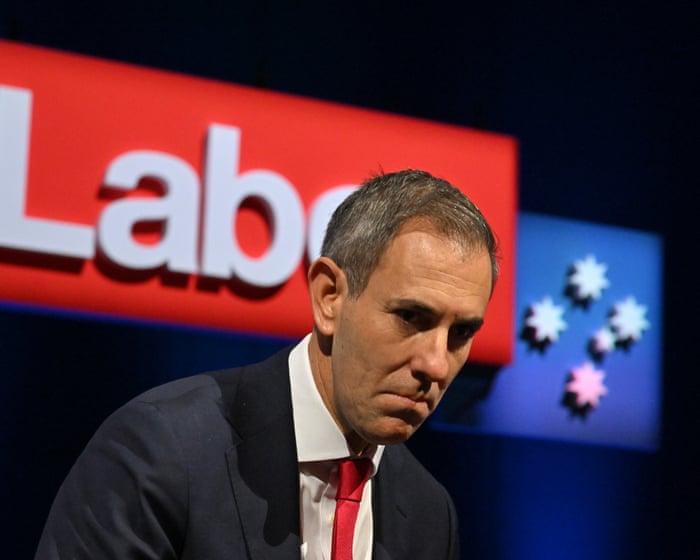
Australia’s Treasurer Jim Chalmers revealed that economic forecasts are worsening, with slower growth and rising unemployment expected. Global conflicts and rising oil prices are increasing costs, while uncertainties in technology investment and inflation are adding to economic challenges.
Key Facts
The Australian economy is expected to grow slower, with higher unemployment ahead.
Oil prices have risen to about $113 a barrel due to conflicts in the Middle East, increasing petrol costs for consumers.
The US and Israel are reportedly planning renewed attacks on Iran, which could push oil prices even higher.
Analysts warn that oil could reach $150 a barrel, causing more inflation and possibly higher interest rates.
Investment in artificial intelligence infrastructure is creating high company debt and causing stock market worries.
Community opposition to big data center projects could slow down AI development, adding economic uncertainty.
High inflation, coupled with low growth and rising unemployment, is described as a difficult situation for financial policymakers.
Treasurer Chalmers stressed that some economic pressures come from global events outside Australia’s control.
Read the Original
Want the full story? Tap a source to open the original
article.
Consumer confidence in the UK dropped sharply in October, falling faster than any time since the 2016 Brexit vote, as rising costs make it harder for people to manage their money. The increase in prices for energy, fuel, and everyday goods, combined with worries about the global conflict in the Middle East, is causing economic stress before the upcoming government budget.
Key Facts
UK consumer confidence declined by 11 points in October to -24, the fastest drop since July 2016.
The cost of living is rising due to higher energy bills, fuel prices, and inflation, which hit 3.5% last month.
The war in the Middle East contributes to global problems that push prices up in the UK.
Average UK households have paid nearly £14,000 extra over five years for loans, energy, and water.
Chancellor John Healey plans to announce measures to help households but says government finances are limited.
The UK government deficit was reported at £24.5 billion, worse than expected.
Consumer spending is expected to slow as people prepare for higher energy costs during winter.
Manufacturing investment is weak due to high costs, although production may stabilize soon.
Read the Original
Want the full story? Tap a source to open the original
article.
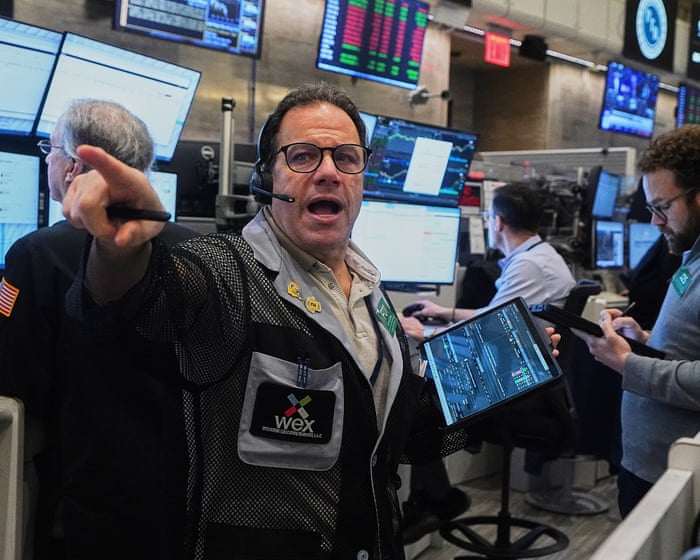
US technology stocks fell sharply due to worries about the large amounts of money these companies are spending on artificial intelligence (AI). Major indexes like the Nasdaq and S&P 500 dropped, with many top tech companies reporting losses or slowing profits.
Key Facts
The Nasdaq Composite fell 2.6 percent, its biggest drop since early June.
The S&P 500 dropped 1.21 percent, its largest fall since late July.
Most of the top seven tech companies, known as the "Magnificent 7," lost value except Apple, which rose 1.2 percent.
Meta raised its AI spending forecast to $135 billion-$145 billion but reported lower-than-expected profits.
Other major tech firms including Amazon, Nvidia, Tesla, Alphabet, Microsoft, Intel, and AMD also saw significant stock drops.
Rising oil prices, partly due to tensions involving the US, Israel, and Iran, added to market concerns.
Asian markets opened lower following the US tech stock declines.
Experts say the market drop is driven more by investors’ fears than changes in the companies’ actual performance.
Global investment in AI is expected to reach $2.7 trillion by 2026 and $3.6 trillion by 2027.
Read the Original
Want the full story? Tap a source to open the original
article.
The U.S. Treasury Department suggested new rules to limit American investments in advanced technology in countries such as China, Russia, and North Korea. These rules focus on cutting funding for areas like artificial intelligence (AI), supercomputers, and other critical tech that could help these countries develop military or security systems.
Key Facts
The Treasury Department proposed regulations to restrict U.S. high-tech investments going to certain countries.
The targeted countries include China, Russia, North Korea, and other nations considered security risks.
The proposal expands existing rules under the Outbound Investment Security Program (OISP).
It covers technologies such as hypersonic systems (very fast missiles), quantum information, and high-performance computing.
AI (artificial intelligence) is also included in the investment restrictions.
These steps aim to prevent sensitive U.S. technology from aiding military or strategic programs in rival countries.
The move reflects ongoing concerns about protecting U.S. national security and technological advantages.
Read the Original
Want the full story? Tap a source to open the original
article.
New research shows that GLP-1 drugs, originally made to treat diabetes, are now most commonly used for weight loss. This change is affecting how people spend their money and shop.
Key Facts
GLP-1 drugs were first created to help people with diabetes.
Many people now use these drugs primarily for losing weight.
This shift in drug use is influencing shopping and spending habits.
Research on this topic was conducted by EY-Parthenon.
The report was covered by CBS News and reporter Megan Cerullo.
The growing popularity of GLP-1 drugs for weight loss is a recent trend.
Changes in consumer behavior linked to these drugs are being studied.
Read the Original
Want the full story? Tap a source to open the original
article.
L’Oreal says weight loss drugs called GLP-1s have changed how people buy beauty and skin care products. The company is creating products to help with skin issues caused by rapid weight loss, and sales have grown faster than expected.
Key Facts
GLP-1 drugs like Ozempic, Wegovy, and Mounjaro were originally made for diabetes but also cause weight loss by reducing appetite.
Rapid weight loss can lead to loose skin, especially around the face, though this is not a direct drug effect.
L’Oreal’s brands SkinCeuticals and Kiehl’s have made products to help with skin sagging linked to weight loss.
L’Oreal’s sales grew by 7.7% in the three months ending September, beating analyst predictions.
L’Oreal increased its investment in dermatology company Galderma to 20% in December.
Galderma makes aesthetic products like Sculptra and Restylane, used to improve skin appearance through injections.
Both L’Oreal and Galderma are testing treatments for people using GLP-1 drugs who are concerned about changes in their facial skin.
Surveys show many weight loss drug users notice changes in their facial look after treatment.
Read the Original
Want the full story? Tap a source to open the original
article.
More Americans are taking GLP-1 drugs like Ozempic and Wegovy mainly to lose weight rather than for medical reasons like diabetes. This shift is changing how people shop for food and clothes, and new policies have made these drugs more affordable and accessible.
Key Facts
About 54% of people using semaglutide drugs now take them for weight loss, more than for other health issues.
People on GLP-1 drugs tend to eat fewer unhealthy snacks and less alcohol while choosing healthier foods.
Food companies and stores are offering more diet-specific foods, smaller portions, and protein-rich products.
GLP-1 users often buy smaller, more fitted clothing and spend more on gym or fitness services after losing weight.
These drugs are now available in pills and have become more affordable and accessible to young, low-income, and male consumers.
A Trump administration deal reduced monthly costs of these drugs from about $1,000 to between $150 and $350.
The Medicare GLP-1 Bridge program allows eligible seniors to get these drugs for $50 per month.
Researchers at the University of Pennsylvania plan to study if GLP-1 drugs can reduce risky behaviors by affecting brain reward systems.
Read the Original
Want the full story? Tap a source to open the original
article.
Global stock markets fell, mainly due to a big drop in artificial intelligence (AI) company stocks. At the same time, oil prices rose to their highest level in five months because of worries about the war with Iran.
Key Facts
The S&P 500 index dropped 1.2%, its largest decrease since July.
The Nasdaq, which has many tech and AI stocks, fell 2.6%.
The Dow Jones Industrial Average rose slightly by 11 points, less than 0.1%.
AI stocks fell because of concerns about high borrowing costs and possible overvaluation despite growth reports.
Large tech companies like Meta, Tesla, and Nvidia reported some strong results but their stock prices still declined.
South Korea, Hong Kong, and Japan saw large drops in their stock markets, losing between 2.7% and 3.5%.
Oil prices increased 4% to $113.17 per barrel due to uncertainty about how the war with Iran may affect global supply.
U.S. government bond yields fell sharply as investors sought safer investments amid stock market weakness.
Read the Original
Want the full story? Tap a source to open the original
article.
Airlines are raising ticket prices and offering fewer flights because jet fuel costs have gone up a lot. Major airlines like American, Delta, Southwest, and United are seeing big fuel bills and are responding by charging more, focusing on premium seats, and cutting flights that lose money.
Key Facts
Airfare prices rose 22% in September compared to the previous year, hitting a record high.
American Airlines' fuel costs increased by nearly 70% in the third quarter, adding $1.9 billion in expenses.
Southwest and United Airlines lowered their profit forecasts due to higher fuel prices.
Delta expects to spend $6 billion more on fuel this year than last year.
Airlines are increasing fares and selling more premium seats to cover rising fuel costs.
Airlines are reducing flights that do not make money to improve profits.
Increased fuel prices are partly caused by the war in Iran limiting oil supplies.
The closure of budget carrier Spirit Airlines reduced competition, allowing fares to rise more.
Read the Original
Want the full story? Tap a source to open the original
article.
The average interest rate for a 30-year fixed mortgage has gone down for the first time in two months. New data from Freddie Mac shows the rate decreased to 7.32 percent this week.
Key Facts
The 30-year fixed mortgage rate declined to 7.32 percent.
This is the first drop after two months of rising or steady rates.
Freddie Mac provided the data on mortgage rates.
A 30-year fixed mortgage means the interest rate stays the same for the whole 30 years of the loan.
Lower mortgage rates can make it cheaper for people to buy homes or refinance existing loans.
The change in mortgage rates is closely watched because it affects the housing market and economy.
Mortgage rates are influenced by factors like inflation, government policies, and economic conditions.
Read the Original
Want the full story? Tap a source to open the original
article.
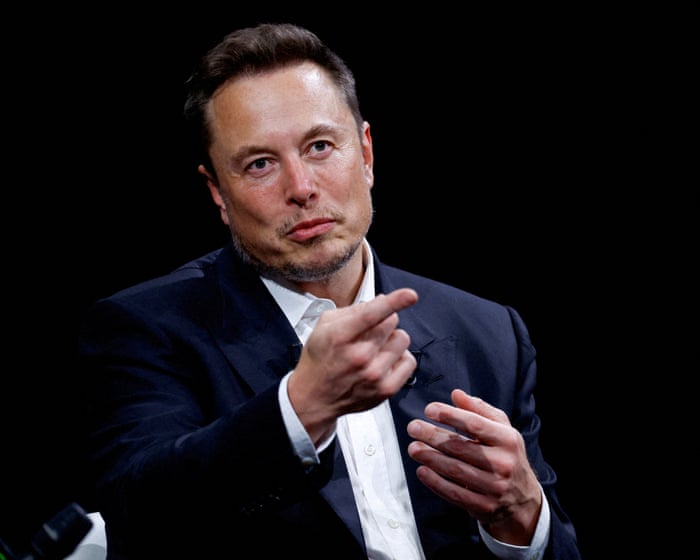
Elon Musk has reportedly invested about $1 billion in Skydance, a new media company led by David Ellison. This investment comes after the merger of Paramount and Warner Bros Discovery under the Skydance name and aims to support the combined company’s operations and cost-saving efforts.
Key Facts
Elon Musk invested around $1 billion in Skydance, a media company run by David Ellison.
Skydance was formed after Paramount merged with Warner Bros Discovery in a $111 billion deal.
David Ellison is the son of Larry Ellison, a billionaire and ally of President Donald Trump.
Existing investors, including Laurene Powell Jobs, have also added more money to Skydance.
The merger affects major studios like Paramount, Warner Bros, HBO Max, CBS News, and CNN.
Skydance plans to save over $6 billion in costs in three years, which may lead to thousands of job losses, especially in Los Angeles.
A group of 12 states sued to block the merger, saying it would reduce competition and harm consumers.
Skydance must release a minimum number of films and TV shows yearly and allow editorial independence for CBS and CNN under a settlement.
Read the Original
Want the full story? Tap a source to open the original
article.
Experts say gas prices in the U.S. are unlikely to drop below $4 a gallon before the midterm elections in early November 2026. High fuel costs are mainly due to conflicts in the Middle East and Russia-Ukraine war, which have damaged oil infrastructure and limited supply.
Key Facts
The national average gas price is $4.27 per gallon as of October 2026.
Gas prices have increased about 43% since the Iran war began in February 2026.
Middle East fighting damaged oil infrastructure, raising transportation costs.
The Russia-Ukraine war reduced fuel exports from Russia, adding to shortages.
Oil prices, measured by Brent crude, rose nearly 60% since the Iran war started, reaching over $112 per barrel recently.
Attacks by Iran and its allies targeted vessels and energy facilities in the Strait of Hormuz, a major oil transport route.
Gas prices tend to fall more slowly than they rise, delaying any price relief even if conflicts ease.
The U.S. imports a small amount of fuel from the Middle East, but global oil market forces keep prices high worldwide.
Read the Original
Want the full story? Tap a source to open the original
article.
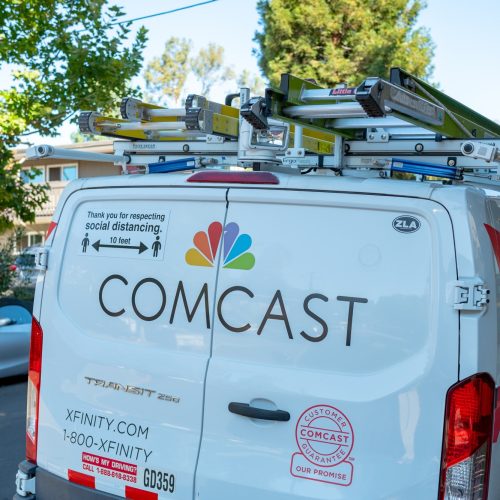
Comcast lost more internet and TV customers in the third quarter of 2026 compared to last year. The company blames strong competition from cheaper fiber and fixed wireless internet, and plans major job cuts and cost-saving changes to improve its business.
Key Facts
Comcast lost 144,000 broadband customers in Q3 2026, more than the 91,000 lost in the same quarter of 2025.
The company also lost 274,000 video (TV) customers, increasing from a 257,000 customer loss last year.
Competition comes from fixed wireless providers and fiber internet companies offering low prices, sometimes $30–$40 per month.
Comcast’s CFO called these low fiber prices “irrational” because fiber installation costs more than $1,500 per home.
Comcast currently has 28.3 million broadband and 10.4 million video customers in the US.
The company plans major job cuts, possibly replacing some customer service jobs with AI technology.
Comcast added 368,000 wireless lines to reach 10.6 million mobile service subscribers.
The changes aim to save over $1 billion and build a more efficient business for future growth.
Read the Original
Want the full story? Tap a source to open the original
article.
Lockheed Martin and the Pentagon have made a 10-year agreement to produce at least 850 F-35 fighter jets. Lockheed Martin will invest at least $7 billion of its own money to support this program.
Key Facts
The agreement covers producing F-35 Lightning II fighter jets for 10 years.
At least 850 jets will be built under this deal.
Lockheed Martin will invest a minimum of $7 billion in the program.
The funds will go to projects that help support the F-35 program.
The deal was announced by the U.S. Department of Defense on a Thursday.
The F-35 is a key fighter jet used by the U.S. military and allies.
This contract ensures long-term production and support for the fighter jets.
Read the Original
Want the full story? Tap a source to open the original
article.
Trucker protests in Italy have stopped the production of buffalo mozzarella, causing a loss of about €3 million in one day because milk cannot reach dairies and cheese cannot be delivered to customers. At the same time, Barclays bank is cutting around 5,000 jobs, about 5% of its workers, to save money by using artificial intelligence (AI).
Key Facts
Italian truckers protested to oppose high diesel prices.
The protests blocked milk deliveries to buffalo mozzarella producers.
Producers estimate they lost €3 million in just 24 hours.
Finished mozzarella cheese could not reach stores or customers.
Barclays announced cutting 5,000 jobs to reduce costs using AI technology.
AI is influencing various industries, including banking and technology.
Nvidia’s CEO encouraged “responsible optimism” about AI’s future despite market drops in AI-related stocks.
The article also mentions protests and unrest in France and trends in AI investment.
Read the Original
Want the full story? Tap a source to open the original
article.
Tokenized finance is growing, but a key problem remains: digital assets are tokenized, yet the money used to pay for them is not, causing delays in transactions. Asia is leading by developing local currency tokenized payments, which can speed up and secure trades better than using dollar-based stablecoins.
Key Facts
Tokenized finance means turning assets like bonds into digital tokens that trade on blockchains.
Currently, payments for these assets take days due to old banking systems, even if the asset trade itself is fast.
The missing piece is tokenized local currencies that can be used directly in transactions on blockchains.
Most stablecoins are pegged to the U.S. dollar, which creates currency risk for local transactions in other countries.
Asia is making progress: Hong Kong issued over $2 billion in tokenized bonds and has 13 public tokenized products.
Japan and South Korea are testing blockchain for securities and aim for fully tokenized markets soon.
Hong Kong passed a Stablecoins Ordinance with strict rules to ensure trust and stability.
Only two companies, HSBC and Anchorpoint, have been licensed to issue stablecoins in Hong Kong under this law.
Read the Original
Want the full story? Tap a source to open the original
article.
A retired decorator from Woking sold a collection of Pokémon cards for £1.56 million at auction. The cards were kept in his attic for 15 years before he realized their value after reading about a single card selling for over £6,000.
Key Facts
The collection sold for £1.56 million at Ewbank's auction house in Surrey.
The seller is a retired decorator from Woking.
The cards were stored in his attic for 15 years.
He noticed their value after seeing a card sell for more than £6,000 in his local newspaper.
Ewbank's auction claimed this was the UK's most valuable trading cards auction ever.
The auction took place on a Wednesday.
The BBC visited to report on the collection and the auction.
Read the Original
Want the full story? Tap a source to open the original
article.
Stocks fell sharply as investors became worried about whether the large spending on artificial intelligence (AI) will bring profits. The Nasdaq dropped 751 points due to concerns about rising debt for AI companies and higher oil prices.
Key Facts
The Nasdaq Composite Index fell 751 points, or 2.8%, on Thursday.
The S&P 500 dropped 1.4%, and the Dow Jones fell 0.1%.
AI companies are spending heavily on data centers, leading to large amounts of debt.
There is concern if these AI companies will make enough profit to cover their costs.
The Brookings Institution estimates AI infrastructure will cost over $10 trillion between 2025 and 2032.
Meta’s stock dropped 7.4% after mixed earnings with higher revenue but lower profits.
Tesla’s stock fell 2.1% after reporting stronger profits but weaker revenue than expected.
Oil prices rose due to worries about the Iran war, with U.S. oil near $99.44 a barrel and Brent crude at $113.
Read the Original
Want the full story? Tap a source to open the original
article.