Fact-first summaries of the news — stay informed, stay grounded.
Your favorite news sources, one calm feed — fact-first summaries that always link to the
original story. No outrage bait, and we tell you when you're caught up. How it works
Business News
Business news, market updates, and economic developments
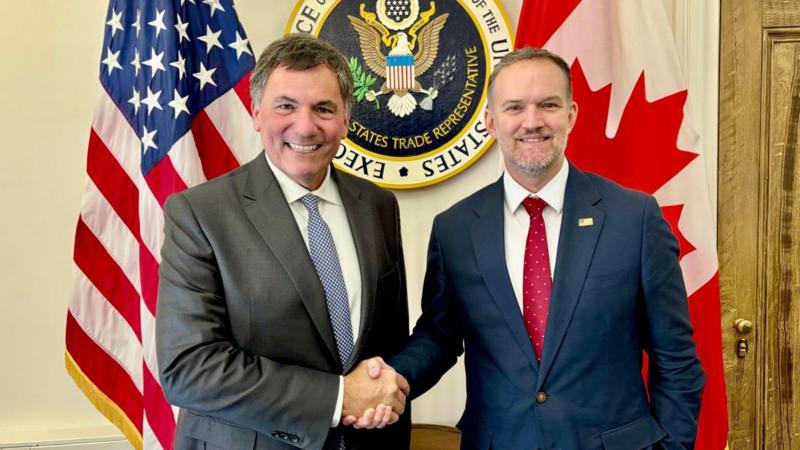
Canada and the United States are close to finalizing a new trade agreement, with leaders from both countries calling it a positive step. However, many details about the deal, including specific trade concessions and terms, have not yet been fully disclosed.
Key Facts
President Donald Trump and Canadian Prime Minister Mark Carney have praised ongoing trade negotiations.
The two countries have met multiple times recently to work on the deal.
Trump paused new tariffs planned on Canadian goods to give more time for the talks.
The deal is expected to remove some trade problems the U.S. had with Canada.
Canada aims to keep its dairy supply management system unchanged, despite U.S. requests for access.
The U.S. wants Canada to drop retaliation tariffs on American cars and reopen markets for American alcohol.
Many Canadians prefer Canada to maintain a hard stance in the negotiations.
Business groups in both countries want a deal to avoid harmful tariffs that could affect trade.
Read the Original
Want the full story? Tap a source to open the original
article.
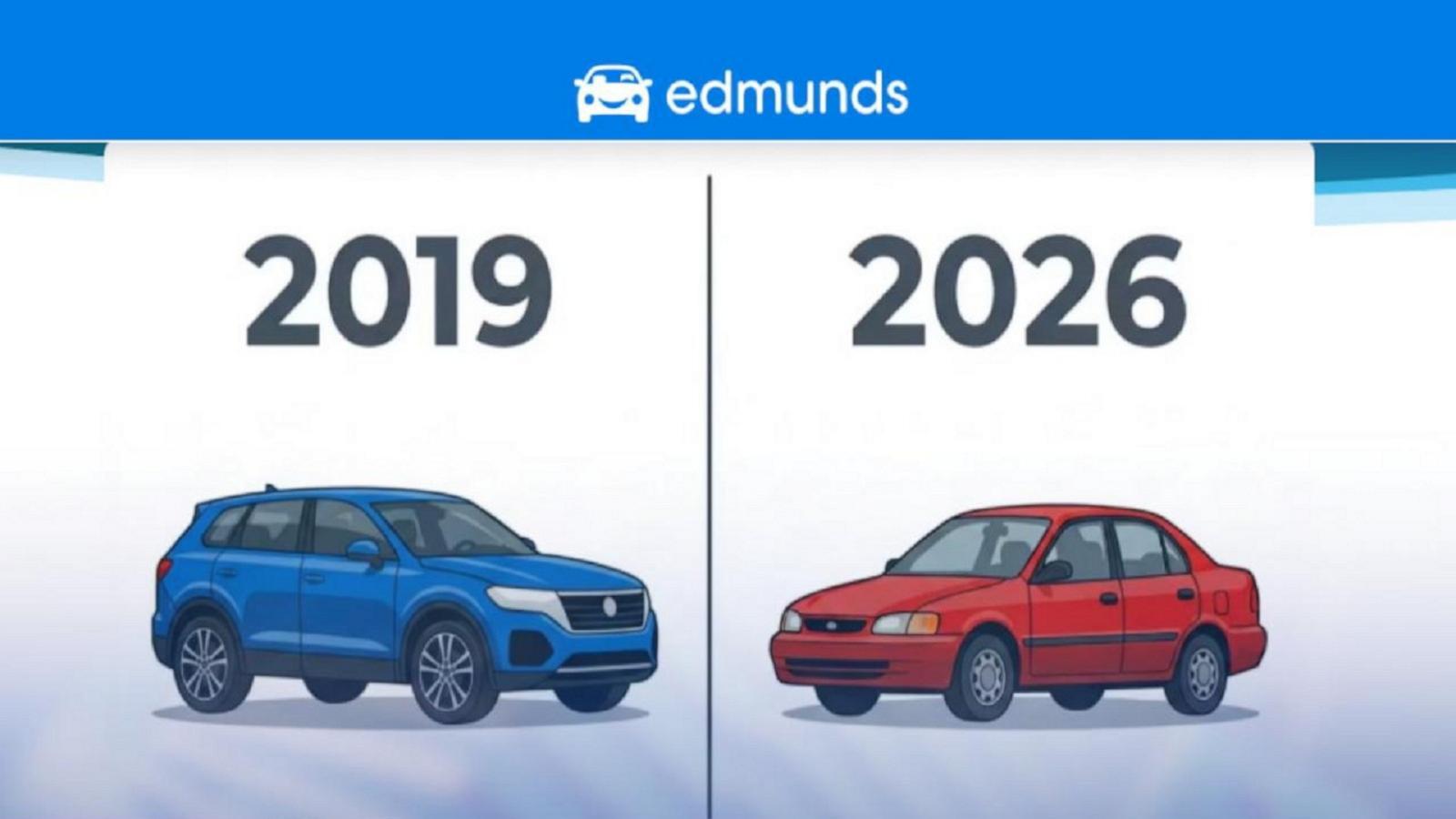
A new report shows that the prices of used cars that are three years old may rise above $32,000. Experts say that the prices are going up significantly.
Key Facts
Used cars that are about three years old could cost more than $32,000 soon.
A report highlights a sharp increase in used car prices.
Ivan Drury, director of insights at Edmunds, discussed why prices are rising.
The used car market is experiencing strong price growth.
Rising used car prices may affect buyers looking for cars that are a few years old.
Read the Original
Want the full story? Tap a source to open the original
article.
President Donald Trump announced that the United States has reached a trade deal with Canada that removes tariffs on US farmers and businesses exporting to Canada. He paused planned 50 percent tariffs on Canadian goods for three days while finalizing the agreement.
Key Facts
President Trump said there will be no tariffs on US goods going into Canada under the new trade deal.
A planned 50 percent tariff on Canadian imports was paused for three days to allow time to finalize the deal.
The tariffs would have affected about $20 billion worth of Canadian imports to the US.
The US and Canada have been negotiating to reduce tariffs, especially on Canadian vehicles.
The US discussed lowering Section 232 tariffs (used when imports are seen as a security threat) on Canadian cars from 25% to 15%.
Canada exports nearly 72 percent of its goods to the US.
The trade relationship was strained by tariffs imposed during President Trump’s current term.
Canadian Prime Minister Mark Carney said progress has been made but some work remains before finalizing the deal.
Read the Original
Want the full story? Tap a source to open the original
article.
President Donald Trump said on Wednesday that the United States reached a last-minute agreement with Canada on trade before new tariffs were about to start. He noted that there are now no tariffs on U.S. exports to Canada, but the deal still needs to be formally completed with signed documents.
Key Facts
President Trump announced a trade deal with Canada just before new 50 percent tariffs were to begin.
The deal will remove tariffs on U.S. exports to Canada.
The agreement has not been officially signed yet and depends on finalizing documents.
The tariffs were planned to apply to Canadian goods entering the U.S.
This announcement came as a last-minute development in ongoing trade talks.
The tariffs and trade talks concern economic relations between the U.S. and Canada.
President Trump described the breakthrough as happening “at the final moments.”
Read the Original
Want the full story? Tap a source to open the original
article.
The U.S. government has slowed escalating its trade conflict with China after China offered a truce last October. Although imports from China to the U.S. have dropped by 40%, much Chinese-made content is still entering the U.S. through other countries, leading to new U.S. measures like using AI to detect rerouted goods. However, this approach may not reduce the overall trade deficit or jobs lost, and experts say addressing the undervalued Chinese yuan might be a more effective way to manage trade imbalances.
Key Facts
Since October, the U.S. chose not to escalate the trade war after China offered a truce.
U.S. imports directly from China dropped by 40% compared to the previous year.
Many Chinese products enter the U.S. indirectly via countries like Mexico, Vietnam, and India.
The U.S. government has introduced an AI tool to detect goods rerouted through other countries to avoid tariffs.
Despite tariffs and new measures, the U.S. trade deficit with China remains high and China’s exports keep growing.
The undervalued Chinese yuan helps China keep its exports cheap and competitive globally.
Economists say the yuan's exchange rate reflects deeper economic problems like low Chinese consumer spending and large U.S. budget deficits.
Changing the yuan's value alone won’t fix the trade imbalance unless broader economic issues are addressed.
Read the Original
Want the full story? Tap a source to open the original
article.
Several universities now let students and families pay tuition using PayPal and Venmo mobile apps. These payment options are integrated into popular university payment platforms like Illumia, Nelnet Campus Commerce, and TouchNet.
Key Facts
Bellarmine University, Butler University, Kansas State University, Michigan State University, and Texas Tech University offer PayPal and Venmo for tuition payments.
PayPal and Venmo are mobile apps that let users send money digitally.
These payment methods are added to university billing platforms including Illumia, Nelnet Campus Commerce, and TouchNet.
The integration makes it easier and faster for students and families to pay tuition fees.
This move reflects a shift towards using digital payments in higher education.
Using apps like PayPal and Venmo can offer more flexible payment options compared to traditional methods.
This is part of a growing trend in universities updating their payment systems with new technology.
Read the Original
Want the full story? Tap a source to open the original
article.
A big sell-off in U.S. government bonds has caused bond yields to rise to their highest levels in years. This increase makes borrowing more expensive for Americans buying homes or cars, but also means better returns for savers.
Key Facts
The yield on the 30-year U.S. Treasury bond hit 5.3%, the highest since 2007.
The 10-year Treasury yield, which affects mortgage rates, rose to 4.7%, up from 4.2% at the start of the year.
Bond yields rise when investors want higher returns, often due to worries about inflation or government debt.
U.S. government debt is close to $40 trillion, contributing to investor concerns.
Instability in the Middle East and higher oil prices have added to inflation worries.
The U.S. Treasury plans to double bond buybacks to stabilize the market by adding liquidity.
Higher bond yields increase borrowing costs for loans but can offer better interest rates for savers.
Experts advise consumers to shop around for loans to avoid paying too much in interest.
Read the Original
Want the full story? Tap a source to open the original
article.
A proposed California law called the “Ethics Over Aesthetics Act” aimed to ban the sale of genetically engineered pets modified only for looks, such as glowing rabbits and unicorns. The bill would have allowed genetic changes for health reasons but has stalled in the state legislature despite wide support from lawmakers and animal groups.
Key Facts
The bill is Assembly Bill 1382 and was introduced by Assembly member Leticia Castillo.
It would ban selling genetically engineered pets altered just for appearance, like glowing rabbits or animals with unusual colors.
Pets covered would include common animals like dogs, cats, rabbits, birds, fish, and reptiles.
Penalties for violations could be fines of at least $5,000 per animal.
Genetic changes for health benefits or hypoallergenic traits would still be allowed.
The law would not ban all genetic engineering, only changes made purely for cosmetic reasons.
The bill passed the Assembly unanimously and had strong early support in Senate committees.
Despite this, the bill stalled and has not become law yet.
Read the Original
Want the full story? Tap a source to open the original
article.
HM Revenue and Customs (HMRC) sent over 81,000 warning letters to cryptocurrency holders in the 2025-26 financial year, alerting them to possible unpaid capital gains tax. The number of letters nearly tripled from the previous year, and new rules starting in 2027 will require crypto platforms to share customer data with tax authorities to improve tax compliance.
Key Facts
HMRC sent 81,172 letters, emails, and texts to crypto investors in 2025-26, up from 27,714 in 2023-24.
Cryptocurrency investors may owe taxes on profits made from selling or exchanging cryptocurrencies.
HMRC suspects there is widespread tax evasion in the crypto market, especially among younger investors.
Bitcoin’s value rose from about £14,000 in December 2022 to £90,000 in October 2025, creating large taxable gains.
From March 2027, crypto platforms outside the UK must share customer information with tax authorities.
HMRC expects these new powers to help collect up to £315 million by April 2030.
The £315 million could fund over 10,000 newly qualified nurses for one year.
After the price peak, Bitcoin’s value has since fallen to around £48,000 in the past year.
Read the Original
Want the full story? Tap a source to open the original
article.
Moderna announced early study results showing that its experimental mRNA cancer vaccine, combined with Merck’s immunotherapy drug Keytruda, helped melanoma patients live longer without cancer coming back compared to Keytruda alone. Following the news, Moderna's stock price more than doubled, and Merck’s shares also increased.
Key Facts
Moderna and Merck are working together on an mRNA cancer vaccine named intismeran.
Intismeran is designed to be personalized based on the unique mutations in a patient's tumor.
The study tested intismeran combined with Keytruda against Keytruda alone in melanoma patients.
Patients receiving the combination treatment had longer periods without cancer returning or spreading.
The companies did not disclose exact survival times or overall survival benefits yet.
They plan to share full study results at a future international medical meeting.
Moderna shares jumped more than 120%, reaching $140.12 per share after the announcement.
Merck’s shares also rose by about 11% following the news.
Read the Original
Want the full story? Tap a source to open the original
article.
Homeowners in the U.S. face higher insurance costs and more companies refusing to renew policies, especially in disaster-prone areas. These changes come as building costs rise and natural disasters become more common and severe.
Key Facts
Home insurance premiums increased between 18% and 43% from 2018 to 2024 across different U.S. regions.
Insurers are canceling policy renewals more often, with nonrenewal rates rising between 96% and 216% in different parts of the country.
The Southeast had the largest rise in nonrenewals, increasing 216% over seven years.
Homeowners in states like Florida, California, and Louisiana face getting fewer options for insurance coverage.
Nonrenewal means an insurer chooses not to continue a policy after it expires, which can happen even if the homeowner hasn’t made claims.
Rising costs and risks related to wildfires, hurricanes, flooding, and storms push insurers to be more selective.
Some homeowners, especially in minority groups, go without insurance because of high costs.
Lack of insurance combined with premium hikes and other housing costs is making it harder for some homeowners to stay in their homes.
Read the Original
Want the full story? Tap a source to open the original
article.
The Federal Reserve may raise interest rates soon, which could increase returns on savings accounts. Money market accounts offer more spending flexibility, while high-yield savings accounts usually provide higher interest rates but have limits on withdrawals.
Key Facts
The Federal Reserve might raise interest rates in September or October, according to a market tool.
A rate hike generally leads to higher interest rates on savings products like money market and high-yield savings accounts.
Money market accounts allow more withdrawals and often come with debit cards or checkbooks.
High-yield savings accounts usually offer better interest rates but limit how often you can access the money.
Money market accounts often have higher minimum balance requirements and possible fees.
High-yield savings accounts may have lower entry requirements but sometimes require higher balances for the best rates.
A certificate of deposit (CD) is another option that locks in interest rates for a fixed period.
Using a CD ladder strategy means spreading money across different CD terms to take advantage of rising rates over time.
Read the Original
Want the full story? Tap a source to open the original
article.
Jesse Murphy, a frequent gambler, received many free bets, tickets, food, and drinks from VIP managers at gambling companies between 2019 and 2024. The Australian government has passed a bill to limit some gambling inducements but stopped short of banning the rewards that encouraged Murphy and others to keep betting.
Key Facts
Jesse Murphy was regularly given free bets, tickets, food, and alcohol by gambling VIP managers from 2019 to 2024.
Murphy’s account received $43,700 in bonus bets from one company over two years.
VIP managers sent bonus bets even when Murphy said he might quit gambling.
Murphy stopped gambling almost two years ago, after which the free rewards stopped.
A parliamentary inquiry recommended a total ban on gambling inducements in June 2023.
The Albanese government passed a law limiting some inducements but did not ban VIP rewards.
The new law requires companies to identify “high risk” gamblers and restrict inducements to them, with the industry deciding how to define “high risk.”
Critics say the law makes only small changes and may not stop harmful gambling practices.
Read the Original
Want the full story? Tap a source to open the original
article.
Almost 20% of older Australians who asked for a review of their home support funding, which was decided by a computer program, received more help after a human checked their case. The government tool uses questions and an algorithm to decide funding, but it cannot be changed by assessors even if they think a person needs more support.
Key Facts
The integrated assessment tool (IAT) started in November and is used to decide home support funding for older Australians.
Up to 31 March, 757 requests asked for a review of funding allocated by the IAT.
Of these, 141 cases resulted in more support or a higher priority after human review.
177 cases had no change, 304 were closed, and 135 are still waiting for a decision.
The algorithm decides funding levels based on health and social questions but cannot be overridden by assessors.
Some aged care workers and older people say the tool sometimes denies needed care and causes stress.
The Commonwealth Ombudsman is investigating the tool after criticism that it is unfair.
Advocates call for more human involvement to ensure older people get fair support.
Read the Original
Want the full story? Tap a source to open the original
article.
Moderna's stock price more than doubled after announcing positive results from a trial of its experimental mRNA vaccine for melanoma, a deadly skin cancer. The vaccine, used with Merck's drug Keytruda, helped prevent the cancer from returning or spreading in high-risk patients after surgery.
Key Facts
Moderna's vaccine trial showed the treatment reduced melanoma recurrence and spread.
The vaccine tested is called intismeran and is personalized for each patient.
It was combined with Merck's Keytruda, a cancer immunotherapy drug.
Moderna’s stock rose 145% to $154.48 after the announcement; Merck’s stock increased by 10.6%.
The study focused on patients who had surgery to remove melanoma.
Experts say this is the first study to show this kind of vaccine can reduce risk of melanoma returning or causing death.
More than 234,000 melanoma cases are expected in the U.S. by 2026.
Melanoma is a deadly skin cancer that starts in cells that give skin its color.
Read the Original
Want the full story? Tap a source to open the original
article.
The US Treasury is doubling its buyback of government debt to stabilize the bond market amid worries about rising inflation. This move helped lower rising yields on long-term Treasury bonds, which had reached their highest levels in decades and affected borrowing costs like mortgages.
Key Facts
The Treasury is increasing its purchase of government debt to support the bond market.
Yields on 10-year, 20-year, and 30-year Treasury notes reached 20-year highs recently.
The 30-year Treasury yield is the highest since 2007.
High yields increase borrowing costs for loans like mortgages.
The Treasury said the buyback aims to provide more liquidity (ease of buying and selling) in the bond market.
Inflation in the US was 3.4% in July, down from 4.2% in May but still above target.
Oil and gas prices remain high, contributing to inflation concerns.
The US stock market showed slight gains after the Treasury’s announcement, helped by strong AI investment growth.
Read the Original
Want the full story? Tap a source to open the original
article.
Moderna and Merck announced that their experimental mRNA cancer vaccine helped stop melanoma, a type of skin cancer, from coming back or spreading in a late-stage trial. This success brings the vaccine closer to becoming a new treatment option for patients at high risk of cancer returning.
Key Facts
The vaccine is personalized and uses mRNA technology.
It specifically targets melanoma, a serious skin cancer.
The trial involved patients with a high risk of melanoma returning or spreading.
Results showed the vaccine was effective in preventing cancer recurrence.
This was a late-stage clinical trial, an important step before approval.
The vaccine could extend the lives of melanoma patients.
Moderna and Merck developed the vaccine together.
Positive trial results move the vaccine closer to market availability.
Read the Original
Want the full story? Tap a source to open the original
article.
Salad companies expect lower profits because of a cyclospora outbreak this summer. The outbreak made some people sick and affected sales of salad products.
Key Facts
Cyclospora is a parasite that can cause food poisoning.
The outbreak happened during the summer.
Salad companies are worried about making less money.
The outbreak led to fewer people buying salads.
Ann Berry, who started the company Threadneedle, spoke about the situation.
The news report was shared by CBS News.
Read the Original
Want the full story? Tap a source to open the original
article.
Target received nearly $1 billion back from the US government after tariffs on imported goods were ruled unlawful by the Supreme Court. This refund helped double Target's operating income in the second quarter compared to last year.
Key Facts
Target got a $994 million pre-tax refund from US tariff payments.
The refund led Target’s Q2 operating income to rise from $1.3 billion to $2.6 billion.
The refund is part of a larger $100 billion repayment of tariffs following a court ruling against some of President Donald Trump’s import taxes.
Despite this, President Trump continues to use other methods to impose tariffs on imports.
Trump delayed new import taxes on Canadian goods by three days amid trade talks.
Target is reducing its reliance on products made in China, now sourcing 30% of its store-label goods from there, down from 60% in 2017.
Target has cut prices on over 10,000 products as part of efforts to improve sales.
Target’s CEO said the company is focused on careful execution during its business turnaround.
Read the Original
Want the full story? Tap a source to open the original
article.
A new study found that people aged 50 and older who have severe sleep problems or who sleep nine hours or more each night tend to retire earlier. Those with sleep issues or long sleep duration had fewer years expected to work between ages 50 and 68.
Key Facts
The study looked at people aged 50+ and their sleep patterns and work life expectancy.
Severe sleep disturbances include trouble falling asleep, staying asleep, waking too early, and feeling unrested.
People with no sleep problems could expect about 13 years and 5 months of work left after age 50.
Severe sleep problems reduced expected work time by around 8 months.
Sleeping nine hours or more each night was linked to about 7-30 months less work time.
Short sleep (less than seven hours) did not clearly reduce working life expectancy compared to 7-8.5 hours sleep.
The shortest working life expectancy was seen in men in routine jobs with severe sleep problems.
Most retirees in the US stop working before age 65, with a median retirement age of 62.
Read the Original
Want the full story? Tap a source to open the original
article.