The US dollar is a key currency for global trade and is held by many countries as a safe asset. Since 1971, the dollar has not been tied to gold but remains dominant, giving the US unique financial advantages and influence in world affairs. Experts discuss what might happen if this dominance is challenged by other currencies or new digital money.
Key Facts
The US dollar is widely used in global trade and is considered a safe currency by many governments.
Some countries, like Ecuador and Panama, use the US dollar as their official money.
After World War II, the dollar was linked to gold but this ended in 1971 under President Nixon.
Since then, the dollar's strength relies on its global acceptance and access to US financial markets.
This situation lets the US print money more freely and build up debt with less risk of inflation.
The US can also enforce sanctions by controlling access to the dollar.
Some countries, especially China, want to replace the dollar as the main global reserve currency.
Experts are exploring if digital currencies could eventually take the dollar’s place in global trade.
Read the Original
Want the full story? Tap a source to open the original
article.
President Donald Trump spoke with Michael Rapino, the CEO of Live Nation, in February before Live Nation reached an agreement with the Department of Justice to settle an antitrust case. Court documents reveal that their conversation covered several topics related to Live Nation’s business.
Key Facts
President Trump and Live Nation CEO Michael Rapino had a conversation in February.
This talk happened before Live Nation settled an antitrust case with the Department of Justice.
The antitrust case involves concerns about competition and market fairness.
Court documents describe that Rapino discussed multiple business topics with President Trump.
The settlement with the DOJ aimed to resolve legal issues related to Live Nation’s operations.
The filing providing this information was made public on a Monday.
Live Nation is a major company involved in event ticketing and live entertainment.
The discussion between Trump and Rapino took place during ongoing government scrutiny of Live Nation’s business practices.
Read the Original
Want the full story? Tap a source to open the original
article.
A new $290 million film studio has opened near Perth, Western Australia, on land that was once a cow paddock. The studio aims to attract big film and TV productions by offering modern facilities and financial incentives, hoping to grow Western Australia’s share of the screen production industry from 1% to 10% over the next ten years.
Key Facts
Perth Film Studios opened on a 16-hectare site in Whiteman, north-east of Perth.
The studio cost $233.5 million to build, funded by the Western Australian government, with an additional $57 million for operations over ten years.
The facility includes four large sound stages, production offices, workshops, and a backlot larger than Perth’s Optus Stadium field.
Tom Avison, experienced from Sky Studios Elstree in the UK, is the studio’s first CEO and promotes the location internationally.
Australia’s drama production spending rose 43% from the previous year, reaching $2.7 billion in 2024-25.
The studio offers financial incentives like production rebates and combines state and federal tax offsets to attract projects.
The studio’s first project is a six-part mystery series called Two Birds, employing over 100 local workers and adding $17 million to the local economy.
Western Australia’s diverse landscapes provide unique filming locations rarely used by large productions before.
Read the Original
Want the full story? Tap a source to open the original
article.
The US Commerce Department has stopped Polestar from importing new cars starting with model year 2027 due to rules banning connected cars from companies linked to China. Polestar will still sell and support its current US models but cannot sell future models like the Polestar 5 or Polestar 6 in the US.
Key Facts
Polestar is an electric car brand owned by Zhejiang Geely Holding, a Chinese company.
The US Commerce Department denied Polestar permission to import vehicles from model year 2027 onward.
The ban is part of a rule targeting connected cars from automakers with Chinese ties.
Polestar can continue selling existing Polestar 3 and Polestar 4 SUVs in the US and provide service support.
Polestar’s Polestar 3 SUV is built in South Carolina, but Polestar 4 SUVs sold in the US are made in South Korea.
Volvo, also owned by Geely, was authorized to import model year 2027 vehicles, unlike Polestar.
Polestar plans to focus on growth in Europe, Southeast Asia, Eastern Europe, Latin America, and Canada.
The company says it will manufacture the upcoming Polestar 7 model in Europe.
Read the Original
Want the full story? Tap a source to open the original
article.
Central air conditioning systems can improve home comfort by cooling the entire house evenly and controlling humidity. Although the upfront costs for installation and equipment are high, newer, efficient units may save money on energy bills over time and increase home value, especially in warm areas.
Key Facts
Installing a central air conditioner often costs several thousand dollars, not including the unit.
Inflation has raised the prices for HVAC equipment and labor recently.
Central AC cools the whole home evenly, unlike window or portable units that cool only one room at a time.
Homes with central air may be more attractive to buyers in hot climates.
Newer central AC models use less energy than systems from 15 to 20 years ago.
Lower monthly energy bills may help offset installation costs over time.
A new system can be more reliable and come with warranties that reduce repair costs.
Central air may not be worth the investment if the home or owner's situation does not justify the cost.
Read the Original
Want the full story? Tap a source to open the original
article.
This article compares how much interest you can earn on $45,000 placed in either a certificate of deposit (CD) or a high-yield savings account over one year. Both have similar interest rates and federal insurance, but the CD offers a fixed rate while the savings account’s rate can change.
Key Facts
Both CDs and high-yield savings accounts currently offer around 4% interest.
Both types of accounts are insured by the FDIC up to $250,000.
A 3-month CD at 3.95% would earn about $437.94 in interest on $45,000.
A high-yield savings account at 4.10% after three months would earn $454.32, slightly more than the CD.
At six months, both accounts would earn the same interest, about $913.23.
Over nine months, the high-yield savings account earns $33.42 more than the CD.
After one year, the CD at 4.15% would earn $22.50 more than the savings account.
If interest rates rise, a savings account could earn more since its rate changes; if rates fall or stay the same, a CD might be better because its rate is fixed.
Read the Original
Want the full story? Tap a source to open the original
article.
CBS Mornings is offering special discounts on various products aimed at improving daily life. Viewers can visit cbsdeals.com to access these deals, and CBS earns a commission from purchases made through the site.
Key Facts
CBS Mornings features exclusive discounts on selected products.
The deals are intended to help improve everyday lifestyle.
Customers can find these offers on the website cbsdeals.com.
CBS earns commissions when people buy items through the website.
The promotions are highlighted during CBS Mornings broadcasts.
The deals are available for a limited time, typically linked to the show.
Read the Original
Want the full story? Tap a source to open the original
article.
The Guardian editors tested and selected over 40 good deals from Prime Day 2026 to help shoppers avoid low-quality offers. They updated their list daily and included discounts on products like kitchenware, home fans, bedding, travel gear, and electronics.
Key Facts
The Guardian’s team personally tested and checked prices to find genuine Prime Day deals.
They found 47 top deals covering categories such as kitchen, home, sleep, travel, tech, beauty, and fashion.
Some highlighted deals include a Titanium Always Pan Pro for $129 (down from $179) and a Levoit Tower Fan for $54.95 (originally $74.99).
The list includes eco-friendly and budget-friendly options like Blueland compostable sponges and reusable silicone storage bags.
The Samsung 48-inch OLED Smart TV was offered at $797.99, discounted from $1,397.99.
Editors update the deal list daily during the sale to provide current recommendations.
The kitchen section features pans praised for quality and durability, such as the Lodge Cast Iron Skillet at $24.95.
The article encourages careful selection to avoid misleading “sale” prices and low-value offers.
Read the Original
Want the full story? Tap a source to open the original
article.
Inflation in the U.S. reached 4.1 percent in May, the highest rate in over three years. Prices increased by 0.7 percent in May alone, showing that costs for goods and services are rising faster.
Key Facts
Inflation hit 4.1 percent for the year ending in May.
This is the highest inflation rate in more than three years.
Prices rose by 0.7 percent during the month of May.
The data comes from the Commerce Department.
Inflation is measured using personal consumption expenditures (PCE), which tracks spending on goods and services.
Higher inflation means the overall cost of things people buy is going up.
This increase shows the economy is seeing faster price growth.
Read the Original
Want the full story? Tap a source to open the original
article.
Dolly Parton, a well-known country singer and businesswoman, made a surprise visit to open a truck stop named Dolly's Tennessean Travel Stop in Cornersville, Tennessee. The event marked the official start of this new travel stop aimed at truck drivers and travelers.
Key Facts
Dolly Parton is both a famous country singer and a businesswoman.
She appeared unexpectedly at the opening of a truck stop.
The truck stop is named Dolly's Tennessean Travel Stop.
It is located in Cornersville, Tennessee.
The truck stop serves truck drivers and other travelers.
This event took place in June 2026.
The truck stop opening was covered by news outlets.
Read the Original
Want the full story? Tap a source to open the original
article.
The Personal Consumption Expenditures (PCE) index, which the Federal Reserve uses to measure inflation, increased at a 4.1% yearly rate in May. This is the highest inflation rate since April 2023 and shows the difficulty the Federal Reserve faces in controlling rising prices.
Key Facts
The PCE index rose 4.1% over the year ending in May.
This matches predictions made by economists.
The previous month, April, saw a 3.8% annual increase.
The 4.1% rate is the highest inflation since April 2023.
The PCE index is the Federal Reserve’s favored measure of inflation.
Higher inflation means prices are rising faster, which is a challenge for the Fed.
The report highlights ongoing inflation concerns in the U.S. economy.
Read the Original
Want the full story? Tap a source to open the original
article.
New data from the Commerce Department shows that the economy grew in 46 states and Washington, D.C. during the first quarter of 2026. The U.S. economy overall grew at a rate of 2.1 percent in this period, which is higher than previous estimates and better than the end of 2025.
Key Facts
GDP grew in 46 states and Washington, D.C. in the first quarter of 2026.
Washington state had the highest growth at 4.5 percent.
A few states experienced a drop in GDP during this period.
Personal income and earnings increased in nearly every state.
U.S. GDP grew 2.1 percent in the first quarter of 2026, up from an earlier estimate of 1.6 percent.
The economy was growing 0.5 percent in the last quarter of 2025 before improving.
Treasury Secretary Scott Bessent said the economy could reach 3 percent growth this year.
Economic improvement is partly linked to reduced tensions between the U.S. and Iran.
Read the Original
Want the full story? Tap a source to open the original
article.
Britain’s net zero economy, focused on reducing carbon emissions and boosting green industries, is worth £100 billion annually and supports well-paying jobs. Labour’s potential leader, Andy Burnham, faces pressure to reconsider support for net zero policies, but experts and unions emphasize the economic and political benefits of sticking to green targets.
Key Facts
The UK’s net zero economy is worth £100 billion a year and offers higher-paying jobs than average.
More than 60% of UK people support net zero and climate action.
Labour lost votes to pro-climate parties like the Greens and Liberal Democrats in recent local elections.
Unions with members in oil and gas have mixed views, but most support net zero despite job declines in the North Sea sector.
North Sea oil and gas jobs have been falling for over 15 years, dropping from 36,000 direct jobs in 2013 to about 30,000 in 2024.
Clean technology is creating jobs and new industries in regions like the Humber and the North East of England.
Moving toward clean energy is seen as key for the survival of new industries globally.
Political experts warn weakening net zero policies could harm Labour’s electoral chances and economic growth.
Read the Original
Want the full story? Tap a source to open the original
article.
Ryanair has changed its rule to let parents sit next to their young children for free without paying a seat reservation fee. This change came after a government investigation looked into whether the previous rule was unfair to families.
Key Facts
Ryanair will now offer free seats next to children for parents after checking in.
Before, parents had to pay about £8 each way to reserve a seat next to their child.
The Competition and Markets Authority (CMA) began investigating the policy for possible unfair charges.
Other airlines usually seat parents and children together for free automatically.
Ryanair’s CEO said the policy change was made reluctantly to match the industry standard.
The free seats are usually at the back of the plane, as front rows are often reserved.
Ryanair said the change will not affect the company’s income much.
Consumer group Which? said Ryanair should not have needed a ruling to stop charging families.
Read the Original
Want the full story? Tap a source to open the original
article.
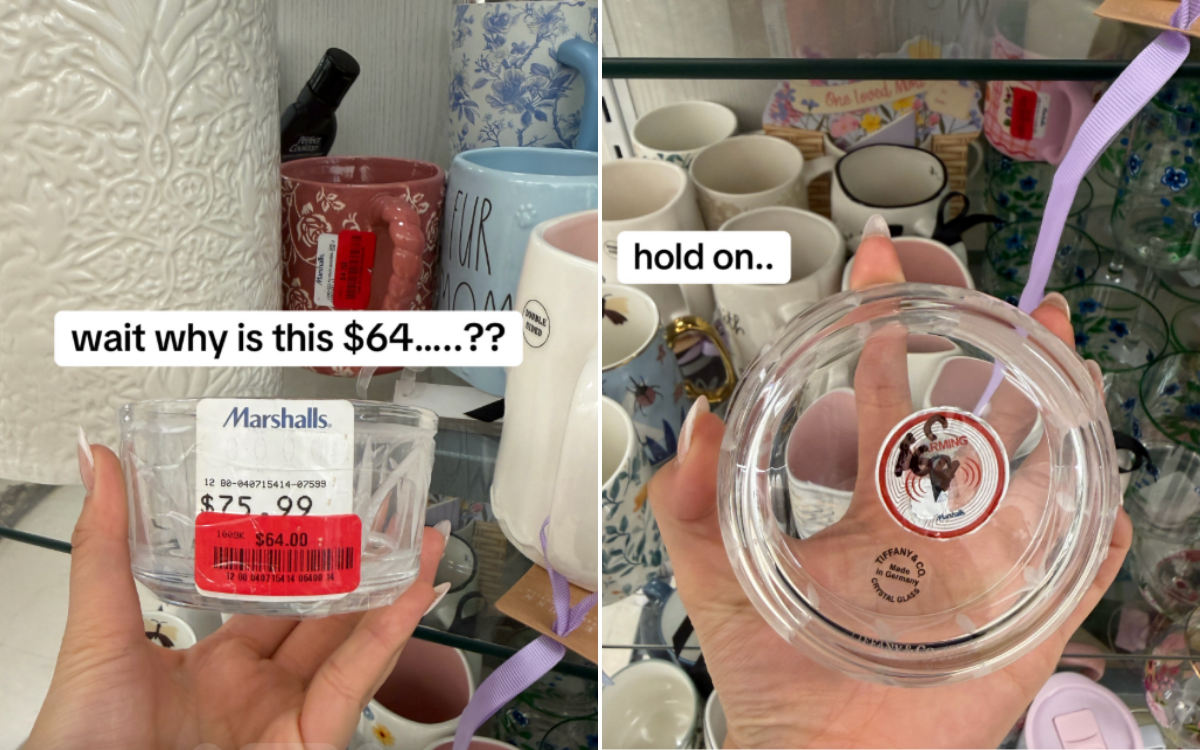
A woman in California found a glass bowl at a thrift store priced at $64, which surprised her until she saw it was made by Tiffany & Co., a well-known luxury brand. She realized the bowl was likely crystal and could be worth much more if sold new but chose not to buy it.
Key Facts
A California woman found a glass bowl in a Marshall’s thrift store priced at $64.
The bowl was marked with "Tiffany and Co." on the bottom rim.
Tiffany & Co. is a famous luxury brand known for high-quality items and its trademarked blue color.
The bowl was probably made from lead glass, also called crystal, often more valuable than regular glass.
New Tiffany & Co. glassware can cost around $300 or more.
The woman did not buy the bowl despite its brand and potential resale value.
Many Americans enjoy thrifting, shopping for used or second-hand goods.
The woman prefers to focus on bargains rather than expensive branded items when thrifting.
Read the Original
Want the full story? Tap a source to open the original
article.
The total amount of money owed to energy suppliers in the UK has reached a new high of £4.79 billion, with unpaid bills rising by 15% over the past year. Energy prices are set to increase in July, but experts suggest ways customers can reduce bills and manage debt.
Key Facts
Energy debt in England, Wales, and Scotland reached £4.79 billion from January to March 2026.
This figure represents customers who have owed money for more than three months.
People without repayment plans owe on average £1,876 for electricity and £1,623 for gas.
Energy prices will rise in July, mainly due to higher gas costs.
Energy suppliers may offer debt relief, payment plans, or help with appliances if customers ask.
About 40% of customers have fixed price deals that keep unit costs steady for usually one year.
Paying bills monthly by direct debit usually costs about £140 less per year than quarterly payments.
Local grants and benefits may help with energy costs or home improvements for eligible people.
Read the Original
Want the full story? Tap a source to open the original
article.
The parents of a 12-year-old girl who was raped by an adult she met on Snapchat have sued Snap, the company that owns the app, and the attacker in Missouri. The lawsuit claims Snapchat did not stop harmful features or warn parents, and allowed the attacker to contact and harm the girl.
Key Facts
The girl started using Snapchat at age 11, even though the app requires users to be 13 or older.
Snapchat recommended the girl and other teens as friends to an adult man, Gabriel Joel Valentin-Rios, who had no real-life connection to them.
Valentin-Rios sent the girl unwanted nude photos, used Snapchat’s location feature to find her home address, and lied about his age to gain her trust.
Valentin-Rios pleaded guilty to statutory rape and is serving an 18-year prison sentence.
The lawsuit says Snapchat knew about Valentin-Rios’s multiple accounts but did not stop him.
The girl has been diagnosed with PTSD, anxiety, and depression after the assault.
The parents want the court to force Snapchat to change its app to better protect children.
Similar lawsuits and state lawsuits allege Snapchat’s design encourages sexual abuse and sextortion of minors.
Read the Original
Want the full story? Tap a source to open the original
article.
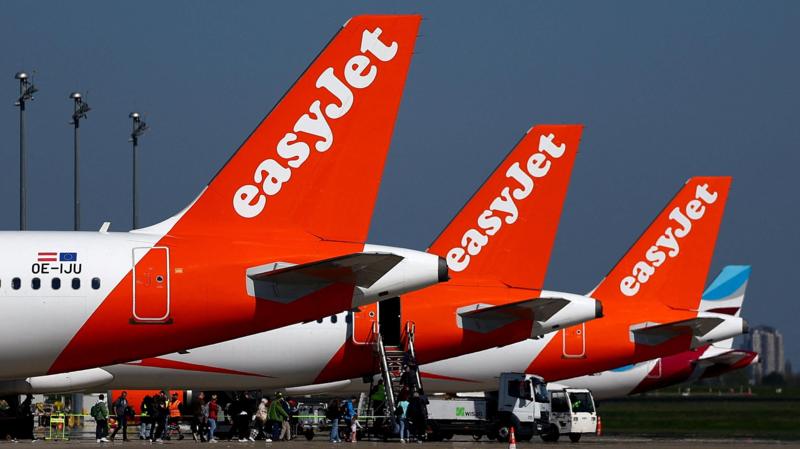
EasyJet has rejected a fourth offer from US investment firm Castlelake to buy the airline for £4.93 billion. EasyJet’s board says the bid undervalues the company and has doubts about Castlelake’s ability to complete the deal.
Key Facts
Castlelake made a fourth takeover offer of £4.93 billion, or £6.50 per share.
Previous offers were £5.60, £6, and £6.25 per share.
EasyJet’s board says the latest offer still undervalues the company and questions whether Castlelake can deliver the deal.
EasyJet’s share price has dropped about 30% over the past year, affected by worries over the war in Iran.
Castlelake manages about $36 billion (£27.3 billion) in assets.
Under the deal, Castlelake and co-investors would own 49% of EasyJet, with the remaining 51% owned by European Union investors.
EasyJet wants Castlelake to provide clear promises about ownership and their ability to complete the purchase.
The deadline for Castlelake to make a firm offer is 17:00 BST on 5 July.
Read the Original
Want the full story? Tap a source to open the original
article.
Gousto, a company that provides meal kits with fresh food and recipes, is closing its warehouse in Clay Lake, Lincolnshire. This closure will put 290 jobs at risk as Gousto moves all production to a single warehouse in Warrington, Cheshire, to lower costs and improve efficiency.
Key Facts
Gousto sells meal kits that include fresh ingredients and cooking recipes.
The Clay Lake warehouse near Spalding will be shut down.
About 290 jobs are at risk due to the closure.
Gousto will centralize production at its Warrington warehouse, where around 600 people work.
Running two warehouses was costly and caused duplicated work.
The company has invested heavily in the Warrington site.
Gousto wants to keep prices low and stay competitive in the food market.
The company plans to support affected employees with care and practical help.
Read the Original
Want the full story? Tap a source to open the original
article.
The UK government will reduce the amount of steel that can be imported without tariffs by about half starting July 1. This action aims to protect the local steel industry from cheap steel coming mainly from China and follows similar moves by the EU.
Key Facts
The UK will cut tariff-free steel import quotas by 51% to 3.2 million tonnes.
Tariffs on steel imported above these quotas will increase to 50% of the product's value.
New rules replace pre-Brexit EU quota agreements, but the UK had kept the old rules after leaving the EU.
Eleven types of steel used by UK manufacturers will be exempt from tariffs to avoid supply problems.
The UK steel industry produces about 3 million tonnes yearly, compared to nearly 2 billion tonnes worldwide.
The UK steel trade body says these measures are necessary to prevent the industry from collapsing.
Steel users worry that quotas and tariffs could raise prices on many steel products that Britain cannot produce.
Overcapacity in steel production is linked to subsidies in China and other countries, leading to excess steel being exported globally.
Read the Original
Want the full story? Tap a source to open the original
article.