Fact-first summaries of the news — stay informed, stay grounded.
Your favorite news sources, one calm feed — fact-first summaries that always link to the
original story. No outrage bait, and we tell you when you're caught up. How it works
Business News
Business news, market updates, and economic developments
The article argues that taxes should be based on the real income a person earns, not on the increased amounts caused by inflation. It suggests that inflation can make people appear to earn more money even when their actual purchasing power does not increase.
Key Facts
Inflation causes prices to rise over time.
When incomes increase just to keep up with inflation, the real value of earnings stays the same.
Taxing income that only grows due to inflation can take more money from people without increasing their real wealth.
The article recommends taxing only the true earnings after adjusting for inflation.
This approach is meant to prevent unfair tax burdens caused by inflation.
Read the Original
Want the full story? Tap a source to open the original
article.
Global diesel supplies are shrinking due to unrest from the Russia-Ukraine war and the Iran crisis. This has caused diesel prices to rise worldwide, affecting industries that rely on diesel fuel.
Key Facts
Diesel prices in the U.S. rose by 44 cents last month to $5.32 per gallon, higher than a year ago but below the 2022 peak of $5.82.
Refineries globally processed 7.5 million fewer barrels of crude oil daily last month compared to 2025.
Conflicts in the Middle East, including the Strait of Hormuz, have reduced refinery operations and diesel supply.
Russian diesel exports dropped by 10% due to restrictions after drone strikes damaged their refineries.
Diesel exports from Russia, the Middle East, and Asia fell by 1.3 million barrels per day in July, about 20% of global sea trade.
U.S. refineries are operating at 96% capacity and increasing diesel exports amid the tight market.
The U.S. Energy Information Administration raised its diesel price forecast for 2026 and 2027.
Diesel is critical for trucking and heating, making supply tightness a concern for the coming winter.
Read the Original
Want the full story? Tap a source to open the original
article.
Andy Burnham was told that if problems in the Strait of Hormuz continue until 2026, the UK economy will grow very little in 2027. The conflict involving Iran has caused higher oil and fuel prices and disrupted supply chains, slowing down economic growth.
Key Facts
UK officials have a report saying the economy might only grow by 0.3% in 2027 if the Strait of Hormuz issues last until late 2026.
The conflict in the Middle East has affected UK businesses and slowed economic growth this year.
Higher costs for oil and fuel are linked to the Iran war.
Supply chains have been disrupted due to the conflict.
The UK economy started the year strong but then slowed down.
Official UK statistics for April to June growth are expected to show about 0.4% growth.
Government planners consider different possible future scenarios for the economy.
The new prime minister and chancellor have seen this economic forecast.
Read the Original
Want the full story? Tap a source to open the original
article.
A family from Somerset, England, won almost £1 million in the National Lottery after ignoring calls and emails for nine days. The family had formed a lottery group to celebrate a birthday, and the prize will be shared between the parents and their four children.
Key Facts
The Jefferson family won nearly £1 million by matching five numbers plus the Bonus Ball.
They formed a lottery syndicate in July 2025 to celebrate builder Mark Jefferson’s birthday.
Mark Jefferson ignored National Lottery notifications for nine days, thinking they were sales calls.
The winning numbers were picked by Jefferson’s daughter, Alexandra.
The family was surprised and emotional when they finally learned about the win.
The prize money will be shared equally among Mark Jefferson, his wife Naomi, and their four adult children.
The lottery draw took place on 24 June.
The family describes winning as a life-changing moment.
Read the Original
Want the full story? Tap a source to open the original
article.
The Powerball lottery jackpot has reached $1 billion for the eighth time. However, if you win, taxes in 31 states would reduce the amount you actually receive to less than $600 million.
Key Facts
The Powerball jackpot is currently $1 billion.
This is the eighth time the jackpot has been this high.
Tax laws in 31 U.S. states reduce lottery winnings.
After taxes, the payout is less than $600 million in these states.
Taxes include federal and state deductions from the prize amount.
The large difference shows how much taxes impact lottery winnings.
Not all states tax lottery prizes equally; some may have no state tax.
Winners usually choose between a lump sum payment or annual payments.
Read the Original
Want the full story? Tap a source to open the original
article.
Inflation in the U.S. rose by 3.4% over the past year as of July, showing a slight slowdown from previous months. Higher energy prices, especially gas, pushed inflation up, but overall consumer price increases are easing, which may influence Federal Reserve decisions on interest rates.
Key Facts
Inflation grew at a 3.4% annual rate in July, matching economist predictions.
Core inflation, which excludes food and energy prices, rose 2.5% annually in July, down from 2.6% in June.
Inflation peaked at 4.2% in May mainly due to a spike in oil and gasoline prices.
Gasoline prices jumped 24.6% compared to last year, averaging $4.06 per gallon in July.
Oil prices increased sharply in July due to conflicts near the Strait of Hormuz and attacks in the Red Sea.
In the year ending July, U.S. prices increased by 3.4%, which is a small drop from the 3.5% rise seen in June. Monthly inflation went up by 0.1%, mainly because housing costs increased, while food prices rose slowly and energy prices fell.
Key Facts
Inflation rose 3.4% from July last year, down slightly from 3.5% in June.
Prices went up 0.1% from June to July.
Housing costs, especially rent, caused most of the monthly price increase.
Food prices increased only a little in July and more slowly than in June.
Energy prices dropped, helping to lower overall costs for consumers.
Prices without food and energy went up 0.2% in July after no change in June.
Medical care and airline tickets became a bit more expensive.
Car insurance prices decreased during this period.
Read the Original
Want the full story? Tap a source to open the original
article.
A Sunoco gas station in Halfmoon, New York, is giving customers a 20% discount if they show their best dance moves. This offer is a unique way to attract customers to the gas station.
Key Facts
The gas station is a Sunoco location in Halfmoon, New York.
Customers can get 20% off their gas purchase by dancing.
The discount is given for showing dance moves at the station.
This promotion is meant to encourage more people to visit the gas station.
The offer was reported on August 12, 2026.
It is an example of a creative marketing strategy by a business.
Read the Original
Want the full story? Tap a source to open the original
article.
Janes Pantry, a bakery company from Gloucestershire, has bought 20 shops that belonged to Coughlan's Bakery, which closed in June due to high costs like business rates and employer taxes. Janes Pantry plans to reopen these shops under its own name and invite former Coughlan's staff to apply for jobs.
Key Facts
Coughlan's Bakery closed in June, citing high business rates and increased employer national insurance taxes.
Coughlan's had locations in Kent, Surrey, West Sussex, and south London.
Janes Pantry bought 20 former Coughlan's shops from the liquidators.
Janes Pantry will reopen these shops with its own brand.
Former Coughlan’s employees are encouraged to apply for jobs at the reopened shops.
Janes Pantry currently operates 12 shops and has over 100 employees.
Comedian Romesh Ranganathan partly owned Coughlan’s but will not be involved in the new business.
The bakery reopening is expected to restore jobs and bring customers back to the high street.
Read the Original
Want the full story? Tap a source to open the original
article.
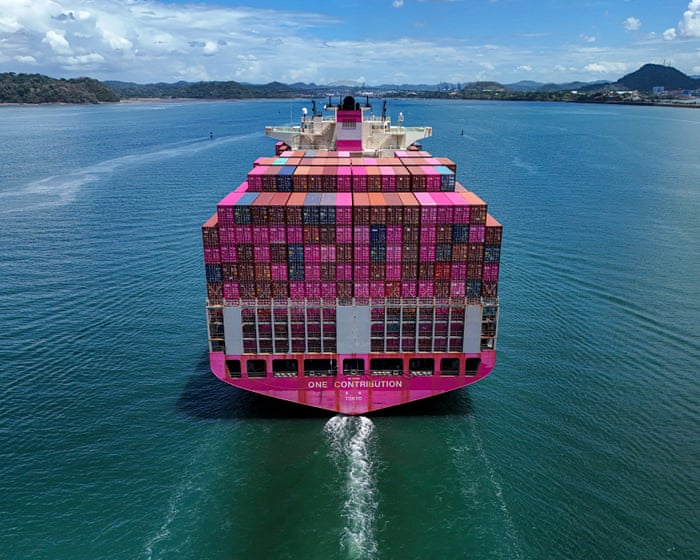
Costs for ships using the Panama Canal have risen due to disruptions caused by the war in Iran and low water levels linked to this year’s El Niño weather event. Ships face long delays, with some paying millions of dollars to move ahead in the queue, as water shortages have led the Panama Canal Authority to impose limits on ship sizes and cargo weight.
Key Facts
A ship reportedly paid $4 million to jump the queue and pass through the Panama Canal faster.
Ships currently wait about 10 days to transit the canal, the longest backlog since May.
The war in Iran has closed nearby key shipping routes, increasing demand for the Panama Canal.
Water levels in the canal are falling due to El Niño, a weather pattern causing drought and heat.
The Panama Canal Authority sets limits on how deep ships can sit in the water to keep traffic moving safely.
Larger ships must carry lighter loads because of these water level restrictions.
The number of transits through the canal increased by 5% from October to June, driven by container ships and gas carriers.
Other major trade routes, like Europe’s Rhine River, face similar problems with low water impacting shipping.
Read the Original
Want the full story? Tap a source to open the original
article.
A giant, 30-foot tall replica of a Hoosier cabinet was unveiled in Nappanee, Indiana, to celebrate the 150th anniversary of Coppes Napanee, a company that still makes cabinets and was one of the original makers of Hoosier cabinets. These cabinets were popular kitchen workstations in American homes in the early 1900s and helped speed up food preparation.
Key Facts
The Hoosier cabinet is a freestanding kitchen workstation and storage unit from the early 20th century.
The replica cabinet in Nappanee is 30 feet tall and has stairs leading to a small loft for visitors to climb and look out from.
Coppes Napanee, one of the two original Hoosier cabinet makers still in business, created the replica as part of its 150th anniversary.
The cabinet’s design centralized and sped up food preparation before built-in kitchen cabinets became common after World War II.
Originally, Hoosier cabinets were sold through about 5,000 dealers nationwide.
The replica is located near Coppes Commons, a marketplace and museum on the site of the original factory.
Wesley Mast, owner and president of Coppes Napanee, said the giant cabinet helps attract visitors and promotes the company’s history and brand.
Read the Original
Want the full story? Tap a source to open the original
article.
The International Energy Agency (IEA) reported that global oil reserves have dropped below 7.9 billion barrels, the lowest since April 2025. This decline increases pressure to reopen key shipping routes like the Strait of Hormuz, as oil supply forecasts for 2026 have been reduced due to ongoing conflicts affecting production in the Middle East and Russia.
Key Facts
The IEA says oil stockpiles are quickly running out and fell below 7.9 billion barrels recently.
Oil prices swung widely in July, from about $70 to $105 per barrel, due to changes in the Iran-US conflict.
The IEA cut its global oil supply forecast for 2026, expecting a drop of 4.3 million barrels per day.
Growth in oil production in the Americas will not fully make up for losses in the Middle East and Russia.
The IEA stresses the need to reopen the Strait of Hormuz and ensure free passage through the Bab el-Mandeb Strait.
OPEC lowered its forecast for 2024 world oil demand growth for the fourth month in a row, now expecting an increase of 580,000 barrels per day.
The UK’s energy grid operator canceled an electricity shortage warning for an upcoming solar eclipse day after securing enough power offers.
Balfour Beatty raised its profit outlook due to increased spending on UK infrastructure and US data centers, despite contract renegotiations on a railway project.
Read the Original
Want the full story? Tap a source to open the original
article.
Several car models will stop being made after 2026, creating chances for buyers to get discounts on remaining stock. These vehicles, including the Ford Escape and Volkswagen ID.4, offer unique features and may become valuable classics in the future.
Key Facts
The Ford Escape, a small SUV with hybrid and plug-in hybrid versions, will end production after 25 years and four generations.
The 2026 Ford Escape starts at $31,845 and offers good comfort and fuel-saving options.
The Volkswagen ID.4, an electric SUV first released in 2021, will also be discontinued after 2026.
Buyers can potentially save about $10,000 off the price of a 2026 ID.4, which starts at $46,570.
The ID.4 has features like heated front seats, wireless charging, a large touchscreen, and driver assistance technology.
The Jaguar F-Pace, a luxury SUV, is ending production as the company moves to electric vehicles.
The Toyota GR Supra sports car, known for its power and manual transmission, will be discontinued.
The Tesla Model S electric car, known for its long driving range, is also on the list of discontinued models.
Read the Original
Want the full story? Tap a source to open the original
article.
British actor Will Poulter, filmmaker Adam Meeks, and chemical dependency counselor Annette Deao are touring Ohio to promote their indie film "Union County." The movie offers a realistic and hopeful look at addiction and recovery, featuring real people from the recovery community.
Key Facts
The film "Union County" was made last year and focuses on addiction and recovery.
Will Poulter is the lead actor in the movie.
Adam Meeks, who is from Ohio, wrote and directed the film.
Annette Deao is a program director at an adult recovery court in Ohio and helped with the movie.
The team is on a multiday road trip around Ohio to show the film at independent cinemas.
The film includes real people from recovery programs, not just professional actors.
The tour is informal, with no big studio support or publicists involved.
The movie highlights both the challenges of addiction and the strength of the local community.
Read the Original
Want the full story? Tap a source to open the original
article.
Eli Lilly is suing six companies that sell illegal versions of its experimental weight-loss drug, retatrutide, which is still in clinical trials and not yet approved by the FDA. The company wants to stop the growing illegal market that sells the drug online and in some stores before it is officially available.
Key Facts
Retatrutide is an experimental weight-loss drug being tested by Eli Lilly and has not yet been approved by the FDA.
Federal law forbids selling drugs that are not approved, but many companies and clinics are offering retatrutide anyway.
Eli Lilly has filed lawsuits against six companies, including telehealth firms, peptide sellers, a med spa, and a pharmacy.
Some of these companies sell retatrutide labeled "for research use" without requiring a prescription.
The illegal drug supply is believed to come from overseas manufacturers.
Eli Lilly plans to seek official FDA approval for retatrutide in early 2027.
Analysts expect retatrutide to be a very successful drug once approved, but worry about the impact of the illegal market.
Illegal sales have been found in places like convenience stores, often openly advertised without apparent punishment.
Read the Original
Want the full story? Tap a source to open the original
article.
Experts predicted that artificial intelligence (AI) would cause many job losses, especially in entry-level white-collar roles. However, a year later, AI has changed how jobs are done but has not caused large-scale unemployment. Employers now value AI skills more and are adjusting job roles rather than cutting many jobs.
Key Facts
AI was expected to eliminate many jobs, including half of entry-level white-collar positions.
Since ChatGPT’s launch in 2022, unemployment among workers exposed to AI rose only slightly, similar to workers less exposed.
Other factors like remote work and ending pandemic hiring also affect employment figures.
Measuring AI’s true impact on jobs is difficult due to delays in government data and limits in private data.
AI is changing job tasks by automating some parts and raising skill requirements.
About 74% of employers see AI skills as important or required, with 13% requiring them across all roles.
Employers want new hires to already have AI skills from day one.
Some job areas see both hiring and layoffs as companies explore the best mix of AI and human skills.
Read the Original
Want the full story? Tap a source to open the original
article.
OpenAI and Anthropic began as AI labs aiming to develop safe technology for society. However, as they grew into large companies focused on profits, their future financial success is uncertain, leading some to suggest the U.S. government should take control of them if private markets reject their value.
Key Facts
OpenAI and Anthropic were started by AI developers concerned about unsafe AI development by large tech firms.
Both labs filed for public stock offerings (IPOs) with very high valuations in June.
There is public concern about these companies concentrating too much global wealth.
Recently, AI-related stocks, including Nvidia and SpaceX, have dropped significantly after initial hype.
AI models are expensive to develop and quickly become outdated, making profits hard to sustain.
Similar AI models are available for free from open-source projects and Chinese competitors.
Many users rely on OpenAI and Anthropic’s technology, which is widely used despite uncertain profitability.
Some experts suggest that if these companies fail financially, the U.S. should nationalize them to protect public interest.
Read the Original
Want the full story? Tap a source to open the original
article.
Tui, a large European travel company, says people are booking holidays later because of the war in Iran and rising living costs. The company lost €60 million due to the conflict and saw profits drop in the spring, but summer holiday bookings have recently increased.
Key Facts
The war in Iran caused uncertainty, making travelers wait before booking trips.
Tui lost €60 million because of the war and related problems.
Two cruise ships were stuck in the Gulf for 12 weeks, costing the company €40 million.
Tui’s profits fell by 43% between April and June compared to last year.
Customer numbers dropped 3% in the same period to just under 10 million.
The markets and airlines part of Tui’s business moved from profit to loss due to weak demand and high fuel prices.
Summer holiday bookings have increased in the last few weeks as the season started.
Climate changes are affecting travel times, with more people choosing to travel outside the busiest months to enjoy cooler weather.
Read the Original
Want the full story? Tap a source to open the original
article.
Great Britain expects a drop in solar power during a near-total solar eclipse, creating a shortage in electricity supply on Wednesday evening. The national energy operator is taking steps to make extra power available and is asking consumers to reduce electricity use during peak hours.
Key Facts
The solar eclipse will block up to 95% of the sun in parts of Great Britain.
Solar power generation will drop by 300 to 1,100 megawatts during the eclipse.
Electricity demand is already high due to a summer heatwave.
The National Energy System Operator (Neso) initially predicted a shortfall over 1,700MW, later updated to about 1,200MW.
Neso is using market tools to encourage extra electricity generation and to maintain supply.
Electricity prices have risen sharply, reaching over £211.40 per megawatt-hour at 7pm.
Octopus Energy, a major electricity supplier, asked customers to avoid using washing machines and dishwashers between 6pm and 8pm.
Octopus Energy is offering eligible customers one free hour of electricity on Sunday as an incentive to reduce usage during the eclipse.
Read the Original
Want the full story? Tap a source to open the original
article.