Polymarket is reviewing its marketing practices after a Wall Street Journal report said the company paid online creators to make misleading videos showing large winnings. The report found many videos used fake trades and did not reflect actual user results on the platform. Polymarket says it is auditing its promotional content to ensure it meets legal and company standards.
Key Facts
The Wall Street Journal analyzed over 1,100 TikTok videos and found many showed fake trades on imitation Polymarket sites.
Videos falsely depicted customers winning about $1.9 million, but actual trades showed losses.
Social media creators were paid to make these misleading videos, and marketing contractors helped spread them widely.
One example showed a student winning $100,000 on a bet involving President Trump, but real bets on the platform all lost.
Polymarket states it is the leading prediction market and is conducting a full audit of its ads to meet legal rules.
The company allows bets on events like elections, sports, and weather, but faces prior scrutiny over insider trading allegations.
Regulators banned Polymarket’s U.S. operations in 2022 for operating without registration but later allowed a limited, invite-only U.S. platform.
The Commodity Futures Trading Commission (CFTC) and Federal Trade Commission (FTC) have not publicly commented on this latest report.
Read the Original
Want the full story? Tap a source to open the original
article.
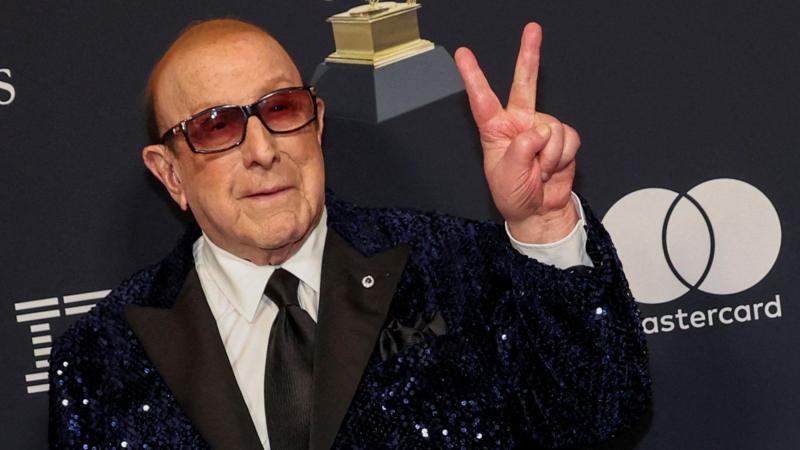
Clive Davis, a legendary music industry executive known for discovering and guiding many top artists, has died at age 94. He played a key role in the success of stars like Whitney Houston, Janis Joplin, and Alicia Keys during his long career.
Key Facts
Clive Davis was 94 years old when he passed away in his Manhattan apartment.
He was a lawyer turned music industry executive and a powerful figure in the record business.
Davis helped start or revive the careers of famous musicians such as Janis Joplin, Whitney Houston, Carlos Santana, and Alicia Keys.
He signed Whitney Houston when she was a teenager and guided her to become a top pop star.
Davis remained influential into his 80s, working with artists across many music styles and generations.
He was chief creative officer at Sony Music and previously led the Arista record label.
Earlier in 2024, he was hospitalized for an upper respiratory problem but was released after a few days.
His family described him as a visionary who shaped music culture and mentored many major artists over decades.
Read the Original
Want the full story? Tap a source to open the original
article.
Clive Davis, a famous music executive who helped launch the careers of many well-known singers like Whitney Houston and Bruce Springsteen, died at 94. He worked at Columbia and Arista Records, signing many top artists and shaping popular music for decades.
Key Facts
Clive Davis died at the age of 94 after recovering from respiratory problems at home in New York.
He was born in Brooklyn on April 4, 1932, and graduated from Harvard Law School.
Davis started working at Columbia Records at age 28 with no music background but learned about copyright and contracts through night classes.
He became vice president and then president of Columbia Records in the 1960s.
Davis signed and supported stars like Whitney Houston, Bruce Springsteen, Aretha Franklin, Santana, and many others.
He spent years developing Whitney Houston’s career and helped shape her debut album with several number-one hits.
Davis made key creative decisions, like starting Houston’s hit “I Will Always Love You” with a long a capella section.
He helped revitalize artists’ careers, including Santana’s successful 1999 album *Supernatural*.
Read the Original
Want the full story? Tap a source to open the original
article.
A strong El Niño weather pattern has developed in the Pacific Ocean and may raise food and energy prices in the coming months. Experts warn it could disrupt farming, supply chains, and increase costs for households worldwide.
Key Facts
NOAA announced El Niño conditions formed on June 11, with a 63% chance it will become very strong.
El Niño means unusually warm ocean waters in the tropical Pacific, affecting global weather patterns.
This can cause floods, storms, droughts, and heatwaves, which harm crops and infrastructure.
Past strong El Niños have caused major economic losses, like $5.7 trillion globally in 1997-98.
The World Bank warns the 2016 El Niño caused $327 million in crop losses.
A very strong El Niño could change electricity demand, increasing summer cooling costs and altering heating use in the US.
Rising fertilizer prices and food shortages due to El Niño may worsen inflation and affect food markets worldwide.
Developing countries may suffer most as they spend more on food and face larger risks from supply disruptions.
Read the Original
Want the full story? Tap a source to open the original
article.
Canada’s inflation rate rose to 3.2% in May, the highest in nearly 29 months, mainly because oil prices increased due to tensions between the US and Iran. The rise in fuel costs affected transportation and food prices, but recent news about a US-Iran agreement may help lower oil prices and inflation soon.
Key Facts
Canada’s inflation hit 3.2% in May, above the Bank of Canada’s 1%-3% target range.
Petrol prices increased by 33.2% compared to last year, the biggest rise since Russia’s invasion of Ukraine.
Transportation costs rose 9% in May due to higher fuel prices.
Food prices went up 3.8%, with fresh fruit up 5.3% and vegetables up 9%.
Shelter costs increased by 1.7% in May, with a slight decline in mortgage costs.
The Bank of Canada views the rise in energy prices as a temporary effect, not leading to wide inflation.
An interim peace deal between the US and Iran reopened a key oil shipping route, causing oil prices to drop in June.
Economists see May as likely the peak for inflation but warn that oil price risks remain if tensions grow again.
Read the Original
Want the full story? Tap a source to open the original
article.
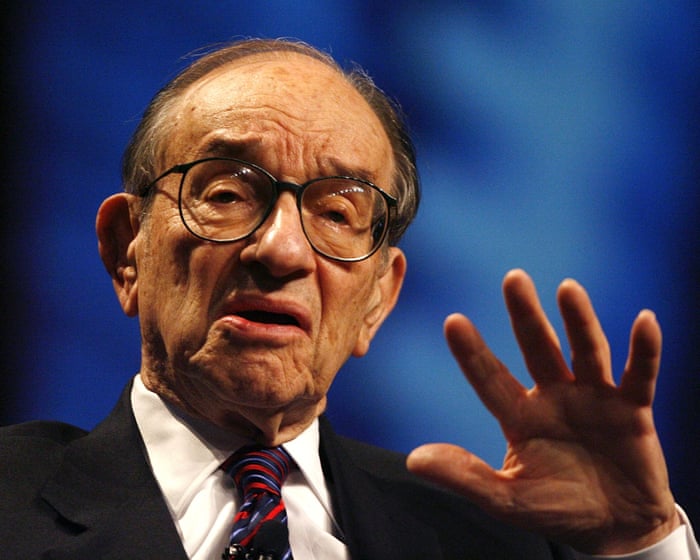
Alan Greenspan, who led the US Federal Reserve from 1987 to 2006, died at age 100. He was praised for managing the economy through crises and a long boom but was later criticized for policies linked to the 2008 financial crash.
Key Facts
Greenspan chaired the US Federal Reserve for nearly 20 years, serving under four presidents.
He helped prevent economic disasters after the 1987 stock market crash and the 1997 Asian financial crisis.
His leadership saw one of the longest US economic booms from 1991 to 2001.
Greenspan's approach favored less government control of banks, trusting them to police themselves.
This approach was later blamed for contributing to the 2008 financial crash.
He admitted in 2008 that his belief in self-regulation by banks was flawed.
Greenspan was influenced by philosopher Ayn Rand and her ideas about capitalism and limited government.
A 2010 congressional report found that his policies helped remove important financial protections, leading to economic risks.
Read the Original
Want the full story? Tap a source to open the original
article.
ABC is asking the public to support the network as it faces two investigations by the Federal Communications Commission (FCC). One investigation looks at a rule for the daytime talk show The View, and the other questions whether ABC can renew licenses for its eight local TV stations.
Key Facts
The FCC is investigating whether The View broke a rule about giving equal time to political candidates.
The FCC is also reviewing ABC’s request to renew licenses for eight local TV stations.
Public comments on The View investigation are open until June 22.
Petitions against ABC’s license renewals can be submitted until June 29.
ABC will air ads urging viewers to support the network during The View and in local markets like New York and Los Angeles.
The ads highlight The View’s history and ABC’s service to local communities.
Some ABC licenses are not set to expire until 2031.
Critics say the FCC’s open investigations may be targeting ABC because it has been criticized by President Donald Trump.
Read the Original
Want the full story? Tap a source to open the original
article.
Clive Davis, a well-known music industry leader who helped launch the careers of stars like Whitney Houston and Bruce Springsteen, has died at age 94. He was the chief creative officer at Sony Music and previously led major record labels including Columbia and Arista.
Key Facts
Clive Davis died at the age of 94 after recently being hospitalized with breathing problems.
He was diagnosed with Bell’s palsy, a nerve disorder, in 2021.
Davis signed famous musicians such as Bruce Springsteen, Janis Joplin, Santana, Whitney Houston, Billy Joel, and Aerosmith.
He worked as president of Columbia Records and later led Arista, J Records, RCA Group, and BMG North America.
Davis was chief creative officer at Sony Music from 2018 until his death.
He grew up in Brooklyn, graduated from New York University and Harvard Law School.
He began his music career as a lawyer for Columbia Records and quickly rose to leadership by signing influential rock and pop artists.
Davis credited his strong work ethic to challenges he faced after losing his parents at a young age.
Read the Original
Want the full story? Tap a source to open the original
article.
A woman claims her dog was injured during grooming, including a cut nipple that was repaired with superglue. The dog owner took the pet to an emergency vet, which cost her £385, and has reported the grooming business to local authorities.
Key Facts
The dog is a two-year-old toy poodle and bichon frisé mix named Honey.
The grooming took place at Scruffy 2 Fluffy in Bargoed, Caerphilly county.
The owner noticed injuries, including blood in Honey’s eye, a cut on her leg, and a hard, sensitive nipple.
An emergency vet visit revealed the nipple had been cut and superglued back together.
The grooming owner described the injury as an accident and said he acted immediately.
The vet fees were reimbursed, but no apology or full explanation was given to the dog owner.
The owner reported the grooming business to Trading Standards, which is investigating.
Honey’s owner said the dog remains nervous and shaken by the incident.
Read the Original
Want the full story? Tap a source to open the original
article.
Lucid Motors is laying off about 1,500 workers, which is 18% of its staff, as part of efforts to reduce costs and become profitable. This follows earlier layoffs in February and includes ending the second work shift at its factory in Arizona.
Key Facts
Lucid Motors is cutting 1,500 jobs, or 18% of its workforce.
Earlier in the year, the company also laid off 12% of its employees.
The layoffs aim to help Lucid become profitable and improve cash flow.
Lucid is ending the second work shift at its factory in Casa Grande, Arizona.
These changes are expected to save the company $158 million after costs.
The company will pay $32 million for severance and employee benefits.
Marc Winterhoff, the chief operating officer who became acting CEO in February, will leave the company.
Lucid has a new CEO, Silvio Napoli, and is removing the COO role.
Read the Original
Want the full story? Tap a source to open the original
article.
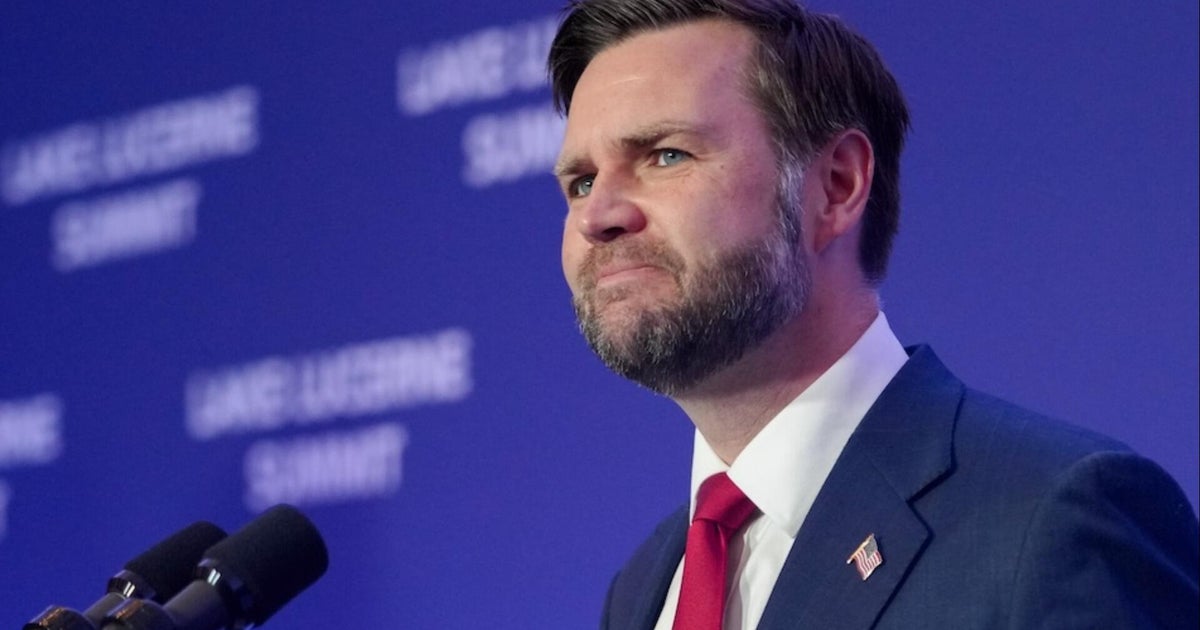
Oil prices fell on Monday after Vice President JD Vance shared news about progress in talks between the U.S. and Iran. This progress suggests a possible deal that could affect the global oil market.
Key Facts
Oil prices dropped on Monday.
Vice President JD Vance reported progress in U.S.-Iran negotiations.
The talks are moving toward a potential agreement.
Changes in relations between the U.S. and Iran can influence oil supply and prices.
The news was reported by CBS News and Business Insider.
Oil markets respond to political developments that affect oil production and trade.
Read the Original
Want the full story? Tap a source to open the original
article.
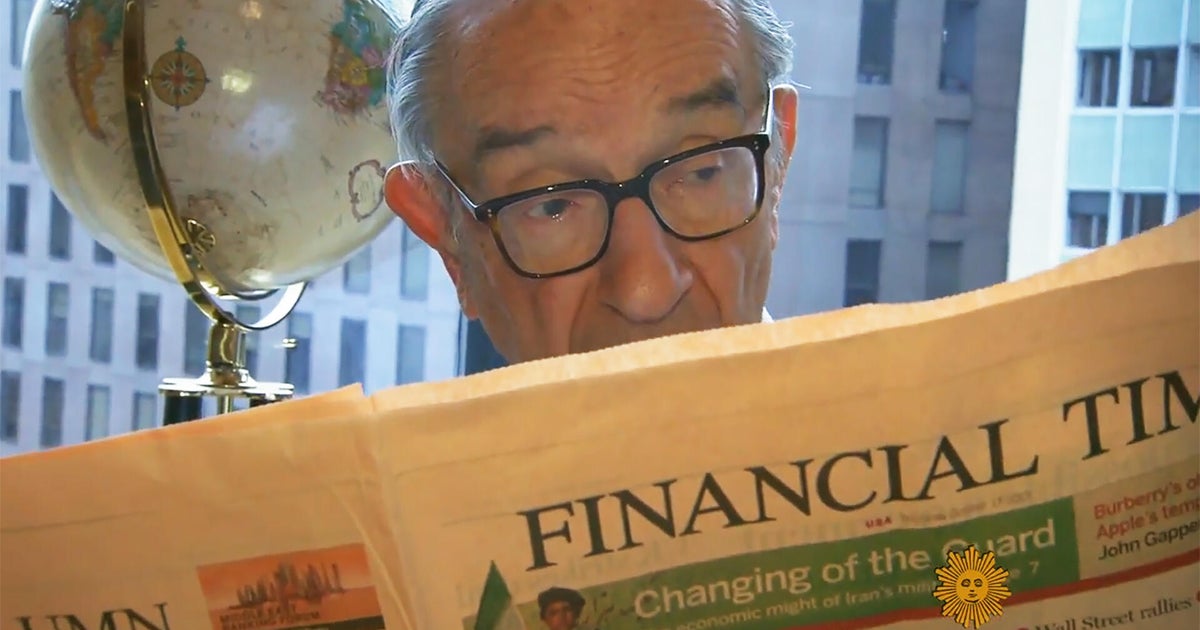
Alan Greenspan, who led the Federal Reserve for 18 years and advised four U.S. presidents, died at age 100 on June 22, 2026. In a 2013 interview, he discussed how trust is essential to the U.S. economy and how fear and irrational behavior affect financial markets.
Key Facts
Alan Greenspan was chair of the Federal Reserve for 18 years.
He worked with four U.S. presidents during his tenure.
Greenspan died on June 22, 2026, at the age of 100.
In 2013, he spoke about managing the American economy before the 2008 financial crisis.
He emphasized that the economy relies heavily on trust to function.
Greenspan explained that when trust breaks down, the economic system can collapse.
He discussed how human emotions, like fear, impact market predictions.
Greenspan’s wife, Andrea Mitchell, mentioned his strong interest in writing.
Read the Original
Want the full story? Tap a source to open the original
article.
Aldi started a four-day giveaway of "Blind Boxes," which are mystery boxes of groceries that shoppers can get for free by signing up online. This promotion aims to help shoppers deal with rising food prices by offering value and surprise in their purchases.
Key Facts
Aldi’s Blind Boxes giveaway runs from June 22 to June 25.
Each day at noon Eastern time, a new mystery box is available on Aldi’s website on a first-come, first-served basis.
The boxes contain various Aldi grocery items and come in four themes: Snack, Fiber, Protein, and Mystery (a mixed selection).
The promotion targets customers looking to save money amid rising grocery prices.
Food prices in the U.S. have increased by about 2.7% for groceries in May compared to last year.
Many consumers are buying less food, switching to cheaper brands, or shopping at discount stores due to these price increases.
The "blind box" concept is popular in other products and adds a surprise element to grocery shopping.
Other companies and stores, like Too Good to Go, Whole Foods, and Kroger, have tried similar mystery or surplus food bundles to offer savings and reduce waste.
Read the Original
Want the full story? Tap a source to open the original
article.
Gold and silver prices have both fallen recently after strong gains last year. Experts say silver is more unpredictable but could offer higher long-term returns, while gold has steadier growth and may better protect against inflation.
Key Facts
Gold prices dropped due to high interest rates, rising oil, and changing Federal Reserve policies.
Silver prices fell about 15% since mid-May and are more volatile than gold.
Silver’s price changes are bigger and happen more often than gold’s prices.
Over the last five years, silver gained about 156%, while gold gained about 121%.
Investors who want quick wins might find silver too risky because of its price swings.
Silver is important in industries like AI, which could increase demand long-term.
Experts recommend holding precious metals for a longer time to get better returns.
Gold tends to be a better choice if the main goal is protection from inflation.
Read the Original
Want the full story? Tap a source to open the original
article.
Investors are uncertain about the future of their investments because many people are criticizing the new Iran deal. It is not clear if the deal will help or hurt economic confidence.
Key Facts
A deal involving Iran has been made recently.
Many people are criticizing this Iran deal.
The criticism might affect investor confidence.
Investors are currently unsure if they should stay positive.
The impact of the deal on investments is still unclear.
Read the Original
Want the full story? Tap a source to open the original
article.
Many people in the U.S. are using AI tools like ChatGPT to help set prices for selling their homes. Experts warn this can cause problems because AI models don’t fully understand local market details or the complex negotiation process, which can lead to wrong pricing and lost money.
Key Facts
Buyers and sellers are using ChatGPT to estimate home values.
AI tools give quick answers but may offer flawed pricing advice.
A $50 million deal almost failed because AI gave conflicting price opinions to buyer and seller.
AI models base answers on text patterns, not real-time property details or human factors.
AI tends to give answers that please users rather than accurate market prices.
A Florida homeowner who used ChatGPT missed out on getting more money through bidding wars.
Experts say AI cannot replace local knowledge and the skill of real estate agents.
Important factors like renovations, local trends, and buyer motivations are often missed by AI.
Read the Original
Want the full story? Tap a source to open the original
article.
The article provides advice on how to save money by lowering bills and subscription costs as we reach the middle of 2026. It features financial tips from CBS News analyst Jill Schlesinger, including ways to reduce expenses like streaming services and improve savings.
Key Facts
The article offers strategies to cut monthly bills.
It suggests reviewing and canceling unnecessary subscription services.
Tips include managing streaming service costs.
Increasing savings account contributions is recommended.
The advice aims to help people save more money in 2026.
Financial expert Jill Schlesinger shares these tips on CBS Mornings.
The focus is on practical, easy ways to reduce everyday expenses.
Read the Original
Want the full story? Tap a source to open the original
article.
Many big stores are offering large discounts this week, including Amazon during its Prime Day event. Kelly O’Grady explains how to find the best deals this summer.
Key Facts
Big retailers are having sales with big discounts this week.
Amazon is holding its Prime Day event, a special sales event for Prime members.
Prime Day offers lower prices on many products.
Other stores also have summer sales at the same time.
Kelly O’Grady provides tips on how to find these summer deals.
The sales are aimed at helping shoppers save money.
Read the Original
Want the full story? Tap a source to open the original
article.
China has added 10 US companies to its export control list, stopping the export of certain goods that can be used for both civilian and military purposes to these companies. China also banned its government from buying products from nearly 50 US firms in response to the US Pentagon blacklisting about 80 Chinese companies for their links to the Chinese military.
Key Facts
China added 10 US companies, including rare-earth mining and defense firms, to its export control list.
Chinese companies are barred from exporting "dual-use" items to these US firms; dual-use means goods that can be used for both civilian and military purposes.
China also banned government procurement from 46 US companies, including major defense contractors like Lockheed Martin and Boeing.
US companies funded locally in China were exempt from this government procurement ban.
The US Pentagon blacklisted about 80 Chinese companies linked to the Chinese military earlier in June 2024.
The US list includes big Chinese firms like Alibaba, Baidu, and BYD, but the US did not ban doing business with them.
Experts see China’s move as a retaliation for US restrictions, possibly signaling a new phase in the ongoing US-China trade tensions.
Some affected companies have already moved part of their supply chains out of China to reduce risks.
Read the Original
Want the full story? Tap a source to open the original
article.