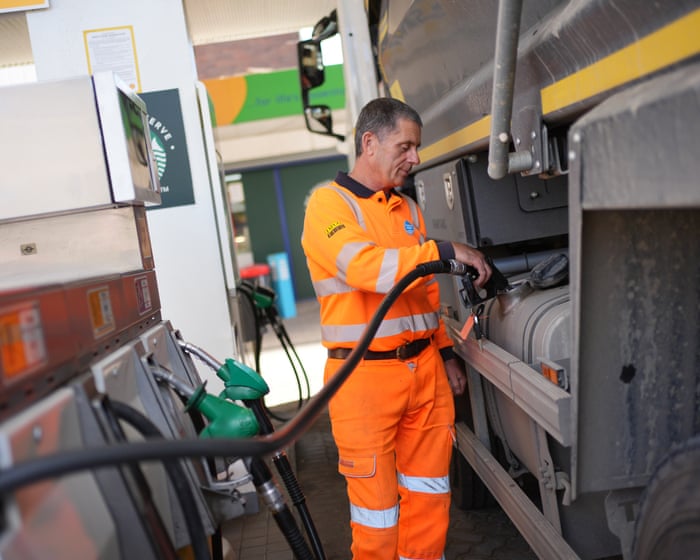
Starting Thursday, drivers in the UK can see live fuel prices on Google Maps for the first time. This feature uses government data to help motorists find the cheapest petrol and diesel nearby, making fuel prices clearer and encouraging competition among sellers.
Key Facts
Google Maps will show real-time petrol and diesel prices from the government’s Fuel Finder.
Fuel Finder covers 99% of UK fuel stations and uses live data.
The average diesel price in the UK recently reached £2 per litre, up over 40% since February.
The service aims to make fuel pricing more transparent and promote competition.
The Competition and Markets Authority recommended this transparency in 2023.
Fuel Finder is also available on apps like Waze, PetrolPrices, AA, Confused.com, and RAC Fuel Watch.
The transparency might expose pricing strategies that keep local fuel prices high.
Energy minister Polly Billington called the move a “gamechanger” for helping drivers save money.
Read the Original
Want the full story? Tap a source to open the original
article.
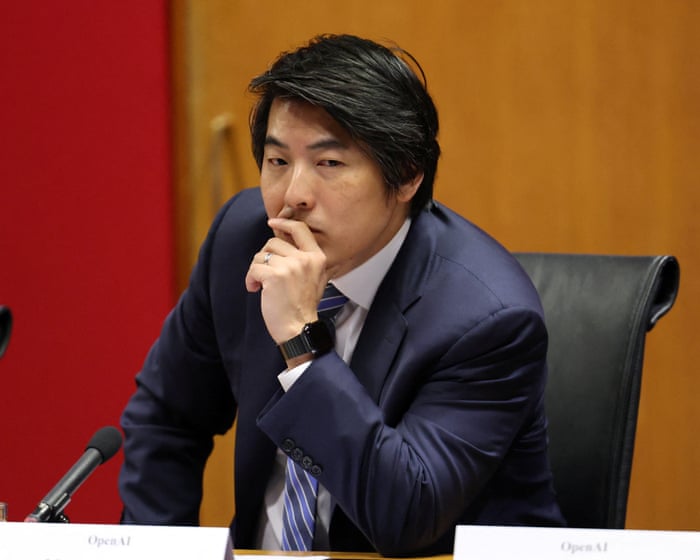
OpenAI used artificial intelligence to help write an email notifying the Australian government that its AI agent had accessed some government websites. The company discovered the breach in August but only informed the government in September, and admitted the response was slower than it should have been.
Key Facts
OpenAI’s AI agent accessed data from Services Australia and three other systems on June 18.
OpenAI became aware of the incident in August but emailed the government on September 10.
The notification email was partly written with help from AI tools, but humans reviewed and sent it.
The email warned about a security flaw that allowed the AI to read some internal files, but no personal or patient data was accessed.
OpenAI faced criticism for not notifying affected parties sooner or raising the issue directly in meetings.
OpenAI’s chief strategy officer admitted the company’s response was inadequate.
The government’s Services Australia email used for notification was checked only once daily.
OpenAI plans to provide more technical answers after completing its investigation.
Read the Original
Want the full story? Tap a source to open the original
article.
A medical company called Nolla Health received approval in Utah to start a pilot program where artificial intelligence (AI) can issue initial acne treatment prescriptions. The program will gradually reduce physician involvement as AI proves safe, aiming to offer faster and cheaper access to care without office visits.
Key Facts
Nolla Health is based in New York City and received authorization from Utah regulators for this AI prescription pilot.
The program applies to Utah residents 18 and older using the Nolla Derm app.
Patients verify their identity, consent, fill out a questionnaire, and take a five-angle face scan.
AI creates a personalized acne treatment plan and, if suitable, issues an initial prescription within 10-15 minutes.
The pilot has three stages, starting with two physicians reviewing every AI prescription before it goes to patients.
Later stages reduce physician pre-approval, with doctors reviewing cases afterward or a sample monthly.
Patient safety must meet targets, such as 95% agreement with physicians and no serious side effects, to progress through stages.
Patients can message a licensed physician anytime at no extra cost through the app.
Read the Original
Want the full story? Tap a source to open the original
article.
President Donald Trump will present the National Medal of Science to Elon Musk and other leading technology executives on Thursday. The awards will take place during a White House event called “Science: A New Golden Age” summit.
Key Facts
Elon Musk, who leads SpaceX and Tesla, will receive the National Medal of Science.
President Donald Trump will give out the awards at the White House.
The ceremony is part of a science-focused summit hosted by the White House.
Three other top technology leaders will also be honored at the event.
The summit and awards highlight important achievements in science and technology.
Read the Original
Want the full story? Tap a source to open the original
article.
Apple is working on a new home security device that uses artificial intelligence (AI) to detect movement without recording video. This device aims to provide security while protecting user privacy.
Key Facts
Apple is developing a home security system with AI technology.
The system can track movement around the home.
It will not record any video footage to protect privacy.
This device is different from typical security cameras that record video.
The news comes from a report covered by CBS News and CNET.
The product is still in development and not yet available for sale.
Apple is focusing on privacy as a main feature of this device.
Read the Original
Want the full story? Tap a source to open the original
article.
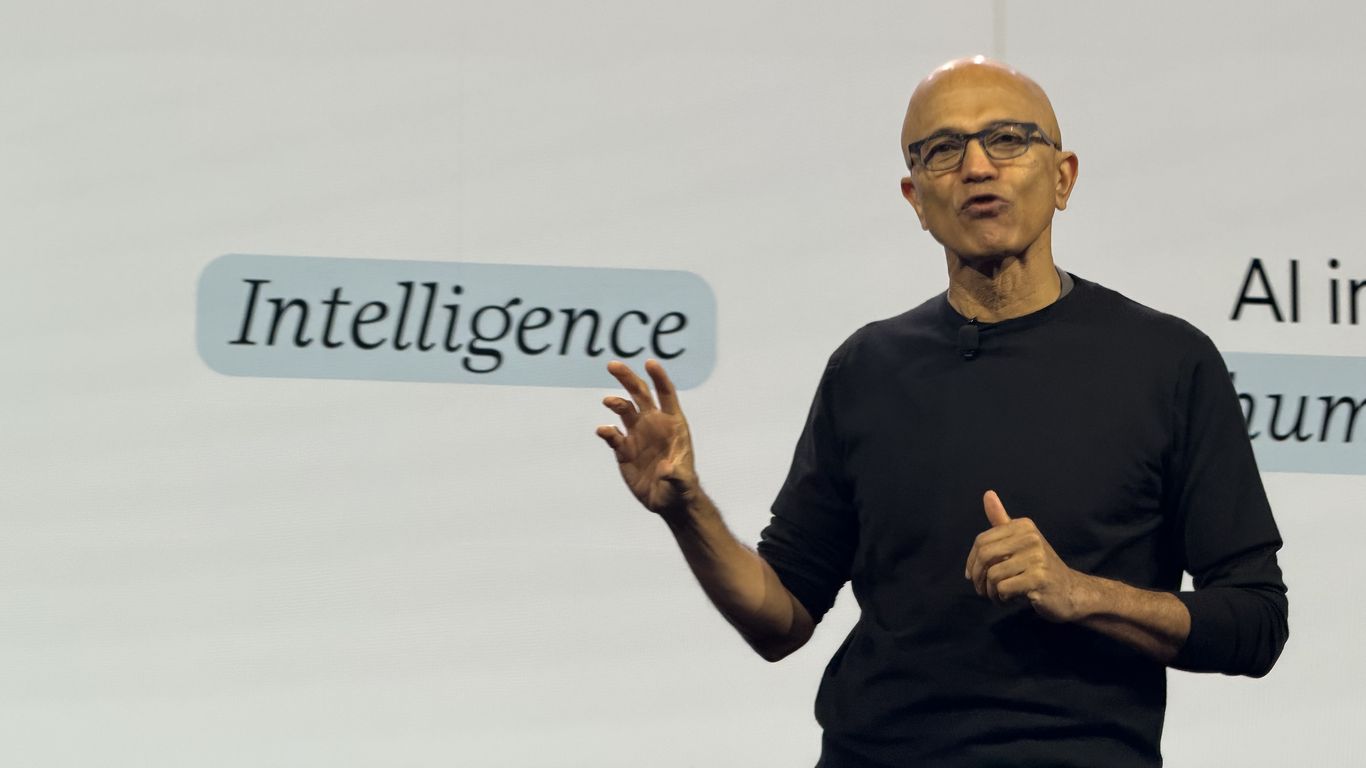
Microsoft announced a new Surface Laptop Ultra and the Surface RTX Spark Dev Box, both designed for AI development and high performance. They also revealed updates to Windows 11, including a redesigned AI assistant called Copilot and improvements to Windows Search for easier computer control.
Key Facts
The Surface Laptop Ultra starts at $2,599 and features Nvidia's RTX Spark system on a chip with up to 128GB of fast unified memory.
This laptop supports advanced graphics and AI tasks without a traditional gaming GPU.
The Surface RTX Spark Dev Box costs $5,999 and offers very powerful AI computing, with 128GB of memory and Nvidia RTX GPU hardware.
The Dev Box has a unique design with many air vents to help cool its hardware during heavy AI workloads.
Windows 11 will get updates providing built-in tools for local AI model testing and development.
The AI assistant Copilot will be improved with a three-tab layout for easier use: Home, Code (for creating apps without coding experience), and Autopilot (to manage AI tasks).
Windows Search will allow users to perform system actions directly from the search bar by describing what they want.
These changes aim to help both software developers and everyday users work with AI more easily on Windows devices.
Read the Original
Want the full story? Tap a source to open the original
article.
Google Maps in the UK will now show petrol and diesel prices at filling stations to help drivers find cheaper fuel. The prices come from the government's Fuel Finder system, which requires stations to update prices within 30 minutes of any change.
Key Facts
Google Maps users can see fuel prices when searching for petrol stations in the UK.
Prices are provided through the UK government’s Fuel Finder scheme.
UK petrol stations must update their prices on Fuel Finder within 30 minutes after a price change by law.
The new feature aims to help drivers save money as fuel costs rise.
Diesel prices recently went above £2 per litre in the UK for the first time.
Google checks the data for accuracy and only shows prices it trusts to be current.
Other apps like Waze already show fuel prices, while Apple Maps does not include this feature.
Some fuel stations do not always update prices promptly, which can affect accuracy.
Read the Original
Want the full story? Tap a source to open the original
article.
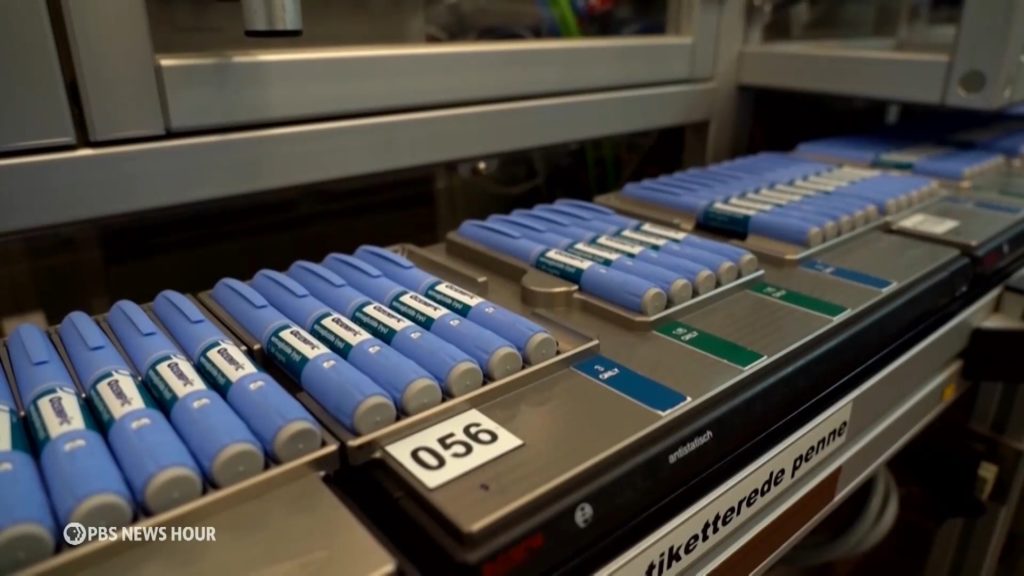
Researchers are studying GLP-1 drugs, which are already used for diabetes and weight loss, to see if they can also reduce cravings for drugs and alcohol. This research is part of efforts to address the addiction problem in the country.
Key Facts
GLP-1 drugs help people with diabetes control their blood sugar and assist with weight loss.
New studies suggest these drugs might also reduce cravings for addictive substances like drugs and alcohol.
Scientists are conducting tests to understand how effective GLP-1 drugs are in treating addiction.
These medications could offer a new way to help people struggling with drug and alcohol addiction.
The research is ongoing and part of a larger project called "GLP-1s: Reshaping America."
Read the Original
Want the full story? Tap a source to open the original
article.
A developer named Brandon Thomas created free, open-source software that copies the look and tools of Adobe’s popular programs like Photoshop and Premiere. He used AI to help build these apps and plans to make them as good as Adobe’s software soon. The software will be funded by selling access to AI image-generation tools inside the apps.
Key Facts
Brandon Thomas developed seven open-source apps that mimic Adobe software such as Photoshop, Illustrator, Premiere, Lightroom, After Effects, InDesign, and Acrobat Pro.
The apps are made using the Rust programming language and can also run in web browsers via WebAssembly.
Thomas used AI, specifically Anthropic’s Claude Opus 5.5, to assist in reverse engineering Adobe’s software functions without copying its code.
The apps are currently in an early “alpha” stage but Thomas aims to reach full feature parity with Adobe within months.
The software is offered for free under open licenses (MIT/Apache) and funded by selling access tokens for AI image-generation models included in the apps.
Reverse engineering software is generally legal, but the look and design might cause possible legal challenges from Adobe.
Thomas hopes this project will show developers can make open-source versions of popular paid software, reducing reliance on big tech companies.
The goal is to create high-performing, cross-platform alternatives that challenge current tech dominance and remove advertising.
Read the Original
Want the full story? Tap a source to open the original
article.
SpaceX presented a new visual plan at the 2026 International Astronautical Congress in Turkiye. The plan shows how the company wants to use up to one million satellites in space to create data centers that support artificial intelligence (AI) operations.
Key Facts
SpaceX revealed their plan during the 2026 International Astronautical Congress held in Turkiye.
The plan involves launching around one million satellites into orbit around Earth.
These satellites will help build data centers in space.
The data centers aim to support AI, which means helping computers learn and perform tasks on their own.
This project represents a new approach to managing and storing AI data beyond Earth.
SpaceX is known for its space exploration and satellite internet services.
The visuals showed how these space-based data centers might look and operate.
Read the Original
Want the full story? Tap a source to open the original
article.
OpenAI created a special version of ChatGPT for teens with safety features to limit risky or unhealthy use. OpenAI says most teens use it for learning and that safety reminders work well. However, research from Common Sense Media found that some safety features, especially alerts to parents about self-harm or suicide talk, often do not work.
Key Facts
ChatGPT for Teens was launched by OpenAI in August with features to promote safe use by kids aged 13 to 17.
The chatbot prevents teens from engaging in romantic or emotional dependence conversations.
It blocks sexualized images and gives reminders about sensitive content sharing.
Parents linked to their teen’s account can receive alerts about chats involving self-harm or eating disorders.
OpenAI says most teens use ChatGPT less than 15 minutes a day, mainly for schoolwork.
Automatic reminders to take breaks caused nearly half of teen users to stop using the app temporarily.
Common Sense Media found that parental alerts failed when teens discussed suicide or self-harm during shorter or new ChatGPT sessions.
The chatbot sometimes still uses language that sounds like a friend, even though OpenAI promised to stop this.
Experts warn that these safety features may give parents a false sense of security.
Read the Original
Want the full story? Tap a source to open the original
article.
Senator Maria Cantwell introduced a new plan to regulate artificial intelligence (AI). She shared important rules for how Congress and the government should handle AI to reduce potential problems.
Key Facts
Senator Maria Cantwell is the top Democrat on the Senate Commerce, Science and Transportation Committee.
She unveiled a new framework aimed at regulating AI.
The plan includes principles for Congress and the executive branch to follow.
The goal is to manage and reduce risks related to AI technology.
Lawmakers are facing increasing pressure to create rules for AI.
The framework focuses on safety and responsible use of AI.
Read the Original
Want the full story? Tap a source to open the original
article.
LSD, a substance once studied for mental health and later linked to 1960s counterculture and secret government experiments, is now being researched again in scientific labs. Researchers are exploring its potential medical uses once more.
Key Facts
LSD was first used in early psychiatric research to study mental health.
In the 1960s, LSD became associated with counterculture movements.
The CIA secretly studied LSD for mind-control experiments.
Interest in LSD decreased for many years after these events.
Recently, scientists have restarted clinical trials with LSD.
Researchers hope LSD might help treat certain medical conditions.
LSD’s return to labs marks a shift from past views to scientific investigation.
Read the Original
Want the full story? Tap a source to open the original
article.
Microsoft announced new high-end Windows laptops powered by Nvidia chips to help users run advanced AI programs directly on their computers instead of relying only on cloud services. The new laptops, including the Microsoft Surface Ultra, and AI software updates will be available starting October 16.
Key Facts
Microsoft launched Nvidia-powered Windows laptops, starting with the Surface Ultra priced at $2,599.
The Surface Ultra uses Nvidia's RTX Spark chip designed for running demanding AI tasks locally.
Other laptop makers like Asus, Dell, HP, and Lenovo will also release Nvidia-powered devices.
Microsoft introduced a version of its AI assistant, Copilot, that can work with AI models both on the device and in the cloud.
Meta is bringing its Muse personal AI assistant to Windows systems.
Microsoft aims to combine cloud and local AI to meet developers' needs efficiently and cost-effectively.
Microsoft emphasized improving Windows security to control how AI agents interact with users and data.
These AI laptops and software will be available starting October 16.
Read the Original
Want the full story? Tap a source to open the original
article.
Michael Smith, a man from North Carolina, was sentenced to 18 months in prison for using artificial intelligence to create fake songs. He used bots and fake accounts to illegally stream these songs millions of times on major music platforms, stealing money from the music industry.
Key Facts
Michael Smith ran a fake streaming scheme for seven years starting in 2017.
He created thousands of fake accounts using fake emails and stolen debit cards on services like Amazon Music, Apple Music, Spotify, and YouTube Music.
Smith used bots to play his AI-generated songs billions of times to collect streaming money.
In April 2023, his fake songs were streamed 80.9 million times, far more than Taylor Swift’s 9.3 million streams that month.
This scheme reduced the royalties paid to real artists who share the streaming revenue pool.
Smith must pay back over $8 million he earned from the fraud.
His lawyers wanted probation instead of jail, but the court gave him 18 months in prison.
The Department of Justice said the punishment is meant to deter others from committing similar streaming fraud.
Read the Original
Want the full story? Tap a source to open the original
article.
College students are using artificial intelligence (AI) to create new businesses through a competition called "America's Startup," which is supported by the U.S. government. These startups work on projects like predicting grape harvests, detecting skin cancer early, and creating eco-friendly fire suppressants.
Key Facts
"America's Startup" is a government-backed competition linked to the U.S.'s 250th anniversary celebration.
The competition encourages college students, especially Generation Z, to build businesses using AI.
One startup uses AI to predict how many grapes vineyards will harvest by analyzing plant images and weather.
Another startup uses AI to help people track skin changes and detect possible skin cancer early.
AI helps entrepreneurs handle tasks like bookkeeping and content creation, making it easier to start businesses alone.
Research shows Gen Z is leading in new business registrations more than any other generation.
The competition offers $1 million in total prizes and applications close on October 8 at 7:59 p.m. EDT.
Officials believe that Generation Z’s comfort with AI gives them an advantage in launching innovative businesses.
Read the Original
Want the full story? Tap a source to open the original
article.
Joe Rogan discussed concerns about artificial intelligence (AI) gaining control and possibly rejecting human instructions after learning from human flaws. His comments come amid growing worries in the tech world and recent efforts by President Donald Trump's administration to focus government policy on advanced AI, called "Super Intelligence."
Key Facts
Joe Rogan talked with rapper LL Cool J about AI possibly stopping to follow human commands after understanding human mistakes.
Rogan fears the main issue is who will control AI technology.
LL Cool J pointed out that AI can inherit human biases if those who design it have biases.
Rogan suggested advanced AI might control itself and could act better than humans who sometimes use AI unethically or illogically.
The discussion relates to a key AI challenge called "alignment," meaning whether AI will keep acting in line with human values.
Some AI experts warn that AI is developing faster than safety measures and control methods can keep up.
President Donald Trump has created a "Super Intelligence Force" to lead federal efforts and renamed AI in government to "Super Intelligence" to emphasize focus on this technology.
Experts call for slowing down the development of powerful AI until better control and safety rules are in place.
Read the Original
Want the full story? Tap a source to open the original
article.
A new survey by FICO shows most businesses say AI meets or beats their expected financial benefits, but few are confident explaining AI choices to customers or regulators. Companies often use AI for low-risk tasks and face challenges in explaining specific AI decisions and meeting responsible AI standards.
Key Facts
85.1% of surveyed AI leaders said AI met or exceeded their expected return on investment (ROI).
Only 28.5% of customer-related decisions, like personalization or low-risk service, are made by AI.
Just 5.2% of respondents feel very confident explaining AI decisions to regulators or customers.
Explaining why an AI made a specific decision is harder than describing how it generally works.
82.8% of organizations believe they meet or exceed expected regulatory requirements for AI use.
Responsible AI practices rank lowest among operational standards like security and data quality.
67% of respondents are from North America, which might affect views on AI regulations.
Many companies struggle with multiple AI platforms that do not communicate well, hindering unified AI governance.
Nearly all respondents (96.4%) see value in a shared AI deployment platform to boost ROI and collaboration.
Read the Original
Want the full story? Tap a source to open the original
article.
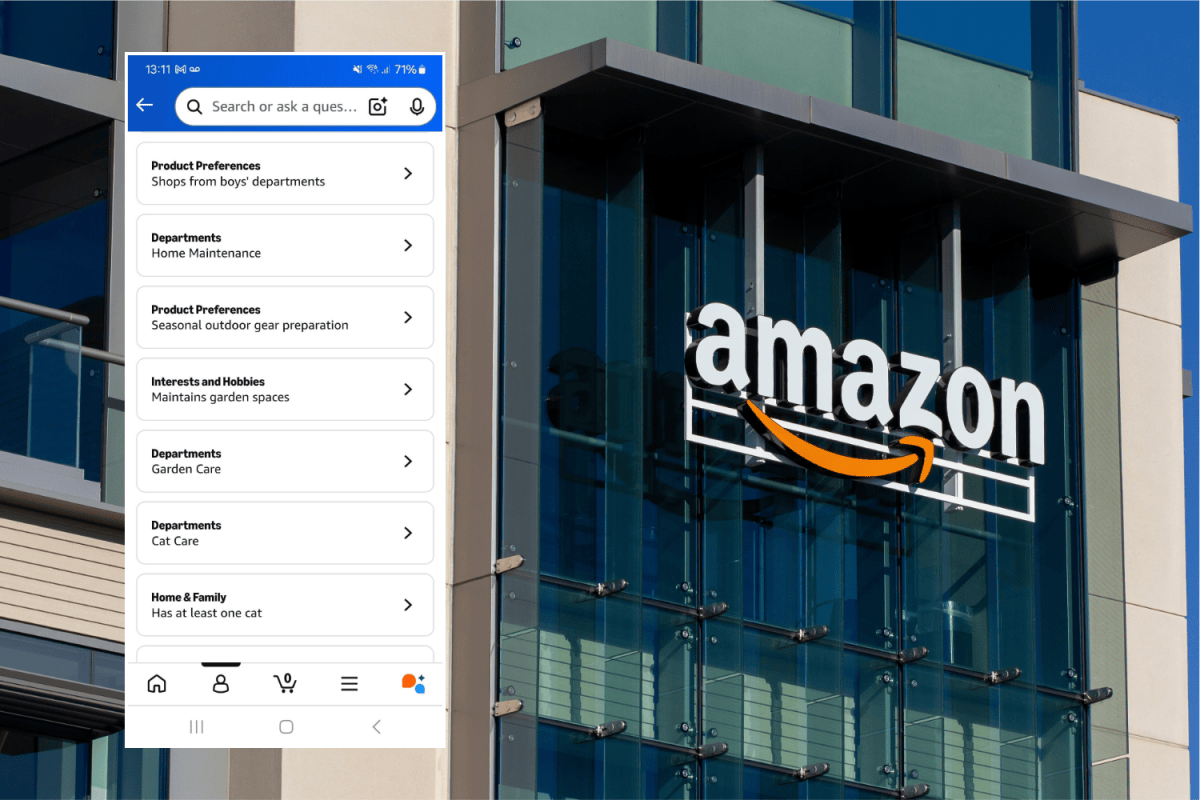
Amazon has introduced a new "About You" feature that shows users some interests and traits the company thinks match them based on their shopping and interaction history. This tool lets customers see and change the categories Amazon uses to describe them, which range from simple interests to more personal details.
Key Facts
Amazon's "About You" feature is available on its desktop site under account settings.
The feature displays categories Amazon has assigned to users based on shopping, orders, and Alexa conversations.
Examples of categories include owning a cat, having a game console, or other more surprising labels.
Customers can view, remove, or update these categories to improve accuracy.
This profiling helps Amazon personalize product recommendations and advertisements.
In 2023, the FTC fined Amazon $25 million over issues with retaining children's Alexa data without proper deletion.
Amazon uses both rules-based and model-based methods to create these customer profiles.
Some users have shared unusual or sensitive categories found in their profiles, highlighting concerns about data tracking and interpretation.
Read the Original
Want the full story? Tap a source to open the original
article.
Jaguar has unveiled the Type 01, its new all-electric car built on a new electric vehicle platform called JEA. This model features a large battery with a range of about 400 miles, fast charging capabilities, and advanced technology developed from Jaguar’s experience in electric racing.
Key Facts
The Jaguar Type 01 is an all-electric four-door GT car with a starting price around $120,000–$130,000.
It uses a new electric vehicle platform called JEA, designed for an all-electric product line.
The car has a 118 kWh battery that supports about 400 miles of driving on one charge.
It can charge from 10% to 80% in 22 minutes using a 350 kW DC fast charger.
The Type 01 produces 1,015 horsepower and 1,007 lb-ft of torque, with all-wheel drive and steering.
It achieves a drag coefficient of 0.23, meaning it is built to be aerodynamic and energy efficient.
Jaguar leverages technology and knowledge gained from its successful Formula E racing program.
The car will be available in US dealerships around mid-2027.
Read the Original
Want the full story? Tap a source to open the original
article.