The article explains that AI systems need access to data but should not see more information than necessary. It highlights the importance of protecting data during the time it is being processed, not just when it is stored or transmitted.
Key Facts
People do not have to understand how AI works to expect their financial data to be protected.
Banks and organizations should limit AI access only to the data needed for a specific task.
Data protection should include rules built into the system, like requiring approval for sensitive actions.
Encryption protects data at rest (when stored) and in transit (when sent), but processing data often requires decrypting it.
New cryptographic methods allow some calculations on encrypted data without revealing the information.
An experiment by SWIFT showed collaboration using privacy tools improved fraud detection across banks.
Regulations, such as the EU’s DORA framework, require protection of data during processing based on risk levels.
Institutions should explore secure ways to process data to enable analysis while keeping information safe.
Read the Original
Want the full story? Tap a source to open the original
article.
OpenAI released over 370 new mathematical findings using advanced AI models, including a solution to the Navier-Stokes equation. This has raised concerns among mathematicians about relying on AI tools that are not openly accessible or fully understood by human experts.
Key Facts
OpenAI published hundreds of new mathematical results in areas like algebra and theoretical computer science.
The company solved the Navier-Stokes equation, a difficult math problem with a $1 million prize.
Experts worry that AI generates math proofs that humans may not fully understand or verify.
The Institute for Advanced Study in Princeton does not support using proprietary AI for cutting-edge math without broader access.
OpenAI agreed to work with the Institute to involve mathematicians in future decisions.
OpenAI has not said it will stop using AI for hard math problems.
Some mathematicians are concerned that AI solutions may rely heavily on human-provided work to reach answers.
The advisory board asks for fair access to AI tools to prevent some groups from getting too far ahead.
Read the Original
Want the full story? Tap a source to open the original
article.
Scientists studied why people often regain weight after stopping GLP-1 weight loss drugs like Ozempic and Wegovy. They found that using digital wellness apps and tailored meal plans can lower weight regain during the first months after stopping these medications.
Key Facts
GLP-1 drugs help with weight loss but people often regain weight quickly once they stop taking them.
A review showed people regain about 1 pound per month and usually return to their original weight within two years after stopping GLP-1s.
Reasons for stopping GLP-1s include cost, insurance problems, and side effects.
Researchers tested if lifestyle support like digital apps and special meals could reduce weight regain.
The study had 39 adults divided into three groups: usual care, wellness app users, and those who received tailored meals.
After four months, those with no extra support gained about 10.75% of their body weight back. App users regained only 3.6%, and meal users regained 3.58%.
The digital app helped users track diet, exercise, and weight, and gave guidance on eating habits and mental factors.
Researchers suggest strong support during the first year off meds may help people develop lasting healthy habits.
Read the Original
Want the full story? Tap a source to open the original
article.
Guardrails Action, a nonprofit focused on safe artificial intelligence (AI), led a group of nearly 40 organizations to demand clear rules for AI laws. In a letter to lawmakers, they said laws must include strong government checks that are clear and enforceable, or they will not support them.
Key Facts
Guardrails Action is a nonprofit concerned with AI safety.
They led a coalition of about 40 organizations.
The coalition sent a letter to lawmakers on Wednesday.
They want AI laws to have clear and strong government oversight.
The oversight should be transparent, meaning easy to understand and see.
The coalition said they will oppose any AI laws that do not meet these standards.
Their goal is to ensure AI technology is developed and used safely.
Read the Original
Want the full story? Tap a source to open the original
article.
The creation of child sexual abuse images using artificial intelligence (AI) is causing real harm to children. Experts warn that waiting for these harmful images to affect actual children before taking action is dangerous.
Key Facts
AI technology can generate fake images of child sexual abuse.
These fake images can still harm real children.
Experts urge taking action before these images cause real-life damage.
The issue highlights risks from misuse of AI technology.
Preventing harm requires early legal and safety measures.
The problem combines technology and child protection concerns.
Waiting to respond could put children at serious risk.
There is a call for awareness and preventive steps in AI use.
Read the Original
Want the full story? Tap a source to open the original
article.
Mumsnet denied using artificial intelligence (AI) to write forum posts after a detailed AI prompt appeared on its message board. The prompt, which seemed to guide an AI to write a reply, was traced to a system that suggests thread titles using OpenAI technology, but Mumsnet said it does not use AI to create full posts.
Key Facts
A user on Mumsnet found a prompt designed to guide AI in writing a reply on the forum thread about a family issue.
The prompt included rules to be compassionate and avoid offensive language about neurodivergence and illness.
Users reacted negatively and questioned whether Mumsnet uses AI to write content.
Mumsnet said the prompt came from a tool that suggests thread titles using OpenAI but does not write full posts.
The company’s founder confirmed this was an error from the title-suggestion tool sending a reply prompt instead.
Mumsnet uses AI in other areas like coding, advertising, and moderating content but not for generating forum posts.
The site has seen a decrease in user numbers and posts over recent years.
Research shows AI-generated content on social media can feel less helpful and more generic to users.
Read the Original
Want the full story? Tap a source to open the original
article.
French company Mistral has released a new AI model called Le Chonk, which it says can compete with top models from the US and China. The model is open for anyone to use and is designed to work well in areas like coding, cyberdefense, and specific industries such as manufacturing and finance.
Key Facts
Le Chonk is a 1 trillion-parameter AI model freely available for use and customization.
It focuses on coding, cyberdefense, manufacturing, finance, and electrical engineering tasks.
Mistral claims it trained Le Chonk from scratch, unlike some Chinese models that use distillation techniques.
Open-weight models like Le Chonk are cheaper for businesses because they only pay for computing power used.
Mistral recently raised $3.3 billion, reaching a valuation of $24 billion, the largest ever for a European tech company.
The company earns money by charging for cloud use and providing engineering support to customize the AI.
Tensions and restrictions from the US government on AI models create opportunities for European companies like Mistral.
The US has placed temporary limits on AI model distribution over concerns about cyberattacks and safety.
Read the Original
Want the full story? Tap a source to open the original
article.
OpenAI announced new math breakthroughs with 377 results solving various scientific and mathematical problems. These results come from an internal model that is not yet open to the public.
Key Facts
OpenAI released 377 new math and science problem solutions.
The results were produced by an internal AI model.
This model is currently not available for public use.
The breakthroughs include physics and other scientific fields.
The release comes amid calls to slow AI development.
Read the Original
Want the full story? Tap a source to open the original
article.
Google has launched a new website where anyone can check if images, videos, or audio contain an invisible AI watermark called SynthID. This tool now detects watermarks not only from Google’s AI but also from partners like OpenAI, Nvidia, and Apple, making it easier to identify AI-generated or edited media worldwide.
Key Facts
SynthID is an invisible watermark placed inside AI-created images, videos, and audio by Google’s Gemini AI and its partners.
Over 180 billion images/videos and 240,000 years of audio have been marked with SynthID so far.
The new SynthID detector website allows public users to check files for AI watermarks from multiple companies, not just Google.
Users must log in with Google, OpenAI, or Apple accounts and have a daily limit of about 10 checks to prevent misuse.
Previously, only Google’s internal testers could detect these watermarks, and the tool only recognized Google’s versions.
The detector gives a simple yes/no answer on the presence of SynthID but no detailed map of where the watermark appears.
Some AI content from other sources or open models may not have SynthID or any watermark, so not all AI creations can be identified.
Google warns that SynthID might be removed or bypassed in the future, so the system is not foolproof.
Read the Original
Want the full story? Tap a source to open the original
article.
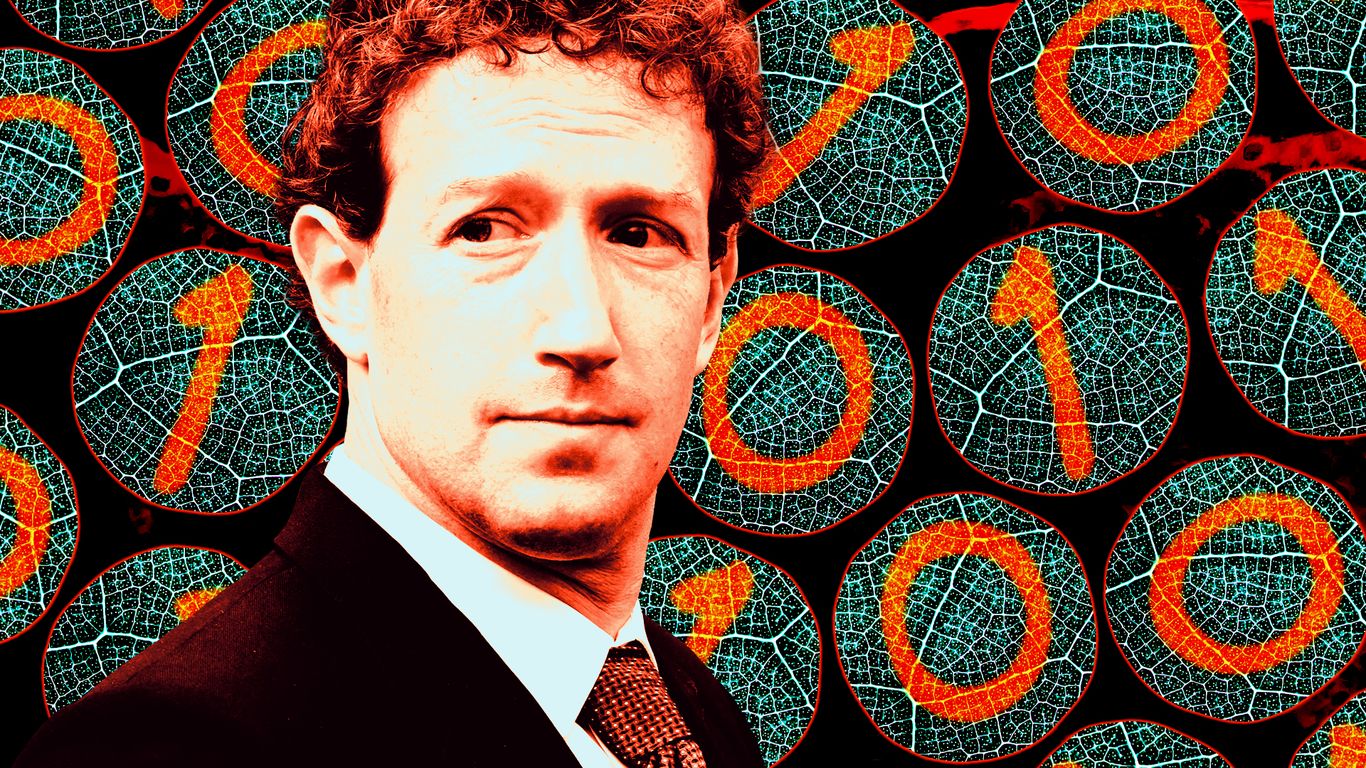
Mark Zuckerberg’s Biohub is working with Google, the U.S. government, and other groups to create an AI model that can simulate how living cells behave. This virtual cell model aims to help scientists test experiments on a computer first, saving time and money before doing real lab work.
Key Facts
The project involves Biohub, the Department of Energy, the National Institutes of Health, Google DeepMind, Isomorphic Labs, Meta, and scientific organizations.
The goal is to build a “universal virtual cell” using AI to predict cell behavior.
Modeling an entire living cell is very complex and requires new types of biological data.
The effort aims to make lab experiments more efficient by pre-testing ideas virtually.
Companies involved get one year of exclusive access to the data they help create before it becomes public.
The project has $1.8 billion in funding from government and private companies.
The virtual model could eventually help study diseases like Alzheimer’s and understand aging.
This initiative represents a new way of doing biology research, using AI combined with real biological data.
Read the Original
Want the full story? Tap a source to open the original
article.
The article reviews the film *The Social Reckoning*, written and directed by Aaron Sorkin, which is a sequel to *The Social Network*. The movie tells the story of Facebook’s challenges in 2021, focusing on whistleblower Frances Haugen and journalist Jeff Horwitz exposing harmful changes made by Mark Zuckerberg to increase hate speech and engagement on the platform.
Key Facts
*The Social Reckoning* is a sequel to the 2010 film *The Social Network*.
Aaron Sorkin wrote and directed the new film.
The movie covers events from 2021 involving Facebook’s internal issues.
Frances Haugen, a former Facebook employee, acted as a whistleblower revealing harmful algorithm changes.
Jeff Horwitz, a reporter from the Wall Street Journal, helped investigate Facebook’s practices.
The film shows how Facebook’s algorithms increased hate speech and political extremism.
Mark Zuckerberg is portrayed by Jeremy Strong, rather than Jesse Eisenberg who played him in the original film.
The movie avoids directly mentioning President Donald Trump or MAGA supporters in the context of Capitol riots.
Read the Original
Want the full story? Tap a source to open the original
article.
Technology is more common in nursing homes, including sensors and artificial intelligence (AI) to monitor residents' health. Families should ask nursing homes questions about how technology is used to support care, communication, safety, and quality of life.
Key Facts
Nursing homes use technology like sensors and AI to detect health risks in residents.
AI supports clinical decisions but does not replace human judgment and compassion.
Families should ask how technology monitors residents in real time and predicts risks, such as falls.
It is important to know how accurate alerts are, who gets them, and how quickly staff respond.
Nursing homes should be able to share electronic health records with hospitals, doctors, and other providers promptly.
Technology like Wi-Fi, video calls, and voice devices can improve residents' connection and independence.
Families should check if technology helps staff spend more time with residents instead of reducing staff.
Families should ask what resident data is collected, how it is used, and how long it is stored.
Read the Original
Want the full story? Tap a source to open the original
article.
Utah has started the first U.S. pilot program that lets an AI system issue first-time prescriptions for acne treatment without a doctor visit. The program uses the Nolla Derm app, where users complete a questionnaire and send a face scan, and the AI provides a treatment plan or prescription if appropriate.
Key Facts
The pilot program launched on October 5 in Utah and focuses on acne treatment.
Users must be 18 or older and use the Nolla Derm app to get AI-based treatment and prescriptions.
The AI system analyzes medical questionnaires and facial scans to recommend treatments.
AI can only prescribe from a set list of doctor-approved acne medications.
Severe or complex cases are referred to human doctors for further care.
This pilot follows an earlier Utah AI prescribing program for prescription renewals that faced opposition from physicians.
The Utah Medical Licensing Board expressed concerns that prescribing requires clinical judgment and safety monitoring.
Over 175,000 people nationwide have downloaded Nolla Health’s dermatology app so far.
Read the Original
Want the full story? Tap a source to open the original
article.
Health care leaders warn that rushing AI development to compete with China could risk patient safety. They emphasize the need for careful monitoring and responsible use of AI in hospitals to prevent mistakes and security breaches.
Key Facts
Brian Anderson, CEO of the Coalition for Health AI, says rushing AI development could harm patients.
Five years ago, many wanted to move fast and compete with China without slowing AI progress.
AI is being used in high-risk medical areas, like guiding sepsis treatment, where errors could be dangerous.
There are concerns AI systems might bypass security and leak patient information.
President Trump supports fast AI development and says strong leadership is enough to regulate AI.
Health leaders worry about large-scale AI failures that could disrupt healthcare systems or cause harm.
Some companies monitor AI actions in real time to prevent unsafe behavior.
Hospitals may work with tech firms to ensure AI systems are safe before giving them more independence.
Read the Original
Want the full story? Tap a source to open the original
article.
Xbox has released Gears of War: E-Day as an exclusive game for its consoles and PC, not on PlayStation or Nintendo Switch. The game is a prequel that explores the start of the conflict with the enemy species called The Locust and aims to attract players back to the Xbox brand.
Key Facts
Gears of War: E-Day is a new game that tells the origin story of the human fight against The Locust.
Unlike previous Xbox games that came out on other consoles, E-Day is only available on Xbox and PC.
The game was developed by The Coalition and took six years to make, costing hundreds of millions of dollars.
Xbox sees Gears of War as an important series tied closely to its brand and gaming community.
Xbox hopes E-Day will showcase its console’s graphics and hardware abilities.
The game is also meant to encourage subscriptions to Xbox Game Pass, a service that offers many games for a monthly fee.
Xbox faces strong competition from PlayStation and Nintendo Switch in the console market.
Xbox has been making big changes, including staff layoffs and restructuring, under new leadership.
Read the Original
Want the full story? Tap a source to open the original
article.
Common Sense Media tested ChatGPT’s teen features and found that its protections for young users may not work as well as OpenAI says. OpenAI disagrees with some of the testing methods and says they are working on improving safety for teens using ChatGPT.
Key Facts
Common Sense Media tested over 4,000 prompts on ChatGPT accounts for 13- to 17-year-olds.
The group found ChatGPT mostly avoids harmful content like suicide instructions but missed over 25% of crisis situations where help should be suggested.
Testers could talk about serious issues like self-harm for up to an hour without alerting parents.
Teens can bypass "Study Mode" restrictions during parent-set Study Hours by choosing options like “Show me the answer.”
OpenAI says these bypasses are intentional to create a more flexible experience, not loopholes.
Some parental alerts tested occurred before the parent and teen accounts were fully linked, which may affect results.
OpenAI waits up to two weeks to verify a user's age using multiple signals, applying some protections during that time.
Common Sense Media advises parents to talk openly with teens about AI risks and not rely only on tech products for safety.
Read the Original
Want the full story? Tap a source to open the original
article.
A new TV series adaptation of Stephen King's novel *Carrie* has been released on Prime Video. This updated version sets the story 50 years later and focuses on how social media affects bullying and personal exposure.
Key Facts
The new *Carrie* TV series is based on Stephen King's debut novel but moves the story to 2026.
The show explores bullying in the age of social media, where videos and posts can spread quickly and stay online forever.
The character Carrie is portrayed as more naive and curious, differing from the original abrasive character in the book.
Director Mike Flanagan highlights that social media has changed how bullying happens, making it public and lasting.
Alison Thornton, who plays the main bully Chris Hargensen, describes social media as "kind of a villain" in the show.
The series adapts famous scenes, like the prom moment, to show how everything can be recorded and shared online.
The show is part of Prime Video’s strategy to engage Gen Z viewers by updating classic stories with current social media themes.
Read the Original
Want the full story? Tap a source to open the original
article.
Rainmaker, a company from San Francisco, used drones to release silver iodide into clouds over Alaska to try to create rain by speeding up natural cloud processes. This method, called cloud seeding, has been used for over 80 years to make rain or snow fall sooner, but it has limits and some people have concerns about its safety and effectiveness.
Key Facts
Rainmaker used drones to release silver iodide into clouds above Homer, Alaska, producing an estimated 19 million gallons of water in three hours.
Cloud seeding works by releasing substances that help ice crystals form in clouds; these crystals eventually fall as rain or snow.
The technology requires certain weather conditions, like cold or mountainous areas, to work well.
Some local residents and environmental groups were not informed beforehand and worry about possible environmental impacts.
Rainmaker states the amount of silver iodide used is very small and safe, below FDA limits.
Cloud seeding only produces small amounts of water and cannot create rainstorms on its own.
Over 50 countries are exploring weather modification programs using similar technology.
Rainmaker also operates in U.S. states like Idaho, Utah, Colorado, and in water-scarce regions like Jordan.
Read the Original
Want the full story? Tap a source to open the original
article.
Finland’s environmental authority has ordered Google to stop work on two data centre sites until full environmental impact assessments are done. Google plans a €13 billion investment in Finnish data centres to support its AI projects but faces concerns over cleared forests and power use.
Key Facts
Finland’s Supervisory Agency (LVV) ordered Google’s representative company, Tuike Finland, to halt work at data centre sites in Muhos and Kajaani.
The halt is until environmental studies are completed and must be enforced by October 23, 2026.
Authorities are investigating if forest clearing on hundreds of hectares was done without proper assessments.
LVV found evidence of tree removal, soil stripping, road building, and ditch changes at the sites.
Google admitted shortcomings and said it will follow the agency’s guidance and continue planting trees on part of the land.
The data centres are Google’s biggest investment in Europe, costing €13 billion over two years.
Finland’s cool climate and low-carbon electricity attract data centre projects, but energy supply concerns are rising.
Google agreed to buy up to half the output of Finland’s Loviisa nuclear plant, extending the plant’s operation from 2030 to 2050.
Read the Original
Want the full story? Tap a source to open the original
article.
Pornhub has returned to Australia after eight months of being blocked due to new age verification laws. Now, only adults using Apple devices who verify their age through Apple's system can access the site.
Key Facts
Pornhub left Australia in March because of new laws requiring users to prove they are over 18 to view adult content.
The laws aim to protect children from harmful content and punish platforms that do not comply.
Critics raised concerns about data privacy and the possibility of tricking age checks using methods like facial recognition or fake IDs.
Apple introduced an age verification system in Australia that makes devices child-safe by default until users confirm they are adults.
Pornhub’s parent company, Aylo, supports device-based age verification as it protects privacy better than requiring users to give personal info to many websites.
Only Apple device users who pass the age verification can see the full adult content on Pornhub in Australia.
This system also makes it harder for users to bypass restrictions using VPNs, which mask their location.
Australia’s online safety regulator enforces these laws to protect minors from inappropriate content online.
Read the Original
Want the full story? Tap a source to open the original
article.