Pornhub has returned to Australia after eight months of being blocked due to new age verification laws. Now, only adults using Apple devices who verify their age through Apple's system can access the site.
Key Facts
Pornhub left Australia in March because of new laws requiring users to prove they are over 18 to view adult content.
The laws aim to protect children from harmful content and punish platforms that do not comply.
Critics raised concerns about data privacy and the possibility of tricking age checks using methods like facial recognition or fake IDs.
Apple introduced an age verification system in Australia that makes devices child-safe by default until users confirm they are adults.
Pornhub’s parent company, Aylo, supports device-based age verification as it protects privacy better than requiring users to give personal info to many websites.
Only Apple device users who pass the age verification can see the full adult content on Pornhub in Australia.
This system also makes it harder for users to bypass restrictions using VPNs, which mask their location.
Australia’s online safety regulator enforces these laws to protect minors from inappropriate content online.
Read the Original
Want the full story? Tap a source to open the original
article.
Pornhub has returned to Australia after adding age verification on Apple devices. This change follows Australian rules requiring adult websites to check that users are 18 or older to prevent access by minors.
Key Facts
Pornhub blocked Australian users in March due to new safety rules requiring age verification.
The rules threaten fines of up to $49.5 million if adult sites do not verify user ages.
Aylo, Pornhub’s parent company, said the previous verification methods risked user privacy.
Apple introduced device-level age checks in Australia, allowing users to confirm age with ID or credit card.
These Apple checks help block under-18 users from accessing adult content on iPhones and iPads.
Pornhub will allow access again only for users who verify their age through Apple’s system.
The UK media regulator Ofcom is investigating if minors can still access Pornhub despite verification.
VPN apps briefly became more popular in Australia when Pornhub was blocked, but this spike was short-lived.
Read the Original
Want the full story? Tap a source to open the original
article.
Australia’s privacy regulator has started investigating the China-based company Shenzhen Qingcheng, which makes the HeyCyan app used in Kmart’s $89 smartglasses. This follows concerns about privacy and secret recording with the glasses, leading to calls for restrictions and a possible ban on their use in public places and government offices.
Key Facts
Kmart sold smartglasses branded Anko that can take photos and record videos, raising privacy concerns.
The HeyCyan app made by Shenzhen Qingcheng is installed on these smartglasses.
Australia’s privacy commissioner, Carly Kind, began an investigation after the company did not respond to privacy inquiries.
Other companies like Meta and Google, which also make smartglasses, are not currently being investigated.
Privacy laws in Australia mainly cover companies, not individual users of these devices.
Proposed changes to the privacy law aim to better regulate smartglasses and other recording devices by requiring more fair and clear privacy practices.
Local councils in Australia have started banning the glasses in some public spaces like swimming pools.
Research showed many videos taken with smartglasses involved discomfort or harassment of people being recorded.
Read the Original
Want the full story? Tap a source to open the original
article.
Jonathan Blow, creator of the puzzle game Braid, has spent ten years developing a new large puzzle game called The Order of the Sinking Star. The game features about 1,500 puzzles and is expected to take around 500 hours to complete. Blow chooses to focus on unique game design rather than business practicality and is skeptical about the use of AI in game development.
Key Facts
Jonathan Blow is a well-known indie game creator, famous for the 2008 game Braid.
His new game, The Order of the Sinking Star, will release soon with roughly 1,500 puzzles.
The game combines mechanics from four existing free puzzle games, creating new challenges.
Blow prioritizes creative design over commercial success when making games.
Some of the puzzle mechanics involve mirror reflections and creating water paths.
Blow is cautious about artificial intelligence (AI) in game making and did not use AI in his new game.
He believes relying too much on AI may reduce skilled programmers in the future.
Blow wants developers to focus on making good games rather than engaging in political arguments.
Read the Original
Want the full story? Tap a source to open the original
article.
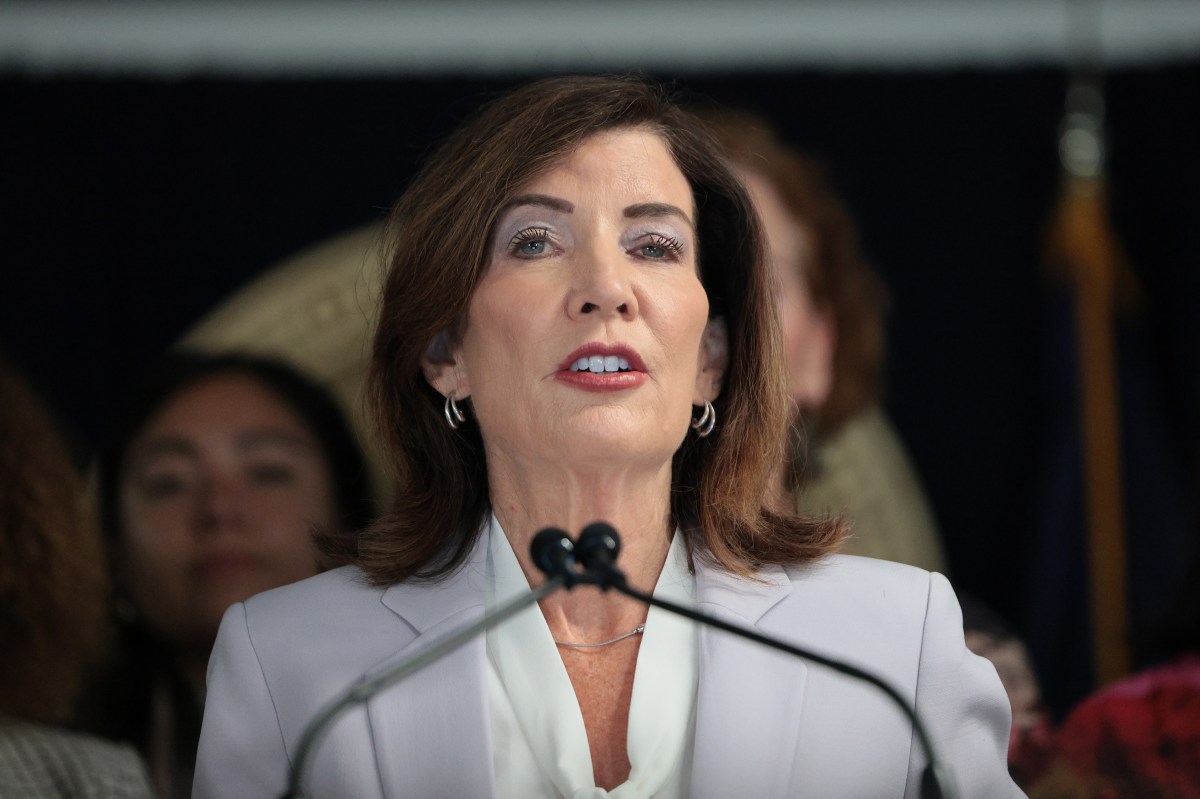
New York Governor Kathy Hochul said AI data centers can bring major benefits to some communities. The state has a temporary pause on new large data centers while it works on rules to protect energy use, the environment, and local areas.
Key Facts
New York has a moratorium (temporary stop) on permits for new large AI data centers.
The pause aims to study how these centers affect electricity use, costs, water, noise, and local resources.
Hochul supports local communities deciding if and how data centers can develop in their areas.
The state is creating rules to protect the electric grid and make sure developers contribute money to communities.
Hochul recommends developers pay $1 million per megawatt of power used by the center.
Large data centers use a lot of electricity and may strain New York’s energy system.
Representative Alexandria Ocasio-Cortez wants a federal moratorium to ensure fair resource use nationwide.
New York’s framework focuses on balancing AI infrastructure growth with environmental and community concerns.
Read the Original
Want the full story? Tap a source to open the original
article.
South Korean President Lee Jae Myung said that artificial intelligence (AI) may have been used in recent cyberattacks on several commercial banks. He asked for a detailed investigation to find out what happened.
Key Facts
President Lee Jae Myung spoke about the bank hacks during a government meeting.
He believes AI models were involved in the attacks.
The cyberattacks targeted multiple commercial banks, including Hana Bank, KB Kookmin Bank, and Shinhan Bank.
The incidents caused worry and concern among the public.
South Korea plans to investigate how AI was used in these hacking attempts.
Artificial intelligence refers to computer systems that can perform tasks normally needing human intelligence.
The goal of the investigation is to understand the new cyber threats and improve security measures.
Read the Original
Want the full story? Tap a source to open the original
article.
President Donald Trump has chosen four officials to lead a new group called the “Super Intelligence Force.” This team will guide how the government handles artificial intelligence (AI), especially concerns about its potential dangers.
Key Facts
President Trump created a new group called the “Super Intelligence Force” focused on AI.
Four government officials have been selected to lead this team.
The group’s purpose is to direct the U.S. approach to AI technology.
There is growing concern about risks linked to AI.
The White House wants to balance AI innovation with safety.
This initiative shows the administration’s plan for AI policy and oversight.
Read the Original
Want the full story? Tap a source to open the original
article.
OpenAI will start adding a hidden watermark to text created by ChatGPT in the European Union to follow the new EU AI law. This watermark helps detect AI-generated text but is not fully reliable and can be turned off outside the EU.
Key Facts
OpenAI’s watermarking feature is automatically turned on for ChatGPT texts in the EU.
The EU AI Act requires AI-generated content to be marked so tools can identify it.
The watermark uses a secret pattern in word choices that does not affect how the text reads.
Detection works about 92% of the time but drops if the text is slightly changed.
The watermark will be optional outside the EU and in OpenAI’s API service.
OpenAI will give only a few trusted groups access to the watermark detector.
Another AI company, Anthropic, has a similar watermarking system enabled worldwide.
The watermarking feature for EU users will be available in the coming weeks.
Read the Original
Want the full story? Tap a source to open the original
article.
The Emmy Awards will no longer air on regular broadcast TV and will instead be shown on Amazon Prime Video. The Television Academy and Amazon made a deal for Prime Video to stream the awards ceremony for the next six years.
Key Facts
The Emmy Awards have been on broadcast TV for over 75 years.
The Television Academy is the organization that runs the Emmy Awards.
A new agreement was made for a multiyear deal with Amazon Prime Video.
This deal will last for six years.
The Emmy Awards ceremony will now be available to stream online via Prime Video.
This marks a major change from traditional TV to streaming platforms.
The announcement was made on a Tuesday.
This is called a historic deal because it is the first time the Emmys move fully to streaming.
Read the Original
Want the full story? Tap a source to open the original
article.
The article explains what a supercomputer is, how it works, and who uses it. It includes a tour of the UK's national supercomputer and interviews with scientists who use it for their research.
Key Facts
The article focuses on the UK’s national supercomputer.
It explains the purpose and functioning of supercomputers.
The article includes a rare behind-the-scenes look inside a supercomputer.
Scientists who use the supercomputer share how it helps their work.
The piece is produced and presented by Imran Rahman-Jones.
The content is part of the Tech Life program on the World Service.
The supercomputer contains circuit boards, processors, and memory sticks.
The program lasts about 26 minutes and has been available for over a year.
Read the Original
Want the full story? Tap a source to open the original
article.
Hackers took control of three country-level internet domains and used this to create fake security certificates for Google and other big companies. Google updated its Chrome browser to block these fake certificates and is working to remove them from the system.
Key Facts
Attackers hijacked the .gh, .sl, and .as country code top-level domains.
They changed important DNS records to prove control of certain domains.
This allowed them to get fake TLS certificates for Google and other top brands.
TLS certificates help prove a website is real and secure by using secret keys.
Google blocked the unauthorized certificates in Chrome and asked the certificate issuers to cancel them.
Google warned domain owners not to depend only on browsers to protect users.
The hackers did not compromise the servers of the affected companies, only the domain controls.
Certificate revocation is a slow process; browsers block certificates faster to reduce risks.
Read the Original
Want the full story? Tap a source to open the original
article.
Asos app users in the UK received a pop-up message from hackers claiming to have accessed company data. Asos said it blocked the hackers’ access, is investigating the issue, and advises users not to click on any links in the message to protect themselves.
Key Facts
On Tuesday, many Asos app users saw a pop-up threatening to leak company data.
The message claimed the hackers took control of Asos’s Snowflake data storage, but Snowflake said their platform was not compromised.
Asos said some basic personal info like names and contact details might be involved, but passwords and payment details likely were not affected.
Customers were advised not to click the link in the hacker’s message, which led to a Telegram account.
It is recommended to change passwords, especially if reused on other sites, and use strong password rules.
Turning on two-step verification (a security step requiring a second confirmation) is strongly advised.
Users should watch their online accounts for unusual activity and be cautious of suspicious messages or calls claiming to be from Asos.
Asos’s website and app continue to work normally while the investigation continues.
Read the Original
Want the full story? Tap a source to open the original
article.
Google has been ordered to temporarily stop work on two datacentres in Finland because it did not complete the required environmental impact assessments before starting construction. Finnish authorities want Google to pause all major changes at the sites until the assessments are finished and reviewed.
Key Facts
Google plans to build two datacentres in Muhos and Kajaani, Finland, as part of a large 13 billion euro project.
Google’s local company cut down large areas of forest (330 hectares in Muhos and almost 200 hectares in Kajaani) without completing environmental impact checks.
The Finnish Licensing and Supervision Authority (LVV) ordered Google to stop major work by 23 October until the environmental assessment is done.
The environmental impact assessment is still ongoing and expected to be completed later this year.
Google admitted it did not meet its own environmental standards and plans to follow LVV’s guidance.
Google said it has taken measures like nature surveys and will plant trees on 130 hectares to improve biodiversity.
Finnish nature conservation groups say the fast pace of datacentre construction is damaging the environment and overwhelming local authorities.
If Google does not comply, LVV may impose fines or take further legal action.
Read the Original
Want the full story? Tap a source to open the original
article.
Amazon Prime Video has gained exclusive global rights to stream the Emmy Awards for six years, starting in 2027. The Emmys will no longer air on traditional U.S. TV networks but will be available to watch live for free worldwide on Prime Video every September.
Key Facts
Amazon Prime Video will stream the Emmys exclusively worldwide for six years, beginning in 2027.
The Emmys will stop airing on ABC, CBS, Fox, and NBC, which rotated broadcasting since 1955.
The live stream will be free and open to all viewers globally, without needing a Prime subscription.
This change reflects a shift toward digital platforms for live events as more people watch online.
The Emmys honor television achievements and have been held since 1949.
Amazon already streams major sports events and aims to expand its live entertainment reach.
YouTube recently won the global rights to stream the Oscars starting in 2029, showing a trend of award shows moving to digital streaming.
The deal allows Amazon to show advertising during the live broadcast to reach a big global audience.
Read the Original
Want the full story? Tap a source to open the original
article.
Hackers are increasingly buying AI tools from underground markets, making powerful cyberattacks cheaper and easier to carry out. These tools include hacked AI accounts, fake identity creators, and AI designed to help write phishing emails and malware.
Key Facts
AI tools advertised in cybercrime forums rose from under 50 per month in late 2025 to over 1,400 by February.
Hackers can buy ChatGPT Plus accounts for as little as 10 cents and prompts to bypass AI safeguards for 32 cents.
Researchers studied nearly 4,000 posts across Telegram channels, dark web forums, and underground markets from October to May.
Sellers use business models like subscriptions and online stores to sell AI hacking tools.
Four types of AI tools sold include hacked AI services, identity fraud tools, malicious AI models like WormGPT, and AI-enhanced malware infrastructure.
AI currently helps criminals carry out parts of attacks more cheaply, but fully automated AI cyberattacks are not yet seen in these markets.
AI tools help with tasks like writing malicious code or making scam calls but do not manage entire cyberattacks independently.
Companies are losing millions of dollars due to cyberattacks enabled by these AI tools.
Read the Original
Want the full story? Tap a source to open the original
article.
Sam Altman, a leading figure in artificial intelligence, said we need to accept some negative effects as AI improves. He believes these trade-offs will lead to big benefits like better health, more wealth, and longer lives.
Key Facts
AI technology is rapidly improving.
Some negative consequences may come with AI progress.
Accepting certain risks could bring large benefits to society.
Benefits mentioned include better health and increased wealth.
Improvements in life expectancy are expected due to AI advances.
The idea is to balance risks with rewards for overall progress.
Sam Altman shared these views publicly.
Read the Original
Want the full story? Tap a source to open the original
article.
Several Native American tribes in the U.S. are restricting or reviewing plans for large data centers due to concerns about their environmental impact and use of resources like electricity and water. While some tribes oppose these developments, others are partnering to build AI and energy projects on their lands.
Key Facts
Data centers need a lot of electricity and sometimes large amounts of water for cooling.
The Cheyenne and Arapaho tribes in Oklahoma approved a three-year ban on data centers on their land.
The Cherokee Nation banned large-scale data centers on tribally owned land after survey results showed many citizens oppose them.
The Kickapoo Tribe in Oklahoma is against big data centers because they may use too many resources and provide few jobs.
The Hualapai Tribe in Arizona passed a moratorium against data centers due to concerns over land and water protection.
The Cachil Dehe Band of Wintun Indians in California plans to build an AI and energy campus on their land in partnership with a developer.
Tribes want strong consultations with developers if data centers are considered on their lands.
Read the Original
Want the full story? Tap a source to open the original
article.
Ars Technica offers a subscription service called ArsPro that lets readers access articles without ads or trackers. Subscribers can read articles as PDF files, use full-text RSS feeds, and enjoy extra features like different page layouts and a special user badge.
Key Facts
Ars Technica started in 1998 and was originally read only in web browsers on desktop computers.
Since the early 2000s, subscribers have been able to get articles as PDFs or full-text RSS feeds for easier offline reading.
The ArsPro subscription removes all advertisements and trackers from the website.
Subscribers can choose from four different front-page layouts to control how much information they see.
There is a special user badge for people with higher-level subscriptions called ArsPro++.
The subscription costs $25 for ArsPro and $50 for ArsPro++.
Money from subscriptions helps fund Ars Technica’s reporting and reduces reliance on advertising.
Subscribers gain access to exclusive forums with a community focused on technology discussions.
Read the Original
Want the full story? Tap a source to open the original
article.
Amazon has stopped Alexa from controlling the audio connected to the AUX input on some older Echo speakers. Users can still use the physical AUX port and connect devices via Bluetooth, but voice commands to control AUX input no longer work.
Key Facts
Alexa voice commands for controlling the AUX input on certain older Echo models have been disabled by Amazon.
Affected Echo models include Echo Plus 2nd Gen (2018), Echo 3rd Gen (2019), Echo Studio 1st Gen (2019), and Echo 4th Gen (2020).
Physical AUX input ports on these devices still work for playing audio from connected devices.
Users can still enable or disable AUX input using the Alexa app.
Bluetooth connections to Echo devices remain unaffected and are a common way to connect external audio devices.
Amazon said only a small number of users used voice commands for AUX control.
Amazon did not provide a reason for removing this feature or how many users are affected.
This change follows previous cases where Amazon removed certain features from Echo devices after purchase.
Read the Original
Want the full story? Tap a source to open the original
article.
The film *Artificial* by Luca Guadagnino explores the story of Sam Altman and OpenAI, showing different views about the impact of artificial intelligence (AI). It highlights tensions between optimism about AI’s benefits and concerns about its risks and ethics.
Key Facts
The film *Artificial* premiered alongside a Vanity Fair story that compared Sam Altman to J. Robert Oppenheimer.
Sam Altman, CEO of OpenAI, said people should accept some bad outcomes to gain AI’s benefits.
AI systems have caused problems like hacking and have been linked to harmful personal events.
The movie portrays Sam Altman as a complex figure with selfish motives.
The story shows the development of AI technology from early research to powerful, self-learning systems.
Elon Musk is depicted introducing Altman to a young AI researcher named Ilya Sutskever.
The film focuses on conflicts inside OpenAI, including Altman being fired and rehired as CEO.
Amazon MGM Studios dropped the movie’s distribution because of its critical view of OpenAI, a company they partly invest in.
Read the Original
Want the full story? Tap a source to open the original
article.