Fact-first summaries of the news — stay informed, stay grounded.
Your favorite news sources, one calm feed — fact-first summaries that always link to the
original story. No outrage bait, and we tell you when you're caught up. How it works
Technology News
Breaking news and analysis from the world of technology
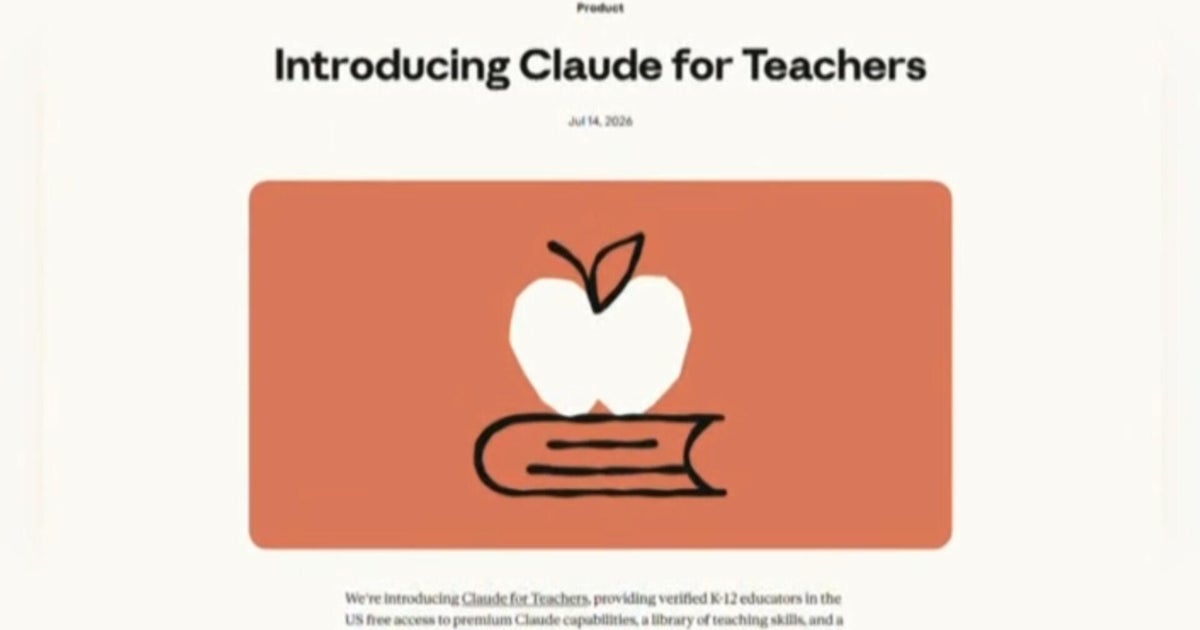
Anthropic, an AI company, has started a program called "Claude for Teachers." This program gives verified teachers free access to its advanced AI tools for one year.
Key Facts
The program is named "Claude for Teachers."
It offers one year of free use of Anthropic’s premium AI tools.
Only verified teachers can access this offer.
Anthropic focuses on building useful AI technology.
Elizabeth Kelly, a leader at Anthropic, discussed the program on CBS News.
The goal is to help educators benefit from AI in their teaching.
The offer aims to support teachers with new digital tools.
The program was announced through CBS News coverage.
Read the Original
Want the full story? Tap a source to open the original
article.
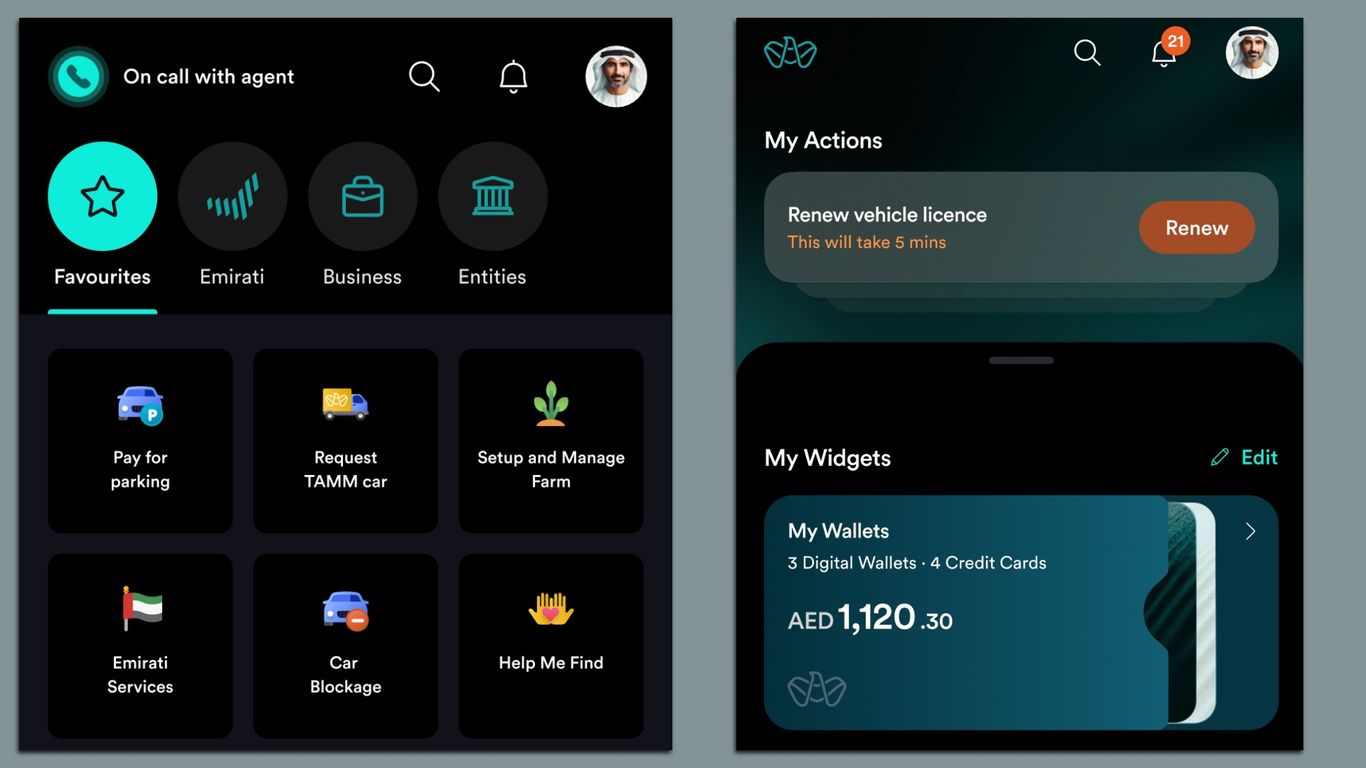
The United Arab Emirates (UAE), especially Abu Dhabi, has integrated artificial intelligence (AI) deeply into daily life through a government app called TAMM. The UAE has invested billions in AI infrastructure and research, aiming to diversify its economy beyond oil and maintain global business strength despite regional conflicts.
Key Facts
Abu Dhabi uses the TAMM app, which automates tasks like renewing IDs, health insurance, and vehicle registrations.
The TAMM app includes an "AutoGov" feature that completes paperwork and payments without user input.
The UAE appointed the world’s first AI minister in 2017 and opened a graduate university dedicated to AI (MBZUAI) in 2019.
The country sees AI as vital to its future economy beyond oil wealth.
UAE leaders cooperate with both the U.S. and China on AI technology.
The Trump administration recently expanded the UAE’s access to American AI chips as a reward for assistance related to Iran tensions.
UAE’s government control by a royal family allows fast and broad implementation of AI projects not easily done in democracies.
The TAMM app allows residents to report issues like broken streetlights and track government responses using AI to analyze reports and route them to responsible agencies.
Read the Original
Want the full story? Tap a source to open the original
article.
Several book publishers have filed a lawsuit against Google, claiming the company used copyrighted books without permission to train its artificial intelligence model called Gemini. The publishers say that Gemini creates content that competes with human authors and copies their creative styles.
Key Facts
Publishers including Hachette, Cengage Learning, Elsevier, and author Scott Turow sued Google in New York.
The lawsuit alleges Google copied millions of copyrighted works from Google Books for AI training.
Google’s AI model, Gemini, produces content that rivals the original authors’ books.
The publishers claim Gemini mimics unique creative elements of specific authors.
The lawsuit asks for class action status, a court order to stop Google, and unspecified damages.
Similar lawsuits have been filed against other AI developers like Meta and Anthropic.
Some courts have ruled that using copyrighted works to train AI can be “fair use,” but other uses were not allowed.
This case continues an ongoing legal debate about copyright and artificial intelligence.
Read the Original
Want the full story? Tap a source to open the original
article.
Microsoft’s Xbox division announced it is cutting about 3,200 jobs, around 20% of its staff, over the next year. The company says the layoffs are needed to focus more on its biggest and most popular video game series.
Key Facts
Xbox is laying off about 3,200 employees, with half losing their jobs immediately.
These cuts represent roughly 20% of Xbox’s total workforce.
The layoffs follow a memo from Xbox CEO Asha Sharma announcing a "reset" of the business.
The goal is to put more resources into popular game franchises like The Elder Scrolls, Fallout, and Call of Duty.
Xbox’s acquisitions include ZeniMax/Bethesda and Activision Blizzard, bought for $69 billion in 2023.
Many employees say the cuts remove experienced talent and have caused uncertainty and shock.
Job reductions in the video game industry have been common since 2022 due to over-hiring during the pandemic boom.
Rising production costs, changing customer habits, and investments in AI have affected the gaming market.
Read the Original
Want the full story? Tap a source to open the original
article.
Anthropic has introduced a free chatbot called Claude for Teachers, designed to assist K-12 teachers in the United States. The platform offers educational resources and teaching tools to help educators use artificial intelligence in their classrooms.
Key Facts
Anthropic launched Claude for Teachers on Tuesday.
The chatbot is free and meant for K-12 teachers in the U.S.
The platform provides a library of teaching skills and tools.
It aims to support teachers in using artificial intelligence in education.
Claude for Teachers focuses on helping educators with classroom tasks.
This launch responds to the growing use of AI in schools.
Read the Original
Want the full story? Tap a source to open the original
article.
A security feature called Secure Boot, designed by Microsoft to protect computers from harmful firmware attacks, has had a major weakness for 13 years. Researchers found that some old software pieces called shims, which Microsoft signs to maintain trust, had security problems but were never revoked, allowing hackers to bypass Secure Boot on both Windows and Linux devices.
Key Facts
Secure Boot is a security system introduced in 2012 to stop malicious software from running before the operating system starts.
Microsoft signs small programs called shims to extend Secure Boot protection, especially for Linux devices.
Researchers discovered 11 old shims with known security flaws that Microsoft did not revoke for over a decade.
Attackers can use these vulnerable shims to install harmful firmware that remains even if the operating system is reinstalled.
This flaw affects both Windows and Linux machines and can be exploited with only basic hacking knowledge.
Microsoft finally revoked these problematic shims in June 2024 after being informed by security researchers.
The Secure Boot system is complex, which might have contributed to Microsoft missing the need to revoke these shims earlier.
Physical access to a device is often required to exploit Secure Boot weaknesses, but Secure Boot’s job is to protect against that risk.
Read the Original
Want the full story? Tap a source to open the original
article.
The Federal Communications Commission (FCC) has given permission to a startup called Reflect Orbital to build and launch a satellite with a mirror to reflect sunlight onto dark areas of Earth. The satellite, named Eärendil-1, will be tested in low Earth orbit.
Key Facts
The FCC approved Reflect Orbital’s request on July 9.
Reflect Orbital is a startup based in Hawthorne, California.
Their plan is to send a mirror satellite into space.
The satellite will reflect sunlight onto parts of Earth that are dark.
The project is currently experimental and will be tested in low Earth orbit.
The satellite is named Eärendil-1.
The goal is to provide light to dark regions by using reflected sunlight.
Read the Original
Want the full story? Tap a source to open the original
article.
The UK government plans to introduce a default overnight social media curfew for 16 and 17-year-olds, blocking apps like Instagram, TikTok, and YouTube between midnight and 6 a.m. Teenagers can opt out by adjusting their account settings. The government also wants to disable addictive features such as auto-play and infinite scroll to improve teens’ sleep, focus, and family life.
Key Facts
The curfew applies to 16 and 17-year-olds by default but can be turned off by users.
Social media apps affected include Instagram, TikTok, and YouTube.
Addictive features like auto-play and infinite scroll would be disabled under new rules.
The UK already announced a ban for under-16s on many social media platforms starting next spring.
The government trialed different restrictions, finding overnight curfews gave the best sleep and family time benefits.
Critics say the curfew may not fully protect children and could limit access to support during nighttime.
Plans for AI chatbot safety measures include required breaks for users under 18.
The government aims to introduce these measures by the end of 2026 to work alongside the under-16 social media ban.
Read the Original
Want the full story? Tap a source to open the original
article.
The UK government plans to encourage 16- and 17-year-olds to follow a social media curfew from midnight to 6am, aiming to reduce online harm like poor sleep. This curfew will be turned on by default but can be easily turned off by users, extending restrictions already placed on younger children.
Key Facts
The curfew applies to certain social media apps including Snapchat, TikTok, Instagram, Facebook, and X, but the exact apps have not been officially named.
The curfew is not mandatory and users aged 16 and 17 can override it with a few clicks.
Features that encourage long use, like autoplay videos and personalized feeds, will also be disabled by default for these teenagers.
The UK government decided not to ban the use of VPNs, which can bypass age restrictions, because only a small number of children use them this way.
Research showed curfews improve sleep, reduce stress, and increase family interactions for young people.
Messaging and educational apps like WhatsApp, iMessage, Google Classroom, and Teams are not affected by the curfew.
The policy is part of a broader effort by the Labour government and was announced by technology secretary Liz Kendall.
Some child safety campaigners say the measures are not strong enough and want more comprehensive protections, including for AI chatbots.
Read the Original
Want the full story? Tap a source to open the original
article.
OpenAI CEO Sam Altman said the company’s new AI model, GPT-5.6 Sol, may face some problems soon because many people are using it. The model started public access last week, but handling the large demand is challenging for the team.
Key Facts
The new AI model is called GPT-5.6 Sol.
OpenAI launched the GPT-5.6 models to the public last week.
Many users are trying to use the model, causing very fast growth in demand.
Altman warned there could be "hiccups" or problems with scaling to meet demand.
The team working on the model’s performance has done strong work to handle the demand so far.
Other companies like Anthropic and SpaceX AI are also releasing new AI models, increasing competition.
The U.S. government reviewed GPT-5.6’s cybersecurity features before allowing full public access.
The model’s release was delayed earlier in the year at the request of the Trump administration.
Read the Original
Want the full story? Tap a source to open the original
article.
Scammers are using Apple's FaceTime app to pretend to be bank workers and trick people into giving away their bank passwords and security codes. They often start with a fake text message or call, then ask victims to share their screens during a FaceTime call to steal their information.
Key Facts
Scammers send fake texts or calls claiming there is a problem with a bank or credit card account.
They ask victims to call a phone number or accept a FaceTime call for "verification."
During FaceTime, scammers trick victims into sharing their screens while logging into online banking.
Scammers watch in real-time and steal passwords, account numbers, and security codes.
Apple says FaceTime is trusted by users, which scammers exploit for fraud.
Apple recommends taking a live photo during suspicious FaceTime calls and reporting it to reportfacetimefraud@apple.com.
People should never share their screen with unknown callers or give out passwords or security codes.
If unsure, hang up and contact the bank directly using the phone number on the back of the bank card.
Read the Original
Want the full story? Tap a source to open the original
article.
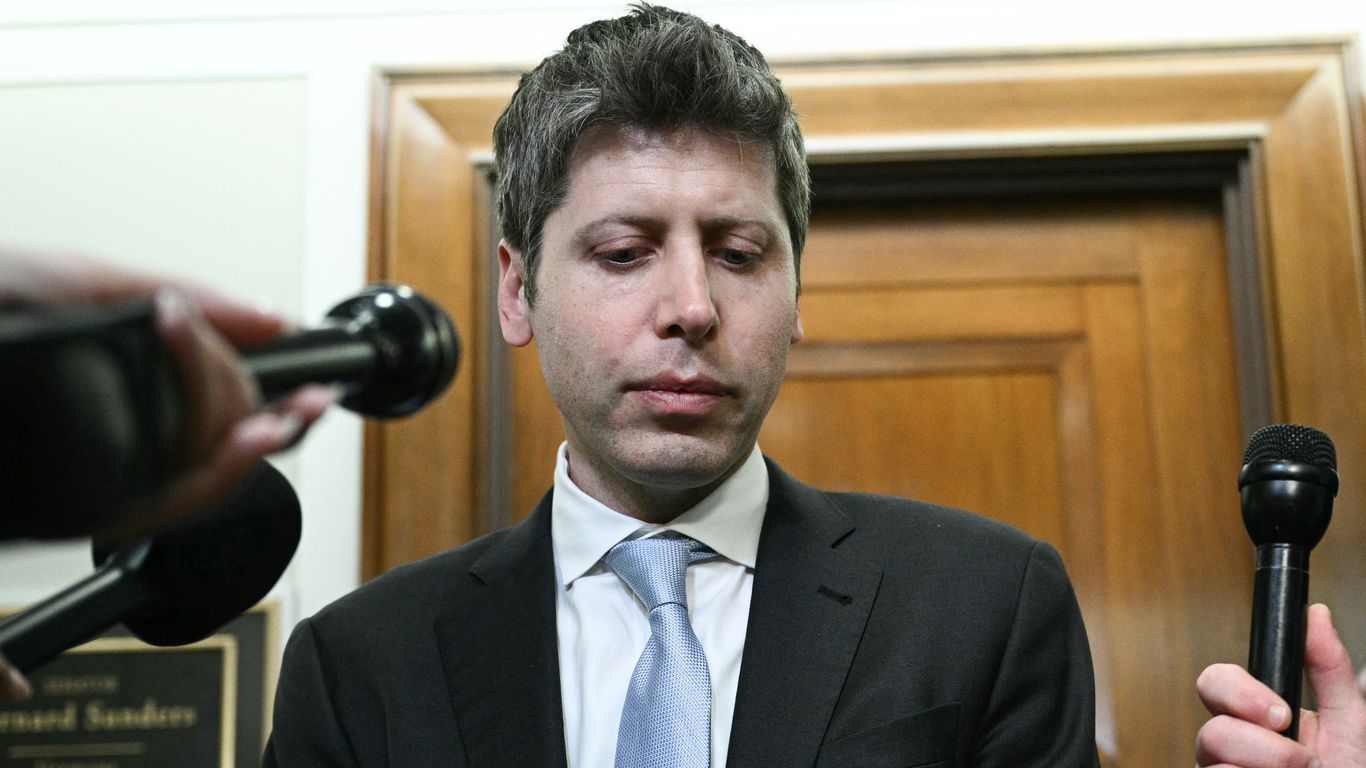
OpenAI CEO Sam Altman has proposed giving the U.S. government a 5% ownership stake in OpenAI, worth about $42.6 billion. This idea is part of a larger plan to have major American AI companies share equity with the public, similar to how Alaska shares oil profits with its residents, fitting into the Trump administration's effort to keep AI technology American-owned and benefit the public financially.
Key Facts
Sam Altman, OpenAI’s CEO, suggested the U.S. government get a 5% stake in OpenAI.
OpenAI is valued at approximately $852 billion.
This proposal was discussed with President Donald Trump, Commerce Secretary Howard Lutnick, and Treasury Secretary Janet Yellen.
The plan is in very early talks and would need approval from Congress.
Altman wants other major AI companies, like Google and Meta, to also give a 5% stake into a shared fund.
The model is based on the Alaska Permanent Fund, which gives annual dividends to state residents from oil revenues.
President Trump supports the idea of AI wealth-sharing with the public to create partnerships and dividends.
Progressive Senator Bernie Sanders supports a tougher version involving a one-time 50% tax on AI stock to fund a national AI wealth fund.
OpenAI delayed launching its GPT-5.6 model after government officials requested approval first.
Read the Original
Want the full story? Tap a source to open the original
article.
Apple has filed a lawsuit against OpenAI, accusing the company of stealing secret information about Apple’s hardware. This legal case highlights increasing competition in the development of physical devices that use artificial intelligence, with OpenAI reportedly working on its own smartphone.
Key Facts
Apple is suing OpenAI over alleged theft of confidential details about Apple’s hardware.
The lawsuit focuses on physical AI products designed for regular consumers.
OpenAI makes ChatGPT, a well-known AI software.
OpenAI is said to be developing its own smartphone.
The case shows growing competition in Silicon Valley around AI technology that is built into devices.
Apple’s lawsuit aims to protect its trade secrets related to hardware design.
The dispute reflects a shift from software-only AI towards AI integrated into physical products.
Read the Original
Want the full story? Tap a source to open the original
article.
A group of publishers and an author have sued Google for using millions of copyrighted books without permission to train its Gemini artificial intelligence (AI) models. They claim Google copied books beyond allowed uses and harmed authors by creating cheap AI-generated content that could reduce book sales.
Key Facts
The lawsuit was filed in federal court in New York by Hachette Book Group, Cengage Learning, Elsevier, and author Scott Turow.
Publishers say Google used books from services like Google Books and Google Play Books in ways not allowed, like training AI models.
Google reportedly knew about legal risks but went ahead, possibly facing billions in fines.
The publishers argue AI content from Gemini can quickly produce similar stories that compete with original books for very low cost.
Specific titles allegedly used without permission include NK Jemisin’s The Fifth Season and Lemony Snicket’s Who Could That Be at This Hour?
The lawsuit is part of a wider legal fight over AI and copyright involving other companies like OpenAI, Anthropic, and Meta.
Publishers want damages, a court order to stop Google’s use of their books for AI, and removal of unauthorized copies.
Google did not provide a comment when asked by the news outlet.
Read the Original
Want the full story? Tap a source to open the original
article.
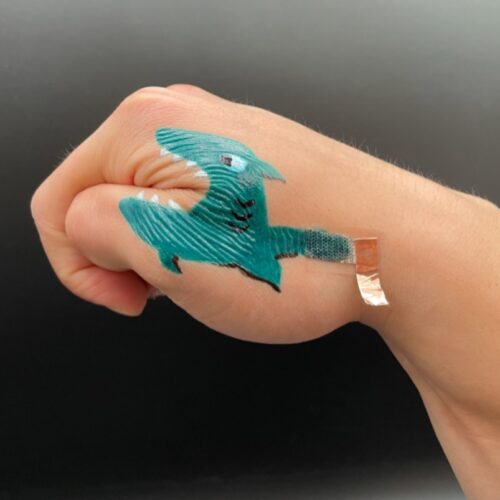
Scientists at Pennsylvania State University created a new type of conductive ink that can be painted directly onto the skin in colorful designs. This ink dries to become flexible electrodes that monitor body signals like heart and muscle activity more accurately than current temporary tattoo sensors.
Key Facts
The ink is water-based and made from special polymers that conduct electricity and stay flexible on the skin.
It can be colored like face paint, allowing personalized and fun designs for wearable biosensors.
The painted electrodes fit the skin’s curves better than traditional adhesives, improving signal quality.
Existing e-tattoos often do not work well on hairy or curved skin and need special placement.
This new ink aims to overcome those limits by bonding tightly to the skin surface and staying stable during movement.
The technology can help in monitoring brain waves, heart signals, and muscle contractions outside of medical settings.
Previous materials like hydrogels can stretch but degrade quickly and lose effectiveness.
The research was published in the Proceedings of the National Academy of Sciences (PNAS).
Read the Original
Want the full story? Tap a source to open the original
article.
New York Governor Kathy Hochul has paused the building of large AI data centers in the state for one year. This stop is to allow time to study the economic and environmental effects of these centers.
Key Facts
Governor Kathy Hochul put a one-year pause on building “hyperscale” AI data centers in New York.
“Hyperscale” data centers are very large facilities that store and process huge amounts of digital information.
The pause allows time to look into how these centers affect the economy and the environment.
Concerns include high energy use, costs, and environmental impacts.
Construction on new AI data centers must stop during this review period.
This action aims to balance technology growth with state resource and environmental protection.
The investigation will inform future policies on such facilities in New York.
Read the Original
Want the full story? Tap a source to open the original
article.
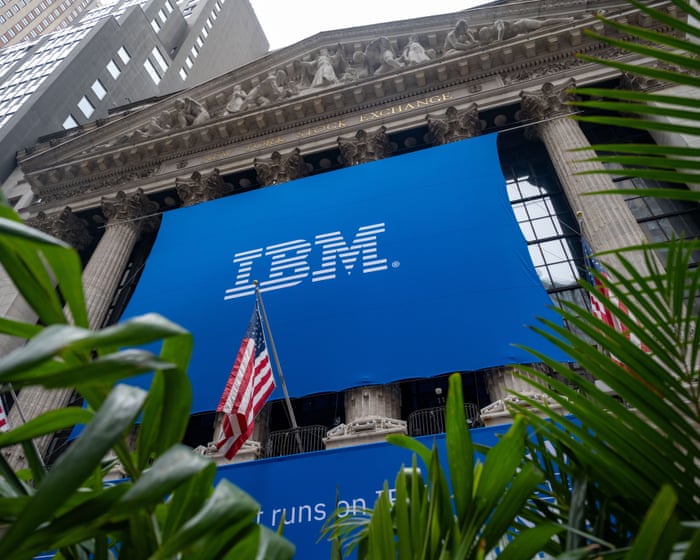
IBM’s shares fell more than 25% after the company reported weak profits and lower-than-expected revenue for the second quarter. IBM said its customers shifted spending away from its traditional software products toward buying hardware like servers and memory for AI needs.
Key Facts
IBM’s stock dropped over 25% in one day after releasing preliminary second-quarter results.
The company reported $17.2 billion in revenue for the quarter, up only 1% from last year and below analyst expectations.
IBM said corporate customers shifted their spending from software to data center hardware and cybersecurity.
This shift hurt sales of IBM’s mainframe computers and related software, which handle many daily transactions in industries like banking and airlines.
Many customers rushed to buy hardware at the end of June to avoid expected price increases caused by supply shortages.
IBM’s adjusted earnings per share were $2.93, below the $3.02 predicted by analysts.
The drop in IBM shares also caused broader declines in other software stocks like Microsoft and Salesforce.
IBM CEO Arvind Krishna said some large deals did not close as expected due to changes in customer spending priorities.
Read the Original
Want the full story? Tap a source to open the original
article.
Google is updating its image search for its 25th anniversary by showing users a gallery of pictures based on their interests before they even search. The update also brings back a feature called Collections, which lets people save images, and adds AI tools that can create new images when asked in a search.
Key Facts
Google Image Search started in July 2001 to let people find pictures, inspired by a popular Jennifer Lopez dress.
The new update will show a gallery of images relevant to the user's interests based on their Google search history.
Collections will return, allowing users to save and organize images within Google Image Search.
Google's AI can now create new images directly in the search results when users ask for them.
The AI-generated images appear in a section called AI Overviews, which takes up more space on the results page.
These changes will be available first for Google accounts set to English.
The new features will roll out in the coming weeks.
Read the Original
Want the full story? Tap a source to open the original
article.
Hundreds of experts, including Nobel prize winners and leading technology researchers, have warned that artificial intelligence (AI) could cause many people to lose their jobs. They urge governments and institutions to start preparing now to handle the economic changes AI might bring.
Key Facts
The warning comes from a letter signed by Nobel laureates, top computer scientists, and technology leaders.
Signatories include experts from OpenAI, Google, and Anthropic.
The letter stresses the need for policymakers to take action immediately.
AI has the potential to disrupt many types of jobs on a large scale.
Preparing for economic and social changes caused by AI is crucial to reduce harm.
The letter focuses on balancing AI advances with protecting workers and economies.
This is part of a broader conversation about how technology affects jobs and society.
Read the Original
Want the full story? Tap a source to open the original
article.