Fact-first summaries of the news — stay informed, stay grounded.
Your favorite news sources, one calm feed — fact-first summaries that always link to the
original story. No outrage bait, and we tell you when you're caught up. How it works
US News
Latest developments and key stories from across the United States
State authorities in Georgia are investigating after a police officer allegedly shot and killed a pet donkey named HeeHaw on a farm near Rockmart. The officer was searching for a missing person when the shooting happened, and the officer involved has been placed on administrative leave during the investigation.
Key Facts
The incident occurred on August 30 around 12:45 a.m. at a farm near Rockmart, Georgia.
Police officers entered the pasture without notifying or getting permission from the donkey’s owner, Hannah Israel.
HeeHaw, the donkey, approached officers and was reportedly first targeted with a Taser before being shot.
The Georgia Department of Agriculture is conducting an independent investigation into the shooting.
The Cedartown Police Chief confirmed the officer involved is on administrative leave during the investigation.
Officers were searching for a missing child at the time, who has since been found safe.
The farm owner has started a GoFundMe that has raised nearly $120,000 to cover legal fees and animal care.
The shooting has drawn large social media attention, with many people questioning the necessity of shooting the donkey.
Read the Original
Want the full story? Tap a source to open the original
article.
Fox News host Rachel Campos-Duffy said President Donald Trump chose her husband, Sean Duffy, as Transportation secretary because "that was all that’s left." This statement was made during an interview on a podcast hosted by Katie Miller.
Key Facts
Rachel Campos-Duffy is a Fox News host.
Sean Duffy, her husband, was appointed Transportation secretary by President Trump.
Campos-Duffy said the appointment happened because it was the remaining available position.
The interview took place on “The Katie Miller Podcast.”
Katie Miller is the wife of Stephen Miller, White House deputy chief of staff.
The podcast discussion included questions about the conversation between the Duffys and President Trump.
Read the Original
Want the full story? Tap a source to open the original
article.
Rep. Troy Downing criticized President Donald Trump’s plan to pause tariffs on imported beef, saying the market has already been harmed. He suggested that reversing the decision may be difficult because the damage to the beef market is already done.
Key Facts
President Trump announced a plan to pause tariffs on beef imports.
Rep. Troy Downing, a Republican from Montana, spoke about this on NewsNation.
Downing said the market has already been affected by the tariff pause.
He indicated that GOP lawmakers might want the decision reversed.
The issue centers on the impact of tariffs, which are taxes on imported goods.
The pause aims to adjust trade rules around beef imports.
The comment reflects concerns about the beef industry's economic health.
The interview took place shortly after the tariff pause announcement.
Read the Original
Want the full story? Tap a source to open the original
article.
U.S. Representative Keith Self says the United States should focus on strengthening NATO and rebuilding its defense industry to stop Russian attacks in Europe. He believes that dealing with Russia is more urgent than concentrating only on possible conflicts with China.
Key Facts
Rep. Keith Self is a member of the U.S. Congress.
He suggests the U.S. should give priority to NATO, a military alliance in Europe and North America.
Self wants to rebuild the U.S. defense industry, which makes weapons and military equipment.
The goal is to prevent or stop Russia from being aggressive in Europe.
He thinks this is more important than focusing only on China.
This reflects current U.S. concerns about global security and military planning.
Read the Original
Want the full story? Tap a source to open the original
article.
Tiger Woods admitted to reckless driving after a crash. He said the accident happened because he was looking at his phone and changing the radio. As a result, his driver's license was suspended for five years.
Key Facts
Tiger Woods was involved in a car crash.
He admitted to reckless driving by pleading no contest.
Woods told police he was distracted by his phone and the radio.
The court suspended his driver's license for five years.
The charge he faced was reckless driving.
Pleading no contest means he accepted the punishment without admitting guilt.
Read the Original
Want the full story? Tap a source to open the original
article.
A federal appeals court ruled that a judge did not have the authority to overturn former soldier Bowe Bergdahl’s military conviction for desertion. This decision means Bergdahl’s court-martial conviction and sentence are now reinstated.
Key Facts
Bowe Bergdahl was convicted by a military court for leaving his post in Afghanistan in 2009.
He was captured by Taliban-linked forces and held for nearly five years.
Bergdahl’s conviction was vacated by a judge in 2023 due to a potential conflict of interest involving the military judge.
The appeals court said only military appellate courts can overturn court-martial convictions, not civilian district courts.
Bergdahl’s legal team argued his Fifth Amendment due-process rights were violated.
He pleaded guilty in 2017 to desertion and misbehavior before the enemy and was dishonorably discharged.
Bergdahl was released in a 2014 prisoner swap that exchanged him for five Taliban prisoners held at Guantanamo Bay.
President Donald Trump criticized the prisoner swap and had called for the death penalty for Bergdahl during his 2015 campaign.
Read the Original
Want the full story? Tap a source to open the original
article.
The U.S. Mint is selling a new $1 coin that features President Donald Trump’s face on one side and the Great Seal of the United States on the other. The coin was made to honor America’s 250th birthday and has sparked discussion because showing a living president on currency is usually not allowed.
Key Facts
The new $1 coin shows President Trump’s face on the “heads” side and the Great Seal of the United States on the “tails” side.
The design was approved by the U.S. Commission of Fine Arts, whose members were appointed by President Trump.
The coin honors 250 years of American history, from 1776 to 2026.
The coin includes the word “LIBERTY” above Trump’s face and “E PLURIBUS UNUM” on the Great Seal side, a Latin phrase meaning “out of many, one.”
A roll of 25 coins costs $61, and a bag of 100 coins costs $154.50.
Some coins made on July 4th are marked specially to honor Independence Day.
Federal law normally does not allow living presidents to appear on U.S. currency, but special exceptions can be made by the treasury secretary.
Buyers can order up to two rolls or bags at first; this limit will increase after the first day of sales.
Read the Original
Want the full story? Tap a source to open the original
article.
Tarrant County, Texas, will have 92 fewer polling places in the November midterm elections compared to 2022, approved by a 3-2 Republican-limited vote. Supporters say the new plan focuses on better locations and accessibility, while opponents warn it may make voting harder for some people.
Key Facts
Tarrant County reduced polling places from 316 in 2022 to 224 for the 2024 midterms.
The decision was made by a 3-2 vote along party lines—Republicans approved, Democrats opposed.
Early voting locations will also drop slightly, from 50 to 47 sites.
Texas law lets counties decide how many polling sites to provide.
Officials say the new sites better meet accessibility and security standards.
The county uses a vote center system where any registered voter can vote at any location.
Critics say cutting sites harms convenience and disproportionately affects Black voters and other communities of color.
Over 100 people spoke against the cuts during an eight-hour public meeting, urging more polling places due to population growth.
Read the Original
Want the full story? Tap a source to open the original
article.
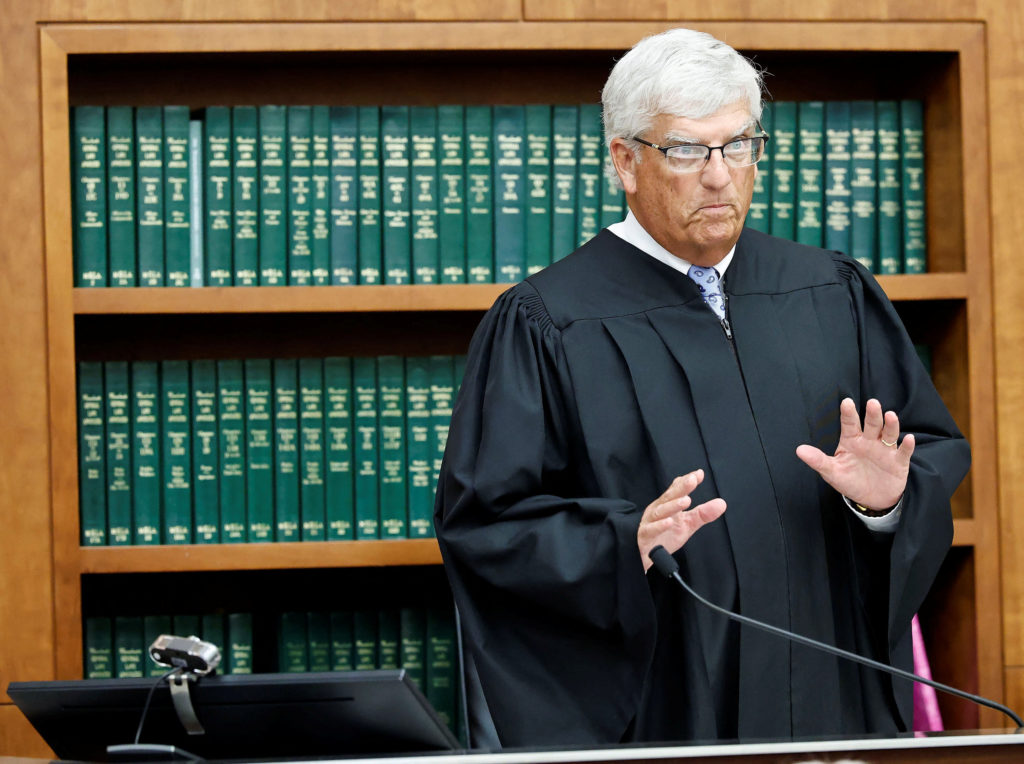
President Donald Trump is building a highly secure ballroom complex at the White House. At the same time, federal judges are improving security at their homes, such as creating safe rooms, to protect themselves from rising threats linked to their work.
Key Facts
President Trump’s new White House ballroom includes military-style security features like bomb shelters and hardened construction.
Federal judges face increasing threats and have installed safe rooms and panic buttons in their homes.
A judge nearly delayed a legal decision out of concern for family safety but ultimately ruled by the law.
Security incidents involving judges rose 57% in fiscal year 2025 and are expected to increase further.
The U.S. Marshals Service identified 315 federal judges as threatened in protective investigations through September 1, 2025.
In 2020, a gunman attacked Judge Esther Salas’s home, killing her son and injuring her husband.
Threats and attacks on judges affect their personal safety and could influence judicial independence.
Judges spending personal money on home security highlights the seriousness of the threat environment.
Read the Original
Want the full story? Tap a source to open the original
article.
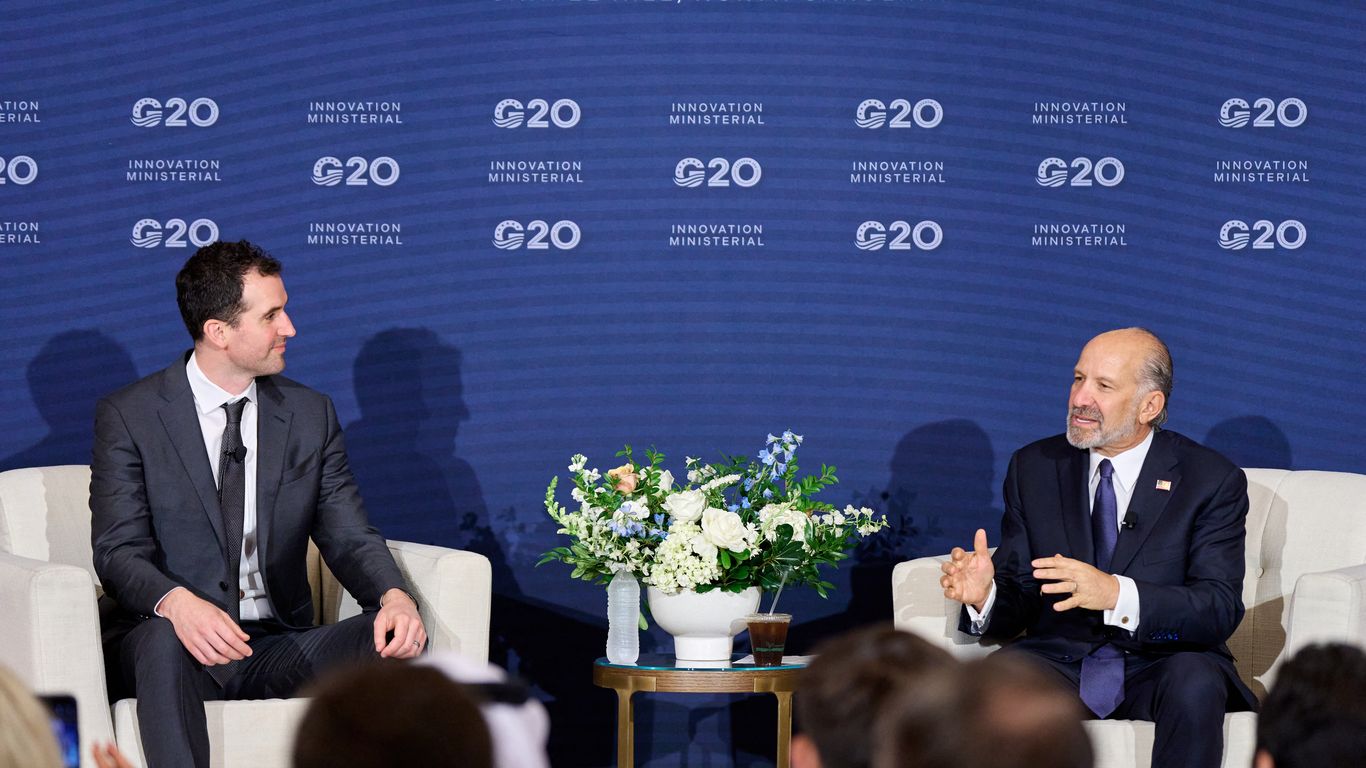
Commerce Secretary Howard Lutnick said the Trump administration now trusts the AI company Anthropic after previous conflicts. Anthropic co-founder Tom Brown has helped improve the company's relationship with the White House and is playing a key role in talks with international leaders.
Key Facts
The Trump administration had earlier clashes with Anthropic over national security and AI safety issues.
Commerce Secretary Howard Lutnick said Anthropic has now met the government’s requests and is "back on the right side."
Tom Brown, a co-founder of Anthropic, is representing the company in discussions with the White House and spoke at the G20 Innovation Ministerial.
Brown praised President Trump’s post about data centers being a source of jobs and prosperity.
The administration and Anthropic had conflicts that led to export controls on Anthropic’s advanced AI models.
Brown helped repair relations by talking with Lutnick and the National Cyber Director.
A federal judge ruled against the Pentagon’s blacklisting of Anthropic, saying it violated the company’s constitutional rights.
Anthropic is still challenging another Pentagon designation in court.
Read the Original
Want the full story? Tap a source to open the original
article.
The United States Mint released 250,000 one-dollar coins that show President Donald Trump's image. The coins celebrate the 250th anniversary of the United States and feature a design based on an official White House photo.
Key Facts
The United States Mint launched 250,000 $1 coins.
The coins feature President Donald Trump's likeness.
These coins celebrate the nation's 250th anniversary.
The portrait on the coin was designed by Joseph Menna, the Mint’s Chief Engraver.
The design is based on an official photo taken by Daniel Torok at the White House.
This is part of an official government release by the US Mint.
The coin portrays a simple and clear image of President Trump.
Read the Original
Want the full story? Tap a source to open the original
article.
The article says that when people claim an election was stolen, they should provide proof. It points out that gerrymandering, which is drawing voting districts unfairly, is clearly visible in many state maps.
Key Facts
Claims of stolen elections require evidence to be taken seriously.
Gerrymandering is the practice of drawing voting districts to favor certain groups or parties.
Evidence of gerrymandering can be seen in state congressional maps.
Gerrymandering affects how votes translate into political power.
The article emphasizes that gerrymandering is a bigger concern than claims of voter fraud.
This issue influences American elections and political fairness.
Read the Original
Want the full story? Tap a source to open the original
article.
New York City will ban the use of artificial intelligence (AI) by students in public schools up to eighth grade. AI use will be allowed only in high school for specific purposes, such as learning about the technology, while some AI tools like psychological chatbots will remain banned.
Key Facts
The AI ban applies to students in grades K-8, usually ages 5 to 13 or 14.
The rule starts next week and is part of a big change in the city’s school technology policies.
Students in grades 1-3 will not use laptops or tablets in class.
Teachers can use AI to help prepare lessons or write messages but cannot have AI grade students’ work.
AI chatbots offering mental health support will be banned in schools.
Screen time is recommended to be limited to 30 minutes for elementary students and 45 minutes for middle schoolers.
The city will form a taskforce with teachers, officials, and experts to review AI policy and provide guidance by April.
Earlier attempts to allow some AI use in schools faced criticism, leading to stricter rules now.
Read the Original
Want the full story? Tap a source to open the original
article.
A jury in Massachusetts is still trying to decide if Lindsay Clancy was responsible for the deaths of her three children in 2023. If the jury cannot agree, the case will result in a mistrial, and prosecutors will decide whether to try her again, offer a plea deal, or drop the charges.
Key Facts
Lindsay Clancy is charged with murdering her three children by strangulation in 2023.
The jury has been deliberating for five days without reaching a verdict.
If no verdict is reached, a mistrial will be declared, and the case will return to its starting point.
Prosecutors may retry Clancy with a new jury, offer a plea deal, or possibly drop the case.
Clancy claims postpartum psychosis caused her actions, while prosecutors say she knew what she was doing.
Clancy was seriously injured after the killings, becoming paralyzed from the waist down.
A conviction could lead to life in prison; an acquittal might lead to mental health treatment.
This case has drawn public attention to mental health issues after childbirth and has divided opinions.
Read the Original
Want the full story? Tap a source to open the original
article.
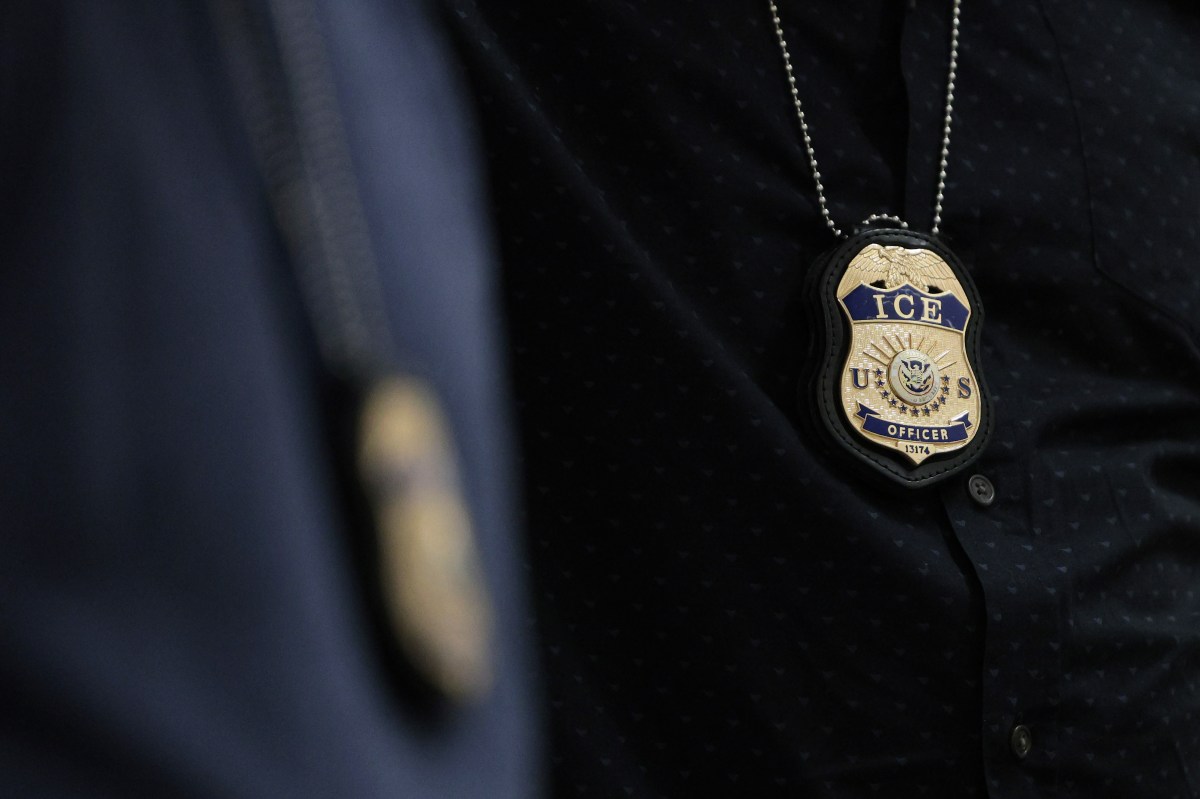
A 51-year-old Chinese man, Lianyong Wei, died less than a day after being taken into U.S. Immigration and Customs Enforcement (ICE) custody in the Northern Mariana Islands. Wei was found unresponsive and died in hospital, with the cause of death still being investigated. His death is part of a rising number of deaths reported in ICE detention since President Donald Trump returned to office in 2025.
Key Facts
Lianyong Wei was arrested on August 21 for assault-related charges and transferred to ICE custody on August 22.
Wei was found unresponsive during a morning check and died shortly after being taken to the hospital.
Wei’s death is the 57th recorded in ICE detention since January 2025, and the 24th this year.
The Northern Mariana Islands is a U.S. territory with its own corrections system where Wei died.
ICE detainees numbered over 65,000 as of July 2026, with a large increase in arrests and detentions under President Trump’s administration.
Concerns have been raised about medical care and conditions in ICE detention centers as detainee numbers grow.
ICE disputes claims of poor medical treatment and says detainees receive appropriate care.
Another detainee, Geraldo Campos, died earlier in 2026, and his death was ruled a homicide connected to restraint by security staff.
Read the Original
Want the full story? Tap a source to open the original
article.
A U.S. Postal Service whistleblower warned that millions of Americans might not receive mail-in ballots for the November midterm elections. This problem could be caused by a new mail voting system ordered by President Donald Trump, which is set to start soon.
Key Facts
The whistleblower works for the U.S. Postal Service.
The warning concerns the midterm elections happening in November.
Millions of mail ballots could be lost or delayed.
The issue is linked to a new mail voting system.
President Donald Trump signed an executive order in March to tighten controls on mail voting.
President Trump has claimed mail voting is vulnerable to fraud, but no large-scale fraud has been proven.
The new system is planned to launch on the coming Tuesday after the warning.
Read the Original
Want the full story? Tap a source to open the original
article.
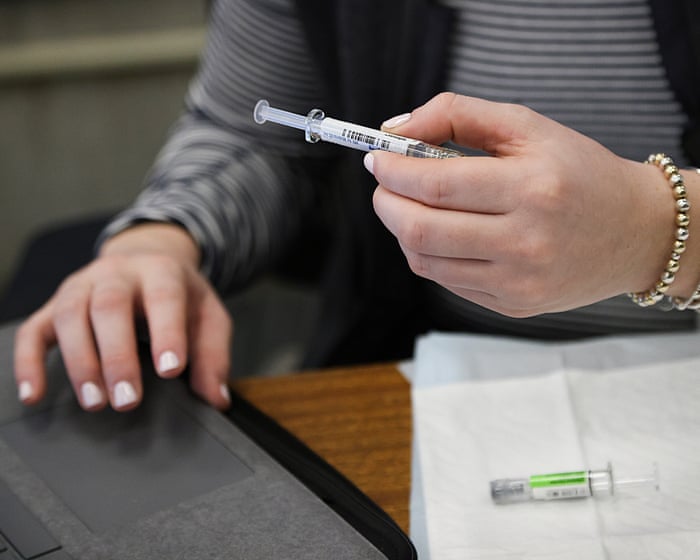
Leading US medical groups are encouraging people to get updated flu and Covid-19 vaccines this fall to protect against illness. They aim to provide clear advice amid changing government guidance and emphasize the importance of vaccinations for older adults, children, and people with health risks.
Key Facts
Flu and updated Covid-19 vaccines are starting to be given this fall after FDA approval.
The CDC usually gives vaccine advice, but recent changes from the Trump administration have caused confusion.
Several medical organizations released their own vaccine guidelines for different groups of patients.
Everyone over six months old should get a flu shot, especially older adults, pregnant women, young children, and those with chronic health problems.
New flu vaccines, including one using mRNA technology, offer better protection, especially for people over 50.
Covid-19 vaccines are now approved mainly for people at higher risk, like those over 65 or with health conditions.
Medical groups recommend all adults get vaccinated for Covid-19, with seniors advised to get an extra dose in fall and another six months later.
Children six months to 23 months old are recommended to get a Covid-19 shot, with older children vaccinated if they have health risks or parental approval.
Read the Original
Want the full story? Tap a source to open the original
article.
Rep. Alexandria Ocasio-Cortez, a Democrat from New York, publicly supported Angie Nixon, a Florida state representative, in her run for the U.S. Senate. Ocasio-Cortez praised Nixon as a strong advocate for working families in Florida.
Key Facts
Alexandria Ocasio-Cortez represents New York in the U.S. House of Representatives.
Ocasio-Cortez is a member of the Democratic Party.
Angie Nixon is a Florida state representative and a democratic socialist.
Nixon is running for the U.S. Senate seat from Florida.
Ocasio-Cortez posted her endorsement on social media.
Ocasio-Cortez described Nixon as a fighter for working families.
Nixon’s campaign opposes major corporate interests.
Read the Original
Want the full story? Tap a source to open the original
article.
Several men linked to a cocaine dealing group connected to some Penn State University fraternities are appearing in court. The case involves leaders accused of running the drug operation.
Key Facts
The suspects are involved in selling cocaine.
The operation includes members of Penn State fraternities.
The accused are reported to be leaders or organizers of the drug ring.
They appeared in court for legal proceedings.
The story was reported by CBS News.
The scandal involves illegal drug distribution on a college campus.
Read the Original
Want the full story? Tap a source to open the original
article.
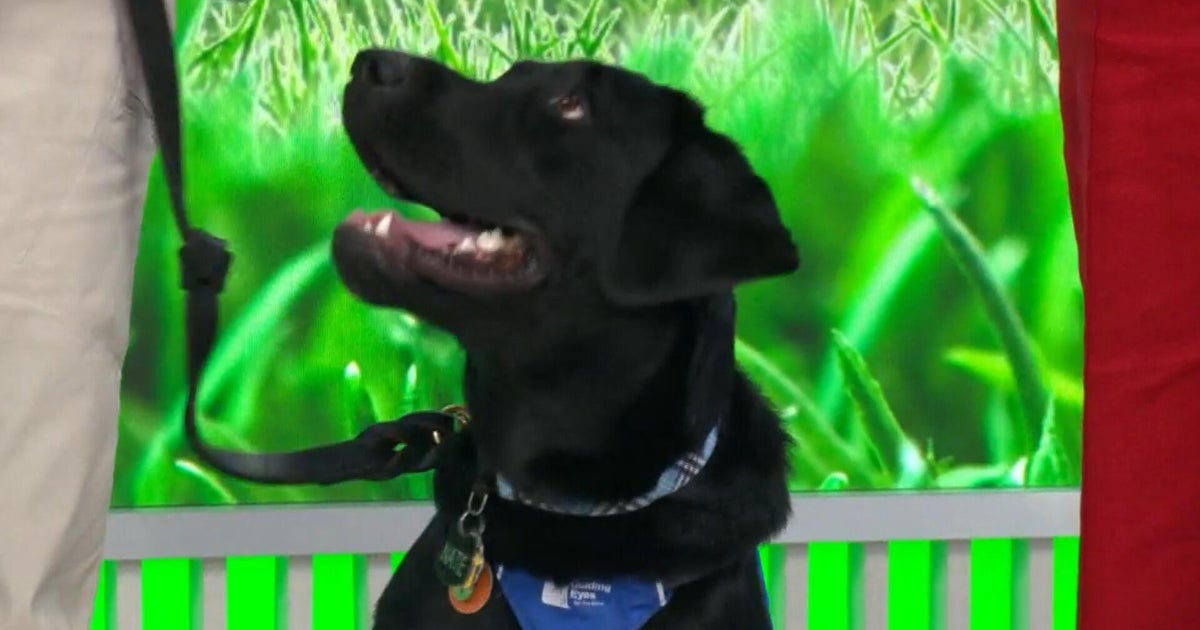
Three guide dogs named Gayle, Nate, and Tony appeared on CBS Mornings to show their training progress. The guide dogs are named after the show's hosts Gayle King, Nate Burleson, and Tony Dokoupil. The hosts and viewers received updates from the people raising the puppies.
Key Facts
The guide dogs are named Gayle, Nate, and Tony.
They are training to become guide dogs.
The dogs are named after CBS Mornings co-hosts Gayle King, Nate Burleson, and Tony Dokoupil.
The puppies appeared on CBS Mornings TV show.
Puppy raisers gave updates on how the dogs are doing in their training.
The segment aired on CBS News.
Read the Original
Want the full story? Tap a source to open the original
article.