Germany's Chancellor Friedrich Merz announced that the country faces intense spying activity, following the arrest of a Ukrainian man suspected of spying for Russia. The suspect allegedly gathered military information related to armored vehicles, ammunition, and explosives and has been in contact with Russian intelligence since at least July 2025.
Key Facts
A Ukrainian man named Vadym Y. was arrested in Germany for allegedly spying for Russia.
He is accused of collecting military-related intelligence, including data on armored vehicles, ammunition, and explosives.
Vadym Y. reportedly communicated with Russian intelligence through an intermediary since July 2025.
Germany has arrested several people this year on suspicion of spying for Russia and other foreign powers.
Germany is a leading European supplier of weapons to Ukraine since Russia’s full-scale invasion in 2022.
Former German spy chief August Hanning was recently arrested on suspicion of espionage and passing classified documents to a foreign power.
Chancellor Merz warned that espionage cases will likely increase in the coming months and years.
Germany and the UK have strengthened defence partnerships to combat hybrid attacks and hostile activities.
Read the Original
Want the full story? Tap a source to open the original
article.
Brazil's President Luiz Inácio Lula da Silva has asked the country's top election court to disqualify his rival, Flávio Bolsonaro, over alleged unfair support from Meta, the company behind Facebook and WhatsApp. Both campaigns have accused each other of abusing social media platforms to influence voters before Sunday's final presidential vote. Meta denies these claims and says it will treat both candidates equally.
Key Facts
Lula's team claims Meta limited their content to help Bolsonaro's campaign.
Bolsonaro's team accuses Lula of using government WhatsApp messages unfairly.
The UN expressed concern about unequal treatment of the campaigns on Meta's platforms.
Meta denied interfering or favoring any candidate and agreed to follow court orders.
Lula wants Bolsonaro investigated for “abuse of economic power” and possibly banned from running for 8 years.
Bolsonaro’s son accused Lula’s government of misusing personal data to send mass messages promoting social programs.
Voters in Brazil will choose between Lula and Bolsonaro in a close presidential runoff on Sunday.
Bolsonaro narrowly led the first voting round but did not secure enough votes to win outright.
Read the Original
Want the full story? Tap a source to open the original
article.
A museum in Glasgow, Scotland, has removed ancient Egyptian human remains from public display because it does not have documented consent from the deceased or their descendants. The museum is following new ethical guidelines aimed at treating human remains with respect and dignity.
Key Facts
Kelvingrove Art Gallery and Museum removed Egyptian mummies and other human remains from exhibits.
The museum is guided by a draft policy saying human remains should only be displayed if there is documented consent.
The policy follows recent ethical standards from the International Council of Museums and a report on African reparations.
Removed items include a painted coffin of a priest, a mummified male head, a mummified right hand, and a mummified right foot.
Additional removals will happen at the History Discovery Centre, Scotland’s Early People gallery, and the St Mungo Museum, all in Glasgow.
Glasgow Life, the organization running the museums, says removing remains reflects respectful, modern museum practice.
Some Scottish politicians criticized the removals as unnecessary and harmful to public education.
Kelvingrove Museum has been open since 1901 and holds diverse collections including ancient Egyptian artifacts.
Read the Original
Want the full story? Tap a source to open the original
article.
Fox News host Brian Kilmeade criticized Steve Witkoff for calling Russian President Vladimir Putin “a humanitarian.” Kilmeade said this remark could make people think Witkoff is naive because Putin is known for harsh actions against opponents.
Key Facts
Brian Kilmeade is a host on Fox News.
Kilmeade shared a video on the social platform X (formerly Twitter).
Kilmeade criticized Steve Witkoff’s comment calling Putin “a humanitarian.”
Steve Witkoff is a special envoy (a person sent on a special mission).
Kilmeade said the Russians would find Witkoff’s comment funny.
Vladimir Putin is the President of Russia.
Putin is widely known for strong actions against his opponents, which contradict the idea of him being a humanitarian.
Read the Original
Want the full story? Tap a source to open the original
article.
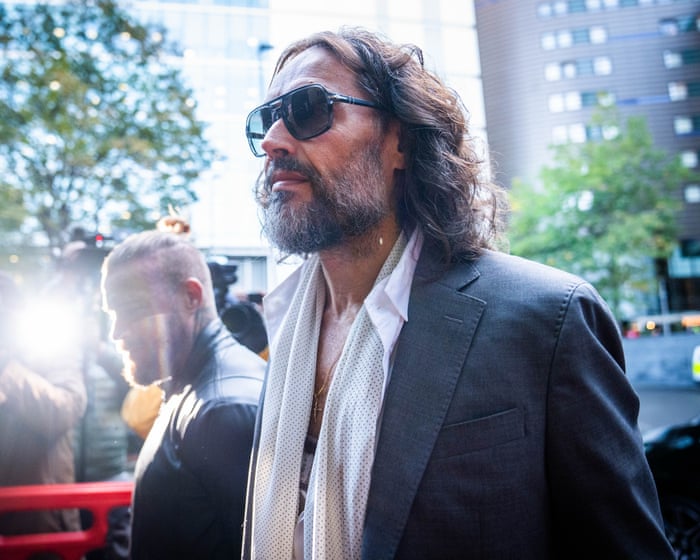
A woman has accused Russell Brand of raping her in 2009, saying he did not stop when she asked him to and caused her physical injury. Brand denies the charges, which include rape and sexual assault involving six women over ten years.
Key Facts
The alleged attack happened in 2009 after Brand picked the woman from a crowd at one of his shows.
The woman told multiple people, including her parents, boyfriend, and friends, about the rape and feared she had HIV.
She described Brand forcing anal sex despite her saying "stop" repeatedly.
Witnesses described the woman as physically injured and emotionally distressed after the incident.
Brand faces eight charges related to alleged sexual crimes involving six women from 1999 to 2009.
Brand denies all the charges and has pleaded not guilty.
The case is being heard at Southwark crown court with multiple witnesses giving evidence.
The woman’s friends and family encouraged her to report to the police, but she was afraid she would not be believed.
Read the Original
Want the full story? Tap a source to open the original
article.
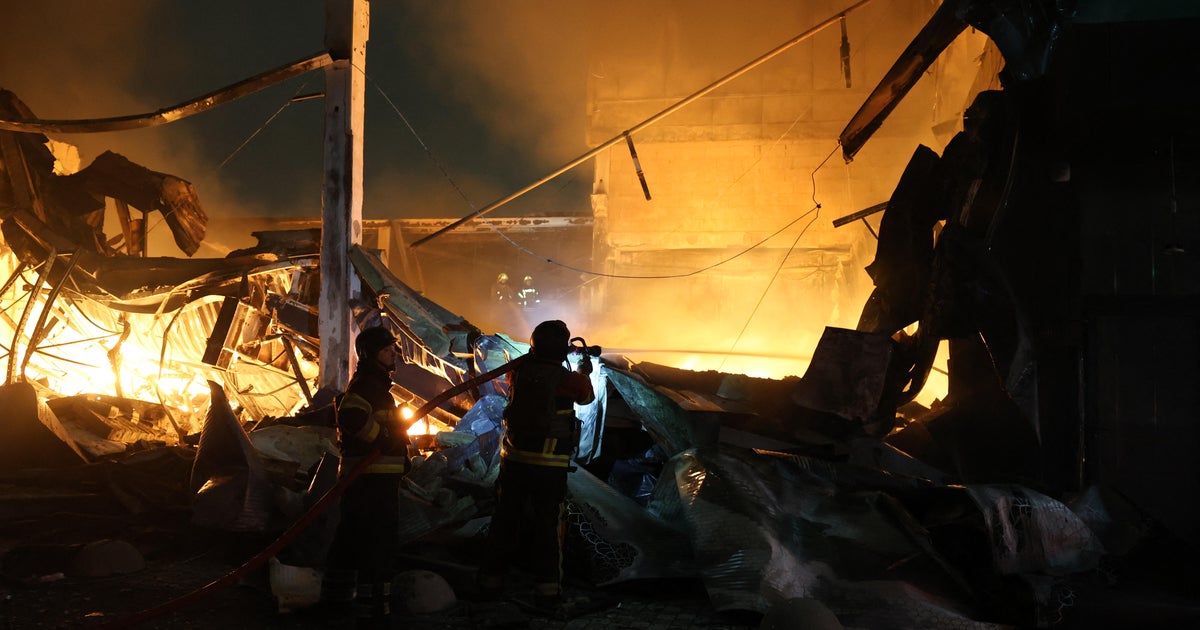
Russian forces carried out missile strikes on Ukraine, which Ukrainian President Volodymyr Zelenskyy said included weapons called cluster warheads. These attacks caused deaths and damage in Ukraine.
Key Facts
Russia launched missile attacks on Ukraine during the night.
President Volodymyr Zelenskyy said Russia used cluster warheads in these attacks.
Cluster warheads are weapons that release many smaller bombs over a wide area.
The attacks resulted in casualties and destruction in Ukraine.
The information comes from CBS News reporting on the conflict.
The use of cluster weapons is controversial and often condemned internationally.
Ukrainian officials have accused Russia of escalating the conflict with these strikes.
Read the Original
Want the full story? Tap a source to open the original
article.
Scientists in Russia found that a compound they created in the lab, called HAEE, already exists naturally in the human body. They discovered that people with Alzheimer's disease have much lower levels of HAEE, suggesting this compound could help diagnose and maybe treat the disease.
Key Facts
Researchers were looking for ways to prevent Alzheimer's disease.
They developed a compound called HAEE to stop harmful protein buildup in the brain.
HAEE was found to form a complex with amyloid-beta protein, preventing it from clumping.
In 2021, scientists found HAEE naturally occurs in human blood.
People with Alzheimer's have lower levels of HAEE than healthy individuals.
This is the first time a lab-created small protein was found naturally in the body.
HAEE might be used as a biomarker, which is a sign to detect Alzheimer's early.
Scientists are studying how HAEE might help protect the brain and treat Alzheimer's.
Read the Original
Want the full story? Tap a source to open the original
article.
J.K. Rowling published a new essay on transgender issues where she critiques eight groups involved in shaping policies on gender and women's rights. She defends her views on sex and gender, criticizes activist groups and institutions, and says she will continue funding legal challenges to policies she believes harm women’s sex-based rights.
Key Facts
Rowling’s new essay is an update to her 2020 writing on sex and gender issues.
She targets transgender rights activists, calling current activism elitist compared to past civil rights movements.
Rowling criticizes LGBTQ+ groups like Stonewall, accusing them of influencing corporations and public institutions to change policies on single-sex spaces.
She emphasizes her support for women’s rights based on biological sex and is concerned about access to single-sex spaces.
Rowling says she rejects being labeled anti-trans and supports the rights and safety of transgender people.
She highlights her legal and charitable work through Beira’s Place and the J.K. Rowling Women’s Fund.
Rowling criticizes government and state institutions for adopting policies she disagrees with.
The essay is over 2,000 words and focuses more on institutions than her earlier writing.
Read the Original
Want the full story? Tap a source to open the original
article.
Ukrainian President Volodymyr Zelensky said Russia’s recent missile attacks show no real change in Moscow’s approach to the war, despite talks between Russian President Vladimir Putin and a US envoy. The attacks caused deaths and injuries across Ukraine, including in Kyiv and other cities, while Ukraine continues to seek advanced defense weapons.
Key Facts
Russia launched ballistic missile attacks across a dozen regions of Ukraine, hitting homes, energy sites, markets, and a monastery.
The attacks killed at least four civilians, including two women in the eastern city of Lozova, and wounded dozens more.
The strikes happened shortly after Russian President Putin met US envoy Steve Witkoff to discuss restarting peace talks.
Zelensky said these attacks show Russia has not changed its attitude toward the war.
Ukraine has asked allies, including the US, for advanced missile-defense systems like Patriot interceptors.
NATO is allowing Ukraine to buy weapons through its central procurement agency case by case.
Zelensky accused Russia of targeting civilians deliberately and using cluster munitions, which spread many small explosives over wide areas.
US President Donald Trump said the peace talks might be the closest to ending the war so far, but European leaders remain skeptical.
Read the Original
Want the full story? Tap a source to open the original
article.
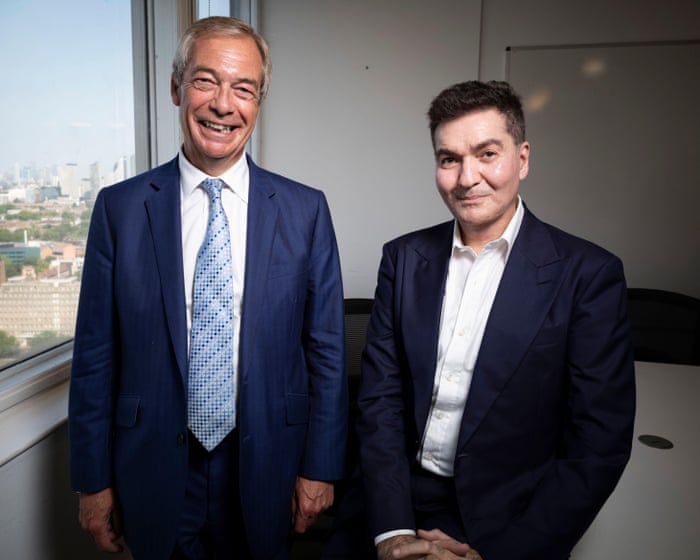
A billionaire donor to Nigel Farage’s Reform UK party, Hossein Ghandehari, was involved in a business with an Iranian religious foundation linked to Iran’s supreme leader. The business was a joint venture to build telecoms infrastructure in Iran, which ended in 2016 as hardline officials took over. Ghandehari’s lawyers say his involvement aimed to encourage political change in Iran.
Key Facts
Hossein Ghandehari, an Iranian-born British businessman, pledged millions to Reform UK and donated £50,000 to Nigel Farage.
Ghandehari’s investment fund, HP Trust, was a major owner of a joint venture to build fibre-optic cables in Iran from 2013 to 2016.
The joint venture was partly owned by Astan Quds Razavi (AQR), a powerful religious foundation in Iran linked to Supreme Leader Ali Khamenei.
AQR has been sanctioned by the US for controlling large parts of Iran’s economy with ties to the supreme leader and government officials.
Ghandehari’s business ties included John Richard Simpson, another Reform UK donor whose firm worked for Ghandehari’s family.
The business partnership ended when hardline leaders replaced the previous AQR custodian in 2016.
Ghandehari’s lawyers say he faced false allegations by Iran’s security council after 2016 and that his goal was to increase access to information in Iran.
Nigel Farage has publicly criticized Iran as a major security threat to the UK.
Read the Original
Want the full story? Tap a source to open the original
article.
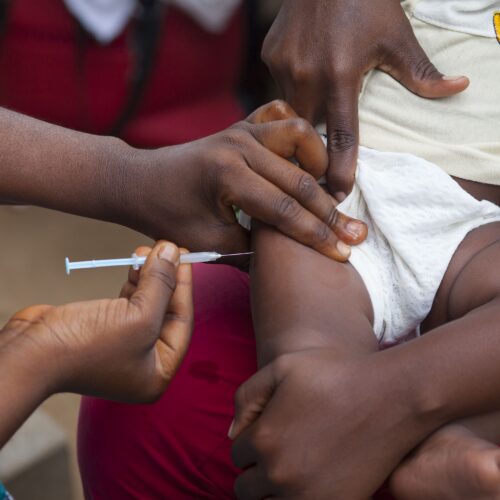
Guinea-Bissau’s government has officially rejected a clinical trial planned by Danish researchers and funded by the US, which would study possible harms from the newborn dose of the hepatitis B vaccine. The trial faced strong criticism from experts and the World Health Organization because it would withhold the vaccine from some babies in a country with high rates of hepatitis B.
Key Facts
The hepatitis B vaccine is recommended worldwide for newborns and has been used safely for many years.
Guinea-Bissau’s Council of Ministers formally rejected the vaccine trial on October 16.
Police in Guinea-Bissau raided the research group’s offices and took vaccines after the trial was rejected.
The trial would have given half the babies no hepatitis B vaccine, which experts called unethical given the risks of the disease.
The World Health Organization said there is no good scientific reason to do the trial and that it puts babies at unnecessary risk.
The US Centers for Disease Control and Prevention (CDC) provided $1.6 million funding to the researchers, stirring public outcry.
The lead researchers have been criticized and are under investigation for previous research conduct.
Guinea-Bissau currently does not provide the newborn hepatitis B vaccine routinely but plans to start in 2028; ethical rules say trials should use the best current care available globally, not just what is offered locally.
Read the Original
Want the full story? Tap a source to open the original
article.
Experts say that a short, three-day joint military attack by the US and Israel on Iran is unlikely to change the ongoing conflict significantly. The main goal is to pressure Iran to negotiate, but there is a risk that such strikes could cause a larger regional crisis.
Key Facts
The US and Israel are reportedly planning new military strikes on Iran.
A three-day offensive is being discussed but is not expected to produce a decisive political result.
The strikes aim either to reduce Iran’s military capabilities or to push Iran to engage in talks.
There is concern that military action might lead to a wider conflict in the Middle East.
Iran still has some influence over the US in this situation.
The discussion comes just before upcoming US and Israeli elections.
Experts question if limited military attacks can achieve the political goals that long confrontations have not.
The context involves issues such as Iran’s nuclear activities and regional power dynamics.
Read the Original
Want the full story? Tap a source to open the original
article.
Albanian lawmakers fought in their parliament, throwing things and breaking microphones. This happened after many days of street protests about corruption and poor school conditions.
Key Facts
Lawmakers in Albania's parliament physically fought and threw objects at each other.
They also ripped microphones from desks during the scuffle.
The incident followed months of daily protests on the streets.
The protests started because of concerns about corruption in the country.
Protesters later focused on poor conditions in schools.
The situation shows ongoing unrest in Albania related to political and social issues.
Read the Original
Want the full story? Tap a source to open the original
article.
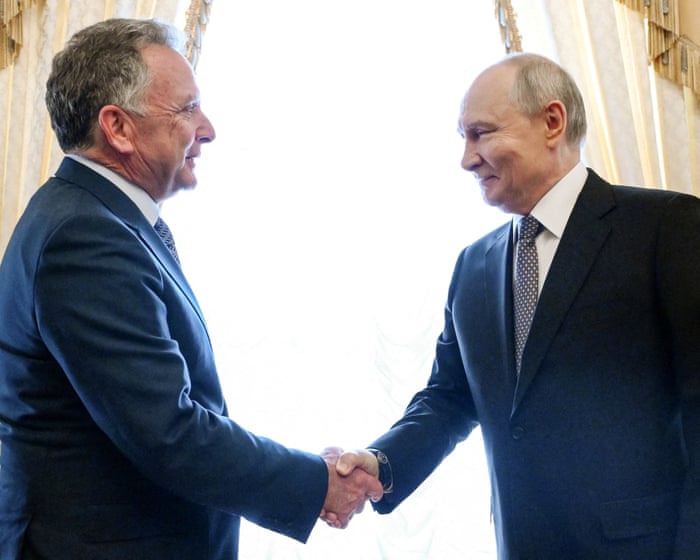
Downing Street rejected Steve Witkoff’s description of Russian President Vladimir Putin as a “humanitarian” during peace efforts to end the war in Ukraine. The UK government highlighted Putin’s role in civilian deaths, attacks on Ukraine’s infrastructure, and the ongoing conflict despite negotiations.
Key Facts
Steve Witkoff, President Trump’s chief negotiator on Ukraine, called Putin a “humanitarian” during a meeting in St Petersburg.
Downing Street said they do not agree with this description and cited Putin’s responsibility for killing civilians and damaging Ukraine’s infrastructure.
Ukraine’s foreign minister criticized Russia’s actions, contradicting the idea of Russian humanitarian efforts.
The UK government regularly discusses the Ukraine situation with international partners, including the US.
Scottish Secretary Douglas Alexander said Putin is responsible for illegal invasion and attempted assassinations in the UK.
Russia agreed in principle to resume peace talks with Ukraine and the US after Witkoff’s meeting.
Despite talks, Russia continued missile and drone attacks, including one on Kharkiv during the meeting.
President Trump suggested the war might be close to ending but had made controversial comments about Ukraine’s president.
Read the Original
Want the full story? Tap a source to open the original
article.
Two Syrian security officers died and five were hurt in a fight with a suspected ISIL group during a raid near Damascus. The authorities killed five ISIL members, arrested six, and seized weapons during the operation in Rankous.
Key Facts
The clashes happened during a raid on an ISIL cell on the outskirts of Damascus.
The fight began when the suspected ISIL members opened fire instead of surrendering.
Two security officers were killed and five wounded; five ISIL suspects were killed and six arrested.
Authorities seized weapons and explosive belts from the group.
Local residents reported the group had about nine people; some escaped, and others were injured.
Syrian security forces imposed a curfew and arrested several people after the raid.
Earlier this month, Syrian authorities foiled another ISIL plot and arrested a top ISIL military commander.
ISIL has frequently attacked Syrian security forces with bombings and ambushes.
Syria joined the international coalition against ISIL in November, after Kurdish forces defeated ISIL in northeast Syria.
Read the Original
Want the full story? Tap a source to open the original
article.
A foreign man was killed by a crowd of about 50 people in Durban, South Africa. The police are investigating the incident, which happened during ongoing protests against immigrants in the country.
Key Facts
The victim, a foreign national in his late 30s or early 40s, was attacked by two men and then by a larger group.
He died at the scene, and police have not yet determined the motive.
This killing follows recent violent protests against immigrants in South Africa's cities, including Durban and Soweto.
The government has asked protesters to remain peaceful but acknowledges the need for immigration reform.
Tens of thousands of undocumented foreign nationals have been deported or sent back this year as part of a crackdown.
Groups like March and March demanded that undocumented migrants leave South Africa by June 30.
Several African countries, including Nigeria and Ghana, have taken steps to protect and repatriate their citizens amid fears of violence.
South Africa has a history of xenophobic attacks; in 2008, over 60 people died and many were displaced during similar violence.
Read the Original
Want the full story? Tap a source to open the original
article.
Ukrainian President Zelenskyy said Russia used cluster missiles in attacks on Kyiv, killing at least four people and injuring 34 others, including children. Russia denied the cluster bomb use and reported shooting down many Ukrainian drones during the same period.
Key Facts
Ukraine says Russia fired ballistic missiles with cluster warheads hitting Kyiv and other areas.
Cluster bombs release smaller explosives over a wide area and can harm civilians.
Over 100 countries banned cluster bombs in 2008, but Russia and the U.S. did not join the treaty.
At least four people died and 34 were injured in the attacks, including five children.
Russia said its air defenses shot down 808 Ukrainian drones overnight.
More than 600 drones were launched toward Moscow recently, according to Moscow’s mayor.
Talks between Russia and the U.S. special envoy Steve Witkoff are ongoing but progress is slow.
Zelenskyy urged President Trump to provide interceptor missiles to help Ukraine defend itself.
Read the Original
Want the full story? Tap a source to open the original
article.
Israeli military attacks in Gaza killed four Palestinians, including a young girl, over the past 24 hours. The Israeli forces have been expanding their control across Gaza, which remains heavily damaged and crowded.
Key Facts
Four Palestinians, including a child, died from Israeli attacks in the last day.
A young girl was killed by gunfire near Jabalia refugee camp in northern Gaza.
One person was killed and another injured in a strike in Gaza City’s Tal al-Hawa neighborhood.
A man on a bicycle was also killed in Khan Younis, southern Gaza.
Another person died from earlier wounds caused by an Israeli strike.
Israeli troops are expanding control inside Gaza, moving from north to center and west.
About two million people live in Gaza, much of which is destroyed or under Israeli control or restrictions.
Since October 2023, over 1,500 Palestinians have been killed and about 5,500 injured after the ceasefire.
Read the Original
Want the full story? Tap a source to open the original
article.
Italy and Spain have agreed to lift border controls on each other's citizens after a three-month stand-off caused by a large number of migrants entering the Spanish territory of Ceuta. Both countries will resume the European Union’s open-border Schengen rules and improve information sharing to keep the area secure.
Key Facts
Italy suspended open-border rules with Spain on July 31 due to concerns about migrants entering Ceuta and then traveling to Italy.
Spain responded by suspending open-border rules with Italy in return.
Over 70,000 migrants crossed from Morocco into Ceuta on July 30 and 31, 2026.
Most migrants quickly returned to Morocco, but thousands, including unaccompanied children, stayed in difficult conditions.
Italian Interior Minister Matteo Piantedosi and Spanish Interior Minister Fernando Grande-Marlaska agreed by phone to lift border restrictions.
Italian Prime Minister Giorgia Meloni and Spanish Prime Minister Pedro Sanchez discussed the issue at a European Council meeting.
The Spanish government’s response to the migrant surge affected Prime Minister Sanchez’s chances in the upcoming election.
Opposition parties in Spain have criticized Sanchez for being too lenient on immigration.
Read the Original
Want the full story? Tap a source to open the original
article.
UK Defence Secretary Wes Streeting urged people and businesses to prepare better for emergencies such as natural disasters, cyber attacks, and terrorism. The government is starting a "national resilience conversation" to raise awareness and advise households on how to get ready for these risks.
Key Facts
Defence Secretary Wes Streeting spoke about the need for the UK to be prepared for emergencies and hostile threats.
The government launched a campaign called "Be Ready" to encourage households to stock supplies like food, water, and first aid for three days.
Streeting mentioned risks including wildfires, flooding, cyber attacks, and supply disruptions caused by hostile states or terrorists.
Environment Secretary Dame Angela Eagle warned that the strong El Niño event will likely cause more extreme storms in the UK.
The National Audit Office reported that the UK’s food supply chain is vulnerable to diseases, cyber attacks, and extreme weather.
Security Minister Dan Jarvis said the advice helps emergency services focus on those who need the most support during crises.
Some European countries already consider emergency preparedness a normal part of daily life.
The government wants to improve UK resilience against power, water, phone, and internet outages during severe weather.
Read the Original
Want the full story? Tap a source to open the original
article.